
Isaiah 37:8
in Isaiah 37When the Rabshakeh heard that the king of Assyria had left Lachish, he withdrew and found the king fighting against Libnah.
BSB
The same verse in ASV and KJV ▾
ASV
So Rabshakeh returned, and found the king of Assyria warring against Libnah; for he had heard that he was departed from Lachish.
KJV
So Rabshakeh returned, and found the king of Assyria warring against Libnah: for he had heard that he was departed from Lachish.
⋯
This verse in Isaiah 37
Commentary
8 notes on this verseRabshakeh returned - From Isa 36:2, we learn that the king of Assyria had sent Rabshakeh from Lachish to Jerusalem; now it is likely that Rabshakeh had besieged that place, and that the king of Assyria had taken his station before this city, and dispatched Rabshakeh against Jerusalem. But, as in the verse above it is said, “he had departed from Lachish,” probably he had been obliged to raise the siege, and sat down before Libnah, which promised an easier conquest.
This site's exposition
warring against Libnah
on Isaiah 37:8-9
Rabshakeh's return finds his master already pulled off Lachish and fighting at Libnah, the campaign moving without having taken the city its own general had threatened. Word of Tirhakah of Ethiopia coming to make war forces Sennacherib's hand, and he answers the rumour Isaiah had promised with a second round of threats rather than a retreat. Barnes places Tirhakah among the datable figures of the chapter, useful for fixing the campaign against the wider Assyrian record.
The record, by era
The Church Fathers2 voices
If someone asks why the book of Prophecies, which is written in the volumes of Kings and Chronicles, seems mixed, let them consider that the prophecy of history is linked, both concerning the liberation of the city and the destruction of Assyria, and concerning the return of the sun with ten and fifteen years elapsed, which is both prophecy and history.
(Verse 8 and following) But when Rabshakeh returned, he found the king of Assyria fighting against Libnah, for he had heard that the king had left Lachish. And he heard that Tirhakah, the king of Ethiopia, had come out to fight against him. When he heard this, he sent messengers to Hezekiah saying: 'Thus you shall speak to Hezekiah, king of Judah, saying: Do not let your God deceive you, in whom you trust, saying: Jerusalem will not be given into the hand of the king of Assyria.'
The Medieval Church1 voice
Here he sets out the return of Rabsaces to Sennacherib. And the meaning of this is evident.
The Puritans and the Awakening1 voice
So Rabshakeh returned,.... To the king of Assyria his master, to give him an account how things went at Jerusalem, and that he could get no direct answer from the king of Judah, and to consult with him what was proper to be done in the present situation of things; leaving the army before Jerusalem, under the command of the other two generals.
The Nineteenth Century1 voice
A commentator
Jamieson, Fausset & Brown1802–1910
Commentary Critical and Explanatory on the Whole Bible (1871)
Libnah--meaning "whiteness," the Blanche-garde of the Crusaders [STANLEY]. EUSEBIUS and JEROME place it more south, in the district of Eleutheropolis, ten miles northwest of Lachish, which Sennacherib had captured (see on Isa 36:2). Libnah was in Judea and given to the priests (1Ch 6:54, 57).
1 more voice on this verse
The Nineteenth Century1 voice
A commentator
Albert Barnes1798–1870
Notes, Explanatory and Practical, on the Old and New Testaments (1832-1869)
proposed
So Rabshakeh returned - Returned from Jerusalem to the camp of his master. He had received no answer to his insulting message Isa 36:21; he saw there was no prospect that the city would surrender; and he therefore returned again to the camp. And found the king of Assyria warring against Libnah - He had departed from Lachish. Why he had done this is unknown. It is possible that he had taken it, though this is not recorded anywhere in history. Or it is possible that he had found it impracticable to subdue it as speedily as he had desired; and had withdrawn from it for the purpose of subduing other places that would offer a more feeble resistance. Libnah was a city in the south of Judah Jos 15:42, given to the priests, and declared a city of refuge 1Ch 6:54, 1Ch 6:57. Eusebius and Jerome say it was in the district of Eleutheropolis (Calmet). It was about ten miles to the northwest of Lachish. This city was taken by Joshua, and all its inhabitants put to the sword After taking this. Joshua next assaulted and took Lachish Jos 10:29-32.
The words behind it
15 Hebrew wordsEvery Hebrew word of this verse in the order it stands, with what it means and the door to its own study. The last column counts the times a word stands in the whole Bible: the rarer the word, the more the places it appears belong together.
| Hebrew | Sound | Meaning | Word study | In the Bible |
|---|---|---|---|---|
| וַיָּ֙שָׁב֙ | vaiyashov | and he returned | H7725 → | 1056 times |
| רַב־ | rav- | [the] chief | H7262 → | 32 times |
| שָׁקֵ֔ה | shakeh | commander | H7262 → | 32 times |
| וַיִּמְצָא֙ | vaiyimtza' | and he found | H4672 → | 455 times |
| אֶת־ | ʾet- | <obj.> | H853 → | 10935 times |
| מֶ֣לֶךְ | melekh | [the] king of | H4428 → | 2525 times |
| אַשּׁ֔וּר | ʾashur | Assyria | H804 → | 151 times |
| נִלְחָ֖ם | nilcham | fighting | H3898 → | 177 times |
| עַל־ | ʾal- | on | H5921 → | 5755 times |
| לִבְנָ֑ה | livnah | Libnah | H3841 → | |
| כִּ֣י | ki | if | H3588 → | 4482 times |
| שָׁמַ֔ע | shama' | he had heard | H8085 → | 1159 times |
| כִּ֥י | ki | that | H3588 → | 4482 times |
| נָסַ֖ע | nasa' | he had departed | H5265 → | 146 times |
| מִלָּכִֽישׁ׃ | milakhish | from Lachish | H3923 → |
וַיָּ֙שָׁב֙and he returned
vaiyashovH7725 →1056 times
רַב־[the] chief
rav-H7262 →32 times
שָׁקֵ֔הcommander
shakehH7262 →32 times
וַיִּמְצָא֙and he found
vaiyimtza'H4672 →455 times
אֶת־<obj.>
ʾet-H853 →10935 times
מֶ֣לֶךְ[the] king of
melekhH4428 →2525 times
אַשּׁ֔וּרAssyria
ʾashurH804 →151 times
נִלְחָ֖םfighting
nilchamH3898 →177 times
עַל־on
ʾal-H5921 →5755 times
לִבְנָ֑הLibnah
livnahH3841 →
כִּ֣יif
kiH3588 →4482 times
שָׁמַ֔עhe had heard
shama'H8085 →1159 times
כִּ֥יthat
kiH3588 →4482 times
נָסַ֖עhe had departed
nasa'H5265 →146 times
מִלָּכִֽישׁ׃from Lachish
milakhishH3923 →
A shaded row is a word that stands 400 times or fewer in the Bible.
The walk
8 stopsEach card is a verse this one points to, and under it the verses that one points to in turn. Where several paths arrive at the same place, that place is listed first: the text keeps returning to it.
Through
2 Kings 8:22So to this day Edom has been in rebellion against the hand of Judah. Likewise, Libnah rebelled at the same time.
it leads to
- Joshua 21:13
So to the descendants of Aaron the priest they gave these cities, together with their pasturelands: Hebron, a city of refuge for the manslayer, Libnah,
Reached by 3 separate paths from here.
- 2 Kings 19:8
When the Rabshakeh heard that the king of Assyria had left Lachish, he withdrew and found the king fighting against Libnah.
Reached by 2 separate paths from here.
- Genesis 27:40
You shall live by the sword and serve your brother. But when you rebel, you will tear his yoke from your neck.”
- Joshua 21:13
Through
Joshua 21:13So to the descendants of Aaron the priest they gave these cities, together with their pasturelands: Hebron, a city of refuge for the manslayer, Libnah,
it leads to
- Joshua 15:42
Libnah, Ether, Ashan,
Reached by 2 separate paths from here.
- Joshua 10:29
Then Joshua and all Israel with him moved on from Makkedah to Libnah and fought against Libnah.
- Joshua 20:7
So they set apart Kedesh in Galilee in the hill country of Naphtali, Shechem in the hill country of Ephraim, and Kiriath-arba (that is, Hebron) in the hill country of Judah.
- Joshua 15:54
Humtah, Kiriath-arba (that is, Hebron), and Zior—nine cities, along with their villages.
- Joshua 15:42
Through
Joshua 12:11the king of Jarmuth, one; the king of Lachish, one;
it leads to
- Joshua 10:31–32
And Joshua and all Israel with him moved on from Libnah to Lachish. They laid siege to it and fought against it.
- Joshua 10:31–32
About Isaiah
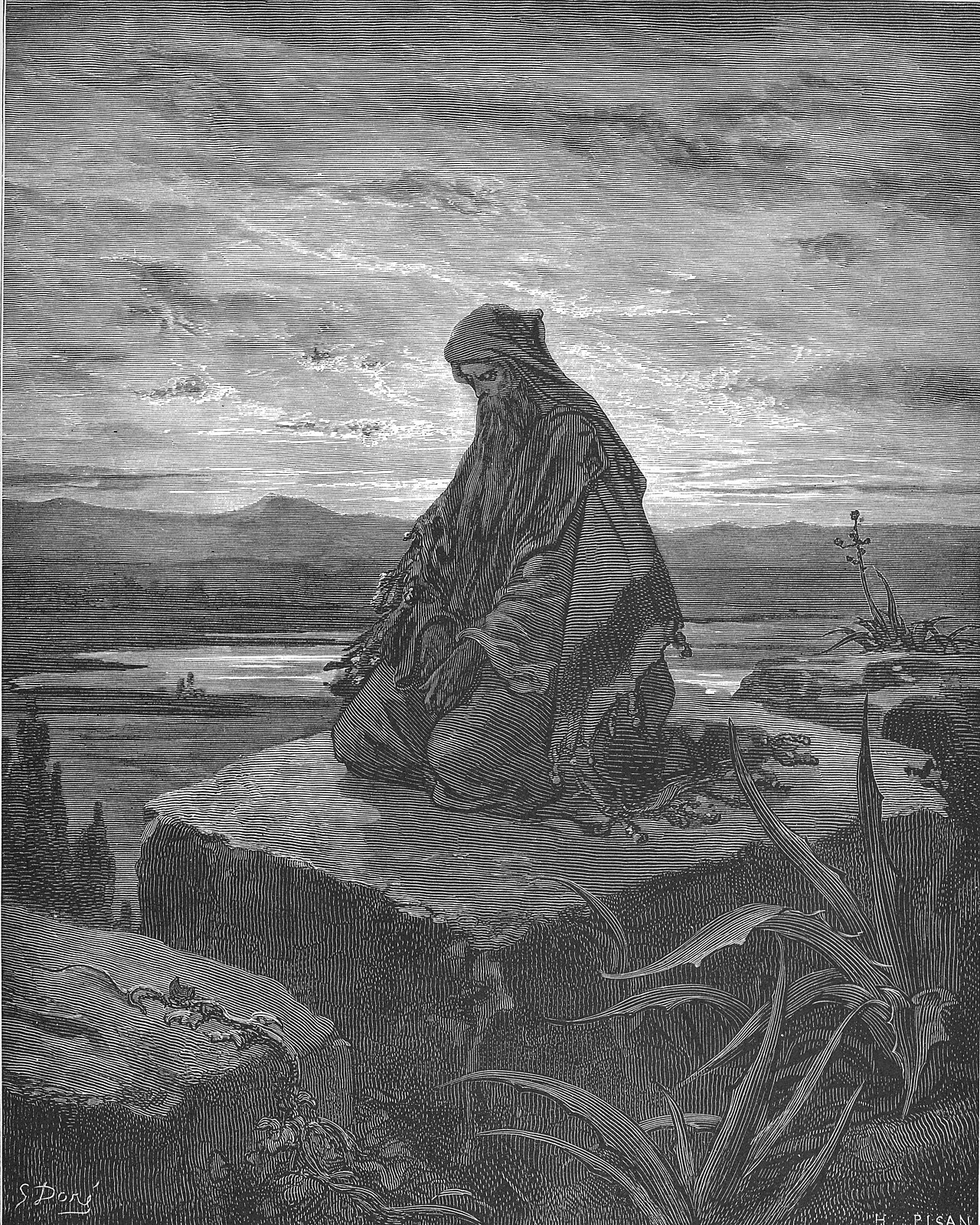
Who and where
2 names in this verse with a page on the site.
- PlaceUpper MesopotamiaAssyriaMesopotamian empire whose capital Nineveh repented at Jonah's preaching and fell to Nahum's burden in 612 BC; the rod of God's ang…
- PlaceShephelahLachishJudah's second city, besieged by Sennacherib in 701 BC, its siege carved on the walls of his palace at Nineveh and confirmed in th…
This page draws on Adam Clarke, Commentary on the Bible; Albert Barnes, Notes on the Book of Isaiah; Albert Barnes, Notes, Explanatory and Practical, on the Old and New Testaments (1832-1869); Jamieson, Fausset & Brown, Commentary Critical and Explanatory on the Whole Bible; Jerome, Commentary on Isaiah; John Gill, Exposition of the Old Testament; John Gill, Exposition of the Old Testament (1748-1763) and Thomas Aquinas, Commentary on Isaiah.