
Isaiah 27:13
in Isaiah 27And in that day a great ram’s horn will sound, and those who were perishing in Assyria will come forth with those who were exiles in Egypt. And they will worship the LORD on the holy mountain in Jerusalem.
BSB
The same verse in ASV and KJV ▾
ASV
And it shall come to pass in that day, that a great trumpet shall be blown; and they shall come that were ready to perish in the land of Assyria, and they that were outcasts in the land of Egypt; and they shall worship Jehovah in the holy mountain at Jerusalem.
KJV
And it shall come to pass in that day, that the great trumpet shall be blown, and they shall come which were ready to perish in the land of Assyria, and the outcasts in the land of Egypt, and shall worship the Lord in the holy mount at Jerusalem.
⋯
This verse in Isaiah 27
Commentary
12 notes on this verseA commentator
Albert Barnes1798–1870
Notes, Explanatory and Practical, on the Old and New Testaments (1832-1869)
The great trumpet shall be blown - This verse is designed to describe in another mode the same fact as that stated in Isa 27:12, that Yahweh would re-collect his scattered people. The figure is derived from the trumpet which was blown to assemble a people for war (Grotius); or from the blowing of the trumpet on occasion of the great feasts and festivals of the Jews (Vitringa). The idea is, that God would summon the scattered people to return to their own land.
This site's exposition
gathered one by one
on Isaiah 27:12-13
The gathering is personal, from "the flowing Euphrates to the Wadi of Egypt", and Israel "will be gathered one by one". A "great ram’s horn will sound", and exiles come from both lands Israel had been driven to, Assyria and Egypt, to "worship the LORD on the holy mountain in Jerusalem".
This site's exposition
a great ram’s horn will sound
The great ram's horn gathers the perishing from Assyria and the exiles from Egypt, and Barnes reads it as the LORD collecting His scattered people. Clarke hears it again in Matthew 24:31. The Jubilee also opened with the ram's horn.
The record, by era
The Church Fathers1 voice
(Verse 13) And it shall be in that day: the great trumpet shall sound, and those who were lost from the land of Assyria and those who were cast out into the land of Egypt shall come, and they shall worship the Lord on the holy mountain in Jerusalem. LXX: And it shall be in that day, a great trumpet shall sound; and those who perished in the region of Assyria and those who perished in Egypt shall come; and they shall worship the Lord on the holy mountain in Jerusalem.
The Medieval Church1 voice
629. And it shall come to pass. Here he sets out the consolation, through return to their land. A great trumpet, the precept of the king, above: he shall set up a sign unto the nations, and shall assemble the fugitives of Israel (Isa 11:12).
The Puritans and the Awakening3 voices
This is applicable both to the preaching of the gospel, by which sinners are gathered in to the grace of God, such as were outcasts and ready to perish (those that were afar off are made nigh; the gospel proclaims the acceptable year of the Lord), and also to the archangel's trumpet at the last day, by which saints shall be gathered to the glory of God, that lay as outcasts in their graves.
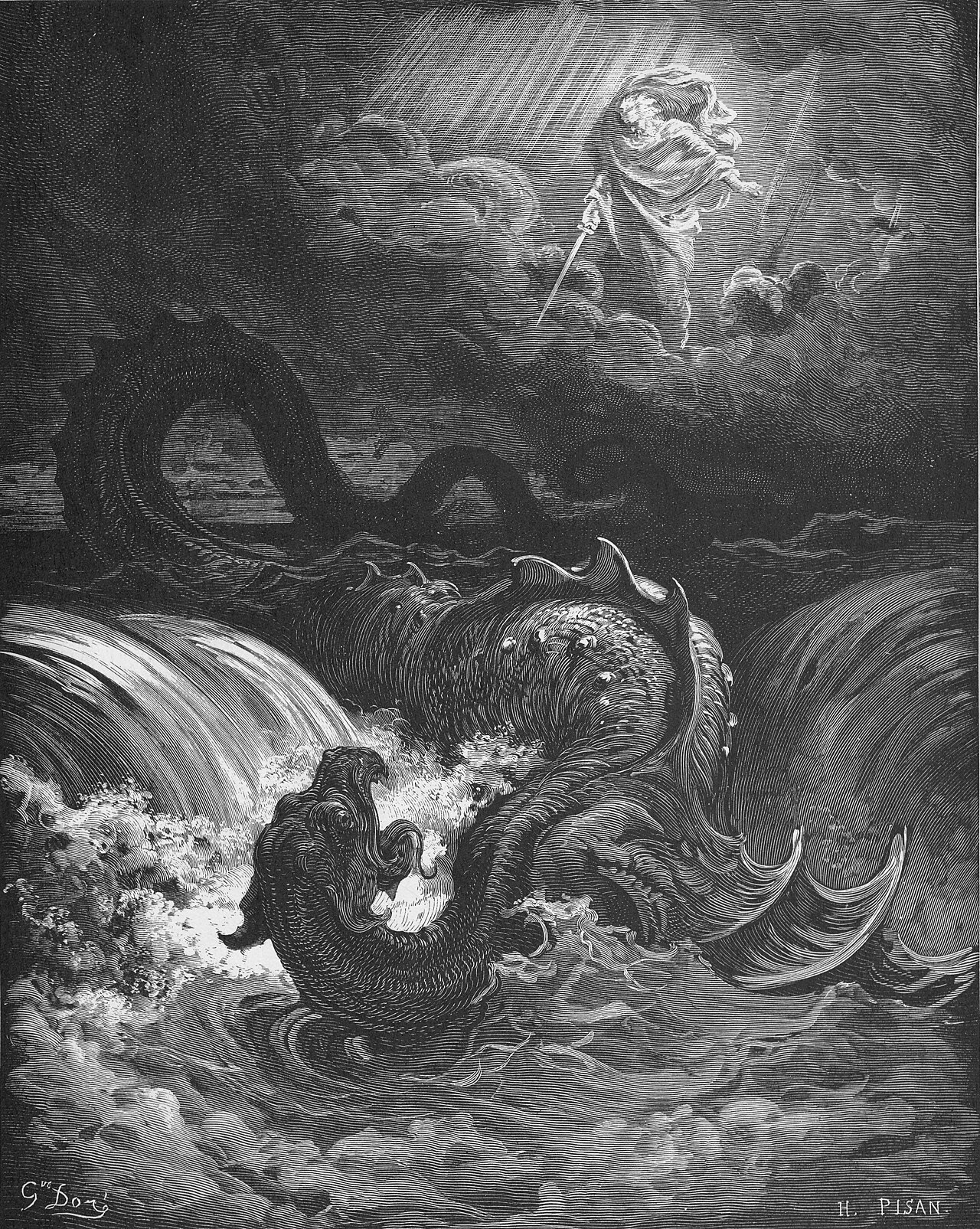
All this is applicable to the grace of the gospel, and God's promises to, and providences concerning, the Christian church, and such as belong to it. 1 In that day the L ORD with his sore and great and strong sword shall punish leviathan the piercing serpent, even leviathan that crooked serpent; and he shall slay the dragon that is in the sea.
quarantine:scripture (2026-07-29) — verbatim-run:30w-of-63
And it shall come to pass in that day,.... When the Lord is about to do the above things, and in order to it.
4 more voices on this verse
The Nineteenth Century4 voices
A commentator
Jamieson, Fausset & Brown1802–1910
Commentary Critical and Explanatory on the Whole Bible (1871)
14:6) which the Jews shall hearken to in the last days (Zec 12:10; As the passover in the first month answers to Christ's crucifixion, so the day of atonement and the idea of "salvation" connected with the feast of tabernacles in the same seventh month, answer to the crowning of "redemption" at His second coming; therefore redemption is put last in 1Co 1:30.
A commentator
Charles Spurgeon1834–1892
The Metropolitan Tabernacle Pulpit, Sermon No. 2868: “'Ready, Yes, Ready!'” (lightly modernized text, CCEL edition) · Written before 1892.
proposed
WHEN attempting to prepare for this service, I found it impossible to fix my mind upon any one subject. This afternoon I had to take rather a long journey to visit a friend who is sick unto death. And at his bedside I trust I have learned some lessons of encouragement and have been animated by witnessing the joy and peace which God grants to His children in their declining hours. Finding that I could not fix upon any one subject, I thought that I would have three.
A commentator
Charles Spurgeon1834–1892
The Metropolitan Tabernacle Pulpit, Sermon No. 2868: “'Ready, Yes, Ready!'” (lightly modernized text, CCEL edition) · Written before 1892.
proposed
WHEN attempting to prepare for this service, I found it impossible to fix my mind upon any one subject. This afternoon I had to take rather a long journey to visit a friend who is sick unto death. And at his bedside I trust I have learned some lessons of encouragement and have been animated by witnessing the joy and peace which God grants to His children in their declining hours. Finding that I could not fix upon any one subject, I thought that I would have three. It may be that out of the three, there will be one intended by Divine Grace for a third of the audience, the second for another third and the other for the rest, so that there will be a portion of meat in due season for all. You know, dear Friends, that the motto of our navy is, "Ready, yes, ready!" That is something like my present subject, for I have three texts in which the word, "Ready," occurs, each time in a different connection. I. The first text will be especially addressed to those who are under concern of soul, having been led, by the enlightening influence of the Divine Spirit, to see their state by nature and to tremble in the prospect of their deserved doom. The text which will suit their case is in Isaiah 27:13—"READY TO PERISH." "They shall come which were ready to perish." By nature, all men, whether they know it or not, are ready to perish. Human nature is, like a blind man, always in danger. No, worse than that, it is like a blind man upon the verge of a tremendous cliff, ready to take the fatal step which will lead to his destruction. The most callous and proud, the most careless and profane cannot, by their indifference or their boasting, altogether evade the apprehension that their state, by nature, is alarming and defenseless. They may try to laugh it away from their minds, but they cannot laugh away the fact.
The great trumpet shall be blown - Does not this refer to the time spoken of by our Lord, Mat 24:31: He shall send forth his angels - the preachers of his Gospel with a great sound of a trumpet - the earnest invitation to be saved by Jesus Christ; and shall gather his elect - the Jews, his ancient chosen people, from the four winds - from all parts of the habitable globe in which they have been dispersed. In this prophet there are several predictions relative to the conversion of Egypt to the true faith, which have not yet been fulfilled, and which must be fulfilled, for the truth of God cannot fail. Should Egypt ever succeed in casting off the Ottoman yoke, and fully establish its independence, it is most likely that the Gospel of Christ would have a speedy entrance into it; and, according to these prophecies, a wide and permanent diffusion. At present the Mohammedan power is a genuine antichrist. This also the Lord will remove in due time.
How the passage was read
What the Jewish commentators add
those lost in the land of Assyria Since they were scattered in a distant land, within the Sambatyon River, he calls them, ‘lost.’
1 more on this passage, in their own words ▾
that the Lord shall gather יַחְבֹּט, lit., shall beat. Jonathan renders: shall fall dead. I.e., the nations from the banks of the Euphrates to the stream of Egypt.
This section is reception history: how the passage was read and kept in the Jewish tradition. Where a reading parts from an essential of the Christian faith, the section says so at that point.
Texts and citation data: Sefaria; each excerpt follows its version’s licence. 1 further source is cited on this chapter that carry no English text this site may quote or only restate the verse.
The words behind it
18 Hebrew wordsEvery Hebrew word of this verse in the order it stands, with what it means and the door to its own study. The last column counts the times a word stands in the whole Bible: the rarer the word, the more the places it appears belong together.
| Hebrew | Sound | Meaning | Word study | In the Bible |
|---|---|---|---|---|
| וְהָיָ֣ה׀ | vehayah | and it will be | H1961 → | 3559 times |
| בַּיּ֣וֹם | baiyom | in the day | H3117 → | 2304 times |
| הַה֗וּא | hahu' | <the> that | H1931 → | 1879 times |
| יִתָּקַע֮ | yitaka' | it will be blown | H8628 → | 69 times |
| בְּשׁוֹפָ֣ר | beshofar | on a trumpet | H7782 → | 72 times |
| גָּדוֹל֒ | gadol | great | H1419 → | 526 times |
| וּבָ֗אוּ | uvau | and they will come | H935 → | 2568 times |
| הָאֹֽבְדִים֙ | haoedim | those [who] were lost | H6 → | 184 times |
| בְּאֶ֣רֶץ | beeretz | in [the] land of | H776 → | 2504 times |
| אַשּׁ֔וּר | ʾashur | Assyria | H804 → | 151 times |
| וְהַנִּדָּחִ֖ים | vehannidachim | and the outcasts | H5080 → | 55 times |
| בְּאֶ֣רֶץ | beeretz | in [the] land of | H776 → | 2504 times |
| מִצְרָ֑יִם | mitzrayim | Egypt | H4714 → | 641 times |
| וְהִשְׁתַּחֲו֧וּ | vehishtachavu | and they will bow down | H7812 → | 172 times |
| לַיהוָ֛ה | layahweh | to Yahweh | H3068 → | 6520 times |
| בְּהַ֥ר | behar | on [the] mountain of | H2022 → | 546 times |
| הַקֹּ֖דֶשׁ | hakodesh | <the> holiness | H6944 → | 469 times |
| בִּירוּשָׁלִָֽם׃ | birushalim | in Jerusalem | H3389 → | 643 times |
וְהָיָ֣ה׀and it will be
vehayahH1961 →3559 times
בַּיּ֣וֹםin the day
baiyomH3117 →2304 times
הַה֗וּא<the> that
hahu'H1931 →1879 times
יִתָּקַע֮it will be blown
yitaka'H8628 →69 times
בְּשׁוֹפָ֣רon a trumpet
beshofarH7782 →72 times
גָּדוֹל֒great
gadolH1419 →526 times
וּבָ֗אוּand they will come
uvauH935 →2568 times
הָאֹֽבְדִים֙those [who] were lost
haoedimH6 →184 times
בְּאֶ֣רֶץin [the] land of
beeretzH776 →2504 times
אַשּׁ֔וּרAssyria
ʾashurH804 →151 times
וְהַנִּדָּחִ֖יםand the outcasts
vehannidachimH5080 →55 times
בְּאֶ֣רֶץin [the] land of
beeretzH776 →2504 times
מִצְרָ֑יִםEgypt
mitzrayimH4714 →641 times
וְהִשְׁתַּחֲו֧וּand they will bow down
vehishtachavuH7812 →172 times
לַיהוָ֛הto Yahweh
layahwehH3068 →6520 times
בְּהַ֥רon [the] mountain of
beharH2022 →546 times
הַקֹּ֖דֶשׁ<the> holiness
hakodeshH6944 →469 times
בִּירוּשָׁלִָֽם׃in Jerusalem
birushalimH3389 →643 times
A shaded row is a word that stands 400 times or fewer in the Bible.
The walk
8 stopsEach card is a verse this one points to, and under it the verses that one points to in turn. Where several paths arrive at the same place, that place is listed first: the text keeps returning to it.
Through
Luke 4:18“The Spirit of the Lord is on Me, because He has anointed Me to preach good news to the poor. He has sent Me to proclaim liberty to the captives and recovery of sight…
it leads to
- Isaiah 61:1
The Spirit of the Lord GOD is on Me, because the LORD has anointed Me to preach good news to the poor. He has sent Me to bind up the brokenhearted, to proclaim liberty…
- Matthew 11:5
The blind receive sight, the lame walk, the lepers are cleansed, the deaf hear, the dead are raised, and the good news is preached to the poor.
- Psalms 146:7–8
He executes justice for the oppressed and gives food to the hungry. The LORD sets the prisoners free,
- Acts 10:38
how God anointed Jesus of Nazareth with the Holy Spirit and with power, and how Jesus went around doing good and healing all who were oppressed by the devil, because God was with Him.
- Luke 7:22
So He replied, “Go back and report to John what you have seen and heard: The blind receive sight, the lame walk, the lepers are cleansed, the deaf hear, the dead are raised, and…
- Isaiah 61:1
Through
Matthew 24:31And He will send out His angels with a loud trumpet call, and they will gather His elect from the four winds, from one end of the heavens to the other.
it leads to
- 1 Thessalonians 4:16
For the Lord Himself will descend from heaven with a loud command, with the voice of an archangel, and with the trumpet of God, and the dead in Christ will be the first to…
- Mark 13:27
And He will send out the angels to gather His elect from the four winds, from the ends of the earth to the ends of heaven.
- 1 Corinthians 15:52
in an instant, in the twinkling of an eye, at the last trumpet. For the trumpet will sound, the dead will be raised imperishable, and we will be changed.
- 1 Thessalonians 4:16
Where this verse is studied
On this page
Studies2
On this verse
On this chapter
About Isaiah
Who and where
3 names in this verse with a page on the site.
- PlaceThe NileEgyptThe land where Joseph rose, where Israel grew into a nation in bondage, where the Passover lamb was slain and the sea opened, and…
- PlaceUpper MesopotamiaAssyriaMesopotamian empire whose capital Nineveh repented at Jonah's preaching and fell to Nahum's burden in 612 BC; the rod of God's ang…
- PlaceJerusalemJerusalemThe city David took from the Jebusites and made his capital, where Solomon built the temple, where Christ was crucified and rose,…
This page draws on 9 works. Open the list of works
This page draws on Adam Clarke, Commentary on the Bible; Albert Barnes, Notes, Explanatory and Practical, on the Old and New Testaments (1832-1869); Charles Spurgeon, The Metropolitan Tabernacle Pulpit, Sermon No. 2868: “'Ready, Yes, Ready!'” (lightly modernized text, CCEL edition); Franz Delitzsch, Biblical Commentary on the Prophecies of Isaiah; Jamieson, Fausset & Brown, Commentary Critical and Explanatory on the Whole Bible; Jerome, Commentary on Isaiah; John Gill, Exposition of the Old Testament (1748-1763); Matthew Henry, Commentary on the Whole Bible and Thomas Aquinas, Commentary on Isaiah.