
Genesis 28:11
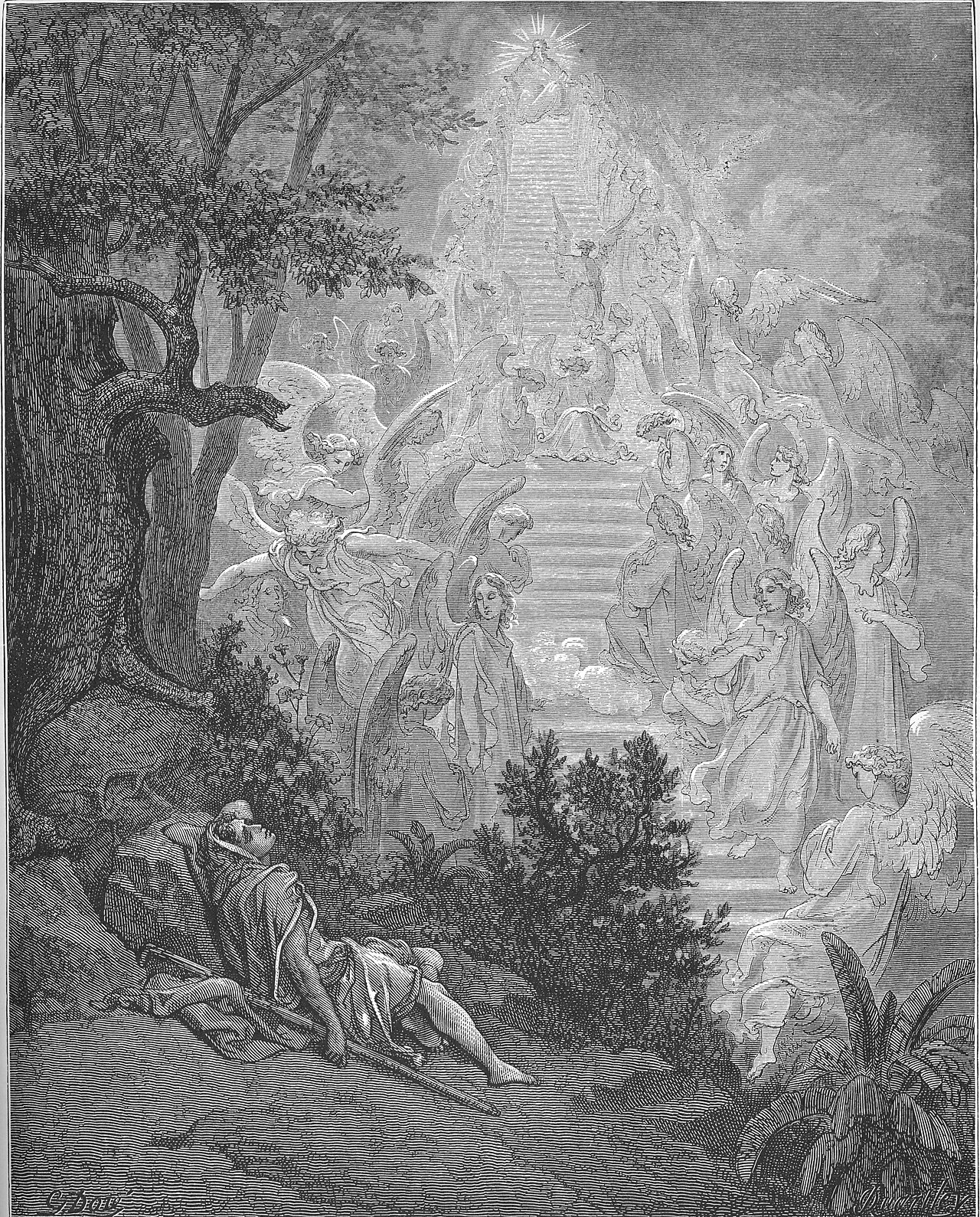
in Genesis 28On reaching a certain place, he spent the night there because the sun had set. And taking one of the stones from that place, he put it under his head and lay down to sleep.
BSB
The same verse in ASV and KJV ▾
ASV
And he lighted upon a certain place, and tarried there all night, because the sun was set; and he took one of the stones of the place, and put it under his head, and lay down in that place to sleep.
KJV
And he lighted upon a certain place, and tarried there all night, because the sun was set; and he took of the stones of that place, and put them for his pillows, and lay down in that place to sleep.
⋯
This verse in Genesis 28
Commentary
10 notes on this verseA certain place, and tarried there - From Gen 28:19, we find this certain place was Luz, or some part of its vicinity. Jacob had probably intended to reach Luz; but the sun being set, and night coming on, he either could not reach the city, or he might suspect the inhabitants, and rather prefer the open field, as he must have heard of the character and conduct of the men of Sodom and Gomorrah.
This site's exposition
Jacob left Beersheba and set out for Haran
on Genesis 28:10-11
Jacob leaves Beersheba, where Abraham had planted a tamarisk and Isaac had built an altar at 26:25. He goes alone. The sun had set, so he spent the night at a certain place with a stone under his head. That ground is what the LORD promises him in the next verse.
This site's exposition
he put it under his head
Adam Clarke identifies the certain place from verse 19 as Luz or its outskirts. He suggests Jacob either could not reach the city before dark or chose the open field over its people, with Sodom in mind. He sleeps outside the city he later renames.
The record, by era
The Church Fathers4 voices
We do not read of blessed Jacob that he departed with horses or asses or camels, but we read only that he carried a staff in his hand. Thus, indeed, when entreating the Lord he said, "Lord, I am not worthy of all your kindnesses.
Consider our ascetic [Jacob]: he was running away from a very cruel man; he was fleeing his brother, and he found help in stone. That stone is Christ. That stone is the support of all those who suffer persecution, but to the unbelieving Jew, it is "a stone of stumbling, and a rock of scandal." "Jacob saw there a ladder set up on the ground with its top reaching to heaven, and in heaven the Lord leaning upon it. And he saw angels ascending and descending." Note: he saw angels ascending; he saw Paul ascending; he saw angels descending; Judas, the betrayer, was falling headlong. He saw angels ascending—holy men going from earth to heaven; he saw angels descending—the devil and his whole army cast down from heaven. It is very difficult indeed to ascend from earth into heaven. We fall more easily than we rise. We fall easily; it requires great labor, a great deal of sweat to climb upwards. If I am on the lowest step, how many more are there before I reach heaven? If I am on the second, the third, the fourth, the tenth, what benefit to me unless I reach the top? Grant with me that this ladder has fifteen rungs. I climb as high as the fourteenth, but unless I reach and hold the fifteenth, what profit to me to have mounted the fourteenth? If I should arrive at the fifteenth and then fall, the higher my ascent, the greater my fall.
When the sun was setting, the text tells us, he slept where the night came upon him: "He took a stone and put it under his head." See the young fellow's hardy spirit: He used the stone as a pillow and slept on the ground. Consequently, since he was imbued with common sense and a hardy attitude and was free of all human pretence, he was found worthy of that remarkable vision. Our Lord is like that, you see: When he sees a dutiful soul that makes no account of present realities, he demonstrates his own great care for him.
When Jacob was in flight from his brother, in Mesopotamia he came to Luza, and there to rest, Scripture says, he placed a stone under his head. The stone under his head was Christ. Never before had he put a stone under his head; only at the time when he was escaping from his persecutor. When he was in his father's house, and as long as he was in his father's house and enjoyed the comforts of the flesh, he had no stone at his head. He departed from his home, poor and alone; he left with only a staff, and immediately that very night he found a stone and placed it at his head. Because he had a pillow of that kind upon which to rest his head, think of the vision he saw. "He dreamed that a ladder was set up on the ground with its top reaching to heaven; angels were ascending and descending on it." He saw angels descend from heaven to earth and others ascend from earth to heaven. Would you know that the stone at Jacob's head was Christ, the cornerstone? "The stone which the builders rejected has become the cornerstone." That is the stone that is called Ebenezer in the Book of Samuel. That stone is Christ. The name Ebenezer, moreover, means "the Stone of Help." "Jacob woke from his sleep," Scripture says, and what did he say? "This is the house of God." What did he do? "He poured oil over the stone." Unless we penetrate the spiritual mystery of holy Scripture, what reason is there that he should anoint the stone?
The Puritans and the Awakening1 voice
And he lighted upon a certain place,....
2 more voices on this verse
The Puritans and the Awakening1 voice
We cannot think it was by reason of his poverty that he was so ill accommodated, but, (1.) It was owing to the plainness and simplicity of those times, when men did not take so much state, and consult their ease so much, as in these later times of softness and effeminacy.
The Nineteenth Century1 voice
A commentator
Jamieson, Fausset & Brown1802–1910
Commentary Critical and Explanatory on the Whole Bible (1871)
proposed
he lighted upon a certain place--By a forced march he had reached Beth-el, about forty-eight miles from Beer-sheba, and had to spend the night in the open field. he took of the stones, etc.--"The nature of the soil is an existing comment on the record of the stony territory where Jacob lay" [CLARKE'S Travels].
quarantine:debris (2026-07-29) — starts-lowercase
How the passage was read
What the Jewish commentators add
[AND HE LIGHTED UPON THE PLACE.] The reason the bet of ba-makom (the place) 10 There is a difference between be-makom and ba-makom.
This section is reception history: how the passage was read and kept in the Jewish tradition. Where a reading parts from an essential of the Christian faith, the section says so at that point.
Texts and citation data: Sefaria; each excerpt follows its version’s licence. 6 further sources are cited on this chapter that carry no English text this site may quote or only restate the verse.
The words behind it
15 Hebrew wordsEvery Hebrew word of this verse in the order it stands, with what it means and the door to its own study. The last column counts the times a word stands in the whole Bible: the rarer the word, the more the places it appears belong together.
| Hebrew | Sound | Meaning | Word study | In the Bible |
|---|---|---|---|---|
| וַיִּפְגַּ֨ע | vaiyifga' | and he reached | H6293 → | 46 times |
| בַּמָּק֜וֹם | bamakom | <in> the place | H4725 → | 401 times |
| וַיָּ֤לֶן | vaiyalen | and he stayed [the] night | H3885 → | 84 times |
| שָׁם֙ | sham | there | H8033 → | 834 times |
| כִּי־ | ki- | for | H3588 → | 4482 times |
| בָ֣א | va' | it had gone | H935 → | 2568 times |
| הַשֶּׁ֔מֶשׁ | hashemesh | the sun | H8121 → | 134 times |
| וַיִּקַּח֙ | vaiyikach | and he took | H3947 → | 966 times |
| מֵאַבְנֵ֣י | meavnei | one of [the] stones of | H68 → | 273 times |
| הַמָּק֔וֹם | hamakom | the place | H4725 → | 401 times |
| וַיָּ֖שֶׂם | vaiyasem | and he put [it] | H7760 → | 584 times |
| מְרַֽאֲשֹׁתָ֑יו | meraashotav | [the] place of head his | H4763 → | |
| וַיִּשְׁכַּ֖ב | vaiyishkav | and he lay down | H7901 → | 212 times |
| בַּמָּק֥וֹם | bamakom | in the place | H4725 → | 401 times |
| הַהֽוּא׃ | hahu' | <the> that | H1931 → | 1879 times |
וַיִּפְגַּ֨עand he reached
vaiyifga'H6293 →46 times
בַּמָּק֜וֹם<in> the place
bamakomH4725 →401 times
וַיָּ֤לֶןand he stayed [the] night
vaiyalenH3885 →84 times
שָׁם֙there
shamH8033 →834 times
כִּי־for
ki-H3588 →4482 times
בָ֣אit had gone
va'H935 →2568 times
הַשֶּׁ֔מֶשׁthe sun
hashemeshH8121 →134 times
וַיִּקַּח֙and he took
vaiyikachH3947 →966 times
מֵאַבְנֵ֣יone of [the] stones of
meavneiH68 →273 times
הַמָּק֔וֹםthe place
hamakomH4725 →401 times
וַיָּ֖שֶׂםand he put [it]
vaiyasemH7760 →584 times
מְרַֽאֲשֹׁתָ֑יו[the] place of head his
meraashotavH4763 →
וַיִּשְׁכַּ֖בand he lay down
vaiyishkavH7901 →212 times
בַּמָּק֥וֹםin the place
bamakomH4725 →401 times
הַהֽוּא׃<the> that
hahu'H1931 →1879 times
A shaded row is a word that stands 400 times or fewer in the Bible.
The walk
8 stopsEach card is a verse this one points to, and under it the verses that one points to in turn. Where several paths arrive at the same place, that place is listed first: the text keeps returning to it.
Through
2 Corinthians 1:5For just as the sufferings of Christ overflow to us, so also through Christ our comfort overflows.
it leads to
- Colossians 1:24
Now I rejoice in my sufferings for you, and I fill up in my flesh what is lacking in regard to Christ’s afflictions for the sake of His body, which is the church.
- Philippians 3:10
I want to know Christ and the power of His resurrection and the fellowship of His sufferings, being conformed to Him in His death,
- 2 Thessalonians 2:16–17
Now may our Lord Jesus Christ Himself and God our Father, who by grace has loved us and given us eternal comfort and good hope,
- Philippians 1:20
I eagerly expect and hope that I will in no way be ashamed, but will have complete boldness so that now as always Christ will be exalted in my body, whether by life or…
- 2 Corinthians 4:10–11
We always carry around in our body the death of Jesus, so that the life of Jesus may also be revealed in our body.
- Colossians 1:24
Through
Matthew 8:20Jesus replied, “Foxes have dens and birds of the air have nests, but the Son of Man has no place to lay His head.”
it leads to
- Psalms 84:3
Even the sparrow has found a home, and the swallow a nest for herself, where she places her young near Your altars, O LORD of Hosts, my King and my God.
- Luke 2:7
And she gave birth to her firstborn, a Son. She wrapped Him in swaddling cloths and laid Him in a manger, because there was no room for them in the inn.
- Psalms 84:3
Through
Genesis 28:18Early the next morning, Jacob took the stone that he had placed under his head, and he set it up as a pillar. He poured oil on top of it,
it leads to
- Genesis 35:14
So Jacob set up a pillar in the place where God had spoken with him—a stone marker—and he poured out a drink offering on it and anointed it with oil.
- Genesis 35:14
Where this verse is studied
On this page
Studies3
On this verse
On this chapter
About Genesis
This page draws on Adam Clarke, Commentary on the Bible; Caesarius of Arles, SERMON 87.2; Jamieson, Fausset & Brown, Commentary Critical and Explanatory on the Whole Bible; Jerome, HOMILIES ON THE PSALMS 41; Jerome, HOMILIES ON THE PSALMS 46; John Chrysostom, HOMILIES ON GENESIS 54.17; John Gill, Exposition of the Old Testament (1748-1763) and Matthew Henry, Commentary on the Whole Bible.