
Genesis 21:12
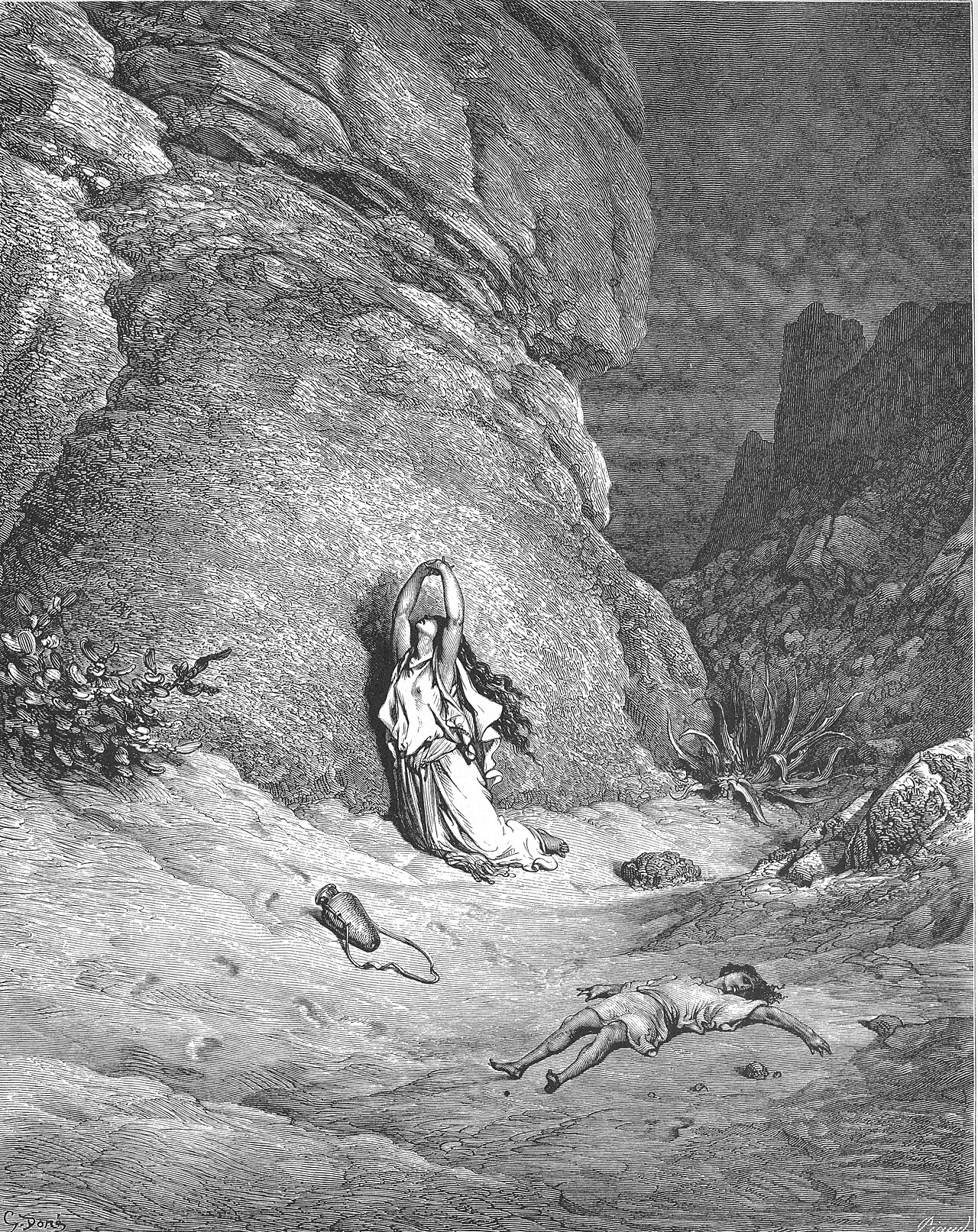
in Genesis 21But God said to Abraham, “Do not be distressed about the boy and your maidservant. Listen to everything that Sarah tells you, for through Isaac your offspring will be reckoned.
BSB
The same verse in ASV and KJV ▾
ASV
And God said unto Abraham, Let it not be grievous in thy sight because of the lad, and because of thy handmaid; in all that Sarah saith unto thee, hearken unto her voice; for in Isaac shall thy seed be called.
KJV
And God said unto Abraham, Let it not be grievous in thy sight because of the lad, and because of thy bondwoman; in all that Sarah hath said unto thee, hearken unto her voice; for in Isaac shall thy seed be called.
⋯
This verse in Genesis 21
Commentary
6 notes on this verseIn Isaac shall thy seed be called - Here God shows the propriety of attending to the counsel of Sarah; and lest Abraham, in whose eyes the thing was grievous, should feel distressed on the occasion, God renews his promises to Ishmael and his posterity.
This site's exposition
this matter distressed Abraham greatly
on Genesis 21:11-13
Abraham is distressed over Ishmael, named here as his son. God tells him to listen to everything Sarah says, and that through Isaac his offspring will be reckoned. Paul quotes that clause at Romans 9:7 and Hebrews at 11:18; verse 13 promises Ishmael a nation of his own.
This site's exposition
Listen to everything that Sarah tells you
God tells Abraham to listen to everything Sarah tells him, and He also answers the distress of verse 11 about the boy and the maidservant. Adam Clarke reads the word as God showing that Sarah was right. Jamieson, Fausset and Brown say it ended Abraham's distress.
The record, by era
The Church Fathers1 voice
Don't object, he says, to what is said to you by her; instead, "whatever Sarah says to you, heed her." Accept everything she now says to you about Ishmael and Hagar, and pay close attention. Don't be ready to distress the woman who in all this period has given evidence of such great affection for you on more than one occasion so as to save you from death by surrendering herself for your welfare and proving the occasion of your wonderful prosperity. On the first occasion she caused you to leave Egypt with all that wealth, and later she was responsible for your being accorded remarkable esteem by Abimelech. So don't allow yourself to follow a course of action contrary to what is advised by her; nor in fact will things turn out otherwise. You see, your descendants will be called after Isaac, the child born of her, and he will be your successor. "But this son of the maidservant I shall cause to become numerous; I shall make him grow into a mighty nation since he is your offspring." So do what is said to you by her, and pay attention to her words.Consider now, I ask you, how great was the peace and harmony that all at once began to reign over their life together, God's goodness strengthening their relationship. "He arose early next morning," the text goes on, remember, "took bread and a bag of water, and gave them to Hagar; he then set the child on her shoulders and sent her off." Notice once again, I ask you, the good man's utterly correct attitude in giving evidence in every way of his godly purpose. I mean, when he heard Sarah's words, "Send away the maidservant and her son," it struck him as severe, since he was kindly disposed toward Ishmael. But when the Lord gave him orders, he immediately carried them out and gave no further thought to his natural affections.
The Puritans and the Awakening2 voices
That the casting out of Ishmael was necessary to the establishment of Isaac in the rights and privileges of the covenant: In Isaac shall thy seed be called. Both Christ and the church must descend from Abraham through the loins of Isaac; this is the entail of the promise upon Isaac, and is quoted by the apostle ( Rom. ix.
quarantine:debris (2026-07-29) — unbalanced-parens
And God said unto Abraham,....
How the passage was read
What the Jewish commentators add
On the verses either side of this one
AND THE THING WAS VERY GRIEVOUS IN ABRAHAM’s SIGHT ON ACCOUNT OF HIS SON. That is, for he had taken to degenerate ways. The plain meaning, however, is that he was grieved because she had told him to send him away. Thus the language of Rashi.
This section is reception history: how the passage was read and kept in the Jewish tradition. Where a reading parts from an essential of the Christian faith, the section says so at that point.
Texts and citation data: Sefaria; each excerpt follows its version’s licence. 4 further sources are cited on this chapter that carry no English text this site may quote or only restate the verse.
The words behind it
23 Hebrew wordsEvery Hebrew word of this verse in the order it stands, with what it means and the door to its own study. The last column counts the times a word stands in the whole Bible: the rarer the word, the more the places it appears belong together.
| Hebrew | Sound | Meaning | Word study | In the Bible |
|---|---|---|---|---|
| וַיֹּ֨אמֶר | vaiyomer | and he said | H559 → | 5305 times |
| אֱלֹהִ֜ים | ʾelohim | God | H430 → | 2601 times |
| אֶל־ | ʾel- | to | H413 → | 5510 times |
| אַבְרָהָ֗ם | ʾavraham | Abraham | H85 → | 175 times |
| אַל־ | ʾal- | may not | H408 → | 724 times |
| יֵרַ֤ע | yera' | it be displeasing | H7489 → | 107 times |
| בְּעֵינֶ֙יךָ֙ | beeineikha | in view your | H5869 → | 887 times |
| עַל־ | ʾal- | on | H5921 → | 5755 times |
| הַנַּ֣עַר | hanaar | the lad | H5288 → | 239 times |
| וְעַל־ | veal- | and on | H5921 → | 5755 times |
| אֲמָתֶ֔ךָ | ʾamatekha | slave woman your | H519 → | 56 times |
| כֹּל֩ | kol | all | H3605 → | 5413 times |
| אֲשֶׁ֨ר | ʾasher | that | H834 → | 5497 times |
| תֹּאמַ֥ר | tomar | she says | H559 → | 5305 times |
| אֵלֶ֛יךָ | ʾeleikha | to you | H413 → | 5510 times |
| שָׂרָ֖ה | sarah | Sarah | H8283 → | 38 times |
| שְׁמַ֣ע | shema' | listen | H8085 → | 1159 times |
| בְּקֹלָ֑הּ | bekolah | to voice her | H6963 → | 506 times |
| כִּ֣י | ki | for | H3588 → | 4482 times |
| בְיִצְחָ֔ק | veyitzchak | in Isaac | H3327 → | 108 times |
| יִקָּרֵ֥א | yikare' | it will be named | H7121 → | 733 times |
| לְךָ֖ | lekha | of you | ||
| זָֽרַע׃ | zara' | offspring | H2233 → | 229 times |
וַיֹּ֨אמֶרand he said
vaiyomerH559 →5305 times
אֱלֹהִ֜יםGod
ʾelohimH430 →2601 times
אֶל־to
ʾel-H413 →5510 times
אַבְרָהָ֗םAbraham
ʾavrahamH85 →175 times
אַל־may not
ʾal-H408 →724 times
יֵרַ֤עit be displeasing
yera'H7489 →107 times
בְּעֵינֶ֙יךָ֙in view your
beeineikhaH5869 →887 times
עַל־on
ʾal-H5921 →5755 times
הַנַּ֣עַרthe lad
hanaarH5288 →239 times
וְעַל־and on
veal-H5921 →5755 times
אֲמָתֶ֔ךָslave woman your
ʾamatekhaH519 →56 times
כֹּל֩all
kolH3605 →5413 times
אֲשֶׁ֨רthat
ʾasherH834 →5497 times
תֹּאמַ֥רshe says
tomarH559 →5305 times
אֵלֶ֛יךָto you
ʾeleikhaH413 →5510 times
שָׂרָ֖הSarah
sarahH8283 →38 times
שְׁמַ֣עlisten
shema'H8085 →1159 times
בְּקֹלָ֑הּto voice her
bekolahH6963 →506 times
כִּ֣יfor
kiH3588 →4482 times
בְיִצְחָ֔קin Isaac
veyitzchakH3327 →108 times
יִקָּרֵ֥אit will be named
yikare'H7121 →733 times
לְךָ֖of you
lekha
זָֽרַע׃offspring
zara'H2233 →229 times
A shaded row is a word that stands 400 times or fewer in the Bible.
The walk
8 stopsEach card is a verse this one points to, and under it the verses that one points to in turn. Where several paths arrive at the same place, that place is listed first: the text keeps returning to it.
Through
1 Samuel 8:7And the LORD said to Samuel, “Listen to the voice of the people in all that they say to you. For it is not you they have rejected, but they have rejected Me as…
it leads to
- Luke 10:16
Whoever listens to you listens to Me; whoever rejects you rejects Me; and whoever rejects Me rejects the One who sent Me.”
- 1 Samuel 10:19
But today you have rejected your God, who saves you from all your troubles and afflictions, and you have said to Him, ‘No, set a king over us.’ Now therefore present yourselves before the…
- Luke 19:14
But his subjects hated him and sent a delegation after him to say, ‘We do not want this man to rule over us.’
- Luke 19:27
And these enemies of mine who were unwilling for me to rule over them, bring them here and slay them in front of me.’”
- Luke 10:16
Through
Hebrews 11:18even though God had said to him, “Through Isaac your offspring will be reckoned.”
it leads to
- Romans 9:7
Nor because they are Abraham’s descendants are they all his children. On the contrary, “Through Isaac your offspring will be reckoned.”
- Romans 9:7
Through
Genesis 17:19But God replied, “Your wife Sarah will indeed bear you a son, and you are to name him Isaac. I will establish My covenant with him as an everlasting covenant for his descendants after…
it leads to
- Genesis 21:2–3
So Sarah conceived and bore a son to Abraham in his old age, at the very time God had promised.
- Luke 1:13–20
But the angel said to him, “Do not be afraid, Zechariah, because your prayer has been heard. Your wife Elizabeth will bear you a son, and you are to give him the name John.
- Genesis 18:10–14
Then the LORD said, “I will surely return to you at this time next year, and your wife Sarah will have a son!” Now Sarah was behind him, listening at the entrance to the…
- Genesis 21:2–3
Where this verse is studied
On this page
Studies15
About Genesis
Who and where
3 names in this verse with a page on the site.
- PersonPatriarchsSarahAbraham's wife — barren, then bearing Isaac by promise “past age” through faith; Paul's allegory of the covenant of promise (Gal 4…
- PersonPatriarchsAbrahamCalled out of Ur, the father of all who believe, justified by faith, and the friend of God through whose seed all nations are bles…
- PersonPatriarchsIsaacThe son of promise and of laughter — bound on Moriah, the quiet inheritor of the covenant.
This page draws on Adam Clarke, Commentary on the Bible; Jamieson, Fausset & Brown, Commentary Critical and Explanatory on the Whole Bible; John Calvin, Commentary on Genesis; John Chrysostom, HOMILIES ON GENESIS 46.4-5; John Gill, Exposition of the Old Testament (1748-1763) and Matthew Henry, Commentary on the Whole Bible.