
Genesis 19:8
in Genesis 19Look, I have two daughters who have never slept with a man. Let me bring them to you, and you can do to them as you please. But do not do anything to these men, for they have come under the protection of my roof.”
BSB
The same verse in ASV and KJV ▾
ASV
Behold now, I have two daughters that have not known man; let me, I pray you, bring them out unto you, and do ye to them as is good in your eyes: only unto these men do nothing, forasmuch as they are come under the shadow of my roof.
KJV
Behold now, I have two daughters which have not known man; let me, I pray you, bring them out unto you, and do ye to them as is good in your eyes: only unto these men do nothing; for therefore came they under the shadow of my roof.
⋯
This verse in Genesis 19
Commentary
8 notes on this verseBehold now, I have two daughters - Nothing but that sacred light in which the rights of hospitality were regarded among the eastern nations, could either justify or palliate this proposal of Lot. A man who had taken a stranger under his care and protection, was bound to defend him even at the expense of his own life.
This site's exposition
shutting the door behind him
on Genesis 19:6-8
Lot goes out to them and shuts the door behind him. He offers the crowd his two daughters and asks them to leave the men under his roof alone. Genesis records the words and adds no comment, the way it records the rest of his story. The same scene runs again at Gibeah in Judges 19.
This site's exposition
under the protection of
Lot sets his two daughters below the protection of his roof. Adam Clarke says that only the sacred weight the eastern nations gave to hospitality could excuse the offer. A man who took a stranger under his roof was bound to defend him even at the cost of his own life.
The record, by era
The Church Fathers1 voice
A commentator
Philoxenus of Mabbug13 Ascetic Discourses, Discourse 11 -- On Abstinence · Written before 523.
proposed
Now this is the first lust which conquered the world, and because of it the first transgression of the law took place. It brought the Sodomites unto the work of impurity.
The Medieval Church1 voice
Indeed, when they [the men of Sodom] were raging to commit such a crime, Lot says among other things: "I have two daughters who have not yet known a man.
The Puritans and the Awakening3 voices
I have two daughters - This was unadvisedly and unjustifiably offered. It is true, of two evils we must chose the less, but of two sins we must chose neither, nor ever do evil that good may come of it.
He reasoned with them, pleaded the laws of hospitality and the protection of his house which his guests were entitled to; but he might as well have offered reason to a roaring lion and a raging bear as to these head-strong sinners, who were governed only by lust and passion.
Behold now, I have two daughters, which have not known man,....
The words behind it
29 Hebrew wordsEvery Hebrew word of this verse in the order it stands, with what it means and the door to its own study. The last column counts the times a word stands in the whole Bible: the rarer the word, the more the places it appears belong together.
| Hebrew | Sound | Meaning | Word study | In the Bible |
|---|---|---|---|---|
| הִנֵּה־ | hineh- | here! | H2009 → | 843 times |
| נָ֨א | na' | please | H4994 → | 404 times |
| לִ֜י | li | [belong] to <the> me | ||
| שְׁתֵּ֣י | shetei | two | H8147 → | 768 times |
| בָנ֗וֹת | vanot | daughters | H1323 → | 588 times |
| אֲשֶׁ֤ר | ʾasher | who | H834 → | 5497 times |
| לֹֽא־ | lo'- | not | H3808 → | 5168 times |
| יָדְעוּ֙ | yadeu | they have known | H3045 → | 945 times |
| אִ֔ישׁ | ʾish | a man | H376 → | 1663 times |
| אוֹצִֽיאָה־ | ʾotziah- | let me bring out | H3318 → | 1067 times |
| נָּ֤א | na' | please | H4994 → | 404 times |
| אֶתְהֶן֙ | ʾethen | <obj.> them | H853 → | 10935 times |
| אֲלֵיכֶ֔ם | ʾaleikhem | to you | H413 → | 5510 times |
| וַעֲשׂ֣וּ | vaasu | and do | H6213 → | 2628 times |
| לָהֶ֔ן | lahen | to <the> them | ||
| כַּטּ֖וֹב | katov | according to the good | H2896 → | 538 times |
| בְּעֵינֵיכֶ֑ם | beeineikhem | in view your | H5869 → | 887 times |
| רַ֠ק | rak | only | H7535 → | 109 times |
| לָֽאֲנָשִׁ֤ים | laanashim | to the men | H582 → | 566 times |
| הָאֵל֙ | hael | <the> these | H411 → | 9 times |
| אַל־ | ʾal- | may not | H408 → | 724 times |
| תַּעֲשׂ֣וּ | taasu | you do | H6213 → | 2628 times |
| דָבָ֔ר | davar | anything | H1697 → | 1440 times |
| כִּֽי־ | ki- | for | H3588 → | 4482 times |
| עַל־ | ʾal- | since | H5921 → | 5755 times |
| כֵּ֥ן | ken | <thus> | H3651 → | 771 times |
| בָּ֖אוּ | bau | they have come | H935 → | 2568 times |
| בְּצֵ֥ל | betzel | in [the] shadow of | H6738 → | |
| קֹרָתִֽי׃ | korati | roof my | H6982 → |
הִנֵּה־here!
hineh-H2009 →843 times
נָ֨אplease
na'H4994 →404 times
לִ֜י[belong] to <the> me
li
שְׁתֵּ֣יtwo
sheteiH8147 →768 times
בָנ֗וֹתdaughters
vanotH1323 →588 times
אֲשֶׁ֤רwho
ʾasherH834 →5497 times
לֹֽא־not
lo'-H3808 →5168 times
יָדְעוּ֙they have known
yadeuH3045 →945 times
אִ֔ישׁa man
ʾishH376 →1663 times
אוֹצִֽיאָה־let me bring out
ʾotziah-H3318 →1067 times
נָּ֤אplease
na'H4994 →404 times
אֶתְהֶן֙<obj.> them
ʾethenH853 →10935 times
אֲלֵיכֶ֔םto you
ʾaleikhemH413 →5510 times
וַעֲשׂ֣וּand do
vaasuH6213 →2628 times
לָהֶ֔ןto <the> them
lahen
כַּטּ֖וֹבaccording to the good
katovH2896 →538 times
בְּעֵינֵיכֶ֑םin view your
beeineikhemH5869 →887 times
רַ֠קonly
rakH7535 →109 times
לָֽאֲנָשִׁ֤יםto the men
laanashimH582 →566 times
הָאֵל֙<the> these
haelH411 →9 times
אַל־may not
ʾal-H408 →724 times
תַּעֲשׂ֣וּyou do
taasuH6213 →2628 times
דָבָ֔רanything
davarH1697 →1440 times
כִּֽי־for
ki-H3588 →4482 times
עַל־since
ʾal-H5921 →5755 times
כֵּ֥ן<thus>
kenH3651 →771 times
בָּ֖אוּthey have come
bauH935 →2568 times
בְּצֵ֥לin [the] shadow of
betzelH6738 →
קֹרָתִֽי׃roof my
koratiH6982 →
A shaded row is a word that stands 400 times or fewer in the Bible.
The walk
8 stopsEach card is a verse this one points to, and under it the verses that one points to in turn. Where several paths arrive at the same place, that place is listed first: the text keeps returning to it.
Through
Isaiah 58:7Isn’t it to share your bread with the hungry, to bring the poor and homeless into your home, to clothe the naked when you see him, and not to turn away from your own…
it leads to
- Matthew 25:35–45
For I was hungry and you gave Me something to eat, I was thirsty and you gave Me something to drink, I was a stranger and you took Me in,
- Ezekiel 18:7
He does not oppress another, but restores the pledge to the debtor. He does not commit robbery, but gives his bread to the hungry and covers the naked with clothing.
- Luke 3:11
John replied, “Whoever has two tunics should share with him who has none, and whoever has food should do the same.”
- Proverbs 28:27
Whoever gives to the poor will not be in need, but he who hides his eyes will receive many curses.
- 1 John 3:17–18
If anyone with earthly possessions sees his brother in need, but withholds his compassion from him, how can the love of God abide in him?
- Matthew 25:35–45
Through
Romans 3:8Why not say, as some slanderously claim that we say, “Let us do evil that good may result”? Their condemnation is deserved!
it leads to
- Romans 6:1
What then shall we say? Shall we continue in sin so that grace may increase?
- Romans 6:15
What then? Shall we sin because we are not under law, but under grace? Certainly not!
- Romans 6:1
Through
Judges 9:15But the thornbush replied, ‘If you really are anointing me as king over you, come and find refuge in my shade. But if not, may fire come out of the thornbush and consume the…
it leads to
- Isaiah 30:2
They set out to go down to Egypt without asking My advice, to seek shelter under Pharaoh’s protection and take refuge in Egypt’s shade.
- Isaiah 30:2
Where this verse is studied
On this page
About Genesis
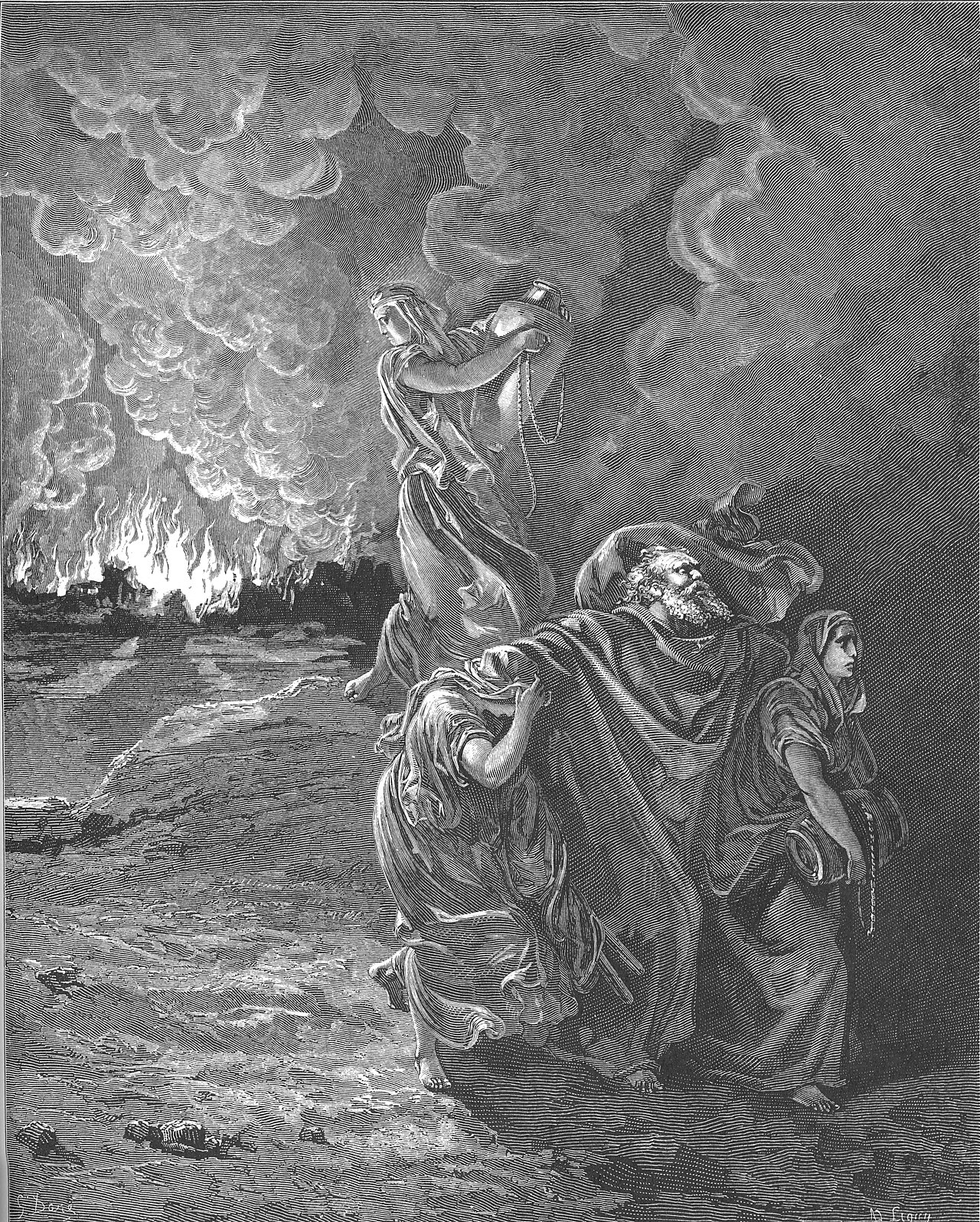
This page draws on Adam Clarke, Commentary on the Bible; Bede, Commentary on Genesis (Hexaemeron); John Calvin, Commentary on Genesis; John Gill, Exposition of the Old Testament (1748-1763); John Wesley, Explanatory Notes upon the Old Testament; Matthew Henry, Commentary on the Whole Bible and Philoxenus of Mabbug, 13 Ascetic Discourses, Discourse 11 -- On Abstinence.