
Genesis 19:13
in Genesis 19because we are about to destroy this place. For the outcry to the LORD against its people is so great that He has sent us to destroy it.”
BSB
The same verse in ASV and KJV ▾
ASV
for we will destroy this place, because the cry of them is waxed great before Jehovah; and Jehovah hath sent us to destroy it.
KJV
For we will destroy this place, because the cry of them is waxen great before the face of the Lord; and the Lord hath sent us to destroy it.
⋯
This verse in Genesis 19
Commentary
5 notes on this verseThis site's exposition
Do you have anyone else here
on Genesis 19:12-14
The angels ask for sons, daughters, sons-in-law and anyone who belongs to him. Lot spoke to the sons-in-law and they thought he was joking. The Hebrew behind that joking is built on the root that gives Isaac his name, and Sarah laughed on the same root one chapter earlier.
This site's exposition
the outcry to the LORD against its people
The angels give Lot the reason, the outcry that was named to Abraham at Mamre. Matthew Henry notes that the same angels who deliver God's people also carry out His judgment on sinners. The inquiry of 18:21 has ended in a verdict.
The record, by era
The Church Fathers1 voice
However, how do we account for the fact that the Savior himself has brought to mind that all who spurned the gospel were worse?
The Puritans and the Awakening2 voices
Note, The holy angels are ministers of God's wrath for the destruction of sinners, as well as of his mercy for the preservation and deliverance of his people. In this sense, the good angels become evil angels, Ps. lxxviii.
quarantine:debris (2026-07-29) — unbalanced-parens
For we will destroy this place,....
How the passage was read
What the Jewish commentators add
On the verses either side of this one
Rashi comments: “Whom else of your family have you in the city besides your wife and daughters who are at home with you? If you have additionally a son-in-law, or sons and daughters, take them out from this place.
This section is reception history: how the passage was read and kept in the Jewish tradition. Where a reading parts from an essential of the Christian faith, the section says so at that point.
Texts and citation data: Sefaria; each excerpt follows its version’s licence. 6 further sources are cited on this chapter that carry no English text this site may quote or only restate the verse.
The words behind it
15 Hebrew wordsEvery Hebrew word of this verse in the order it stands, with what it means and the door to its own study. The last column counts the times a word stands in the whole Bible: the rarer the word, the more the places it appears belong together.
| Hebrew | Sound | Meaning | Word study | In the Bible |
|---|---|---|---|---|
| כִּֽי־ | ki- | for | H3588 → | 4482 times |
| מַשְׁחִתִ֣ים | mashchitim | [are] about to destroy | H7843 → | 146 times |
| אֲנַ֔חְנוּ | ʾanachnu | we | H587 → | 120 times |
| אֶת־ | ʾet- | <obj.> | H853 → | 10935 times |
| הַמָּק֖וֹם | hamakom | the place | H4725 → | 401 times |
| הַזֶּ֑ה | hazeh | <the> this | H2088 → | 1180 times |
| כִּֽי־ | ki- | for | H3588 → | 4482 times |
| גָֽדְלָ֤ה | gadelah | it is great | H1431 → | 117 times |
| צַעֲקָתָם֙ | tzaakatam | outcry their | H6818 → | 21 times |
| אֶת־ | ʾet- | with | H854 → | 929 times |
| פְּנֵ֣י | penei | [the] face of | H6440 → | 2123 times |
| יְהוָ֔ה | yahweh | Yahweh | H3068 → | 6520 times |
| וַיְשַׁלְּחֵ֥נוּ | vayshalechenu | and he has sent us | H7971 → | 845 times |
| יְהוָ֖ה | yahweh | Yahweh | H3068 → | 6520 times |
| לְשַׁחֲתָֽהּ׃ | leshachatah | to destroy it | H7843 → | 146 times |
כִּֽי־for
ki-H3588 →4482 times
מַשְׁחִתִ֣ים[are] about to destroy
mashchitimH7843 →146 times
אֲנַ֔חְנוּwe
ʾanachnuH587 →120 times
אֶת־<obj.>
ʾet-H853 →10935 times
הַמָּק֖וֹםthe place
hamakomH4725 →401 times
הַזֶּ֑ה<the> this
hazehH2088 →1180 times
כִּֽי־for
ki-H3588 →4482 times
גָֽדְלָ֤הit is great
gadelahH1431 →117 times
צַעֲקָתָם֙outcry their
tzaakatamH6818 →21 times
אֶת־with
ʾet-H854 →929 times
פְּנֵ֣י[the] face of
peneiH6440 →2123 times
יְהוָ֔הYahweh
yahwehH3068 →6520 times
וַיְשַׁלְּחֵ֥נוּand he has sent us
vayshalechenuH7971 →845 times
יְהוָ֖הYahweh
yahwehH3068 →6520 times
לְשַׁחֲתָֽהּ׃to destroy it
leshachatahH7843 →146 times
A shaded row is a word that stands 400 times or fewer in the Bible.
The walk
8 stopsEach card is a verse this one points to, and under it the verses that one points to in turn. Where several paths arrive at the same place, that place is listed first: the text keeps returning to it.
Through
Jude 1:7In like manner, Sodom and Gomorrah and the cities around them, who indulged in sexual immorality and pursued strange flesh, are on display as an example of those who sustain the punishment of eternal…
it leads to
- Deuteronomy 29:23
All its soil will be a burning waste of sulfur and salt, unsown and unproductive, with no plant growing on it, just like the destruction of Sodom and Gomorrah, Admah and Zeboiim, which the…
- 2 Peter 2:6
if He condemned the cities of Sodom and Gomorrah to destruction, reducing them to ashes as an example of what is coming on the ungodly;
- Romans 1:26–27
For this reason God gave them over to dishonorable passions. Even their women exchanged natural relations for unnatural ones.
- Genesis 19:24–26
Then the LORD rained down sulfur and fire on Sodom and Gomorrah—from the LORD out of the heavens.
- Genesis 18:20
Then the LORD said, “The outcry against Sodom and Gomorrah is great. Because their sin is so grievous,
- Deuteronomy 29:23
Through
Acts 12:23Immediately, because Herod did not give glory to God, an angel of the Lord struck him down, and he was eaten by worms and died.
it leads to
- Psalms 115:1
Not to us, O LORD, not to us, but to Your name be the glory, because of Your loving devotion, because of Your faithfulness.
- Acts 10:25–26
As Peter was about to enter, Cornelius met him and fell at his feet to worship him.
- 2 Thessalonians 2:4
He will oppose and exalt himself above every so-called god or object of worship. So he will seat himself in the temple of God, proclaiming himself to be God.
- Psalms 115:1
Where this verse is studied
On this page
About Genesis
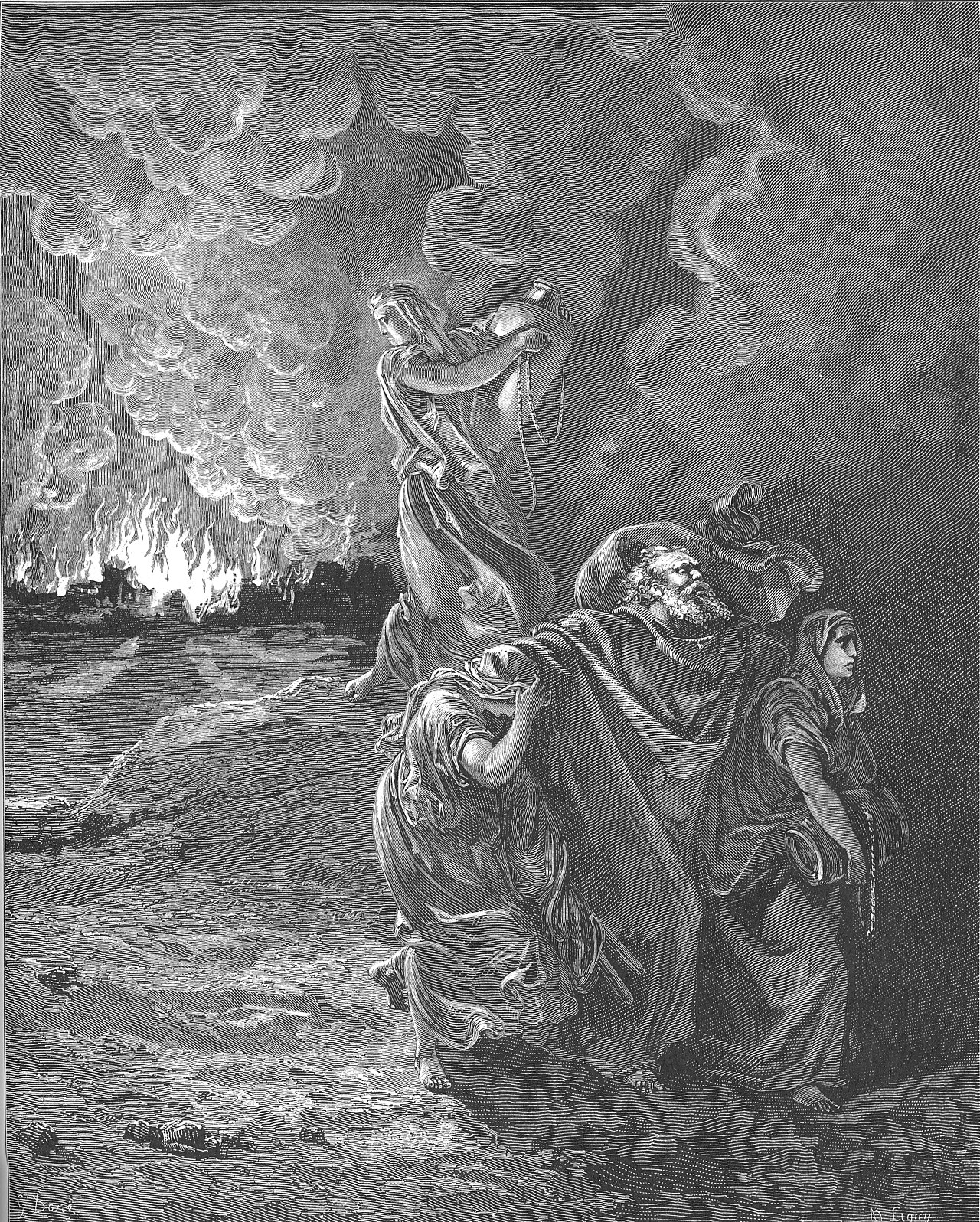
This page draws on John Gill, Exposition of the Old Testament; John Gill, Exposition of the Old Testament (1748-1763); Matthew Henry, Commentary on the Whole Bible and Salvian the Presbyter, THE GOVERNANCE OF GOD 4.9.