
Genesis 19:16
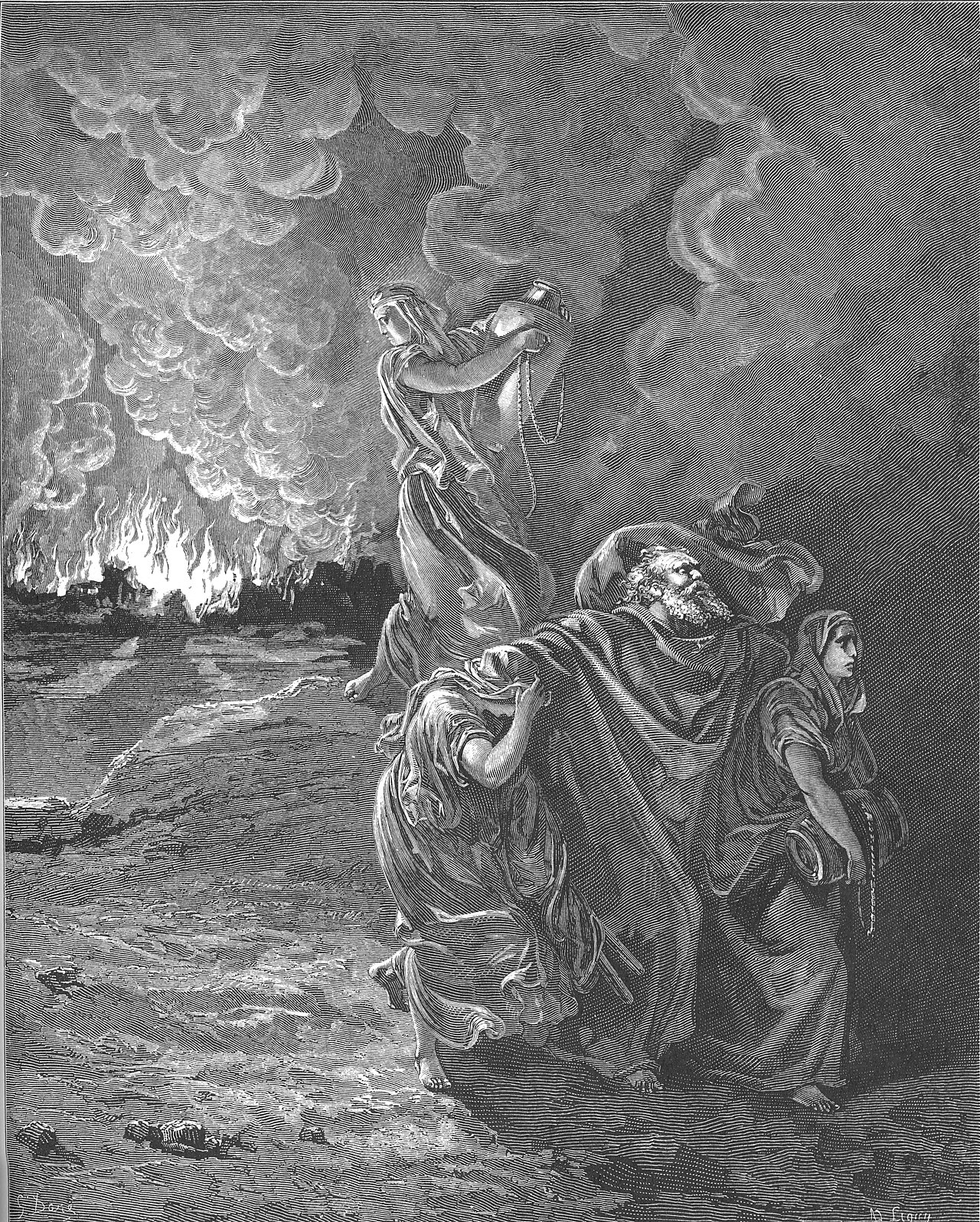
in Genesis 19But when Lot hesitated, the men grabbed his hand and the hands of his wife and his two daughters. And they led them safely out of the city, because of the LORD’s compassion for them.
BSB
The same verse in ASV and KJV ▾
ASV
But he lingered; and the men laid hold upon his hand, and upon the hand of his wife, and upon the hand of his two daughters, Jehovah being merciful unto him: and they brought him forth, and set him without the city.
KJV
And while he lingered, the men laid hold upon his hand, and upon the hand of his wife, and upon the hand of his two daughters; the Lord being merciful unto him: and they brought him forth, and set him without the city.
⋯
This verse in Genesis 19
Commentary
13 notes on this verseWhile he lingered - Probably in affectionate though useless entreaties to prevail on the remaining parts of his family to escape from the destruction that was now descending; laid hold upon his hand - pulled them away by mere force, the Lord being merciful; else they had been left to perish in their lingering, as the others were in their gainsaying.
This site's exposition
At daybreak the angels hurried Lot along
on Genesis 19:15-17
The angels hurried him at daybreak and he hesitated. They take him by the hand, with his wife and his two daughters, and lead the four out of the city. The reason the verse gives is the LORD's compassion for them. Peter calls him righteous Lot at 2 Peter 2:7.
This site's exposition
when Lot hesitated
Adam Clarke guesses that Lot lingered pleading with the rest of his family to come. The angels pulled the four away by force. Clarke holds that they would have perished in their lingering as the sons-in-law perished in their scorn.
The record, by era
The Church Fathers1 voice
A commentator
Clement of RomeClement's First Letter to the Corinthians, Chapter 11 · Written before 99.
proposed
On account of his hospitality and godliness, Lot was saved out of Sodom when all the country round was punished by means of fire and brimstone, the Lord thus making it manifest that He does not forsake those that hope in Him, but gives up such as depart from Him to punishment and torture. [Genesis 19:15-26, 2 Peter 2:6-9] For Lot's wife, who went forth with him, being of a different mind from himself, and not continuing in agreement with him [as to the command which had been given them], was made an example of, so as to be a pillar of salt unto this day. This was done that all might know that those who are of a double mind, and who distrust the power of God, bring down judgment on themselves and become a sign to all succeeding generations.
The Medieval Church1 voice
And they led him out and placed him outside the city. There he spoke to him: "Save your soul, do not look back, nor stay in any region around, but save yourself on the mountain, lest you also perish together."
The Puritans and the Awakening3 voices
Herein it is said, The Lord was merciful to him; otherwise he might justly have left him to perish, since he was so loth to depart. Note, (1.) The salvation of the most righteous men must be attributed to God's mercy, not to their own merit.
Tho' Lot did not make a jest of the warning as his sons-in-law, yet he lingered, he did not make so much haste as the case required. And it might have been fatal to him, if the angels had not laid hold on his hand, and brought him forth. Herein the Lord was merciful to him, otherwise he might justly have left him to perish, since he was loath to depart.
And while he lingered,....
5 more voices on this verse
The Nineteenth Century5 voices
EVEN as Lot lingered in Sodom, awakened sinners are apt to tarry long in their sin and unbelief. Some few are suddenly brought to Christ, and, like Saul of Tarsus, within a few hours enjoy complete Gospel liberty. But many others are unwise children and tarry long in the place of danger, loitering where they ought to hasten and wasting time which they should diligently redeem. It is angelic work to quicken those who linger.
A commentator
Jamieson, Fausset & Brown1802–1910
Commentary Critical and Explanatory on the Whole Bible (1871)
The kindly interest the angels took in the preservation of Lot is beautifully displayed. But he "lingered." Was it from sorrow at the prospect of losing all his property, the acquisition of many years? Or was it that his benevolent heart was paralyzed by thoughts of the awful crisis?
EVEN as Lot lingered in Sodom, awakened sinners are apt to tarry long in their sin and unbelief. Some few are suddenly brought to Christ, and, like Saul of Tarsus, within a few hours enjoy complete Gospel liberty. But many others are unwise children and tarry long in the place of danger, loitering where they ought to hasten and wasting time which they should diligently redeem. It is angelic work to quicken those who linger. The angels who descended to earth in the disguise of wayfarers did not disdain to be employed in such a gracious office, and, if you and I would be like angels, we must do as they did—take procrastinating sinners by the hand and endeavor to compel them to escape—constraining them to flee from the wrath to come. It is a sign of God's great mercy to any soul when it has an anxious friend to quicken its pace heavenward and Christ-ward. So the text tells us, "The Lord being merciful unto him." Let no unconverted person think it an annoyance to be rebuked for his sin or to be frequently exhorted to lay hold on eternal life. It is a great loving-kindness from the Father of mercies to be beset by the persevering earnestness of believing friends. Look upon it in that light, O young man, over whom a mother yearns anxiously, for, if God's longsuffering in bearing with you should lead you to repentance, much more should this kindness in sending you a compassionate friend constrain you to yield your heart to Him. Bless God every day for kind-hearted relatives who labor to guide you to the Lord Jesus! You cannot have a greater blessing. I thought, this morning, that perhaps the Lord might make me to some of you the angel of mercy by enabling me to lead you out of the Sodom of your sins and to conduct you into a state of present salvation.
A commentator
Charles Spurgeon1834–1892
The Metropolitan Tabernacle Pulpit, Sermon No. 3450: “Dangerous Lingering” (lightly modernized text, CCEL edition) · Written before 1892.
proposed
LOT was highly favored. In the midst of a general destruction, angels were sent to take care of him. He had received a warning which many had not heard—and he had felt the terror that warning would excite—while some who had heard the tidings little heeded their imminent moment. Lot stood in the condition of one who knew that he must leave the city, for it was about to be destroyed. He intended to leave it. He was just about to take his departure, but, nevertheless, hesitated a little, halted a while, avoided hurry, protracted his stay with some attachment to the place where he had dwelt, and so, in the face of danger, he hesitated. Being slow to move when fully aware that judgment was swift to overtake, "He lingered." I believe Lot to be in this respect the exact counterpart of a great many hearers of the Gospel. They understand at least its threats. They know something about the way of escape. They have resolved to follow that way and they intend to do so very soon. Yet for a long time they have halted on the verge of decision, almost persuaded to be Christians. Strong as their resolution to become followers of the Savior seems to be, unhappily they stop short, they linger in their old condition—halting between two opinions. To such persons I propose to address a few words of exhortation this evening. First of all, to expostulate with you personally upon personal matters. Then to speak to you about others, for I have the full conviction that the man who lingers puts others in danger as well as himself, just as Lot's lingering was hazardous to his daughters and to his wife. And lastly, to commend the means which I trust God will use tonight, similar to those which He used with Lot, that some angelic hand or some Providential force may lay hold upon the lingerer, that he may be brought out from the City of Destruction and made to flee for help to Christ the Lord.
A commentator
Charles Spurgeon1834–1892
The Metropolitan Tabernacle Pulpit, Sermon No. 3450: “Dangerous Lingering” (lightly modernized text, CCEL edition) · Written before 1892.
proposed
LOT was highly favored. In the midst of a general destruction, angels were sent to take care of him. He had received a warning which many had not heard—and he had felt the terror that warning would excite—while some who had heard the tidings little heeded their imminent moment. Lot stood in the condition of one who knew that he must leave the city, for it was about to be destroyed. He intended to leave it.
The words behind it
16 Hebrew wordsEvery Hebrew word of this verse in the order it stands, with what it means and the door to its own study. The last column counts the times a word stands in the whole Bible: the rarer the word, the more the places it appears belong together.
| Hebrew | Sound | Meaning | Word study | In the Bible |
|---|---|---|---|---|
| וַֽיִּתְמַהְמָ֓הּ׀ | vaiyitmahmah | and he delayed | H4102 → | |
| וַיַּחֲזִ֨קוּ | vaiyachaziku | and they took hold | H2388 → | 291 times |
| הָאֲנָשִׁ֜ים | haanashim | the men | H582 → | 566 times |
| בְּיָד֣וֹ | beyado | on hand his | H3027 → | 1618 times |
| וּבְיַד־ | uveyad- | and on [the] hand of | H3027 → | 1618 times |
| אִשְׁתּ֗וֹ | ʾishto | wife his | H802 → | 781 times |
| וּבְיַד֙ | uveyad | and on [the] hand of | H3027 → | 1618 times |
| שְׁתֵּ֣י | shetei | [the] two | H8147 → | 768 times |
| בְנֹתָ֔יו | venotav | daughters his | H1323 → | 588 times |
| בְּחֶמְלַ֥ת | bechemlat | in [the] mercy of | H2551 → | |
| יְהוָ֖ה | yahweh | Yahweh | H3068 → | 6520 times |
| עָלָ֑יו | ʾalav | towards him | H5921 → | 5755 times |
| וַיֹּצִאֻ֥הוּ | vaiyotziuhu | and they brought out him | H3318 → | 1067 times |
| וַיַּנִּחֻ֖הוּ | vaiyanichuhu | and they placed him | H5117 → | 142 times |
| מִח֥וּץ | michutz | from [the] outside | H2351 → | 164 times |
| לָעִֽיר׃ | lair | of the city | H5892 → | 1090 times |
וַֽיִּתְמַהְמָ֓הּ׀and he delayed
vaiyitmahmahH4102 →
וַיַּחֲזִ֨קוּand they took hold
vaiyachazikuH2388 →291 times
הָאֲנָשִׁ֜יםthe men
haanashimH582 →566 times
בְּיָד֣וֹon hand his
beyadoH3027 →1618 times
וּבְיַד־and on [the] hand of
uveyad-H3027 →1618 times
אִשְׁתּ֗וֹwife his
ʾishtoH802 →781 times
וּבְיַד֙and on [the] hand of
uveyadH3027 →1618 times
שְׁתֵּ֣י[the] two
sheteiH8147 →768 times
בְנֹתָ֔יוdaughters his
venotavH1323 →588 times
בְּחֶמְלַ֥תin [the] mercy of
bechemlatH2551 →
יְהוָ֖הYahweh
yahwehH3068 →6520 times
עָלָ֑יוtowards him
ʾalavH5921 →5755 times
וַיֹּצִאֻ֥הוּand they brought out him
vaiyotziuhuH3318 →1067 times
וַיַּנִּחֻ֖הוּand they placed him
vaiyanichuhuH5117 →142 times
מִח֥וּץfrom [the] outside
michutzH2351 →164 times
לָעִֽיר׃of the city
lairH5892 →1090 times
A shaded row is a word that stands 400 times or fewer in the Bible.
The walk
8 stopsEach card is a verse this one points to, and under it the verses that one points to in turn. Where several paths arrive at the same place, that place is listed first: the text keeps returning to it.
Through
Titus 3:5He saved us, not by the righteous deeds we had done, but according to His mercy, through the washing of new birth and renewal by the Holy Spirit.
it leads to
- Ephesians 2:8–9
For it is by grace you have been saved through faith, and this not from yourselves; it is the gift of God,
- 2 Timothy 1:9
He has saved us and called us to a holy calling, not because of our works, but by His own purpose and by the grace He granted us in Christ Jesus before time began.
- 1 Corinthians 6:11
And that is what some of you were. But you were washed, you were sanctified, you were justified, in the name of the Lord Jesus Christ and by the Spirit of our God.
- 1 Peter 3:21
And this water symbolizes the baptism that now saves you also—not the removal of dirt from the body, but the pledge of a clear conscience toward God—through the resurrection of Jesus Christ,
- 1 Peter 1:3
Blessed be the God and Father of our Lord Jesus Christ! By His great mercy He has given us new birth into a living hope through the resurrection of Jesus Christ from the dead,
- Ephesians 2:8–9
Through
Psalms 103:13As a father has compassion on his children, so the LORD has compassion on those who fear Him.
it leads to
- Luke 11:11–12
What father among you, if his son asks for a fish, will give him a snake instead?
- Hebrews 12:5–11
And you have forgotten the exhortation that addresses you as sons: “My son, do not take lightly the discipline of the Lord, and do not lose heart when He rebukes you.
- Luke 15:21–22
The son declared, ‘Father, I have sinned against heaven and against you. I am no longer worthy to be called your son.’
- Luke 11:11–12
Where this verse is studied
On this page
About Genesis
Who and where
1 name in this verse with a page on the site.
This page draws on 9 works. Open the list of works
This page draws on Adam Clarke, Commentary on the Bible; Bede, Commentary on Genesis (Hexaemeron); Charles Spurgeon, The Metropolitan Tabernacle Pulpit, Sermon No. 789: “Lingerers Hastened” (lightly modernized text, CCEL edition); Charles Spurgeon, The Metropolitan Tabernacle Pulpit, Sermon No. 3450: “Dangerous Lingering” (lightly modernized text, CCEL edition); Clement of Rome, Clement's First Letter to the Corinthians, Chapter 11; Jamieson, Fausset & Brown, Commentary Critical and Explanatory on the Whole Bible; John Gill, Exposition of the Old Testament (1748-1763); John Wesley, Explanatory Notes upon the Old Testament and Matthew Henry, Commentary on the Whole Bible.