
Genesis 18:10
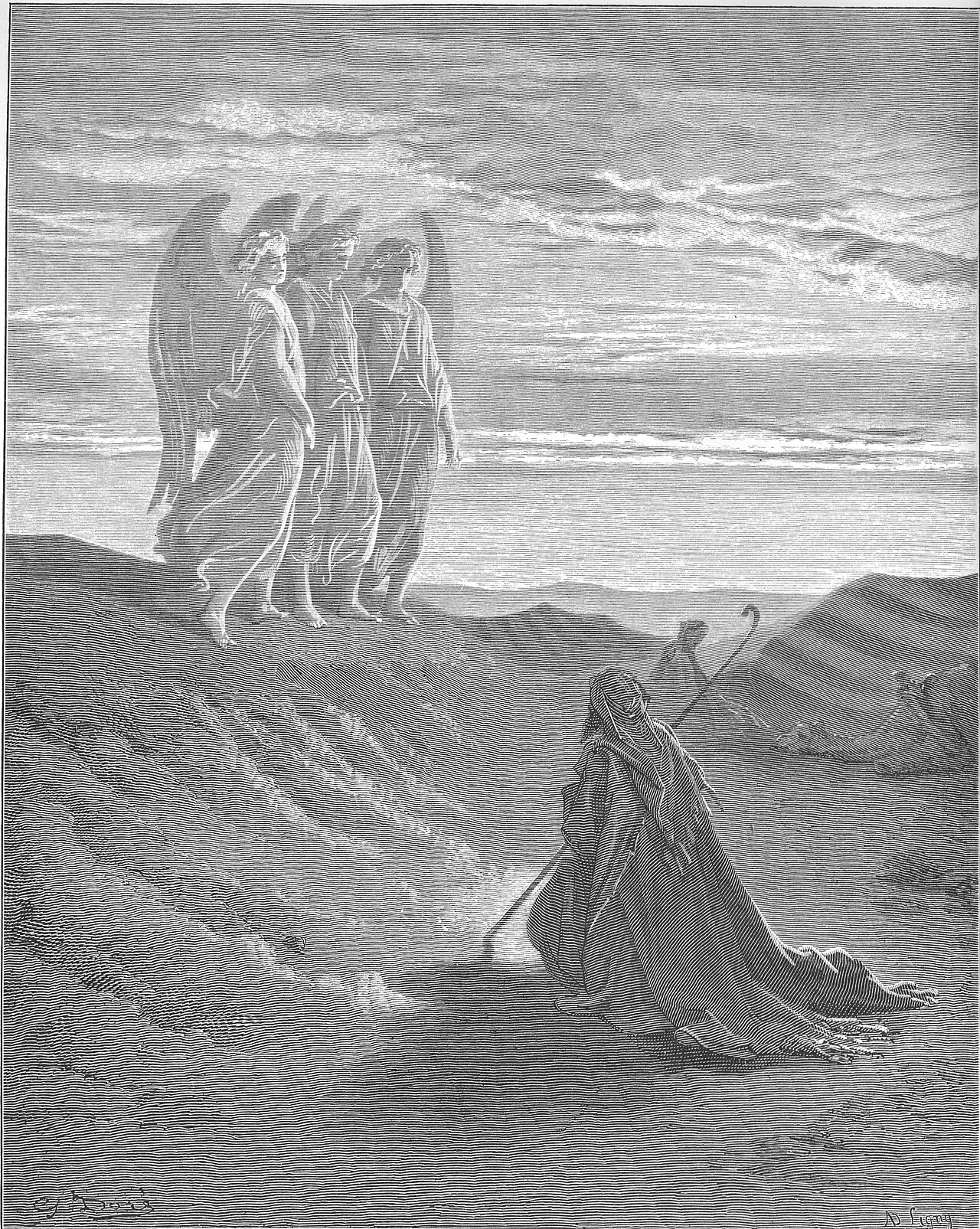
in Genesis 18Then the LORD said, “I will surely return to you at this time next year, and your wife Sarah will have a son!” Now Sarah was behind him, listening at the entrance to the tent.
BSB
The same verse in ASV and KJV ▾
ASV
And he said, I will certainly return unto thee when the season cometh round; and, lo, Sarah thy wife shall have a son. And Sarah heard in the tent door, which was behind him.
KJV
And he said, I will certainly return unto thee according to the time of life; and, lo, Sarah thy wife shall have a son. And Sarah heard it in the tent door, which was behind him.
⋯
This verse in Genesis 18
Commentary
6 notes on this verse(Verse 10) However, he said, 'Returning, I will come to you at this time and in this hour, and Sarah will have a son.' For 'hour,' we read 'life' in Hebrew, so that the order or sense is: I will return to you in the time of life, as if he were saying, if I live, if life accompanies me. This, however, is anthropopathically expressed, like other things.
This site's exposition
Where is your wife Sarah
on Genesis 18:9-10
They ask for Sarah by name. Jamieson, Fausset and Brown read the question as the moment Abraham knew he had more than travellers at his table. The LORD promises that Sarah will have a son at this time next year. Sarah listens from the tent entrance behind him.
This site's exposition
at this time next year
The LORD Himself now speaks, and Sarah hears the promise of a son from behind the tent door. Adam Clarke reads next year as either a full year or the nine months a child is carried, and Isaac was born when Abraham was a hundred. Romans 9:9 quotes the promise.
The record, by era
The Puritans and the Awakening2 voices
): " I will certainly return unto thee, and visit thee next time with the performance, as now I do with the promise." God will return to those that bid him welcome, that entertain his visits: "I will return thy kindness, Sarah thy wife shall have a son; " it is repeated again,
quarantine:debris (2026-07-29) — leading-punctuation+unbalanced-parens
And he said,....
The Nineteenth Century1 voice
I will certainly return - Abraham was now ninety-nine years of age, and this promise was fulfilled when he was a hundred; so that the phrase according to the time of life must mean either a complete year, or nine months from the present time, the ordinary time of pregnancy. Taken in this latter sense, Abraham was now in the ninety-ninth year of his age, and Isaac was born when he was in his hundredth year.
How the passage was read
What the Jewish commentators add
Rashi comments, “The angel was not announcing that he would return to him, but he was speaking to him as G-d’s agent, [meaning that G-d would return]. This is similar to the verse: And the angel of the Eternal said to her [Hagar], I will multiply thy seed exceedingly.
1 more on this passage, in their own words ▾
‘BA’IM BAYAMIM’ (ADVANCED IN DAYS). In his youthful days a man is called “standing in days,” and they are referred to as “his days” because they belong to him, just as in verse The number of thy days will I fulfill. 97 Exodus:26.
This section is reception history: how the passage was read and kept in the Jewish tradition. Where a reading parts from an essential of the Christian faith, the section says so at that point.
Texts and citation data: Sefaria; each excerpt follows its version’s licence. 2 further sources are cited on this chapter that carry no English text this site may quote or only restate the verse.
The words behind it
16 Hebrew wordsEvery Hebrew word of this verse in the order it stands, with what it means and the door to its own study. The last column counts the times a word stands in the whole Bible: the rarer the word, the more the places it appears belong together.
| Hebrew | Sound | Meaning | Word study | In the Bible |
|---|---|---|---|---|
| וַיֹּ֗אמֶר | vaiyomer | and he said | H559 → | 5305 times |
| שׁ֣וֹב | shov | certainly <to return> | H7725 → | 1056 times |
| אָשׁ֤וּב | ʾashuv | I will return | H7725 → | 1056 times |
| אֵלֶ֙יךָ֙ | ʾeleikha | to you | H413 → | 5510 times |
| כָּעֵ֣ת | kaet | about the time | H6256 → | 296 times |
| חַיָּ֔ה | chaiyah | living | H2416 → | 498 times |
| וְהִנֵּה־ | vehineh- | and there! | H2009 → | 843 times |
| בֵ֖ן | ven | a son | H1121 → | 4930 times |
| לְשָׂרָ֣ה | lesarah | [will belong] to Sarah | H8283 → | 38 times |
| אִשְׁתֶּ֑ךָ | ʾishtekha | wife your | H802 → | 781 times |
| וְשָׂרָ֥ה | vesarah | and Sarah | H8283 → | 38 times |
| שֹׁמַ֛עַת | shomaat | [was] listening | H8085 → | 1159 times |
| פֶּ֥תַח | petach | [the] opening of | H6607 → | 164 times |
| הָאֹ֖הֶל | haohel | the tent | H168 → | 345 times |
| וְה֥וּא | vehu' | and it | H1931 → | 1879 times |
| אַחֲרָֽיו׃ | ʾacharav | [was] behind him | H310 → | 715 times |
וַיֹּ֗אמֶרand he said
vaiyomerH559 →5305 times
שׁ֣וֹבcertainly <to return>
shovH7725 →1056 times
אָשׁ֤וּבI will return
ʾashuvH7725 →1056 times
אֵלֶ֙יךָ֙to you
ʾeleikhaH413 →5510 times
כָּעֵ֣תabout the time
kaetH6256 →296 times
חַיָּ֔הliving
chaiyahH2416 →498 times
וְהִנֵּה־and there!
vehineh-H2009 →843 times
בֵ֖ןa son
venH1121 →4930 times
לְשָׂרָ֣ה[will belong] to Sarah
lesarahH8283 →38 times
אִשְׁתֶּ֑ךָwife your
ʾishtekhaH802 →781 times
וְשָׂרָ֥הand Sarah
vesarahH8283 →38 times
שֹׁמַ֛עַת[was] listening
shomaatH8085 →1159 times
פֶּ֥תַח[the] opening of
petachH6607 →164 times
הָאֹ֖הֶלthe tent
haohelH168 →345 times
וְה֥וּאand it
vehu'H1931 →1879 times
אַחֲרָֽיו׃[was] behind him
ʾacharavH310 →715 times
A shaded row is a word that stands 400 times or fewer in the Bible.
The walk
8 stopsEach card is a verse this one points to, and under it the verses that one points to in turn. Where several paths arrive at the same place, that place is listed first: the text keeps returning to it.
Through
Genesis 17:19But God replied, “Your wife Sarah will indeed bear you a son, and you are to name him Isaac. I will establish My covenant with him as an everlasting covenant for his descendants after…
it leads to
- Genesis 21:2–3
So Sarah conceived and bore a son to Abraham in his old age, at the very time God had promised.
Reached by 2 separate paths from here.
- Genesis 18:10–14
Then the LORD said, “I will surely return to you at this time next year, and your wife Sarah will have a son!” Now Sarah was behind him, listening at the entrance to the…
- Luke 1:13–20
But the angel said to him, “Do not be afraid, Zechariah, because your prayer has been heard. Your wife Elizabeth will bear you a son, and you are to give him the name John.
- Genesis 21:2–3
Through
Genesis 21:2So Sarah conceived and bore a son to Abraham in his old age, at the very time God had promised.
it leads to
- Galatians 4:22
For it is written that Abraham had two sons, one by the slave woman and the other by the free woman.
- Hebrews 11:11
By faith Sarah, even though she was barren and beyond the proper age, was enabled to conceive a child, because she considered Him faithful who had promised.
- Luke 1:24–25
After these days, his wife Elizabeth became pregnant and for five months remained in seclusion. She declared,
- Genesis 18:14
Is anything too difficult for the LORD? At the appointed time I will return to you—in about a year—and Sarah will have a son.”
- Genesis 17:19
But God replied, “Your wife Sarah will indeed bear you a son, and you are to name him Isaac. I will establish My covenant with him as an everlasting covenant for his descendants after…
- Galatians 4:22
Where this verse is studied
On this page
Studies3
On this verse
On this chapter
About Genesis
Who and where
1 name in this verse with a page on the site.
This page draws on Adam Clarke, Commentary on the Bible; Chuck Missler, The Book of Genesis; Jamieson, Fausset & Brown, Commentary Critical and Explanatory on the Whole Bible; Jerome, Hebrew Questions on Genesis; John Gill, Exposition of the Old Testament (1748-1763) and Matthew Henry, Commentary on the Whole Bible.