
Genesis 11:10
in Genesis 11This is the account of Shem. Two years after the flood, when Shem was 100 years old, he became the father of Arphaxad.
BSB
The same verse in ASV and KJV ▾
ASV
These are the generations of Shem. Shem was a hundred years old, and begat Arpachshad two years after the flood:
KJV
These are the generations of Shem: Shem was an hundred years old, and begat Arphaxad two years after the flood:
⋯
This verse in Genesis 11
Commentary
10 notes on this verseThese are the generations of Shem,.... Or a genealogy of the posterity of Shem; not of all of them, only of those of the line which led to Abraham, by which might appear the true line in which the Messiah from Adam through Abraham sprung: Shem was one hundred years old, and begat Arphexad two years after the flood; by which it is pretty plain that he was younger than Japheth; See Gill on Gen 10:21 of Arphaxad his son; see Gill on Gen 10:22.
This site's exposition
This is the account of Shem
on Genesis 11:10-11
This is the fifth of the eleven accounts, and it narrows to one line of Shem. Arphaxad is born two years after the flood, so the line is counted from the flood and reaches back behind the tower. Shem lived 500 years after that and had other sons and daughters.
The record, by era
The Church Fathers3 voices
But to avoid needless prolixity, we shall mention not the number of years each member of this series lived but only the year of his life in which he gave birth to his heir, that we may thus reckon the number of years from the flood to Abraham and may at the same time leave room to touch briefly and cursorily upon some other matters necessary to our argument. In the second year, then, after the flood, Shem when he was 100 years old begat Arpachshad; Arpachshad when he was 135 years old begat Cainan; Cainan when he was 130 years begat Salah. Salah himself, too, was the same age when he begat Eber. Eber lived 134 years and begat Peleg, in whose days the earth was divided. Peleg himself lived 130 years and begat Reu; and Reu lived 132 years and begat Serug; Serug 130, and begat Nahor; and Nahor 79, and begat Terah; and Terah 70, and begat Abram, whose name God afterwards changed into Abraham. There are thus from the flood to Abraham 1, years, according to the common or Septuagint versions. In the Hebrew copies far fewer years are given, and for this either no reason or a not very credible one is given.
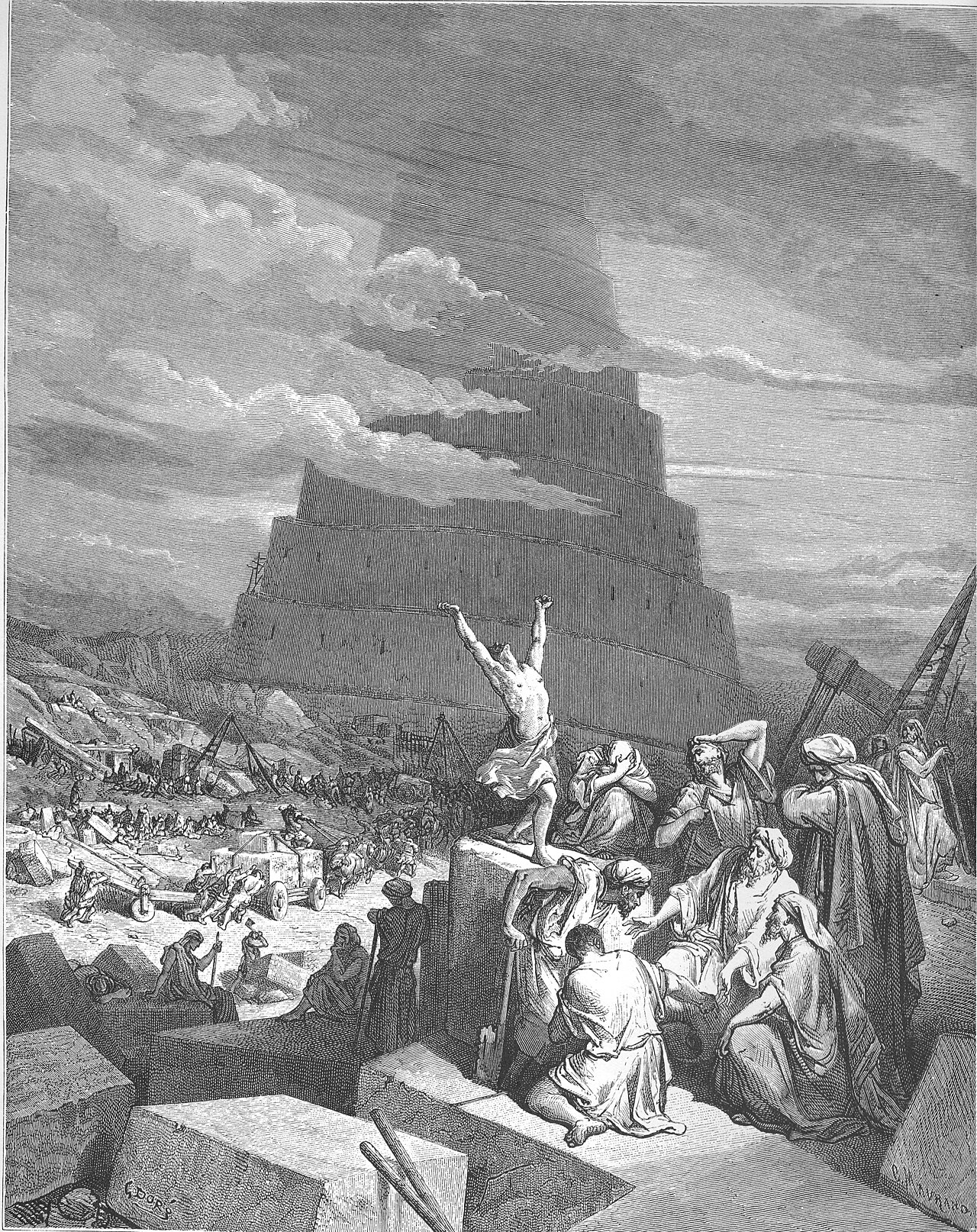
When, therefore, we look for the city of God in these seventy-two nations, we cannot affirm that while they had but one tongue, that is, one language, the human race had departed from the worship of the true God. Nor can we conclude that genuine godliness had survived only in those generations that descend from Shem through Arpachshad and reach to Abraham. But from the time when they proudly built a tower to heaven, a symbol of godless exaltation, the city or society of the wicked becomes apparent. Whether it was only disguised before or nonexistent, whether both cities remained after the flood—the godly in the two sons of Noah who were blessed and in their posterity, and the ungodly in the cursed son and his descendants, from whom sprang that mighty hunter against the Lord—is not easily determined.
It is necessary, therefore, to preserve the series of generations descending from Shem, for the sake of exhibiting the city of God after the flood. As before the flood it was exhibited in the series of generations descending from Seth, now it is descending from Shem. And therefore does divine Scripture, after exhibiting the earthly city as Babylon or "Confusion," revert to the patriarch Shem and recapitulate the generations from him to Abraham, specifying the year in which each father gave birth to the son that belonged to this line and how long he lived. And unquestionably it is this that fulfills the promise I made, that it should appear why it is said of the sons of Eber, "The name of the one was Peleg, for in his days the earth was divided." For what can we understand by the division of the earth, if not the diversity of languages? And, therefore, omitting the other sons of Shem, who are not concerned in this matter, Scripture gives the genealogy of those by whom the line runs on to Abraham, as before the flood those are given who carried on the line to Noah from Seth. Accordingly this series of generations begins thus: "These are the generations of Shem: Shem was a hundred years old and begat Arpachshad two years after the flood. And Shem lived after he begat Arpachshad five hundred years and begat sons and daughters." In like manner it registers the rest, naming the year of his life in which each begat the son who belonged to that line that extends to Abraham. It specifies, too, how many years he lived thereafter, begetting sons and daughters, that we may not childishly suppose that the men named were the only men, but that we may understand how the population increased and how regions and kingdoms so vast could be populated by the descendants of Shem.
The Medieval Church1 voice
These are the generations of Shem. Shem was one hundred years old when he begot Arphaxad, two years after the flood. After the destruction of the Tower of Babel, Scripture hastens, by enumerating the generations of the second age of the world (for the first …
The Puritans and the Awakening1 voice
That nothing is left upon record concerning those of this line, but their names and ages; the Holy Ghost seeming to hasten thro' them to the story of Abraham. How little do we know of those that are gone before us in this world, even those that lived in the same places where we live! Or indeed of those who are our contemporaries, but in distant places.
3 more voices on this verse
The Puritans and the Awakening1 voice
That nothing is left upon record concerning those of this line, but their names and ages; the Holy Ghost seeming to hasten thro' them to the story of Abraham. How little do we know of those that are gone before us in this world, even those that lived in the same places where we live! Or indeed of those who are our contemporaries, but in distant places.
The Nineteenth Century2 voices
These are the generations of Shem - This may he called the holy family, as from it sprang Abraham, Isaac, Jacob, the twelve patriarchs, David, Solomon, and all the great progenitors of the Messiah. We have already seen that the Scripture chronology, as it exists in the Hebrew text, the Samaritan, the Septuagint, Josephus, and some of the fathers, is greatly embarrassed; and it is yet much more so in the various systems of learned and unlearned chronologists.
A commentator
Albert Barnes1798–1870
Notes, Explanatory and Practical, on the Old and New Testaments (1832-1869)
proposed
- Section IX - The Line to Abram - XXXV. The Line of Abram 18. רעוּ re‛û, Re‘u, “friend;” verb: “feed, delight in, enjoy.” 20. שׂרוּג śerûg, Serug, “vine-shoot.” 22. נחור nāchôr, Nachor, “snorting.” 24. תרה terach, Terach, “delay?” Aramaic. 26. אברם 'abrām, Abram, “high father.” הרן hārān Haran, “mountaineer.” The usual phrase, “These are the generations,” marks the beginning of the fifth document. Accordingly, we now enter upon a new phase of human development. The nations have gradually departed from the living God. They have not, however, stopped at this negative stage of ungodliness. They have fallen into polytheism and idolatry. And the knowledge of the one true God, the Maker, Possessor, and Upholder of heaven and earth, is on the verge of being entirely lost. Nevertheless the promises, first to the race of Adam, that the seed of the woman should bruise the serpent’s head, and next to the family of Noah, that the Lord should be the God of Shem, were still in force. It is obvious, from the latter promise, that the seed of the woman is to be expected in the line of Shem. The present passage contains the pedigree of Abram from Shem. From this it appears that the sacred writer here reverts to the second year after the flood - a point of time long before the close of the preceding narrative. “Shem was the son of a hundred years,” or in his hundredth year, two years after the flood, and therefore in the six hundred and third year of Noah, and consequently three years after Japheth. Abram was the twentieth, inclusive, from Adam, the tenth from Shem, and the seventh from Heber. A second Kenan is inserted after Arpakshad in the Septuagint, and in the Gospel according to Luke. But this name does not occur even in the Septuagint in 1Ch 1:24, where the genealogy of Abram is given. It is not found in the Samaritan Pentateuch, the Targums, or the ancient versions. […]
The words behind it
13 Hebrew wordsEvery Hebrew word of this verse in the order it stands, with what it means and the door to its own study. The last column counts the times a word stands in the whole Bible: the rarer the word, the more the places it appears belong together.
| Hebrew | Sound | Meaning | Word study | In the Bible |
|---|---|---|---|---|
| אֵ֚לֶּה | ʾeleh | these | H428 → | 746 times |
| תּוֹלְדֹ֣ת | toldot | [are] [the] accounts of | H8435 → | 39 times |
| שֵׁ֔ם | shem | Shem | H8035 → | 17 times |
| שֵׁ֚ם | shem | Shem | H8035 → | 17 times |
| בֶּן־ | ben- | [was] a son of | H1121 → | 4930 times |
| מְאַ֣ת | meat | one hundred | H3967 → | 581 times |
| שָׁנָ֔ה | shanah | year[s] | H8141 → | 877 times |
| וַיּ֖וֹלֶד | vaiyoled | and he fathered | H3205 → | 496 times |
| אֶת־ | ʾet- | <obj.> | H853 → | 10935 times |
| אַרְפַּכְשָׁ֑ד | ʾarpakhshad | Arphaxad | H775 → | 9 times |
| שְׁנָתַ֖יִם | shenatayim | two years | H8141 → | 877 times |
| אַחַ֥ר | ʾachar | after | H310 → | 715 times |
| הַמַּבּֽוּל׃ | hamabul | the flood | H3999 → | 13 times |
אֵ֚לֶּהthese
ʾelehH428 →746 times
תּוֹלְדֹ֣ת[are] [the] accounts of
toldotH8435 →39 times
שֵׁ֔םShem
shemH8035 →17 times
שֵׁ֚םShem
shemH8035 →17 times
בֶּן־[was] a son of
ben-H1121 →4930 times
מְאַ֣תone hundred
meatH3967 →581 times
שָׁנָ֔הyear[s]
shanahH8141 →877 times
וַיּ֖וֹלֶדand he fathered
vaiyoledH3205 →496 times
אֶת־<obj.>
ʾet-H853 →10935 times
אַרְפַּכְשָׁ֑דArphaxad
ʾarpakhshadH775 →9 times
שְׁנָתַ֖יִםtwo years
shenatayimH8141 →877 times
אַחַ֥רafter
ʾacharH310 →715 times
הַמַּבּֽוּל׃the flood
hamabulH3999 →13 times
A shaded row is a word that stands 400 times or fewer in the Bible.
The walk
5 stopsEach card is a verse this one points to, and under it the verses that one points to in turn. Where several paths arrive at the same place, that place is listed first: the text keeps returning to it.
Through
Genesis 11:27This is the account of Terah. Terah became the father of Abram, Nahor, and Haran. And Haran became the father of Lot.
it leads to
- Genesis 14:12
They also carried off Abram’s nephew Lot and his possessions, since Lot was living in Sodom.
- Genesis 11:31
And Terah took his son Abram, his grandson Lot son of Haran, and his daughter-in-law Sarai the wife of Abram, and they set out from Ur of the Chaldeans for the land of Canaan.…
- Genesis 12:4
So Abram departed, as the LORD had directed him, and Lot went with him. Abram was seventy-five years old when he left Haran.
- 2 Peter 2:7
and if He rescued Lot, a righteous man distressed by the depraved conduct of the lawless
- Genesis 13:1–11
So Abram went up out of Egypt into the Negev—he and his wife and all his possessions—and Lot was with him.
- Genesis 14:12
Where this verse is studied
On this page
Studies20
On this chapter
Show the next 6 titles
About Genesis
Who and where
1 name in this verse with a page on the site.
This page draws on Adam Clarke, Commentary on the Bible; Albert Barnes, Notes, Explanatory and Practical, on the Old and New Testaments (1832-1869); Augustine of Hippo, City of God 16.10; Bede, Commentary on Genesis (Hexaemeron); Chuck Missler, The Book of Genesis; John Gill, Exposition of the Old Testament (1748-1763); John Gill, Exposition of the Old Testament and John Wesley, Explanatory Notes upon the Old Testament.