
Ezekiel 18:9
in Ezekiel 18He follows My statutes and faithfully keeps My ordinances. That man is righteous; surely he will live, declares the Lord GOD.
BSB
The same verse in ASV and KJV ▾
ASV
hath walked in my statutes, and hath kept mine ordinances, to deal truly; he is just, he shall surely live, saith the Lord Jehovah.
KJV
Hath walked in my statutes, and hath kept my judgments, to deal truly; he is just, he shall surely live, saith the Lord God.
⋯
This verse in Ezekiel 18
Commentary
3 notes on this verseA commentator
Albert Barnes1798–1870
Notes, Explanatory and Practical, on the Old and New Testaments (1832-1869)
Live ... die - In the writings of Ezekiel there is a development of the meaning of “life” and “death.” In the holy land the sanctions of divine government were in great degree temporal; so that the promise of “life” for “obedience,” the threatening of “death” for “disobedience,” in the Books of Moses, were regarded simply as temporal and national. In their exile this could not continue in its full extent, and the universality of the misfortune necessarily made men look deeper into the words of God.
This site's exposition
But if a man be just, and do that which is lawful and right,
on Ezekiel 18:5-9
The just man is described by a list of concrete acts rather than abstract virtue, no idols, no adultery, restoring the debtor's pledge, feeding the hungry, refusing usury, walking in God's statutes, and the verdict follows plainly, he is just, he shall surely live. Henry notes the list draws directly on the law's own social ethics, so that righteousness here is never merely ritual but reaches into ordinary dealings between neighbors. Wesley reads the specificity as deliberate, giving the exiles a concrete standard rather than a vague appeal to character.
The record, by era
The Puritans and the Awakening1 voice
(1.) From sins against the second commandment. In the matters of God's worship he is jealous, for he knows God is so. He has not only not sacrificed in the high places to the images there set up, but he has not so much as eaten upon the mountains, that is, not had any communion with idolaters by eating things sacrificed to idols, 1 Cor. x.
How the passage was read
What the Jewish commentators add
On the verses either side of this one
and he commits upon his brother any of these Heb. אָח. Jonathan renders: and he does to his brother any one of these.
This section is reception history: how the passage was read and kept in the Jewish tradition. Where a reading parts from an essential of the Christian faith, the section says so at that point.
Texts and citation data: Sefaria; each excerpt follows its version’s licence. 5 further sources are cited on this chapter that carry no English text this site may quote or only restate the verse.
The words behind it
13 Hebrew wordsEvery Hebrew word of this verse in the order it stands, with what it means and the door to its own study. The last column counts the times a word stands in the whole Bible: the rarer the word, the more the places it appears belong together.
| Hebrew | Sound | Meaning | Word study | In the Bible |
|---|---|---|---|---|
| בְּחֻקּוֹתַ֧י | bechukotai | in statutes my | H2708 → | 104 times |
| יְהַלֵּ֛ךְ | yehalekh | he walked | H1980 → | 1546 times |
| וּמִשְׁפָּטַ֥י | umishpatai | and judgments my | H4941 → | 422 times |
| שָׁמַ֖ר | shamar | he has kept | H8104 → | 468 times |
| לַעֲשׂ֣וֹת | laasot | by doing | H6213 → | 2628 times |
| אֱמֶ֑ת | ʾemet | faithfulness | H571 → | |
| צַדִּ֥יק | tzadik | [is] righteous | H6662 → | 206 times |
| הוּא֙ | hu' | he | H1931 → | 1879 times |
| חָיֹ֣ה | chayoh | certainly <live> | H2421 → | 282 times |
| יִֽחְיֶ֔ה | yichyeh | he will live | H2421 → | 282 times |
| נְאֻ֖ם | neum | [the] utterance of | H5002 → | 376 times |
| אֲדֹנָ֥י | ʾadonai | [the] Lord | H136 → | 440 times |
| יְהוִֽה׃ | yahweh | Yahweh | H3069 → | 306 times |
בְּחֻקּוֹתַ֧יin statutes my
bechukotaiH2708 →104 times
יְהַלֵּ֛ךְhe walked
yehalekhH1980 →1546 times
וּמִשְׁפָּטַ֥יand judgments my
umishpataiH4941 →422 times
שָׁמַ֖רhe has kept
shamarH8104 →468 times
לַעֲשׂ֣וֹתby doing
laasotH6213 →2628 times
אֱמֶ֑תfaithfulness
ʾemetH571 →
צַדִּ֥יק[is] righteous
tzadikH6662 →206 times
הוּא֙he
hu'H1931 →1879 times
חָיֹ֣הcertainly <live>
chayohH2421 →282 times
יִֽחְיֶ֔הhe will live
yichyehH2421 →282 times
נְאֻ֖ם[the] utterance of
neumH5002 →376 times
אֲדֹנָ֥י[the] Lord
ʾadonaiH136 →440 times
יְהוִֽה׃Yahweh
yahwehH3069 →306 times
A shaded row is a word that stands 400 times or fewer in the Bible.
The walk
8 stopsEach card is a verse this one points to, and under it the verses that one points to in turn. Where several paths arrive at the same place, that place is listed first: the text keeps returning to it.
Through
Habakkuk 2:4Look at the proud one; his soul is not upright—but the righteous will live by faith—
it leads to
- Romans 1:17
For the gospel reveals the righteousness of God that comes by faith from start to finish, just as it is written: “The righteous will live by faith.”
- Hebrews 10:38
But My righteous one will live by faith; and if he shrinks back, I will take no pleasure in him.”
- Galatians 3:11–12
Now it is clear that no one is justified before God by the law, because, “The righteous will live by faith.”
- Galatians 2:16
know that a man is not justified by works of the law, but by faith in Jesus Christ. So we, too, have believed in Christ Jesus, that we may be justified by faith in…
- Romans 1:17
Through
1 John 2:29If you know that He is righteous, you also know that everyone who practices righteousness has been born of Him.
it leads to
- John 3:3–5
Jesus replied, “Truly, truly, I tell you, no one can see the kingdom of God unless he is born again.”
- John 3:3–5
Through
Amos 5:4For this is what the LORD says to the house of Israel: “Seek Me and live!
it leads to
- Zephaniah 2:3
Seek the LORD, all you humble of the earth who carry out His justice. Seek righteousness; seek humility. Perhaps you will be sheltered on the day of the LORD’s anger.
- 2 Chronicles 15:2
So he went out to meet Asa and said to him, “Listen to me, Asa and all Judah and Benjamin. The LORD is with you when you are with Him. If you seek Him,…
- Jeremiah 29:12–13
Then you will call upon Me and come and pray to Me, and I will listen to you.
- Zephaniah 2:3
About Ezekiel
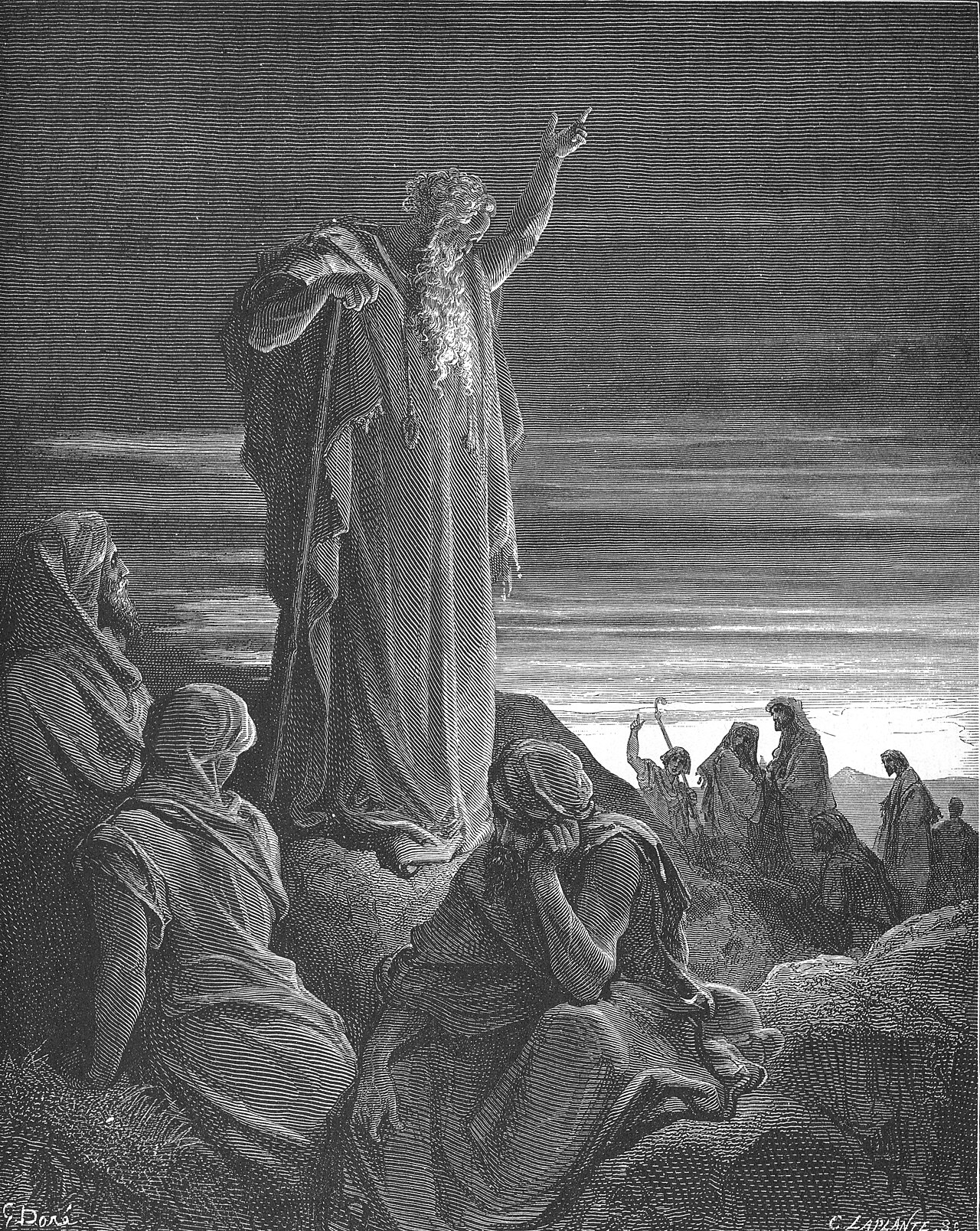
This page draws on Albert Barnes, Notes, Explanatory and Practical, on the Old and New Testaments (1832-1869); John Wesley, Explanatory Notes upon the Old Testament and Matthew Henry, Commentary on the Whole Bible.