
Exodus 22:25
in Exodus 22If you lend money to one of My people among you who is poor, you must not act as a creditor to him; you are not to charge him interest.
BSB
The same verse in ASV and KJV ▾
ASV
If thou lend money to any of my people with thee that is poor, thou shalt not be to him as a creditor; neither shall ye lay upon him interest.
KJV
If thou lend money to any of my people that is poor by thee, thou shalt not be to him as an usurer, neither shalt thou lay upon him usury.
⋯
This verse in Exodus 22
Commentary
7 notes on this verseThere is a great deal about sharing and exchanging, but it is enough to say that the law forbids lending at interest to a brother. By brother it means not merely one born of the same parents but a member of the same tribe or one of the same faith, who shares in the same Logos. The law does not deem it right to collect interest on the capital. It seeks to enable free giving to those in need, with hands and minds wide open. God is the creator of this free gift.
This site's exposition
If you lend money to one of My people among you who is poor
Adam Clarke traces the Hebrew neshech, interest, to a root meaning to bite, a small charge that consumes a man's substance. The rule covers lending to “one of My people among you who is poor,” and Deuteronomy 23:20 allows interest from a foreigner.
The record, by era
The Puritans and the Awakening3 voices
And such provision the law made for the preserving estates to their families by the year of Jubilee, that a people who had little concern in trade could not be supposed to borrow money but for necessity; therefore it was generally forbidden among themselves; but to a stranger they were allowed to lend upon usury.
If we were not able to make restitution, he must be sold for a slave: the court of judgment was to do it, and it is likely the person robbed received the money. Thus with us in some cases, felons are transported to the Plantations, where only, Englishmen know what slavery is.
If thou lend money to any of my people that is poor by thee, Such only need to borrow money, and to whom it should be freely lent, when it may be to the good of the borrower, and not any injury to the lender: this law, according to the Jewish writers, only respects Israelites, and not Gentiles; agreeably to which is Jarchi's note,"if thou lend, that is, not to a Gentile; and to which of my people? the poor, and to which of the poor? that is with thee:" thou shalt not be to him as an usurer; that will not lend without usury, nor without an exorbitant interest, and deals very hardly with the borrower if he is not punctual in the payment of it; the Israelites were not only not to be usurers, but they were not to be like them; they were not to require anything for lending a poor man a little money; as not any settled interest, so neither were they to take any previous gift or reward later, see Luk 6:34. neither shalt thou lay upon him usury; or oblige him to give interest for money borrowed: it is in the plural, number, "neither shall ye lay"; and Aben Ezra observes, that the lender, scribe, and witness, all transgress this law; that is, when a man lends money on interest, and a bond is made by the scribe for it, and this signed by witnesses, all are guilty of the breach of it: yea, some Jewish writers (h) say, not only those, but whoever is a surety or bondsman for the payment, and even the borrower himself; see Gill on Psa 15:5. (h) Misn. Bava Metzia, c. 5. sect. 11. Maimon. & Bartenora in ib.
The Nineteenth Century2 voices
Neither shalt thou lay upon him usury - נשך neshech, from nashach, to bite, cut, or pierce with the teeth; biting usury. So the Latins call it usura vorax, devouring usury. “The increase of usury is called נשך neshech, because it resembles the biting of a serpent; for as this is so small as scarcely to be perceptible at first, but the venom soon spreads and diffuses itself till it reaches the vitals, so the increase of usury, which at first is not perceived nor felt, at length grows so much as by degrees to devour another’s substance.” - Leigh.
A commentator
Albert Barnes1798–1870
Notes, Explanatory and Practical, on the Old and New Testaments (1832-1869)
proposed
See the notes at Lev 25:35-43; compare Deu 23:19.
The words behind it
16 Hebrew wordsEvery Hebrew word of this verse in the order it stands, with what it means and the door to its own study. The last column counts the times a word stands in the whole Bible: the rarer the word, the more the places it appears belong together.
| Hebrew | Sound | Meaning | Word study | In the Bible |
|---|---|---|---|---|
| אִם־ | ʾim- | if | H518 → | 1069 times |
| כֶּ֣סֶף׀ | kesef | money | H3701 → | 403 times |
| תַּלְוֶ֣ה | talveh | you will lend to | H3867 → | |
| אֶת־ | ʾet- | <obj.> | H853 → | 10935 times |
| עַמִּ֗י | ʾami | people my | H5971 → | 1873 times |
| אֶת־ | ʾet- | <obj.> | H853 → | 10935 times |
| הֶֽעָנִי֙ | heani | the poor [person] | H6041 → | |
| עִמָּ֔ךְ | ʾimakh | with you | H5973 → | 1050 times |
| לֹא־ | lo'- | not | H3808 → | 5168 times |
| תִהְיֶ֥ה | tihyeh | you must be | H1961 → | 3559 times |
| ל֖וֹ | lo | to <the> him | ||
| כְּנֹשֶׁ֑ה | kenosheh | like a creditor | H5383 → | |
| לֹֽא־ | lo'- | not | H3808 → | 5168 times |
| תְשִׂימ֥וּן | tesimun | you must put ! | H7760 → | 584 times |
| עָלָ֖יו | ʾalav | on him | H5921 → | 5755 times |
| נֶֽשֶׁךְ׃ | neshekh | interest | H5392 → |
אִם־if
ʾim-H518 →1069 times
כֶּ֣סֶף׀money
kesefH3701 →403 times
תַּלְוֶ֣הyou will lend to
talvehH3867 →
אֶת־<obj.>
ʾet-H853 →10935 times
עַמִּ֗יpeople my
ʾamiH5971 →1873 times
אֶת־<obj.>
ʾet-H853 →10935 times
הֶֽעָנִי֙the poor [person]
heaniH6041 →
עִמָּ֔ךְwith you
ʾimakhH5973 →1050 times
לֹא־not
lo'-H3808 →5168 times
תִהְיֶ֥הyou must be
tihyehH1961 →3559 times
ל֖וֹto <the> him
lo
כְּנֹשֶׁ֑הlike a creditor
kenoshehH5383 →
לֹֽא־not
lo'-H3808 →5168 times
תְשִׂימ֥וּןyou must put !
tesimunH7760 →584 times
עָלָ֖יוon him
ʾalavH5921 →5755 times
נֶֽשֶׁךְ׃interest
neshekhH5392 →
A shaded row is a word that stands 400 times or fewer in the Bible.
The walk
8 stopsEach card is a verse this one points to, and under it the verses that one points to in turn. Where several paths arrive at the same place, that place is listed first: the text keeps returning to it.
Through
Psalms 15:5who lends his money without interest and refuses a bribe against the innocent. He who does these things will never be shaken.
it leads to
- Deuteronomy 23:19–20
Do not charge your brother interest on money, food, or any other type of loan.
Reached by 3 separate paths from here.
- Ezekiel 22:12
In you they take bribes to shed blood. You engage in usury, take excess interest, and extort your neighbors. But Me you have forgotten, declares the Lord GOD.
Reached by 2 separate paths from here.
- Deuteronomy 16:19
Do not deny justice or show partiality. Do not accept a bribe, for a bribe blinds the eyes of the wise and twists the words of the righteous.
- Ezekiel 18:8
He does not engage in usury or take excess interest, but he withholds his hand from iniquity and executes true justice between men.
- Matthew 7:21–25
Not everyone who says to Me, ‘Lord, Lord,’ will enter the kingdom of heaven, but only he who does the will of My Father in heaven.
- Deuteronomy 23:19–20
Through
Nehemiah 5:7and after serious thought I rebuked the nobles and officials, saying, “You are exacting usury from your own brothers!” So I called a large assembly against them
it leads to
- Leviticus 25:36
Do not take any interest or profit from him, but fear your God, that your countryman may live among you.
- Leviticus 25:36
Through
Ezekiel 18:8He does not engage in usury or take excess interest, but he withholds his hand from iniquity and executes true justice between men.
it leads to
- Psalms 15:5
who lends his money without interest and refuses a bribe against the innocent. He who does these things will never be shaken.
Reached by 2 separate paths from here.
- Zechariah 8:16
These are the things you must do: Speak truth to one another, render true and sound judgments in your gates,
- Psalms 15:5
Where this verse is studied
On this page
Studies14
About Exodus
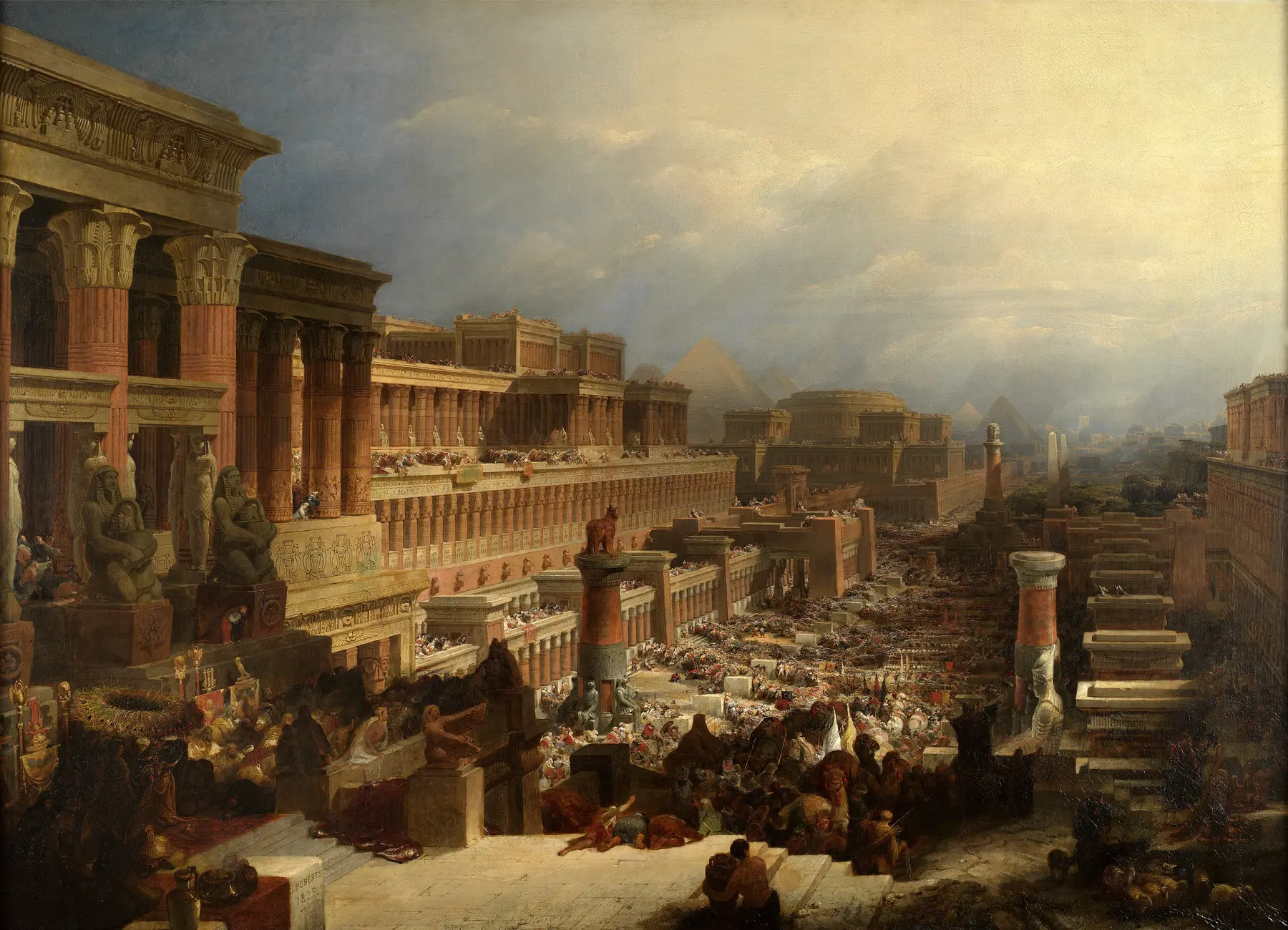
This page draws on Adam Clarke, Commentary on the Bible; Albert Barnes, Notes, Explanatory and Practical, on the Old and New Testaments (1832-1869); Clement of Alexandria, The Stromata Book 2; John Calvin, Commentary on the Four Last Books of Moses Arranged in the Form of a Harmony; John Gill, Exposition of the Old Testament (1748-1763) and John Wesley, Explanatory Notes upon the Old Testament.