
Exodus 19:12
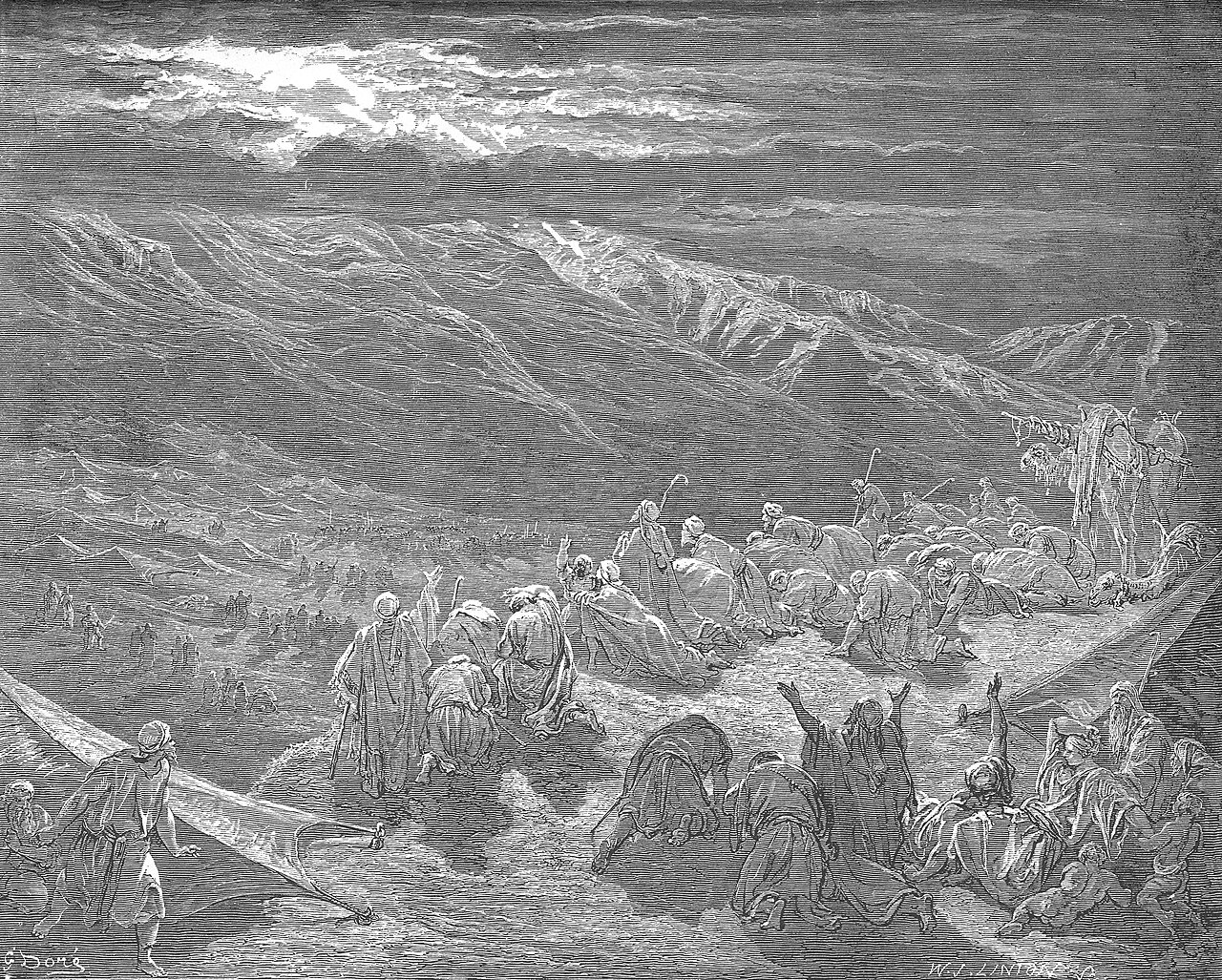
in Exodus 19And you are to set up a boundary for the people around the mountain and tell them, ‘Be careful not to go up on the mountain or touch its base. Whoever touches the mountain shall surely be put to death.
BSB
The same verse in ASV and KJV ▾
ASV
And thou shalt set bounds unto the people round about, saying, Take heed to yourselves, that ye go not up into the mount, or touch the border of it: whosoever toucheth the mount shall be surely put to death:
KJV
And thou shalt set bounds unto the people round about, saying, Take heed to yourselves, that ye go not up into the mount, or touch the border of it: whosoever toucheth the mount shall be surely put to death:
⋯
This verse in Exodus 19
Commentary
10 notes on this verseThou shalt set bounds - Whether this was a line marked out on the ground, beyond which they were not to go, or whether a fence was actually made to keep them off, we cannot tell; or whether this fence was made all round the mountain, or only at that part to which one wing of the camp extended, is not evident. This verse strictly forbids the people from coming near and touching Mount Sinai, which was burning with Fire.
This site's exposition
thou shalt set bounds unto the people
A line is drawn around the mountain and the penalty for crossing it is death, which is the first thing done at Sinai before a single commandment is spoken. Hebrews 12:18-24 takes this scene as its own picture of the mount that might be touched and that burned with fire, and sets mount Sion beside it. The writer of Hebrews quotes the fear of this chapter and answers it with a second mountain rather than by softening the first.
The record, by era
The Church Fathers1 voice
A commentator
Augustine of HippoON THE SPIRIT AND THE LETTER 17.29 · Written in the 5th century.
proposed
Now, amidst this admirable correspondence, there is at least this very considerable diversity in the cases, in that the people in the earlier instance were deterred by a horrible dread from approaching the place where the law was given; whereas in the other case the Holy Ghost came upon them who were gathered together in expectation of His promised gift. There it was on tables of stone that the finger of God operated; here it was on the hearts of men. There the law was given outwardly, so that the unrighteous might be terrified; here it was given inwardly, so that they might be justified.
The Puritans and the Awakening3 voices
And thou shall set bounds to the people round about,....
This was to intimate, (1.) That humble awful reverence which ought to possess the minds of all those that worship God. We are mean creatures before a great Creator, vile sinners before a holy righteous Judge; and therefore a godly fear and shame well become us, Heb. xii.
This was to intimate, (1.) That humble awful reverence which ought to possess the minds of all those that worship God. We are mean creatures before a great Creator, vile sinners before a holy righteous Judge; and therefore a godly fear and shame well become us, Heb. xii.
The Nineteenth Century1 voice
A commentator
Jamieson, Fausset & Brown1802–1910
Commentary Critical and Explanatory on the Whole Bible (1871)
proposed
The Lord said unto Moses, Lo, I come . . . in a thick cloud, &c.--The deepest impressions are made on the mind through the medium of the senses; and so He who knew what was in man signalized His descent at the inauguration of the ancient church, by all the sensible tokens of august majesty that were fitted to produce the conviction that He is the great and terrible God.
3 more voices on this verse
The Nineteenth Century3 voices
Thou shalt set bounds - Whether this was a line marked out on the ground, beyond which they were not to go, or whether a fence was actually made to keep them off, we cannot tell; or whether this fence was made all round the mountain, or only at that part to which one wing of the camp extended, is not evident. This verse strictly forbids the people from coming near and touching Mount Sinai, which was burning with Fire.
A commentator
Albert Barnes1798–1870
Notes, Explanatory and Practical, on the Old and New Testaments (1832-1869)
proposed
Set bounds unto the people - The low line of alluvial mounds at the foot of the cliff of Ras Safsafeh exactly answers to the bounds which were to keep the people off from touching the mount: but the bounds here spoken of were to be set up by Moses.
A commentator
Albert Barnes1798–1870
Notes, Explanatory and Practical, on the Old and New Testaments (1832-1869)
proposed
Set bounds unto the people - The low line of alluvial mounds at the foot of the cliff of Ras Safsafeh exactly answers to the bounds which were to keep the people off from touching the mount: but the bounds here spoken of were to be set up by Moses.
How the passage was read
What the Jewish commentators add
Place a border on the mount. 105 The Biblical text reads, And thou shalt set bounds (ve-higbalta) unto the people. I.E.
2 more on this passage, in their own words ▾
I.e., so that all the people will behold His coming down, meaning that they will see the appearance of the Glory of the Eternal like devouring fire on the top of the mount, 208 Further,:17.
WHEN ‘HAYOVEIL’ (THE RAM’S HORN) SOUNDETH LONG, THEY SHALL COME UP TO THE MOUNT. “The Hebrew word hayoveil denotes a ram’s horn, and the horn used here was that of Isaac’s ram.” 210 Genesis:13. Thus Rashi’s language.
This section is reception history: how the passage was read and kept in the Jewish tradition. Where a reading parts from an essential of the Christian faith, the section says so at that point.
Texts and citation data: Sefaria; each excerpt follows its version’s licence. 1 further source is cited on this chapter that carry no English text this site may quote or only restate the verse.
The words behind it
16 Hebrew wordsEvery Hebrew word of this verse in the order it stands, with what it means and the door to its own study. The last column counts the times a word stands in the whole Bible: the rarer the word, the more the places it appears belong together.
| Hebrew | Sound | Meaning | Word study | In the Bible |
|---|---|---|---|---|
| וְהִגְבַּלְתָּ֤ | vehigbalta | and you will set a boundary for | H1379 → | |
| אֶת־ | ʾet- | <obj.> | H853 → | 10935 times |
| הָעָם֙ | haam | the people | H5971 → | 1873 times |
| סָבִ֣יב | saviv | all around | H5439 → | 336 times |
| לֵאמֹ֔ר | lemor | <to> saying | H559 → | 5305 times |
| הִשָּׁמְר֥וּ | hishameru | take heed | H8104 → | 468 times |
| לָכֶ֛ם | lakhem | to <the> yourselves | ||
| עֲל֥וֹת | alot | to go up | H5927 → | 890 times |
| בָּהָ֖ר | bahar | on the mountain | H2022 → | 546 times |
| וּנְגֹ֣עַ | unegoa' | and to touch | H5060 → | 150 times |
| בְּקָצֵ֑הוּ | bekatzehu | <in> edge its | H7097 → | 97 times |
| כָּל־ | kol- | every | H3605 → | 5413 times |
| הַנֹּגֵ֥עַ | hanogea' | <the> [one who] touches | H5060 → | 150 times |
| בָּהָ֖ר | bahar | <in> the mountain | H2022 → | 546 times |
| מ֥וֹת | mot | certainly <to die> | H4191 → | 839 times |
| יוּמָֽת׃ | yumat | he will be put to death | H4191 → | 839 times |
וְהִגְבַּלְתָּ֤and you will set a boundary for
vehigbaltaH1379 →
אֶת־<obj.>
ʾet-H853 →10935 times
הָעָם֙the people
haamH5971 →1873 times
סָבִ֣יבall around
savivH5439 →336 times
לֵאמֹ֔ר<to> saying
lemorH559 →5305 times
הִשָּׁמְר֥וּtake heed
hishameruH8104 →468 times
לָכֶ֛םto <the> yourselves
lakhem
עֲל֥וֹתto go up
alotH5927 →890 times
בָּהָ֖רon the mountain
baharH2022 →546 times
וּנְגֹ֣עַand to touch
unegoa'H5060 →150 times
בְּקָצֵ֑הוּ<in> edge its
bekatzehuH7097 →97 times
כָּל־every
kol-H3605 →5413 times
הַנֹּגֵ֥עַ<the> [one who] touches
hanogea'H5060 →150 times
בָּהָ֖ר<in> the mountain
baharH2022 →546 times
מ֥וֹתcertainly <to die>
motH4191 →839 times
יוּמָֽת׃he will be put to death
yumatH4191 →839 times
A shaded row is a word that stands 400 times or fewer in the Bible.
The walk
8 stopsEach card is a verse this one points to, and under it the verses that one points to in turn. Where several paths arrive at the same place, that place is listed first: the text keeps returning to it.
Through
Exodus 34:12Be careful not to make a treaty with the inhabitants of the land you are entering, lest they become a snare in your midst.
it leads to
- Exodus 23:32–33
You shall make no covenant with them or with their gods.
- Joshua 23:12–13
For if you turn away and cling to the rest of these nations that remain among you, and if you intermarry and associate with them,
- Deuteronomy 7:2
and when the LORD your God has delivered them over to you to defeat them, then you must devote them to complete destruction. Make no treaty with them and show them no mercy.
- Deuteronomy 7:16
You must destroy all the peoples the LORD your God will deliver to you. Do not look on them with pity. Do not worship their gods, for that will be a snare to you.
- Judges 2:2–3
and you are not to make a covenant with the people of this land, but you shall tear down their altars.’ Yet you have not obeyed My voice. What is this you have done?
- Exodus 23:32–33
Through
Joshua 3:4But keep a distance of about two thousand cubits between yourselves and the ark. Do not go near it, so that you can see the way to go, since you have never traveled this…
it leads to
- Psalms 89:7
In the council of the holy ones, God is greatly feared, and awesome above all who surround Him.
- Psalms 89:7
Through
Exodus 10:28“Depart from me!” Pharaoh said to Moses. “Make sure you never see my face again, for on the day you see my face, you will die.”
it leads to
- Amos 7:13
But never prophesy at Bethel again, because it is the sanctuary of the king and the temple of the kingdom.”
- 2 Chronicles 25:16
While he was still speaking, the king asked, “Have we made you the counselor to the king? Stop! Why be struck down?” So the prophet stopped, but he said, “I know that God has…
- Amos 7:13
Where this verse is studied
On this page
Studies8
About Exodus
This page draws on Adam Clarke, Commentary on the Bible; Albert Barnes, Notes, Explanatory and Practical, on the Old and New Testaments (1832-1869); Augustine of Hippo, ON THE SPIRIT AND THE LETTER 17.29; Jamieson, Fausset & Brown, Commentary Critical and Explanatory on the Whole Bible; John Gill, Exposition of the Old Testament (1748-1763); Matthew Henry, Commentary on the Whole Bible and Sir Robert Anderson, Types in Hebrews.