
Ecclesiastes 3:20
in Ecclesiastes 3All go to one place; all come from dust, and all return to dust.
BSB
The same verse in ASV and KJV ▾
ASV
All go unto one place; all are of the dust, and all turn to dust again.
KJV
All go unto one place; all are of the dust, and all turn to dust again.
⋯
This verse in Ecclesiastes 3
Commentary
10 notes on this verseThe resurrection as a fact is not to be rejected because of an exceptional situation. Yet, since all things earthly return and crumble into the earth, I wonder how there can be any doubt even concerning the instances noted. For the most part, the sea itself also casts up on neighboring shores whatever human bodies it has swallowed. And if this were not so, it surely would not be difficult for God to join what has been scattered and to unite again what has been dispersed.
This site's exposition
all are of the dust, and all turn to dust again
on Ecclesiastes 3:20-22
All go unto one place, all are of the dust, and all turn to dust again, the plainest statement in the chapter of what the eye sees at any grave. The Preacher then asks, rather than answers, who knoweth the spirit of man that goeth upward and the spirit of the beast that goeth downward to the earth, a genuine question left open under the sun and not a denial that the two spirits differ. The chapter closes where it can honestly close from that vantage point, that a man should rejoice in his own works, for that is his portion, since no one can be brought back to see what happens after him.
The record, by era
The Church Fathers4 voices
"All go to the same place; all originate from dust and return to dust." It is not surprising that there is no distinction in this life between righteous and wicked, nor that none values virtues, but all things occur with uncertain outcome, where nothing seems to differ according to the worthlessness of the body between sheep and men: there is the same birth, common end in death; we proceed similarly towards the light and are equally dissolved into the dust. But there seems to be this difference, that the spirit of man ascends to the heavens, and the spirit of animals goes down into the earth, but from where do we know this for certain? Who can know whether what is hoped is true or false? But he says this, not because he thinks the spirit dies with the body, or that there's one place set aside for beasts and for man, but because before the arrival of Christ all were led equally to the nether regions. Jacob said that he was about to go down to those regions. And Job complains that the pious and impious are held back in the lower world. And the Gospel says that with an abyss blocking the way even Abraham and Lazarus were rich in prayers in the underworld. And in fact before Christ accompanied by a robber opened the wheel of flames, and the fiery rumpias and the gates of paradise, the heavens were closed and the equal unworthiness of the spirits of sheep and of men was abridged. One also seems to be dispersed and the other saved; but there is not much of a difference between dying with the body or being held in the darkness of the underworld. Let us look over these things one by one in paragraphs, and discuss them briefly. ...And though we only differ from beasts in language, though it is shown to us, how we are like the beasts - weak in body. Just as a beast dies, thus man dies, and one breath is for all, and that is the air that we breathe. […]
"Then I said to myself concerning men: God has chosen them out, but only to see that they themselves are as beasts. For the fate of men and the fate of beast - they have one and the same fate: as one dies so the other dies, and they all have the same spirit. Man has no superiority over beast, for all is futile. All go to the same place; all originate from dust and return to dust.
A commentator
Augustine of HippoON THE SOUL AND ITS ORIGIN 4:37 · Written in the 5th century.
proposed
In order, indeed, that you may have the fullest and clearest assurance that what is the soul is in the usage of the Holy Scriptures also called spirit, the soul of a brute animal has the designation of spirit. And of course cattle have not that spirit which you, my beloved brother, have defined as being distinct from the soul. It is therefore quite evident that the soul of a brute animal could be rightly called "spirit" in a general sense of the term; as we read in the Book of Ecclesiastes, "Who knoweth the spirit of the sons of men, whether it goeth upward; and the spirit of the beast, whether it goeth downward into the earth?" In like manner, touching the devastation of the deluge, the Scripture testifies, "All flesh died that moved upon the earth, both of fowl, and of cattle, and of beast, and of every creeping thing that creepeth upon the earth, and every man: and all things which have the spirit of life." Here, if we remove all the windings of doubtful disputation, we understand the term spirit to be synonymous with soul in its general sense. Of so wide a signification is this term, that even God is called "a spirit;" and a stormy blast of the air, although it has material substance, is called by the psalmist the "spirit" of a tempest. For all these reasons, therefore, you will no longer deny that what is the soul is called also spirit; I have, I think, adduced enough from the pages of Holy Scripture to secure your assent in passages where the soul of the very brute beast, which has no understanding, is designated spirit.
[Daniel 7:17-18] "These four great beasts are the four kingdoms which shall arise from the earth. But the saints of the Most High God shall take the kingdom." The four kingdoms of which we have spoken above were earthly in character. "For everything which is of the earth shall return to earth" (Ecclesiastes 3:20). But the saints shall never possess an earthly kingdom, but only a heavenly. Away, then, with the fable about a millennium! (Revelation 20:4-6) "...And they shall possess the kingdom unto eternity, even forever and ever..." If this be taken to refer to the Maccabees, the advocate of this position should explain how the kingdom of the Maccabees is of a perpetual character.
The Medieval Church1 voice
A commentator
BonaventureCommentary on Ecclesiastes, Chapter 3 · Written in the 13th century.
proposed
And he adds the likeness as regards matter: and therefore he says: All things are subject to vanity, namely, because they were made from nothing, therefore they are vain; Romans 8: "The creature was made subject to vanity." He does not say that nothing is …
3 more voices on this verse
The Puritans and the Awakening2 voices
All go unto one place,.... The earth (w) from whence they came; all are of the dust, and all turn to dust again; Adam's body was made of the dust of the earth, and so all his posterity, all of them; in which they agree with beasts, who are made of the dust also; and, when they die, return to it; see Gen 2:7. (w) "Magna parens terra est", Ovid. Metamorph. l. 1. Fab. 7.
And therefore he concludes that it is our wisdom to make use of what power we have for our own comfort, and not to oppress others with it. Mutability of Human Affairs. 1 To every thing there is a season, and a time to every purpose under the heaven: 2 A time to be born, and a time to die; a time to plant, and a time to pluck up that which is planted;
quarantine:scripture (2026-07-29) — verbatim-run:40w-of-72
The Nineteenth Century1 voice
All go unto one place - “Man was born To die, nor aught exceeds in this respect The vilest brute. Both transient, frail, and vain, Draw the same breath; alike grow old, decay, And then expire: both to one grave descend; There blended lie, to native dust return’d.” - C.
The words behind it
13 Hebrew wordsEvery Hebrew word of this verse in the order it stands, with what it means and the door to its own study. The last column counts the times a word stands in the whole Bible: the rarer the word, the more the places it appears belong together.
| Hebrew | Sound | Meaning | Word study | In the Bible |
|---|---|---|---|---|
| הַכֹּ֥ל | hakol | <the> everything | H3605 → | 5413 times |
| הוֹלֵ֖ךְ | holekh | [is] going | H1980 → | 1546 times |
| אֶל־ | ʾel- | to | H413 → | 5510 times |
| מָק֣וֹם | makom | place | H4725 → | 401 times |
| אֶחָ֑ד | ʾechad | one | H259 → | 971 times |
| הַכֹּל֙ | hakol | <the> everything | H3605 → | 5413 times |
| הָיָ֣ה | hayah | it was | H1961 → | 3559 times |
| מִן־ | min- | from | H4480 → | 1188 times |
| הֶֽעָפָ֔ר | heafar | the dust | H6083 → | 110 times |
| וְהַכֹּ֖ל | vehakol | and <the> everything | H3605 → | 5413 times |
| שָׁ֥ב | shav | [is] returning | H7725 → | 1056 times |
| אֶל־ | ʾel- | to | H413 → | 5510 times |
| הֶעָפָֽר׃ | heafar | the dust | H6083 → | 110 times |
הַכֹּ֥ל<the> everything
hakolH3605 →5413 times
הוֹלֵ֖ךְ[is] going
holekhH1980 →1546 times
אֶל־to
ʾel-H413 →5510 times
מָק֣וֹםplace
makomH4725 →401 times
אֶחָ֑דone
ʾechadH259 →971 times
הַכֹּל֙<the> everything
hakolH3605 →5413 times
הָיָ֣הit was
hayahH1961 →3559 times
מִן־from
min-H4480 →1188 times
הֶֽעָפָ֔רthe dust
heafarH6083 →110 times
וְהַכֹּ֖לand <the> everything
vehakolH3605 →5413 times
שָׁ֥ב[is] returning
shavH7725 →1056 times
אֶל־to
ʾel-H413 →5510 times
הֶעָפָֽר׃the dust
heafarH6083 →110 times
A shaded row is a word that stands 400 times or fewer in the Bible.
The walk
8 stopsEach card is a verse this one points to, and under it the verses that one points to in turn. Where several paths arrive at the same place, that place is listed first: the text keeps returning to it.
Through
Genesis 3:19By the sweat of your brow you will eat your bread, until you return to the ground—because out of it were you taken. For dust you are, and to dust you shall return.”
it leads to
- Ecclesiastes 12:7
before the dust returns to the ground from which it came and the spirit returns to God who gave it.
Reached by 3 separate paths from here.
- Job 34:15
all flesh would perish together and mankind would return to the dust.
- Psalms 104:29
When You hide Your face, they are terrified; when You take away their breath, they die and return to dust.
- Ecclesiastes 12:7
Through
Ecclesiastes 12:7before the dust returns to the ground from which it came and the spirit returns to God who gave it.
it leads to
- Genesis 3:19
By the sweat of your brow you will eat your bread, until you return to the ground—because out of it were you taken. For dust you are, and to dust you shall return.”
Reached by 2 separate paths from here.
- Daniel 12:2
And many who sleep in the dust of the earth will awake, some to everlasting life, but others to shame and everlasting contempt.
- Ecclesiastes 3:20–21
All go to one place; all come from dust, and all return to dust.
- Psalms 146:4
When his spirit departs, he returns to the ground; on that very day his plans perish.
- Job 34:14–15
If He were to set His heart to it and withdraw His Spirit and breath,
- Genesis 3:19
Where this verse is studied
On this page
About Ecclesiastes
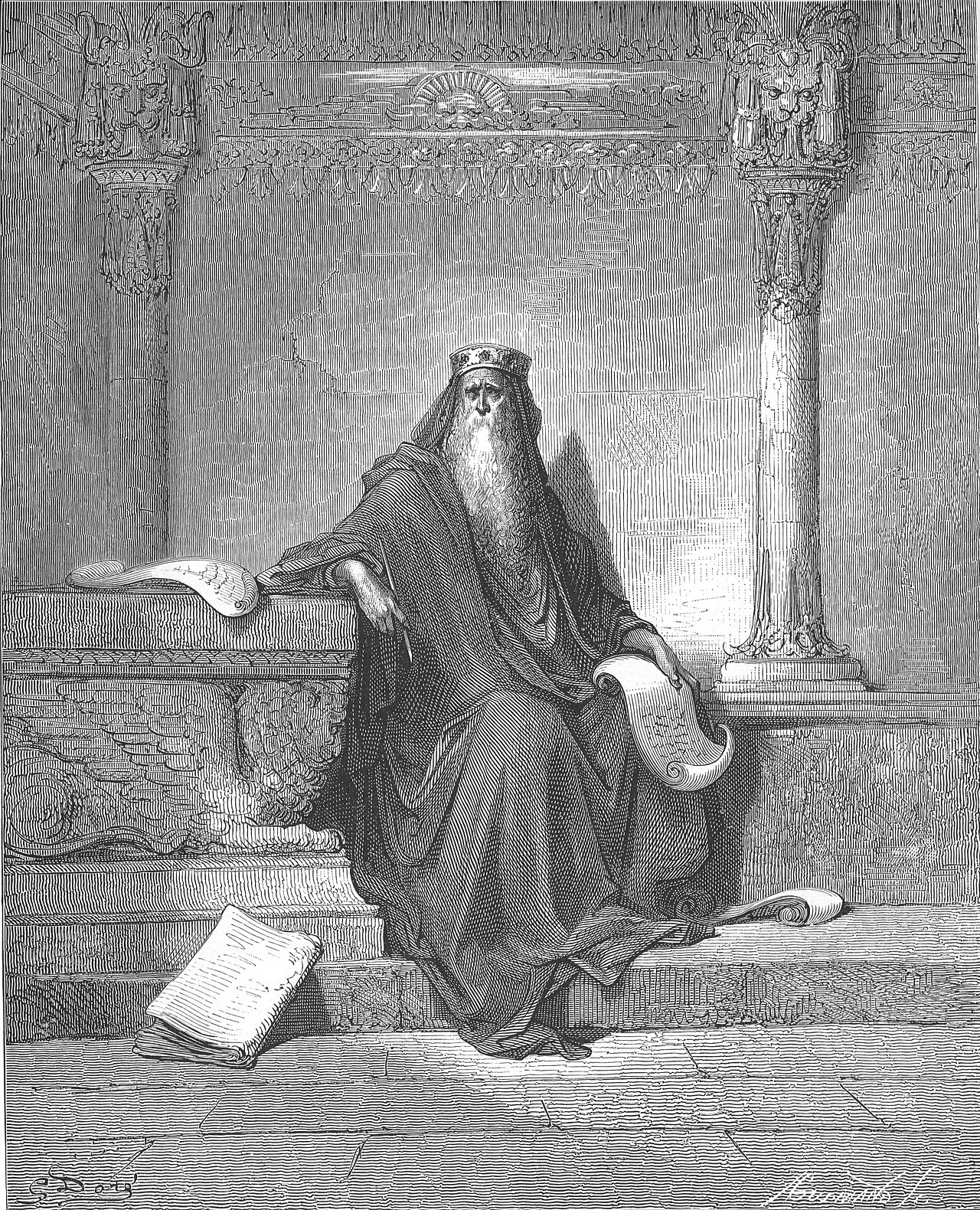
This page draws on 9 works. Open the list of works
This page draws on Adam Clarke, Commentary on the Bible; Ambrose of Milan, On the Death of Satyrus 2.58; Augustine of Hippo, ON THE SOUL AND ITS ORIGIN 4:37; Bonaventure, Commentary on Ecclesiastes, Chapter 3; Charles Bridges, An Exposition of the Book of Ecclesiastes; Jerome, Commentary on Ecclesiastes; Jerome, Commentary on Daniel; John Gill, Exposition of the Old Testament (1748-1763) and Matthew Henry, Commentary on the Whole Bible.