
Deuteronomy 34:12
in Deuteronomy 34and no prophet who performed all the mighty acts of power and awesome deeds that Moses did in the sight of all Israel.
BSB
The same verse in ASV and KJV ▾
ASV
and in all the mighty hand, and in all the great terror, which Moses wrought in the sight of all Israel.
KJV
And in all that mighty hand, and in all the great terror which Moses shewed in the sight of all Israel.
⋯
This verse in Deuteronomy 34
Commentary
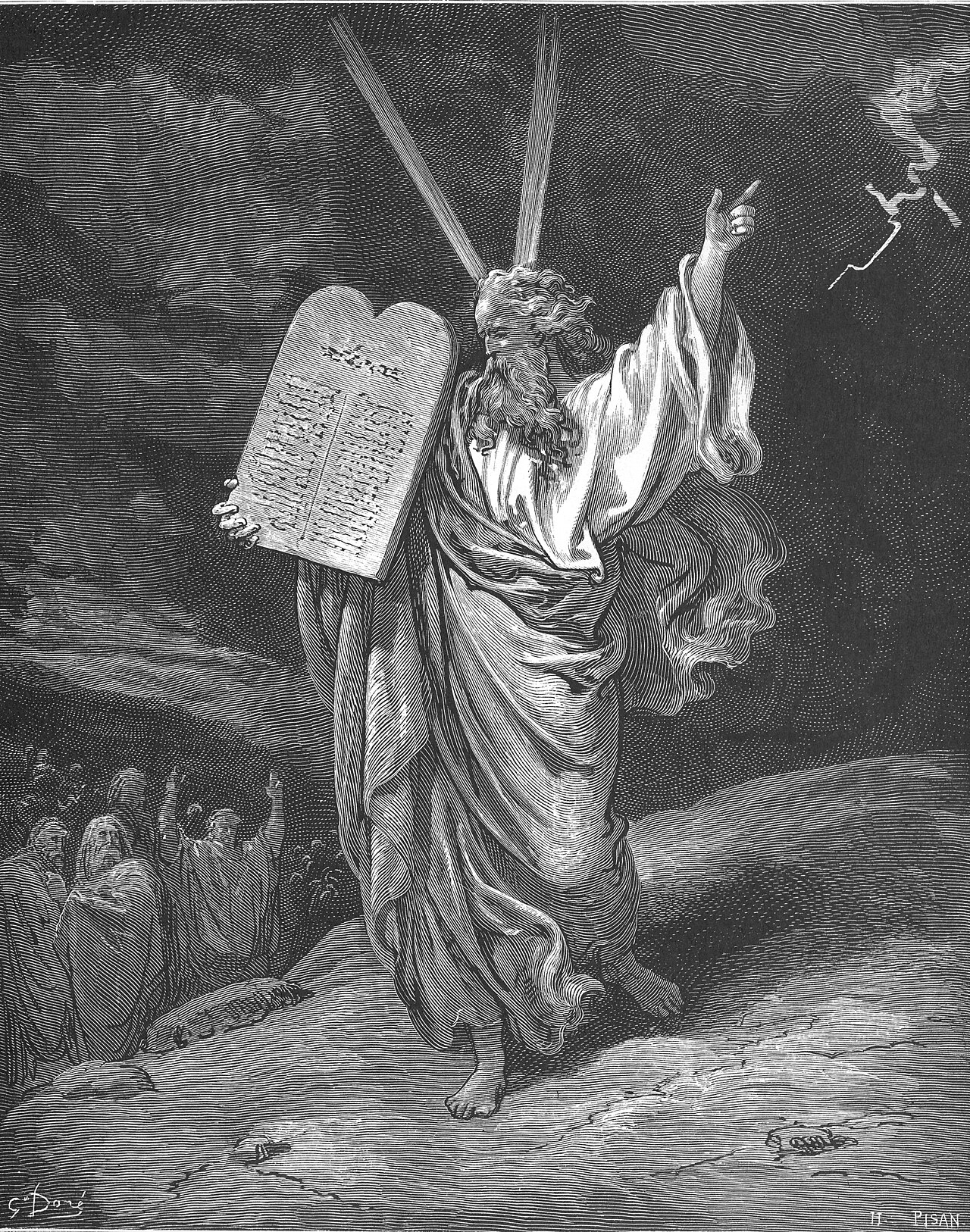
2 notes on this verseBut as far as the other prophets came short of him, our Lord Jesus went beyond him. Moses was faithful as a servant, but Christ as a son: his miracles more illustrious, his communion with the father more intimate: for he is in his bosom from eternity. Moses lies buried: but Christ is sitting at the right-hand of God, and of the increase of his government there shall be no end.
This site's exposition
And in all that mighty hand
The last words of the Torah look back at Egypt. Mighty hand and great terror gather the vocabulary of 4:34 and 26:8, where the same words describe what God did there, so the five books close on the deliverance rather than on the land. The chapter speaks from a later time, at verse 6 with unto this day and at verse 10 with there arose not a prophet since, and readers have long asked who wrote the close of the book, with the Talmud at Bava Batra 15a recording one opinion that Joshua wrote the last verses and another that Moses wrote them at God's dictation. What the five books leave standing is a people camped outside a land they do not hold, the prophet of 18:15 promised and not come, and a grave no man can find.
How the passage was read
What the Jewish commentators add
This alludes to the division of the Red Sea concerning which it is said, And Israel saw the great hand. 347 Exodus:31. AND IN ALL THE GREAT TERROR. This is a reference to the Revelation. Literally: “‘the stand’ ( ma’amad ) at Mount Sinai.” See Vol. II, p., Note.
1 more on this passage, in their own words ▾
This is connected with the [preceding] verse, And there hath not arisen a prophet since in Israel — in all the signs etc.
This section is reception history: how the passage was read and kept in the Jewish tradition. Where a reading parts from an essential of the Christian faith, the section says so at that point.
Texts and citation data: Sefaria; each excerpt follows its version’s licence. 2 further sources are cited on this chapter that carry no English text this site may quote or only restate the verse.
The words behind it
12 Hebrew wordsEvery Hebrew word of this verse in the order it stands, with what it means and the door to its own study. The last column counts the times a word stands in the whole Bible: the rarer the word, the more the places it appears belong together.
| Hebrew | Sound | Meaning | Word study | In the Bible |
|---|---|---|---|---|
| וּלְכֹל֙ | ulekhol | and to all | H3605 → | 5413 times |
| הַיָּ֣ד | haiyad | the hand | H3027 → | 1618 times |
| הַחֲזָקָ֔ה | hachazakah | <the> mighty | H2389 → | 56 times |
| וּלְכֹ֖ל | ulekhol | and to all | H3605 → | 5413 times |
| הַמּוֹרָ֣א | hamora' | the terror | H4172 → | 12 times |
| הַגָּד֑וֹל | hagadol | <the> great | H1419 → | 526 times |
| אֲשֶׁר֙ | ʾasher | which | H834 → | 5497 times |
| עָשָׂ֣ה | ʾasah | he did | H6213 → | 2628 times |
| מֹשֶׁ֔ה | mosheh | Moses | H4872 → | 765 times |
| לְעֵינֵ֖י | leeinei | to [the] eyes of | H5869 → | 887 times |
| כָּל־ | kol- | all | H3605 → | 5413 times |
| יִשְׂרָאֵֽל׃ | yisrael | Israel | H3478 → | 2507 times |
וּלְכֹל֙and to all
ulekholH3605 →5413 times
הַיָּ֣דthe hand
haiyadH3027 →1618 times
הַחֲזָקָ֔ה<the> mighty
hachazakahH2389 →56 times
וּלְכֹ֖לand to all
ulekholH3605 →5413 times
הַמּוֹרָ֣אthe terror
hamora'H4172 →12 times
הַגָּד֑וֹל<the> great
hagadolH1419 →526 times
אֲשֶׁר֙which
ʾasherH834 →5497 times
עָשָׂ֣הhe did
ʾasahH6213 →2628 times
מֹשֶׁ֔הMoses
moshehH4872 →765 times
לְעֵינֵ֖יto [the] eyes of
leeineiH5869 →887 times
כָּל־all
kol-H3605 →5413 times
יִשְׂרָאֵֽל׃Israel
yisraelH3478 →2507 times
A shaded row is a word that stands 400 times or fewer in the Bible.
Where this verse is studied
On this page
Studies1
About Deuteronomy
Who and where
1 name in this verse with a page on the site.
This page draws on John Gill, Exposition of the Old Testament; John Wesley, Explanatory Notes upon the Old Testament and Keil and Delitzsch, Biblical Commentary on the Old Testament: The Pentateuch.