
Daniel 6:20
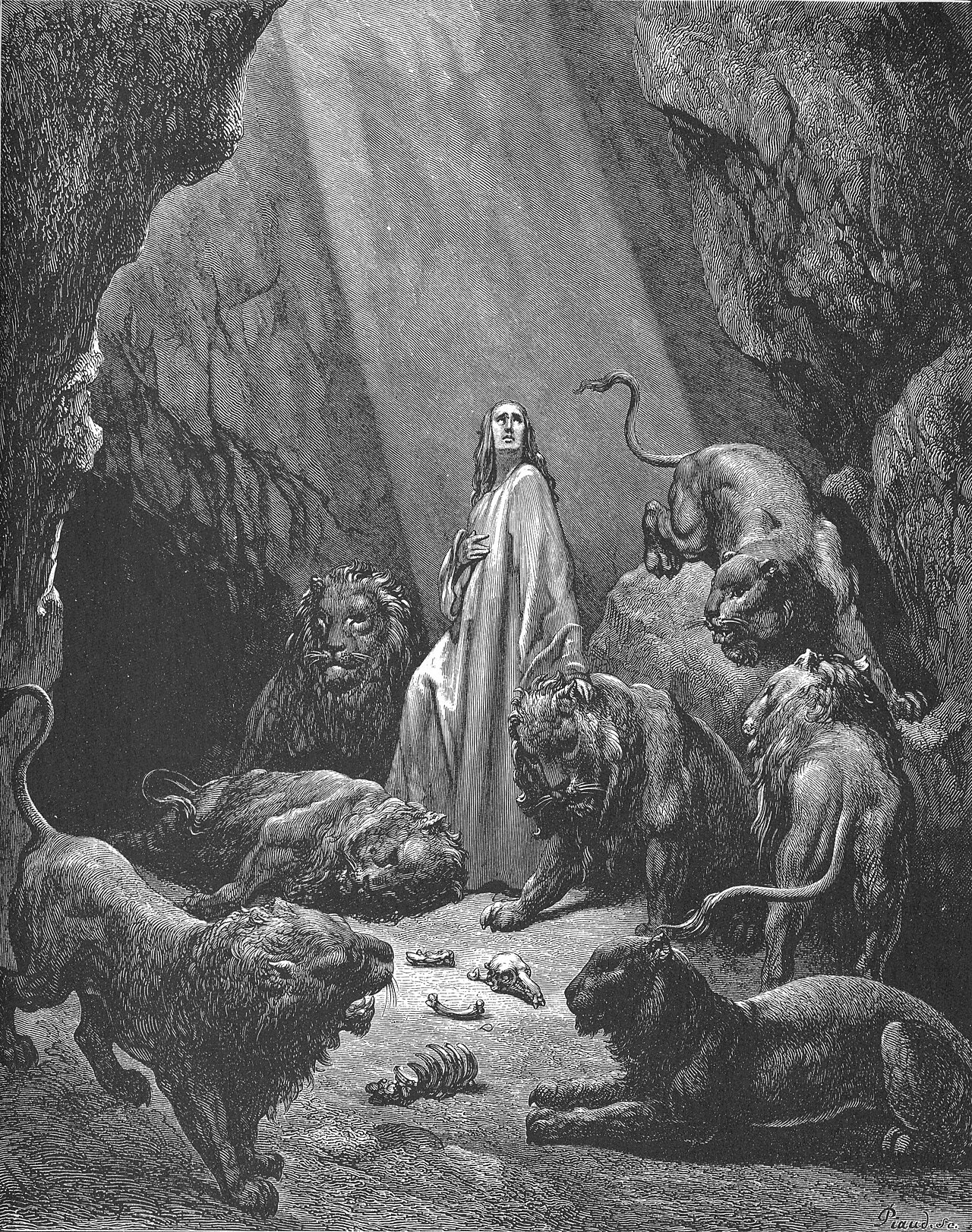
in Daniel 6When he reached the den, he cried out in a voice of anguish, “O Daniel, servant of the living God, has your God, whom you serve continually, been able to deliver you from the lions?”
BSB
The same verse in ASV and KJV ▾
ASV
And when he came near unto the den to Daniel, he cried with a lamentable voice; the king spake and said to Daniel, O Daniel, servant of the living God, is thy God, whom thou servest continually, able to deliver thee from the lions?
KJV
And when he came to the den, he cried with a lamentable voice unto Daniel: and the king spake and said to Daniel, O Daniel, servant of the living God, is thy God, whom thou servest continually, able to deliver thee from the lions?
⋯
This verse in Daniel 6
Commentary
14 notes on this verseHe cried with a lamentable voice - His heart, full of grief, affected his speech. Servant of the living God - The king was convinced that, unless his God saved him, his destruction was inevitable.
This site's exposition
spent the night fasting
on Daniel 6:18-20
Darius “spent the night fasting,” with no entertainment, and “sleep fled from him”. At dawn he “hurried to the den of lions” and “cried out in a voice of anguish”. He calls God “the living God” and asks whether He has “been able to deliver you from the lions”.
This site's exposition
servant of the living God
Albert Barnes and Jamieson, Fausset and Brown thought Darius learned the title living God from Daniel himself. The latter heard doubt mixed with hope in his question. Theodoret of Cyrus noted that the king calls Daniel God's servant, where he might have called him his own.
The record, by era
The Church Fathers4 voices
Accordingly, "Then he arose at first light and came to the den of lions in haste, and having called in a strong voice said, 'Daniel, slave of the living God, your God whom you serve perpetually, was he able to take you out from the mouth of the lions?'" [Daniel 6:19-20] And so why, having been disturbed, did the king cry this word, except that he had heard what happened to the boys, who were not willing to obey the prescription of the king, and were preserved from the furnace of fire?... The same happened to him, but he feared God and despised the decree of the Medes and Persians.
Each of these phrases shows the religious spirit of the king, who complimented Daniel on his piety: first, he calls him not his own servant but God's; next, he calls Daniel's God "living;" then, in praise of his piety, "whom you serve with constancy," that …
Verse 20. "And approaching the pit, he called out to Daniel with a tear-choked voice and addressed him."
Take heed, O man, because even at that time God rescued whom he wished to still live, so that the magnificent work of God may be shown and it may be preached in all the world until now. But whom he wishes to testify, he, having crowned them, takes them. For he rescued the three boys, so that the boast of Nebuchadnezzar may be shown as being nothing, wishing to demonstrate this, that "what is impossible for men is possible for God." [Luke 18:27] For since Nebuchadnezzar was arrogant and said, "And who is the god who is able to rescue you from the furnace of fire?" [Daniel 3:15] God demonstrated to him that he is able to rescue his slaves whenever he wills. For also similarly it happened to Daniel, for after Darius said, "Is God whom you perpetually serve, able to rescue you from the mouths of the lions?" [Daniel 6:20] Daniel answered and said, "God sent his angel and he stopped the mouths of the lions and they did not hurt me." [Daniel 6:22] For also all the governors and satraps contrived a pretext, so that they handed Daniel over to the beasts in order to kill him. But God, seeing their machinations and the sincerity of the blessed Daniel, rescued him from the mouths of the lions, so that he rescues whom he wills but takes whom he wills.
The Puritans and the Awakening1 voice
Able to deliver - What he doubted of, we are sure of, that the servants of the living God, have a master who is able to deliver them and bear them out in his service.
6 more voices on this verse
The Puritans and the Awakening2 voices
And when he came to the den, he cried with a lamentable voice unto Daniel,....
What he doubted of we are sure of, that the servants of the living God have a Master who is well able to protect them and bear them out in his service. The joyful news he meets with-that Daniel is alive, is safe, and well, and unhurt in the lions' den,
The Nineteenth Century4 voices
A commentator
Charles Spurgeon1834–1892
The Metropolitan Tabernacle Pulpit, Sermon No. 2859: “The Lions' Den” (lightly modernized text, CCEL edition) · Written before 1892.
THE empire of Babylonia and Chaldea passed into the hands of a new dynasty and king Belshazzar was slain in a night-assault upon his capital. On that very night, he had clothed Daniel in scarlet and made him the third ruler in the Kingdom. This was Providential, for, had Daniel been in obscurity, he would have been little likely to attract the notice of Darius. But, observing him in the palace, clothed in scarlet, Darius would naturally ask who he was and enquire into his antecedents.
A commentator
Jamieson, Fausset & Brown1802–1910
Commentary Critical and Explanatory on the Whole Bible (1871)
proposed
living God--having life Himself, and able to preserve thy life; contrasted with the lifeless idols. Darius borrowed the phrase from Daniel; God extorting from an idolater a confession of the truth. thou servest continually--in times of persecution, as well as in times of peace. is thy God . . . able--the language of doubt, yet hope.
quarantine:debris (2026-07-29) — starts-lowercase
A commentator
Charles Spurgeon1834–1892
The Metropolitan Tabernacle Pulpit, Sermon No. 2859: “The Lions' Den” (lightly modernized text, CCEL edition) · Written before 1892.
proposed
THE empire of Babylonia and Chaldea passed into the hands of a new dynasty and king Belshazzar was slain in a night-assault upon his capital. On that very night, he had clothed Daniel in scarlet and made him the third ruler in the Kingdom. This was Providential, for, had Daniel been in obscurity, he would have been little likely to attract the notice of Darius. But, observing him in the palace, clothed in scarlet, Darius would naturally ask who he was and enquire into his antecedents. The fame of his wisdom would be quickly told and the fact of his having twice interpreted the dreams of Nebuchadnezzar, in former times, and of his having just then, with startling precision, foretold the downfall of Belshazzar and the capture of the city by the Medes and Persians, would be eagerly related. Hence it was not at all surprising that Darius took great notice of Daniel, weighed his character, observed his conduct and, after a while, exalted him to be prime minister of his realm. Daniel's prosperity and honors excited the envy of the courtiers. Full of sullen spite and brimming over with jealousy, presidents and princes conspired together to cast him down with calumnious accusations. We are known to say that "any stick will do to beat a dog," so they looked about for any charge with which they might assail him. I have no doubt they watched him constantly, waited eagerly for his halting—all the while basely flattering the man they wanted to trip up.
A commentator
Albert Barnes1798–1870
Notes, Explanatory and Practical, on the Old and New Testaments (1832-1869)
proposed
He cried with a lamentable voice - A voice full of anxious solicitude. Literally, “a voice of grief.” Such a cry would be natural on such an occasion. O Daniel, servant of the living God - The God who has life; who imparts life; and who can preserve life. This was the appellation, probably, which he had heard Daniel use in regard to God, and it is one which he would naturally employ on such an occasion as this; feeling that the question of life was entirely in his hands. Whom thou servest continually - At all times, and in all circumstances: as a captive in a distant land; in places of honor and power; when surrounded by the great who worship other gods; and when threatened with death for your devotion to the service of God. This had been the character of Daniel, and it was natural to refer to it now.
The words behind it
24 Hebrew wordsEvery Hebrew word of this verse in the order it stands, with what it means and the door to its own study. The last column counts the times a word stands in the whole Bible: the rarer the word, the more the places it appears belong together.
| Hebrew | Sound | Meaning | Word study | In the Bible |
|---|---|---|---|---|
| וּכְמִקְרְבֵ֣הּ | ukhemikreveh | and just as approached he | H7127 → | 9 times |
| לְגֻבָּ֔א | leguba' | to den the | H1358 → | 10 times |
| לְדָ֣נִיֵּ֔אל | ledaniyel | to Daniel | H1841 → | 57 times |
| בְּקָ֥ל | bekal | with a voice | H7032 → | 7 times |
| עֲצִ֖יב | ʾatziv | pained | H6088 → | |
| זְעִ֑ק | zeik | he cried out | H2200 → | |
| עָנֵ֨ה | ʾaneh | [was] replying | H6032 → | 30 times |
| מַלְכָּ֜א | malka' | king the | H4430 → | 180 times |
| וְאָמַ֣ר | veamar | and [was] saying | H560 → | 71 times |
| לְדָנִיֵּ֗אל | ledaniyel | to Daniel | H1841 → | 57 times |
| דָּֽנִיֵּאל֙ | daniyel | O Daniel | H1841 → | 57 times |
| עֲבֵד֙ | ʾaved | [the] servant of | H5649 → | 7 times |
| אֱלָהָ֣א | ʾelaha' | God the | H426 → | 95 times |
| חַיָּ֔א | chaiya' | <the> living | H2417 → | 7 times |
| אֱלָהָ֗ךְ | ʾelahakh | God your | H426 → | 95 times |
| דִּ֣י | di | whom | H1768 → | 345 times |
| אַ֤נְתְּ | ʾantah | you | H607 → | 15 times |
| פָּֽלַֽח־ | palach- | [are] paying reverence | H6399 → | 10 times |
| לֵהּ֙ | leh | to him | ||
| בִּתְדִירָ֔א | bitdira' | in <the> continuance | H8411 → | |
| הַיְכִ֥ל | haykhil | ¿ was he able | H3202 → | 11 times |
| לְשֵׁיזָבוּתָ֖ךְ | lesheizavutakh | to deliver you | H7804 → | 9 times |
| מִן־ | min- | from | H4481 → | 109 times |
| אַרְיָוָתָֽא׃ | ʾaryavata' | lions the | H744 → | 10 times |
וּכְמִקְרְבֵ֣הּand just as approached he
ukhemikrevehH7127 →9 times
לְגֻבָּ֔אto den the
leguba'H1358 →10 times
לְדָ֣נִיֵּ֔אלto Daniel
ledaniyelH1841 →57 times
בְּקָ֥לwith a voice
bekalH7032 →7 times
עֲצִ֖יבpained
ʾatzivH6088 →
זְעִ֑קhe cried out
zeikH2200 →
עָנֵ֨ה[was] replying
ʾanehH6032 →30 times
מַלְכָּ֜אking the
malka'H4430 →180 times
וְאָמַ֣רand [was] saying
veamarH560 →71 times
לְדָנִיֵּ֗אלto Daniel
ledaniyelH1841 →57 times
דָּֽנִיֵּאל֙O Daniel
daniyelH1841 →57 times
עֲבֵד֙[the] servant of
ʾavedH5649 →7 times
אֱלָהָ֣אGod the
ʾelaha'H426 →95 times
חַיָּ֔א<the> living
chaiya'H2417 →7 times
אֱלָהָ֗ךְGod your
ʾelahakhH426 →95 times
דִּ֣יwhom
diH1768 →345 times
אַ֤נְתְּyou
ʾantahH607 →15 times
פָּֽלַֽח־[are] paying reverence
palach-H6399 →10 times
לֵהּ֙to him
leh
בִּתְדִירָ֔אin <the> continuance
bitdira'H8411 →
הַיְכִ֥ל¿ was he able
haykhilH3202 →11 times
לְשֵׁיזָבוּתָ֖ךְto deliver you
lesheizavutakhH7804 →9 times
מִן־from
min-H4481 →109 times
אַרְיָוָתָֽא׃lions the
ʾaryavata'H744 →10 times
A shaded row is a word that stands 400 times or fewer in the Bible.
The walk
8 stopsEach card is a verse this one points to, and under it the verses that one points to in turn. Where several paths arrive at the same place, that place is listed first: the text keeps returning to it.
Through
Hebrews 7:25Therefore He is able to save completely those who draw near to God through Him, since He always lives to intercede for them.
it leads to
- Romans 8:34
Who is there to condemn us? For Christ Jesus, who died, and more than that was raised to life, is at the right hand of God—and He is interceding for us.
- 1 John 2:1–2
My little children, I am writing these things to you so that you will not sin. But if anyone does sin, we have an advocate before the Father—Jesus Christ, the Righteous One.
- 1 Timothy 2:5
For there is one God, and there is one mediator between God and men, the man Christ Jesus,
- Romans 8:34
Through
1 Chronicles 16:11Seek out the LORD and His strength; seek His face always.
it leads to
- Psalms 27:8–9
My heart said, “Seek His face.” Your face, O LORD, I will seek.
- Zephaniah 2:2–3
before the decree takes effect and the day passes like chaff, before the burning anger of the LORD comes upon you, before the Day of the LORD’s anger comes upon you.
- Psalms 68:35
O God, You are awesome in Your sanctuary; the God of Israel Himself gives strength and power to His people. Blessed be God!
- Psalms 24:6
Such is the generation of those who seek Him, who seek Your face, O God of Jacob. Selah
- Psalms 67:1
May God be gracious to us and bless us, and cause His face to shine upon us, Selah
- Psalms 27:8–9
Where this verse is studied
On this page
About Daniel
Who and where
1 name in this verse with a page on the site.
This page draws on 12 works. Open the list of works
This page draws on Adam Clarke, Commentary on the Bible; Albert Barnes, Notes on the Book of Daniel; Albert Barnes, Notes, Explanatory and Practical, on the Old and New Testaments (1832-1869); Charles Spurgeon, The Metropolitan Tabernacle Pulpit, Sermon No. 2859: “The Lions' Den” (lightly modernized text, CCEL edition); Hippolytus of Rome, Commentary on Daniel 3.28.5-6; Hippolytus of Rome, Commentary on Daniel 2.35.3-7; Jamieson, Fausset & Brown, Commentary Critical and Explanatory on the Whole Bible; Jerome, St. Jerome, Commentary on Daniel, CHAPTER SIX; John Gill, Exposition of the Old Testament (1748-1763); John Wesley, Explanatory Notes upon the Old Testament; Matthew Henry, Commentary on the Whole Bible and Theodoret of Cyrus, COMMENTARY ON DANIEL 6:19-20.