
2 Samuel 2:27
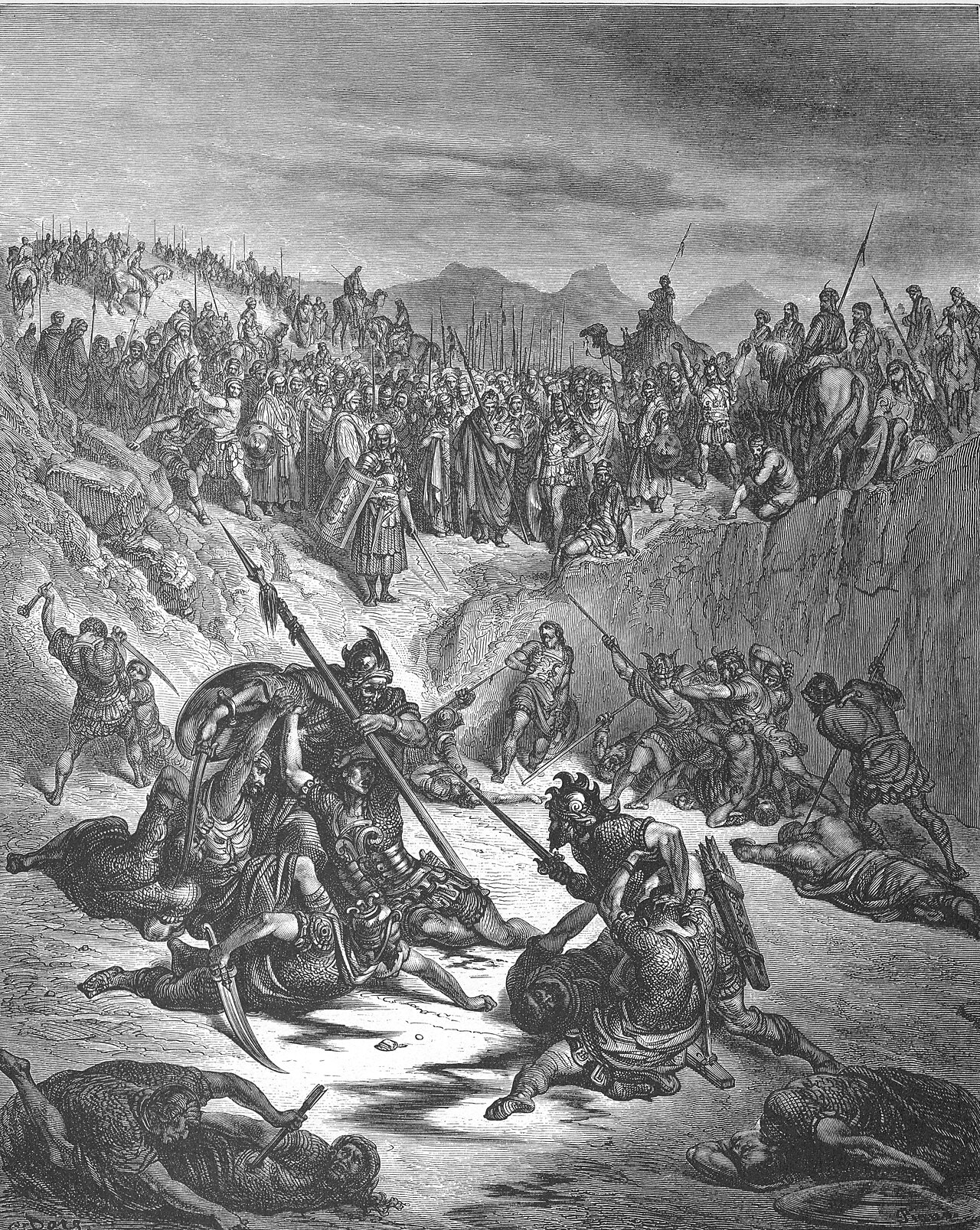
in 2 Samuel 2“As surely as God lives,” Joab replied, “if you had not spoken up, the troops would have continued pursuing their brothers until morning.”
BSB
The same verse in ASV and KJV ▾
ASV
And Joab said, As God liveth, if thou hadst not spoken, surely then in the morning the people had gone away, nor followed every one his brother.
KJV
And Joab said, As God liveth, unless thou hadst spoken, surely then in the morning the people had gone up every one from following his brother.
⋯
This verse in 2 Samuel 2
Commentary
8 notes on this verseA commentator
Albert Barnes1798–1870
Notes, Explanatory and Practical, on the Old and New Testaments (1832-1869)
Joab’s speech means either “unless thou hadst spoken (challenged us to fight, 2Sa 2:14), the people would have returned from the pursuit of their brethren (many hours ago, even) this morning;” or, “If thou hadst not spoken (asked for peace, 2Sa 2:26), surely the people would have returned, etc., in the morning, i. e. would not have ceased the pursuit until the morning.” The latter interpretation is the more accordant with Joab’s boastful character.
This site's exposition
Shall the sword devour for ever
on 2 Samuel 2:26-28
Abner calls out to Joab with a question rather than a threat, shall the sword devour for ever, and do you not know it will be bitterness in the end? The line reads as plain prophecy of the two years' war still to come between the houses. Joab answers that the people would have stood down at morning regardless, then blows the trumpet himself, and the fighting stops for that day without either man claiming the other yielded first.
This site's exposition
As surely as God lives
The oath of Joab reads two ways. John Wesley and Adam Clarke take it to mean that the troops would have gone home that morning had Abner never proposed the contest of verse 14. Albert Barnes reads it as a boast that the pursuit would have run until morning had Abner kept silent.
The record, by era
The Puritans and the Awakening3 voices
Thou complainest that the sword devours, but who first unsheathed it? Now thou wouldst have the people parted, but remember who set them on to fight. We should have retired in the morning if thou hadst not given the challenge." Those that are forward to make mischief are commonly the first to complain of it.
quarantine:debris (2026-07-29) — odd-straight-quotes
Unless, &c. - Unless thou hadst made the motion that they should fight, ver. 14. It was thou, not I, that gave the first occasion of this fight. Abner was the sole cause of this war; otherwise all things had been ended by an amicable agreement: which might have been made that very morning, if he had so pleased.
quarantine:anchor (2026-07-29) — cites-ver-14-anchored-27-27
And Joab said, as God liveth,....
The Nineteenth Century2 voices
A commentator
Jamieson, Fausset & Brown1802–1910
Commentary Critical and Explanatory on the Whole Bible (1871)
Asahel pursued after Abner--To gain the general's armor was deemed the grandest trophy. Asahel, ambitious of securing Abner's, had outstripped all other pursuers, and was fast gaining on the retreating commander. Abner, conscious of possessing more physical power, and unwilling that there should be "blood" between himself and Joab, Asahel's brother, twice urged him to desist.
And Joab said - The meaning of this verse appears to be this: If Abner had not provoked the battle, (see 2Sa 2:14), Joab would not have attacked the Israelites that day; as his orders were probably to act on the defensive. Therefore the blame fell upon Israel.
The words behind it
15 Hebrew wordsEvery Hebrew word of this verse in the order it stands, with what it means and the door to its own study. The last column counts the times a word stands in the whole Bible: the rarer the word, the more the places it appears belong together.
| Hebrew | Sound | Meaning | Word study | In the Bible |
|---|---|---|---|---|
| וַיֹּ֣אמֶר | vaiyomer | and he said | H559 → | 5305 times |
| יוֹאָ֔ב | yoav | Joab | H3097 → | 144 times |
| חַ֚י | chai | [by] [the] life | H2416 → | 498 times |
| הָֽאֱלֹהִ֔ים | haelohim | of <the> God | H430 → | 2601 times |
| כִּ֥י | ki | if | H3588 → | 4482 times |
| לוּלֵ֖א | lule' | if not | H3884 → | |
| דִּבַּ֑רְתָּ | dibarta | you had spoken | H1696 → | 1141 times |
| כִּ֣י | ki | for | H3588 → | 4482 times |
| אָ֤ז | ʾaz | then | H227 → | 141 times |
| מֵֽהַבֹּ֙קֶר֙ | mehaboker | from the morning | H1242 → | 214 times |
| נַעֲלָ֣ה | naalah | it had abandoned pursuit | H5927 → | 890 times |
| הָעָ֔ם | haam | the people | H5971 → | 1873 times |
| אִ֖ישׁ | ʾish | each | H376 → | 1663 times |
| מֵאַחֲרֵ֥י | meacharei | from after | H310 → | 715 times |
| אָחִֽיו׃ | ʾachiv | brother his | H251 → | 630 times |
וַיֹּ֣אמֶרand he said
vaiyomerH559 →5305 times
יוֹאָ֔בJoab
yoavH3097 →144 times
חַ֚י[by] [the] life
chaiH2416 →498 times
הָֽאֱלֹהִ֔יםof <the> God
haelohimH430 →2601 times
כִּ֥יif
kiH3588 →4482 times
לוּלֵ֖אif not
lule'H3884 →
דִּבַּ֑רְתָּyou had spoken
dibartaH1696 →1141 times
כִּ֣יfor
kiH3588 →4482 times
אָ֤זthen
ʾazH227 →141 times
מֵֽהַבֹּ֙קֶר֙from the morning
mehabokerH1242 →214 times
נַעֲלָ֣הit had abandoned pursuit
naalahH5927 →890 times
הָעָ֔םthe people
haamH5971 →1873 times
אִ֖ישׁeach
ʾishH376 →1663 times
מֵאַחֲרֵ֥יfrom after
meachareiH310 →715 times
אָחִֽיו׃brother his
ʾachivH251 →630 times
A shaded row is a word that stands 400 times or fewer in the Bible.
The walk
8 stopsEach card is a verse this one points to, and under it the verses that one points to in turn. Where several paths arrive at the same place, that place is listed first: the text keeps returning to it.
Through
Proverbs 17:14To start a quarrel is to release a flood; so abandon the dispute before it breaks out.
it leads to
- Proverbs 25:8
do not bring hastily to court. Otherwise, what will you do in the end when your neighbor puts you to shame?
Reached by 2 separate paths from here.
- Proverbs 20:3
It is honorable for a man to resolve a dispute, but any fool will quarrel.
- 2 Timothy 2:23–24
But reject foolish and ignorant speculation, for you know that it breeds quarreling.
- Proverbs 25:8
Through
1 Samuel 25:26Now, my lord, as surely as the LORD lives and you yourself live, the LORD has held you back from coming to bloodshed and avenging yourself with your own hand. May your enemies and…
it leads to
- 2 Samuel 18:32
The king asked the Cushite, “Is the young man Absalom all right?” And the Cushite replied, “May what has become of the young man happen to the enemies of my lord the king and…
- Romans 12:19–20
Do not avenge yourselves, beloved, but leave room for God’s wrath. For it is written: “Vengeance is Mine; I will repay, says the Lord.”
- Genesis 20:6
Then God said to Abimelech in the dream, “Yes, I know that you did this with a clear conscience, and so I have kept you from sinning against Me. That is why I did…
- Hebrews 10:30
For we know Him who said, “Vengeance is Mine; I will repay,” and again, “The Lord will judge His people.”
- 2 Samuel 18:32
Through
Job 27:2“As surely as God lives, who has deprived me of justice—the Almighty, who has embittered my soul—
it leads to
- Job 34:5
For Job has declared, ‘I am righteous, yet God has deprived me of justice.
- Job 34:5
About 2 Samuel
This page draws on Adam Clarke, Commentary on the Bible; Albert Barnes, Notes, Explanatory and Practical, on the Old and New Testaments (1832-1869); Albert Barnes, Notes on the Old Testament; Jamieson, Fausset & Brown, Commentary Critical and Explanatory on the Whole Bible; John Gill, Exposition of the Old Testament; John Gill, Exposition of the Old Testament (1748-1763); John Wesley, Explanatory Notes upon the Old Testament and Matthew Henry, Commentary on the Whole Bible.