
2 Samuel 2:12
in 2 Samuel 2One day Abner son of Ner and the servants of Ish-bosheth son of Saul marched out from Mahanaim to Gibeon.
BSB
The same verse in ASV and KJV ▾
ASV
And Abner the son of Ner, and the servants of Ish-bosheth the son of Saul, went out from Mahanaim to Gibeon.
KJV
And Abner the son of Ner, and the servants of Ish–bosheth the son of Saul, went out from Mahanaim to Gibeon.
⋯
This verse in 2 Samuel 2
Commentary
6 notes on this verseA commentator
Albert Barnes1798–1870
Notes, Explanatory and Practical, on the Old and New Testaments (1832-1869)
This expedition to Gibeon may have been for the purpose of shifting his metropolis to his own tribe of Benjamin, and to his family place, “Gibeah of Saul,” close to Gibeon, with the further purpose of attacking the kingdom of David. “To go out” 2Sa 2:12-13 is a technical phrase for going out to war 1Sa 18:30.
This site's exposition
went out from Mahanaim to Gibeon
on 2 Samuel 2:12-13
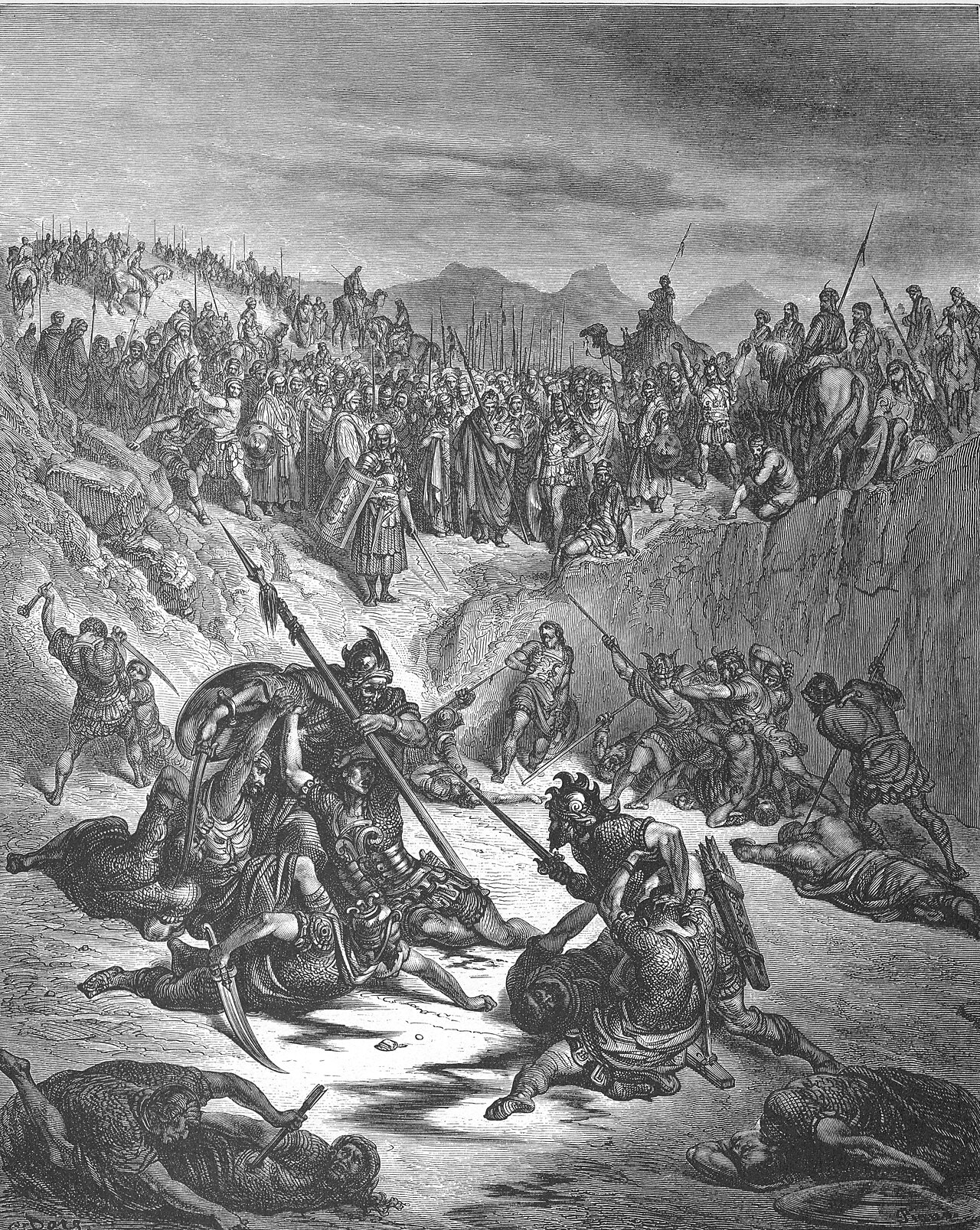
Abner leads Ish-bosheth's servants out to Gibeon, and Joab leads David's servants out to meet him, and the two companies sit down on opposite sides of one pool. The meeting looks at first like a parley, and the next verses turn it into a battlefield. This is the opening move of the long war between the house of Saul and the house of David that 3:1 will name outright.
The record, by era
The Puritans and the Awakening2 voices
), which continued long, even the remaining five years, ch. iii. An encounter between their two armies. It does not appear that either side brought their whole force into the field, for the slaughter was but small,
quarantine:debris (2026-07-29) — leading-punctuation+unbalanced-parens
And Abner the son of Ner,....
The Nineteenth Century2 voices
A commentator
Jamieson, Fausset & Brown1802–1910
Commentary Critical and Explanatory on the Whole Bible (1871)
Abner . . . and the servants of Ish-bosheth . . . went out from Mahanaim to Gibeon--This town was near the confines of Judah, and as the force with which Abner encamped there seemed to have some aggressive design, David sent an army of observation, under the command of Joab, to watch his movements.
A commentator
Jamieson, Fausset & Brown1802–1910
Commentary Critical and Explanatory on the Whole Bible (1871)
proposed
Abner the son of Ner, captain of Saul's host took Ish-bosheth--Here was the establishment of a rival kingdom, which, however, would probably have had no existence but for Abner. Ish-bosheth--or "Esh-baal" (1Ch 8:33;
quarantine:debris (2026-07-29) — unbalanced-parens
The words behind it
11 Hebrew wordsEvery Hebrew word of this verse in the order it stands, with what it means and the door to its own study. The last column counts the times a word stands in the whole Bible: the rarer the word, the more the places it appears belong together.
| Hebrew | Sound | Meaning | Word study | In the Bible |
|---|---|---|---|---|
| וַיֵּצֵא֙ | vaiyetze' | and he went out | H3318 → | 1067 times |
| אַבְנֵ֣ר | ʾavner | Abner | H74 → | 63 times |
| בֶּן־ | ben- | [the] son of | H1121 → | 4930 times |
| נֵ֔ר | ner | Ner | H5369 → | 17 times |
| וְעַבְדֵ֖י | veavdei | and [the] servants of | H5650 → | 799 times |
| אִֽישׁ־ | ʾish- | Ish- | H378 → | 22 times |
| בֹּ֣שֶׁת | boshet | bosheth | H378 → | 22 times |
| בֶּן־ | ben- | [the] son of | H1121 → | 4930 times |
| שָׁא֑וּל | shaul | Saul | H7586 → | 402 times |
| מִֽמַּחֲנַ֖יִם | mimachanayim | from Mahanaim | H4266 → | 13 times |
| גִּבְעֽוֹנָה׃ | givonah | Gibeon towards | H1391 → | 38 times |
וַיֵּצֵא֙and he went out
vaiyetze'H3318 →1067 times
אַבְנֵ֣רAbner
ʾavnerH74 →63 times
בֶּן־[the] son of
ben-H1121 →4930 times
נֵ֔רNer
nerH5369 →17 times
וְעַבְדֵ֖יand [the] servants of
veavdeiH5650 →799 times
אִֽישׁ־Ish-
ʾish-H378 →22 times
בֹּ֣שֶׁתbosheth
boshetH378 →22 times
בֶּן־[the] son of
ben-H1121 →4930 times
שָׁא֑וּלSaul
shaulH7586 →402 times
מִֽמַּחֲנַ֖יִםfrom Mahanaim
mimachanayimH4266 →13 times
גִּבְעֽוֹנָה׃Gibeon towards
givonahH1391 →38 times
A shaded row is a word that stands 400 times or fewer in the Bible.
The walk
8 stopsEach card is a verse this one points to, and under it the verses that one points to in turn. Where several paths arrive at the same place, that place is listed first: the text keeps returning to it.
Through
Joshua 9:3But the people of Gibeon, having heard what Joshua had done to Jericho and Ai,
it leads to
- Joshua 10:2
So Adoni-zedek and his people were greatly alarmed, because Gibeon was a great city, like one of the royal cities; it was larger than Ai, and all its men were mighty.
Reached by 2 separate paths from here.
- Joshua 9:17
So the Israelites set out and on the third day arrived at their cities—Gibeon, Chephirah, Beeroth, and Kiriath-jearim.
Reached by 2 separate paths from here.
- Joshua 10:2
Through
2 Samuel 17:14Then Absalom and all the men of Israel said, “The advice of Hushai the Archite is better than that of Ahithophel.” For the LORD had purposed to thwart the good counsel of Ahithophel in…
it leads to
- 2 Samuel 15:34
But you can thwart the counsel of Ahithophel for me if you return to the city and say to Absalom: ‘I will be your servant, my king; in the past I was your father’s…
- 1 Corinthians 1:19–20
For it is written: “I will destroy the wisdom of the wise; the intelligence of the intelligent I will frustrate.”
- Proverbs 19:21
Many plans are in a man’s heart, but the purpose of the LORD will prevail.
- Isaiah 8:10
Devise a plan, but it will be thwarted; state a proposal, but it will not happen. For God is with us.”
- 2 Samuel 15:34
Through
Joshua 10:4“Come up and help me. We will attack Gibeon, because they have made peace with Joshua and the Israelites.”
it leads to
- Joshua 9:15
And Joshua made a treaty of peace with them to let them live, and the leaders of the congregation swore an oath to them.
- Joshua 9:15
Through
Joshua 10:2So Adoni-zedek and his people were greatly alarmed, because Gibeon was a great city, like one of the royal cities; it was larger than Ai, and all its men were mighty.
it leads to
- Deuteronomy 11:25
No man will be able to stand against you; the LORD your God will put the fear and dread of you upon all the land, wherever you set foot, as He has promised you.
- Deuteronomy 11:25
About 2 Samuel
Who and where
1 name in this verse with a page on the site.
This page draws on Adam Clarke, Commentary on the Bible; Albert Barnes, Notes, Explanatory and Practical, on the Old and New Testaments (1832-1869); Jamieson, Fausset & Brown, Commentary Critical and Explanatory on the Whole Bible; John Gill, Exposition of the Old Testament (1748-1763) and Matthew Henry, Commentary on the Whole Bible.