
2 Samuel 18:16
in 2 Samuel 18Then Joab blew the ram’s horn, and the troops broke off their pursuit of Israel because Joab had restrained them.
BSB
The same verse in ASV and KJV ▾
ASV
And Joab blew the trumpet, and the people returned from pursuing after Israel; for Joab held back the people.
KJV
And Joab blew the trumpet, and the people returned from pursuing after Israel: for Joab held back the people.
⋯
This verse in 2 Samuel 18
Commentary
6 notes on this verseThe danger is over, now that Absalom is slain; the people will soon return to their allegiance to David, and therefore no more blood shall be spilt; no prisoners are taken, to be tried as traitors and made examples; let every man return to his tent; they are all the king's subjects, all his good subjects again.
This site's exposition
Joab held back the people
on 2 Samuel 18:16-17
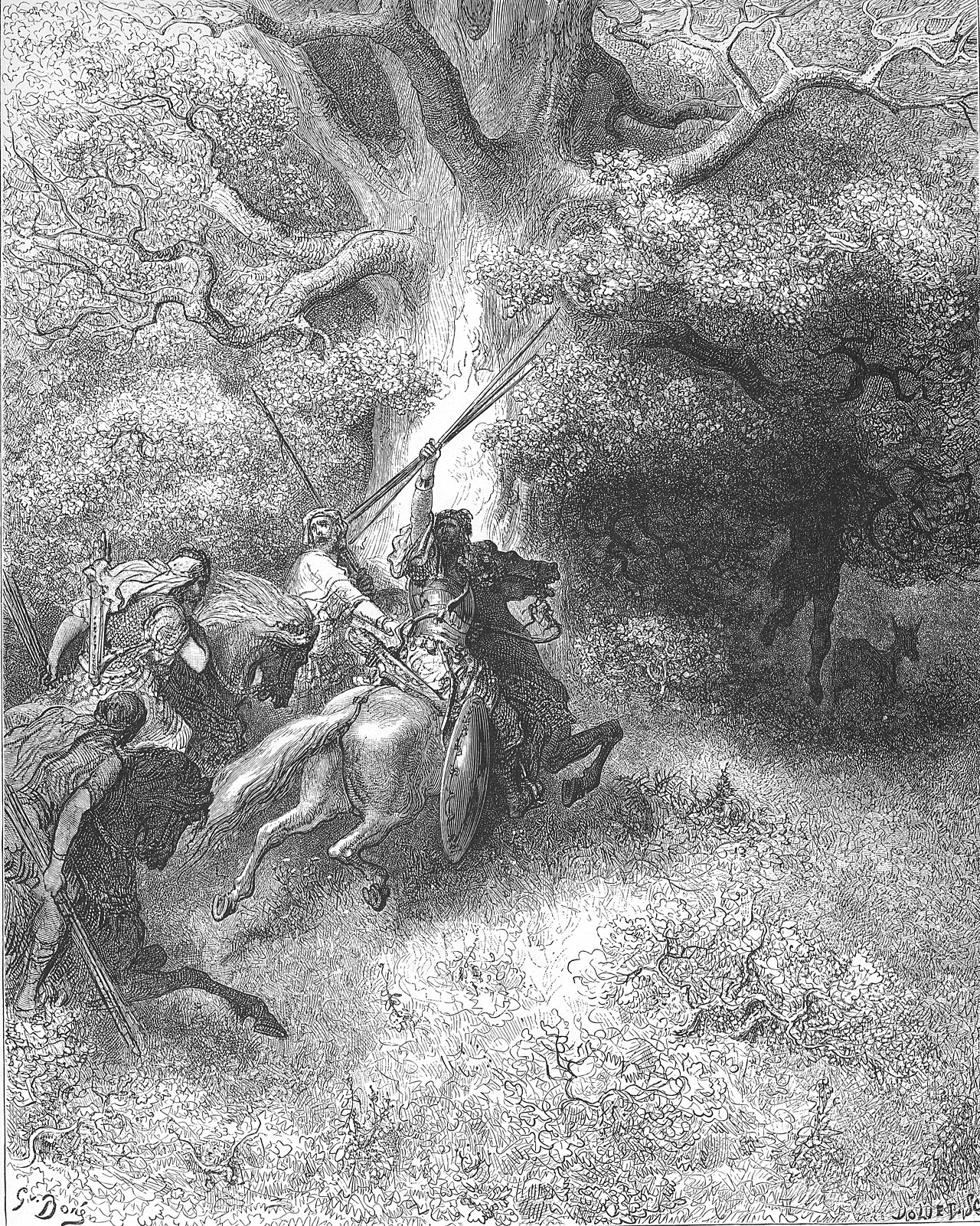
Joab sounds the trumpet and the pursuit stops; the head of the revolt is dead, and further slaughter serves nothing more. Absalom's body is thrown into a pit in the wood and covered with a great heap of stones, the burial the ancient world gave a rebel rather than a prince, while the rest of Israel scatters to their own tents. Clarke notes the heap of stones was the standing way to mark a memory for good or ill, the same rite by which a hero and a traitor were both remembered on the ground where they fell.
The record, by era
The Puritans and the Awakening1 voice
And Joab blew the trumpet,.... As the sign of a retreat: and the people returned from pursuing after Israel; upon the sound of the trumpet, the meaning of which they understood: for Joab held back the people: from shedding any more blood; the head of the conspiracy being removed, the thing would be crushed at once; and Joab neither chose to slay any more, nor take any prisoners, to be tried as traitors, being unawares, without thought, drawn into this rebellion.
The Nineteenth Century3 voices
A commentator
Jamieson, Fausset & Brown1802–1910
Commentary Critical and Explanatory on the Whole Bible (1871)
proposed
Joab blew the trumpet, . . . and held back the people--Knowing that by the death of the usurper there was no occasion for further bloodshed, he put an end to the pursuit and thereby evinced the temperate policy of his conduct.
Joab blew the trumpet - He knew that the rebellion was now extinguished by the death of Absalom; and was not willing that any farther slaughter should be made of the deluded people.
A commentator
Albert Barnes1798–1870
Notes, Explanatory and Practical, on the Old and New Testaments (1832-1869)
proposed
Blew the trumpet - To stop the pursuit and slaughter 2Sa 2:28; 2Sa 20:22.
The words behind it
13 Hebrew wordsEvery Hebrew word of this verse in the order it stands, with what it means and the door to its own study. The last column counts the times a word stands in the whole Bible: the rarer the word, the more the places it appears belong together.
| Hebrew | Sound | Meaning | Word study | In the Bible |
|---|---|---|---|---|
| וַיִּתְקַ֤ע | vaiyitka' | and he gave a blast | H8628 → | 69 times |
| יוֹאָב֙ | yoav | Joab | H3097 → | 144 times |
| בַּשֹּׁפָ֔ר | bashofar | on the trumpet | H7782 → | 72 times |
| וַיָּ֣שָׁב | vaiyasho | and it turned back | H7725 → | 1056 times |
| הָעָ֔ם | haam | the people | H5971 → | 1873 times |
| מִרְדֹ֖ף | mirdof | from pursuing | H7291 → | 143 times |
| אַחֲרֵ֣י | ʾacharei | after | H310 → | 715 times |
| יִשְׂרָאֵ֑ל | yisrael | Israel | H3478 → | 2507 times |
| כִּֽי־ | ki- | for | H3588 → | 4482 times |
| חָשַׂ֥ךְ | chasakh | he restrained | H2820 → | |
| יוֹאָ֖ב | yoav | Joab | H3097 → | 144 times |
| אֶת־ | ʾet- | <obj.> | H853 → | 10935 times |
| הָעָֽם׃ | haam | the people | H5971 → | 1873 times |
וַיִּתְקַ֤עand he gave a blast
vaiyitka'H8628 →69 times
יוֹאָב֙Joab
yoavH3097 →144 times
בַּשֹּׁפָ֔רon the trumpet
bashofarH7782 →72 times
וַיָּ֣שָׁבand it turned back
vaiyashoH7725 →1056 times
הָעָ֔םthe people
haamH5971 →1873 times
מִרְדֹ֖ףfrom pursuing
mirdofH7291 →143 times
אַחֲרֵ֣יafter
ʾachareiH310 →715 times
יִשְׂרָאֵ֑לIsrael
yisraelH3478 →2507 times
כִּֽי־for
ki-H3588 →4482 times
חָשַׂ֥ךְhe restrained
chasakhH2820 →
יוֹאָ֖בJoab
yoavH3097 →144 times
אֶת־<obj.>
ʾet-H853 →10935 times
הָעָֽם׃the people
haamH5971 →1873 times
A shaded row is a word that stands 400 times or fewer in the Bible.
The walk
8 stopsEach card is a verse this one points to, and under it the verses that one points to in turn. Where several paths arrive at the same place, that place is listed first: the text keeps returning to it.
Through
1 Corinthians 14:8Again, if the trumpet sounds a muffled call, who will prepare for battle?
it leads to
- Numbers 10:9
When you enter into battle in your land against an adversary who attacks you, sound short blasts on the trumpets, and you will be remembered before the LORD your God and saved from your…
- Ezekiel 33:3–6
and he sees the sword coming against that land and blows the ram’s horn to warn the people.
- Jeremiah 4:19
My anguish, my anguish! I writhe in pain! Oh, the pain in my chest! My heart pounds within me; I cannot be silent. For I have heard the sound of the horn, the alarm…
- Isaiah 27:13
And in that day a great ram’s horn will sound, and those who were perishing in Assyria will come forth with those who were exiles in Egypt. And they will worship the LORD on…
- Joel 2:1
Blow the ram’s horn in Zion; sound the alarm on My holy mountain! Let all who dwell in the land tremble, for the Day of the LORD is coming; indeed, it is near—
- Numbers 10:9
Through
2 Samuel 20:22Then the woman went to all the people with her wise counsel, and they cut off the head of Sheba son of Bichri and threw it to Joab. So he blew the ram’s horn…
it leads to
- 2 Samuel 20:1
Now a worthless man named Sheba son of Bichri, a Benjamite, happened to be there, and he blew the ram’s horn and shouted: “We have no share in David, no inheritance in Jesse’s son.…
- Ecclesiastes 7:19
Wisdom makes the wise man stronger than ten rulers in a city.
- 2 Samuel 2:28
So Joab blew the ram’s horn, and all the troops stopped; they no longer pursued Israel or continued to fight.
- 2 Samuel 20:1
Where this verse is studied
On this page
Studies1
About 2 Samuel
This page draws on Adam Clarke, Commentary on the Bible; Albert Barnes, Notes, Explanatory and Practical, on the Old and New Testaments (1832-1869); Jamieson, Fausset & Brown, Commentary Critical and Explanatory on the Whole Bible; John Gill, Exposition of the Old Testament; John Gill, Exposition of the Old Testament (1748-1763) and Matthew Henry, Commentary on the Whole Bible.