
2 Samuel 18:29
in 2 Samuel 18The king asked, “Is the young man Absalom all right?” And Ahimaaz replied, “When Joab sent the king’s servant and your servant, I saw a great tumult, but I do not know what it was.”
BSB
The same verse in ASV and KJV ▾
ASV
And the king said, Is it well with the young man Absalom? And Ahimaaz answered, When Joab sent the king’s servant, even me thy servant, I saw a great tumult, but I knew not what it was.
KJV
And the king said, Is the young man Absalom safe? And Ahimaaz answered, When Joab sent the king’s servant, and me thy servant, I saw a great tumult, but I knew not what it was.
⋯
This verse in 2 Samuel 18
Commentary
7 notes on this verseI saw a great tumult - It was very probable that Ahimaaz did not know of the death of Absalom; he had seen the rout of his army, but did not know of his death. Others think he knew all, and told this untruth that he might not be the messenger of bad news to David.
This site's exposition
Blessed be the LORD your God
on 2 Samuel 18:28-29
Ahimaaz calls out that all is well and blesses the LORD. When David asks whether “the young man Absalom” is all right, Ahimaaz answers he saw a great tumult but does not know what it was. Adam Clarke and John Gill both weigh whether he already knew Absalom was dead.
This site's exposition
I saw a great tumult
The king's question turns on the word shalom. John Gill hears the contrast: the army has peace, and David asks whether Absalom has it too. Charles Spurgeon preached the question as a father's anxious enquiry for a son both wicked and loved, asked over a field of twenty thousand dead.
The record, by era
The Puritans and the Awakening1 voice
And the king said, is the young man Absalom safe?.... Or, is there "peace" (f) to him? you say there is peace, and that prosperity and success have attended my army; but what peace has Absalom? is he well, and in safety?
The Nineteenth Century3 voices
THIS WAS SAID by David after a great battle in which many had been slain, and the hosts led by Absalom had fallen to the number of twenty thousand; perishing not only by the sword, but among the thick oaks and tangled briers of the wood, which concealed fearful precipices and great caverns, into which the rebels plunged in their wild fright when the rout set in. His father's anxious question concerned his wicked but still well-beloved son, "Is the young man Absalom safe?" He does not appear to have asked, "How have we won the victory?"
A commentator
Jamieson, Fausset & Brown1802–1910
Commentary Critical and Explanatory on the Whole Bible (1871)
David sat between the two gates--that is, in the tower-house on the wall that overhung the gate of Mahanaim. Near it was a watchtower, on which a sentinel was posted, as in times of war, to notify every occurrence.
THIS WAS SAID by David after a great battle in which many had been slain, and the hosts led by Absalom had fallen to the number of twenty thousand; perishing not only by the sword, but among the thick oaks and tangled briers of the wood, which concealed fearful precipices and great caverns, into which the rebels plunged in their wild fright when the rout set in. His father's anxious question concerned his wicked but still well-beloved son, "Is the young man Absalom safe?" He does not appear to have asked, "How have we won the victory?" but "Is the young man Absalom safe?" Not "Is Joab, the captain of my host, alive, for upon him so much depends?" but "Is the young man Absalom safe?" Not "How many of our noble troops have fallen in the battle?" but "Is the young man Absalom safe?" It has been said that he showed here more of the father than of the kingmore of affection than of wisdom; and that is, doubtless, a correct criticism upon the old man's absorbing fondness. David was no doubt, in this case, weak in his excessive tenderness. But, brethren, it is much more easy for us to blame a father under such circumstances than for us quite to understand his feelings; I may add, it would be wiser to sympathize, as far as we can, than to sit in judgment upon a case which has never been our own. Perhaps if we were placed in the same position we should find it impossible to feel otherwise than he did.
The words behind it
20 Hebrew wordsEvery Hebrew word of this verse in the order it stands, with what it means and the door to its own study. The last column counts the times a word stands in the whole Bible: the rarer the word, the more the places it appears belong together.
| Hebrew | Sound | Meaning | Word study | In the Bible |
|---|---|---|---|---|
| וַיֹּ֣אמֶר | vaiyomer | and he said | H559 → | 5305 times |
| הַמֶּ֔לֶךְ | hamelekh | the king | H4428 → | 2525 times |
| שָׁל֥וֹם | shalom | [does] peace? | H7965 → | 236 times |
| לַנַּ֖עַר | lanaar | [belong] to the young man | H5288 → | 239 times |
| לְאַבְשָׁל֑וֹם | leavshalom | to Absalom | H53 → | 110 times |
| וַיֹּ֣אמֶר | vaiyomer | and he said | H559 → | 5305 times |
| אֲחִימַ֡עַץ | ʾachimaatz | Ahimaaz | H290 → | 15 times |
| רָאִיתִי֩ | raiti | I saw | H7200 → | 1300 times |
| הֶהָמ֨וֹן | hehamon | the multitude | H1995 → | |
| הַגָּד֜וֹל | hagadol | <the> great | H1419 → | 526 times |
| לִ֠שְׁלֹחַ | lishloach | to send | H7971 → | 845 times |
| אֶת־ | ʾet- | <obj.> | H853 → | 10935 times |
| עֶ֨בֶד | ʾeved | [the] servant of | H5650 → | 799 times |
| הַמֶּ֤לֶךְ | hamelekh | the king | H4428 → | 2525 times |
| יוֹאָב֙ | yoav | Joab | H3097 → | 144 times |
| וְאֶת־ | veet | and <obj.> | H853 → | 10935 times |
| עַבְדֶּ֔ךָ | ʾavdekha | servant your | H5650 → | 799 times |
| וְלֹ֥א | velo' | and not | H3808 → | 5168 times |
| יָדַ֖עְתִּי | yada'ti | I know | H3045 → | 945 times |
| מָֽה׃ | mah | whatever | H4100 → | 752 times |
וַיֹּ֣אמֶרand he said
vaiyomerH559 →5305 times
הַמֶּ֔לֶךְthe king
hamelekhH4428 →2525 times
שָׁל֥וֹם[does] peace?
shalomH7965 →236 times
לַנַּ֖עַר[belong] to the young man
lanaarH5288 →239 times
לְאַבְשָׁל֑וֹםto Absalom
leavshalomH53 →110 times
וַיֹּ֣אמֶרand he said
vaiyomerH559 →5305 times
אֲחִימַ֡עַץAhimaaz
ʾachimaatzH290 →15 times
רָאִיתִי֩I saw
raitiH7200 →1300 times
הֶהָמ֨וֹןthe multitude
hehamonH1995 →
הַגָּד֜וֹל<the> great
hagadolH1419 →526 times
לִ֠שְׁלֹחַto send
lishloachH7971 →845 times
אֶת־<obj.>
ʾet-H853 →10935 times
עֶ֨בֶד[the] servant of
ʾevedH5650 →799 times
הַמֶּ֤לֶךְthe king
hamelekhH4428 →2525 times
יוֹאָב֙Joab
yoavH3097 →144 times
וְאֶת־and <obj.>
veetH853 →10935 times
עַבְדֶּ֔ךָservant your
ʾavdekhaH5650 →799 times
וְלֹ֥אand not
velo'H3808 →5168 times
יָדַ֖עְתִּיI know
yada'tiH3045 →945 times
מָֽה׃whatever
mahH4100 →752 times
A shaded row is a word that stands 400 times or fewer in the Bible.
The walk
7 stopsEach card is a verse this one points to, and under it the verses that one points to in turn. Where several paths arrive at the same place, that place is listed first: the text keeps returning to it.
Through
2 Samuel 20:9“Are you well, my brother?” Joab asked Amasa. And with his right hand Joab grabbed Amasa by the beard to kiss him.
it leads to
- Matthew 26:48–49
Now the betrayer had arranged a signal with them: “The One I kiss is the man; arrest Him.”
- Luke 22:47–48
While He was still speaking, a crowd arrived, led by the man called Judas, one of the Twelve. He approached Jesus to kiss Him.
- Psalms 55:21
His speech is smooth as butter, but war is in his heart. His words are softer than oil, yet they are swords unsheathed.
- Micah 7:2
The godly man has perished from the earth; there is no one upright among men. They all lie in wait for blood; they hunt one another with a net.
- Proverbs 26:24–26
A hateful man disguises himself with his speech, but he lays up deceit in his heart.
- Matthew 26:48–49
Through
2 Samuel 18:22Ahimaaz son of Zadok, however, persisted and said to Joab, “Regardless of whatever may happen, please let me also run behind the Cushite!” “My son,” Joab replied, “why do you want to run, since…
it leads to
- Ephesians 5:4
Nor should there be obscenity, foolish talk, or crude joking, which are out of character, but rather thanksgiving.
- Romans 1:28
Furthermore, since they did not see fit to acknowledge God, He gave them up to a depraved mind, to do what ought not to be done.
- Ephesians 5:4
Where this verse is studied
On this page
Studies2
About 2 Samuel
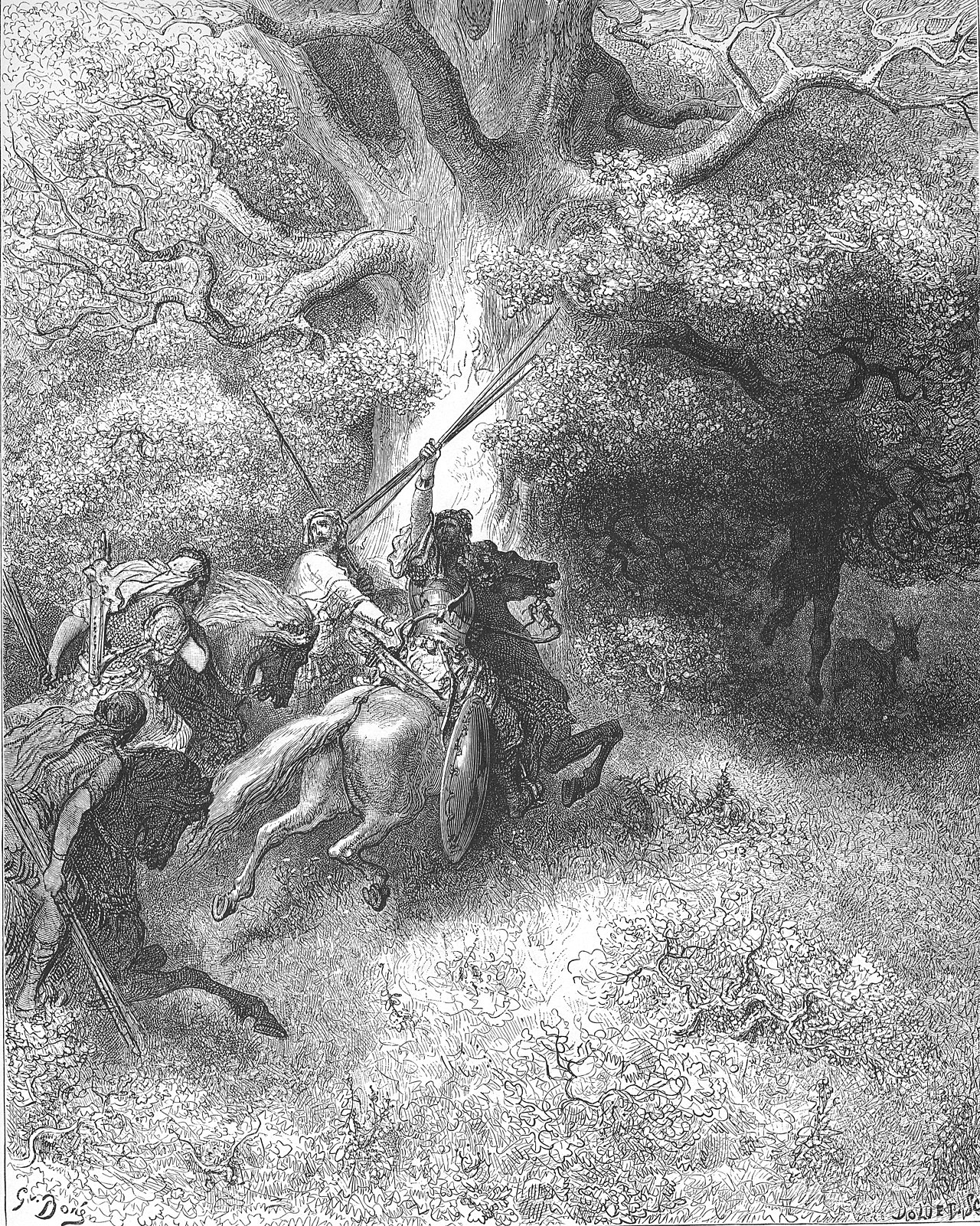
This page draws on Adam Clarke, Commentary on the Bible; Charles Spurgeon, The Metropolitan Tabernacle Pulpit, Sermon No. 1433: “An Anxious Enquiry for a Beloved Son” (lightly modernized text, CCEL edition); Jamieson, Fausset & Brown, Commentary Critical and Explanatory on the Whole Bible; John Gill, Exposition of the Old Testament and John Gill, Exposition of the Old Testament (1748-1763).