
2 Samuel 1:25
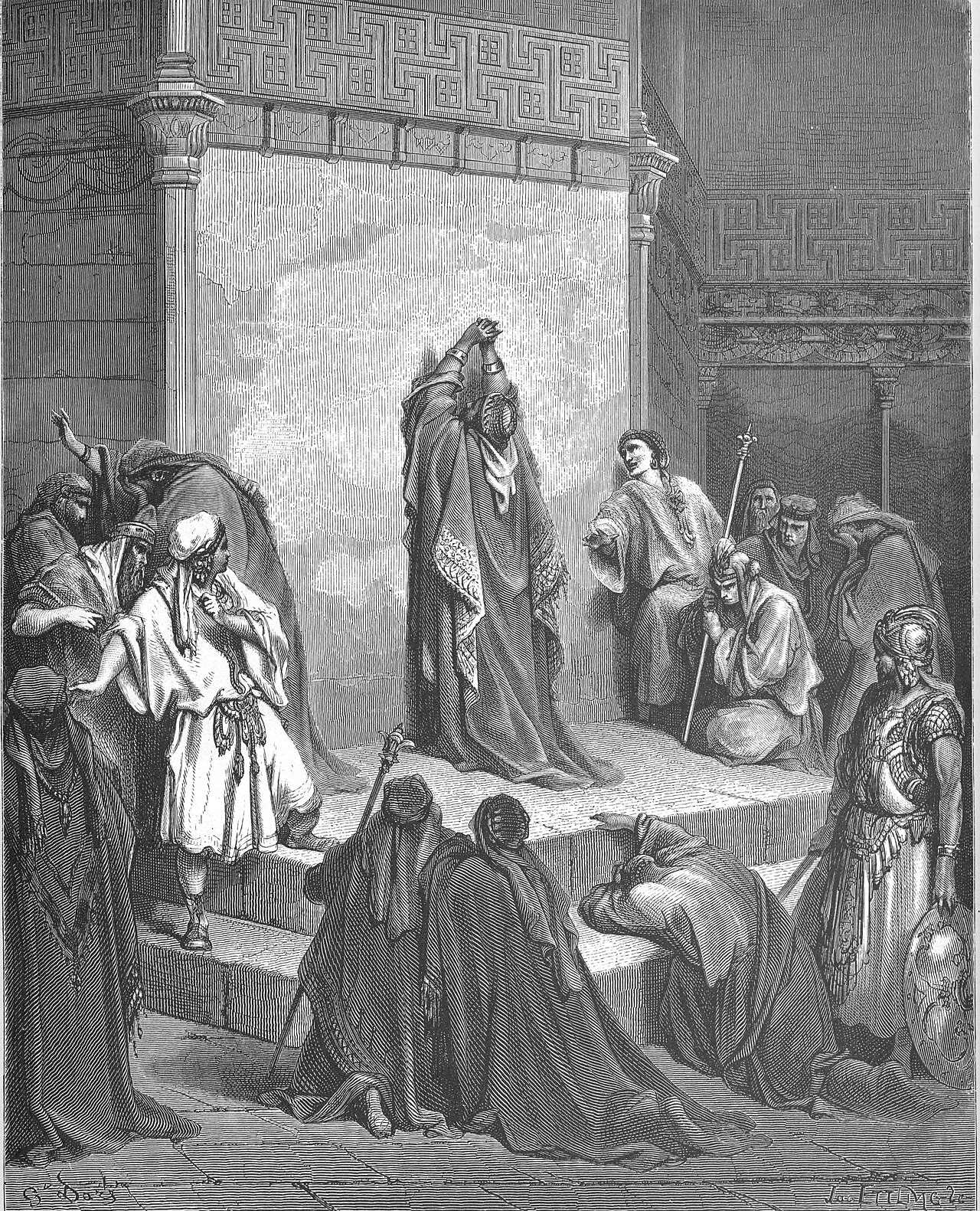
in 2 Samuel 1How the mighty have fallen in the thick of battle! Jonathan lies slain on your heights.
BSB
The same verse in ASV and KJV ▾
ASV
How are the mighty fallen in the midst of the battle! Jonathan is slain upon thy high places.
KJV
How are the mighty fallen in the midst of the battle! O Jonathan, thou wast slain in thine high places.
⋯
This verse in 2 Samuel 1
Commentary
7 notes on this verseA commentator
Albert Barnes1798–1870
Notes, Explanatory and Practical, on the Old and New Testaments (1832-1869)
How are the mighty fallen - The recurrenee of the same idea 2Sa 1:19, 2Sa 1:25, 2Sa 1:27 is perfectly congenial to the nature of elegy, since grief is fond of dwelling upon the particular objects of the passion, and frequently repeating them. By unanimous consent this is considered one of the most beautiful odes in the Bible, and the generosity of David in thus mourning for his enemy and persecutor, Saul, enhances the effect upon the mind of the reader.
This site's exposition
How are the mighty fallen in the midst of the battle
on 2 Samuel 1:25-26
The refrain returns a second time and the lament narrows from the nation's grief to David's own, distressed for thee, my brother Jonathan. Thy love to me was wonderful, passing the love of women, opens the covenant thread that runs from Jonathan stripping himself of robe and sword for David at 1 Samuel 18:1-4 through their last meeting at 23:16-18, where Jonathan strengthened David's hand in God. Blaikie and the older writers read the phrase as covenant loyalty rather than romance, the same weight of chesed that names the kindness of God shown later to Jonathan's own son at chapter 9.
The record, by era
The Church Fathers1 voice
I will now cite you from the Scriptures a wonderful instance of friendship. Jonathan, the son of Saul, loved David, and his soul was so knit to him, that David in mourning over him says, "Thy love to me was wonderful, passing the love of women. Thou wast wounded unto death." What then? did he envy David? Not at all, though he had great reason. How? Because, by the events he perceived that the kingdom would pass from himself to him, yet he felt nothing of the kind. He did not say, "This is he that is depriving me of my paternal kingdom," but he favored his obtaining the sovereignty; and he spared not his father for the sake of his friend. Yet let not any one think him a parricide, for he did not injure his father, but restrained his unjust attempts. He rather spared than injured him. He did not permit him to proceed to an unjust murder. He was many times willing even to die for his friend, and far from accusing him, he restrained even his father's accusation. Instead of envying, he joined in obtaining the kingdom for him. Why do I speak of wealth? He even sacrificed his own life for him. For the sake of his friend, he did not even stand in awe of his father, since his father entertained unjust designs, but his conscience was free from all such. Thus justice was conjoined with friendship. Such then was Jonathan. Let us now consider David. He had no opportunity of returning the recompense, for his benefactor was taken away before the reign of David, and slain before he whom he had served came to his kingdom. What then? As far as it was allowed him and left in his power, let us see how that righteous man manifested his friendship. "Very pleasant," he says, "hast thou been to me, Jonathan; thou wast wounded unto death." Is this all? […]
The Puritans and the Awakening3 voices
, 27 ), and so the strength of the people is weakened. Public losses are most laid to heart by men of public spirit. David hoped God would make him instrumental to repair those losses and yet laments them.
quarantine:debris (2026-07-29) — leading-punctuation+unbalanced-parens
And he said unto him, Out of the camp of Israel am I escaped. 4 And David said unto him, How went the matter? And he answered, That the people are fled from the battle, and many of the people also are fallen and dead; and Saul and Jonathan his son are dead also.
quarantine:scripture (2026-07-29) — scripture-overlap:100%@v3-4
How are the mighty fallen in the midst of the battle!....
The Nineteenth Century1 voice
A commentator
Jamieson, Fausset & Brown1802–1910
Commentary Critical and Explanatory on the Whole Bible (1871)
proposed
Ye daughters of Israel, weep over Saul, who clothed you in scarlet, with other delights, &c.--The fondness for dress, which anciently distinguished Oriental women, is their characteristic still.
quarantine:scripture (2026-07-29) — verbatim-run:15w-of-29
The words behind it
9 Hebrew wordsEvery Hebrew word of this verse in the order it stands, with what it means and the door to its own study. The last column counts the times a word stands in the whole Bible: the rarer the word, the more the places it appears belong together.
| Hebrew | Sound | Meaning | Word study | In the Bible |
|---|---|---|---|---|
| אֵ֚יךְ | ʾeikh | how! | H349 → | 82 times |
| נָפְל֣וּ | nafelu | they have fallen | H5307 → | 435 times |
| גִבֹּרִ֔ים | giborim | [the] mighty [ones] | H1368 → | 158 times |
| בְּת֖וֹךְ | betokh | in [the] middle of | H8432 → | 418 times |
| הַמִּלְחָמָ֑ה | hamilchamah | the battle | H4421 → | 320 times |
| יְה֣וֹנָתָ֔ן | yehonatan | Jonathan | H3083 → | 81 times |
| עַל־ | ʾal- | on | H5921 → | 5755 times |
| בָּמוֹתֶ֖יךָ | bamoteikha | high places your | H1116 → | 102 times |
| חָלָֽל׃ | chalal | [is] slain | H2491 → | 94 times |
אֵ֚יךְhow!
ʾeikhH349 →82 times
נָפְל֣וּthey have fallen
nafeluH5307 →435 times
גִבֹּרִ֔ים[the] mighty [ones]
giborimH1368 →158 times
בְּת֖וֹךְin [the] middle of
betokhH8432 →418 times
הַמִּלְחָמָ֑הthe battle
hamilchamahH4421 →320 times
יְה֣וֹנָתָ֔ןJonathan
yehonatanH3083 →81 times
עַל־on
ʾal-H5921 →5755 times
בָּמוֹתֶ֖יךָhigh places your
bamoteikhaH1116 →102 times
חָלָֽל׃[is] slain
chalalH2491 →94 times
A shaded row is a word that stands 400 times or fewer in the Bible.
The walk
8 stopsEach card is a verse this one points to, and under it the verses that one points to in turn. Where several paths arrive at the same place, that place is listed first: the text keeps returning to it.
Through
Judges 5:18Zebulun was a people who risked their lives; Naphtali, too, on the heights of the battlefield.
it leads to
- Judges 4:10
where he summoned Zebulun and Naphtali. Ten thousand men followed him, and Deborah also went with him.
- Judges 4:10
Through
Lamentations 5:16The crown has fallen from our head. Woe to us, for we have sinned!
it leads to
- Psalms 89:39
You have renounced the covenant with Your servant and sullied his crown in the dust.
- Isaiah 3:9–11
The expression on their faces testifies against them, and like Sodom they flaunt their sin; they do not conceal it. Woe to them, for they have brought disaster upon themselves.
- Psalms 89:39
Through
2 Samuel 1:27How the mighty have fallen and the weapons of war have perished!”
it leads to
- 2 Samuel 1:19
“Your glory, O Israel, lies slain on your heights. How the mighty have fallen!
- Psalms 46:9
He makes wars to cease throughout the earth; He breaks the bow and shatters the spear; He burns the shields in the fire.
- Ezekiel 39:9–10
Then those who dwell in the cities of Israel will go out, kindle fires, and burn up the weapons—the bucklers and shields, the bows and arrows, the clubs and spears. For seven years they…
- 2 Samuel 1:19
Through
2 Samuel 1:19“Your glory, O Israel, lies slain on your heights. How the mighty have fallen!
it leads to
- 2 Samuel 1:27
How the mighty have fallen and the weapons of war have perished!”
- Deuteronomy 4:7–8
For what nation is great enough to have a god as near to them as the LORD our God is to us whenever we call on Him?
- 2 Samuel 1:27
Where this verse is studied
On this page
Studies1
About 2 Samuel
Who and where
1 name in this verse with a page on the site.
This page draws on Albert Barnes, Notes, Explanatory and Practical, on the Old and New Testaments (1832-1869); Jamieson, Fausset & Brown, Commentary Critical and Explanatory on the Whole Bible; John Chrysostom, HOMILIES ON 2 TIMOTHY 7; John Gill, Exposition of the Old Testament (1748-1763); Matthew Henry, Commentary on the Whole Bible and W. G. Blaikie, The Second Book of Samuel (Expositor's Bible).