
2 Samuel 1:19
in 2 Samuel 1“Your glory, O Israel, lies slain on your heights. How the mighty have fallen!
BSB
The same verse in ASV and KJV ▾
ASV
Thy glory, O Israel, is slain upon thy high places! How are the mighty fallen!
KJV
The beauty of Israel is slain upon thy high places: how are the mighty fallen!
⋯
This verse in 2 Samuel 1
Commentary
9 notes on this verseThe beauty of Israel is slain upon thy high places,.... The high mountains of Gilboa, where Saul their king, and Jonathan his son, a prince of the blood, and natural heir to the crown, and multitudes of young men, the flower of the nation, were wounded and slain. Here begins the lamentation, or the elegiac song: how are the mighty fallen! mighty men of war, strong and valiant, as Saul and his sons were, and the soldiers in his army.
This site's exposition
The beauty of Israel is slain
The lament opens on the whole nation's loss before it turns to any one man, the beauty of Israel is slain upon thy high places, and falls at once into the refrain that structures the entire poem, how are the mighty fallen. Barnes counts the same line three times across the elegy, here, at verse 25 and at verse 27, and reads the repetition as grief returning again and again to the one thought it cannot leave. Jamieson Fausset and Brown take beauty as the gazelle or antelope, the ancient figure for grace and speed rather than mere appearance.
The record, by era
The Puritans and the Awakening5 voices
), that he had often been victorious over the enemies of Israel and vexed them whithersoever he turned, 1 Sam. xiv. His sword returned not empty, but satiated with blood and spoil,
quarantine:debris (2026-07-29) — leading-punctuation+unbalanced-parens
, 27 ), and so the strength of the people is weakened. Public losses are most laid to heart by men of public spirit. David hoped God would make him instrumental to repair those losses and yet laments them.
quarantine:debris (2026-07-29) — leading-punctuation+unbalanced-parens
) intimates that he meant him by the beauty of Israel, which, he there says, was slain upon the high places. He laments Jonathan as his particular friend (
quarantine:debris (2026-07-29) — leading-punctuation
And he said unto him, Out of the camp of Israel am I escaped. 4 And David said unto him, How went the matter? And he answered, That the people are fled from the battle, and many of the people also are fallen and dead; and Saul and Jonathan his son are dead also.
quarantine:scripture (2026-07-29) — scripture-overlap:100%@v3-4
Beauty - Their flower and glory. Saul and Jonathan, and their army. High places - Hebrew. upon thy high places; that is, those which belong to thee, O land of Israel.
2 more voices on this verse
The Nineteenth Century2 voices
A commentator
Jamieson, Fausset & Brown1802–1910
Commentary Critical and Explanatory on the Whole Bible (1871)
The beauty of Israel is slain upon thy high places--literally, "the gazelle" or "antelope of Israel." In Eastern countries, that animal is the chosen type of beauty and symmetrical elegance of form. how are the mighty fallen!--This forms the chorus.
A commentator
Albert Barnes1798–1870
Notes, Explanatory and Practical, on the Old and New Testaments (1832-1869)
proposed
The beauty ... - i. e. Saul and Jonathan who were the chief ornament and pride of Israel, and slain upon “high places” 2Sa 1:25, namely, on Mount Gilboa.
How the passage was read
What the Jewish commentators add
On the verses either side of this one
He said, "To teach the Bnei Yehudah archery. David said, "Now that mighty among Yisroel have fallen, the Bnei Yehudah need to be taught how to make war and how to pull back a bow.
This section is reception history: how the passage was read and kept in the Jewish tradition. Where a reading parts from an essential of the Christian faith, the section says so at that point.
Texts and citation data: Sefaria; each excerpt follows its version’s licence. 5 further sources are cited on this chapter that carry no English text this site may quote or only restate the verse.
The words behind it
8 Hebrew wordsEvery Hebrew word of this verse in the order it stands, with what it means and the door to its own study. The last column counts the times a word stands in the whole Bible: the rarer the word, the more the places it appears belong together.
| Hebrew | Sound | Meaning | Word study | In the Bible |
|---|---|---|---|---|
| הַצְּבִי֙ | hatzevi | the beauty | H6643 → | |
| יִשְׂרָאֵ֔ל | yisrael | O Israel | H3478 → | 2507 times |
| עַל־ | ʾal- | on | H5921 → | 5755 times |
| בָּמוֹתֶ֖יךָ | bamoteikha | high places your | H1116 → | 102 times |
| חָלָ֑ל | chalal | [is] slain | H2491 → | 94 times |
| אֵ֖יךְ | ʾeikh | how! | H349 → | 82 times |
| נָפְל֥וּ | nafelu | they have fallen | H5307 → | 435 times |
| גִבּוֹרִֽים׃ | giborim | [the] mighty [ones] | H1368 → | 158 times |
הַצְּבִי֙the beauty
hatzeviH6643 →
יִשְׂרָאֵ֔לO Israel
yisraelH3478 →2507 times
עַל־on
ʾal-H5921 →5755 times
בָּמוֹתֶ֖יךָhigh places your
bamoteikhaH1116 →102 times
חָלָ֑ל[is] slain
chalalH2491 →94 times
אֵ֖יךְhow!
ʾeikhH349 →82 times
נָפְל֥וּthey have fallen
nafeluH5307 →435 times
גִבּוֹרִֽים׃[the] mighty [ones]
giborimH1368 →158 times
A shaded row is a word that stands 400 times or fewer in the Bible.
The walk
8 stopsEach card is a verse this one points to, and under it the verses that one points to in turn. Where several paths arrive at the same place, that place is listed first: the text keeps returning to it.
Through
2 Samuel 1:27How the mighty have fallen and the weapons of war have perished!”
it leads to
- 2 Samuel 1:25
How the mighty have fallen in the thick of battle! Jonathan lies slain on your heights.
- Ezekiel 39:9–10
Then those who dwell in the cities of Israel will go out, kindle fires, and burn up the weapons—the bucklers and shields, the bows and arrows, the clubs and spears. For seven years they…
- Psalms 46:9
He makes wars to cease throughout the earth; He breaks the bow and shatters the spear; He burns the shields in the fire.
- 2 Samuel 1:25
Through
Lamentations 5:16The crown has fallen from our head. Woe to us, for we have sinned!
it leads to
- Psalms 89:39
You have renounced the covenant with Your servant and sullied his crown in the dust.
- Isaiah 3:9–11
The expression on their faces testifies against them, and like Sodom they flaunt their sin; they do not conceal it. Woe to them, for they have brought disaster upon themselves.
- Psalms 89:39
Through
Lamentations 2:1How the Lord has covered the Daughter of Zion with the cloud of His anger! He has cast the glory of Israel from heaven to earth. He has abandoned His footstool in the day…
it leads to
- 1 Chronicles 28:2
Then King David rose to his feet and said, “Listen to me, my brothers and my people. It was in my heart to build a house as a resting place for the ark of…
- Psalms 132:7
Let us go to His dwelling place; let us worship at His footstool.
- Ezekiel 28:14–16
You were anointed as a guardian cherub, for I had ordained you. You were on the holy mountain of God; you walked among the fiery stones.
- 1 Chronicles 28:2
Where this verse is studied
On this page
Studies1
About 2 Samuel
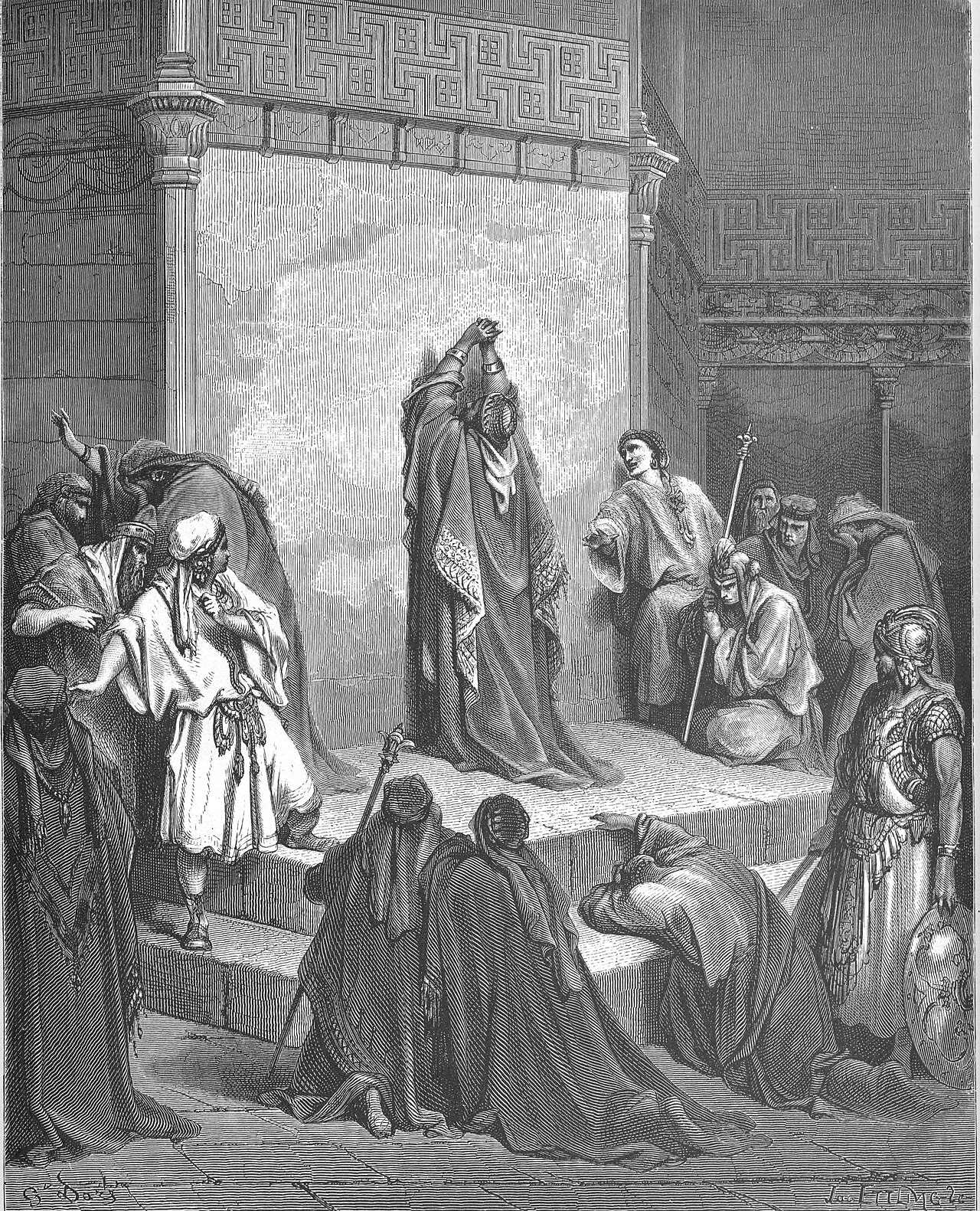
This page draws on Albert Barnes, Notes on the Old Testament; Albert Barnes, Notes, Explanatory and Practical, on the Old and New Testaments (1832-1869); Jamieson Fausset and Brown, Commentary Critical and Explanatory on the Whole Bible; Jamieson, Fausset & Brown, Commentary Critical and Explanatory on the Whole Bible; John Gill, Exposition of the Old Testament (1748-1763); John Wesley, Explanatory Notes upon the Old Testament and Matthew Henry, Commentary on the Whole Bible.