
2 Kings 6:28
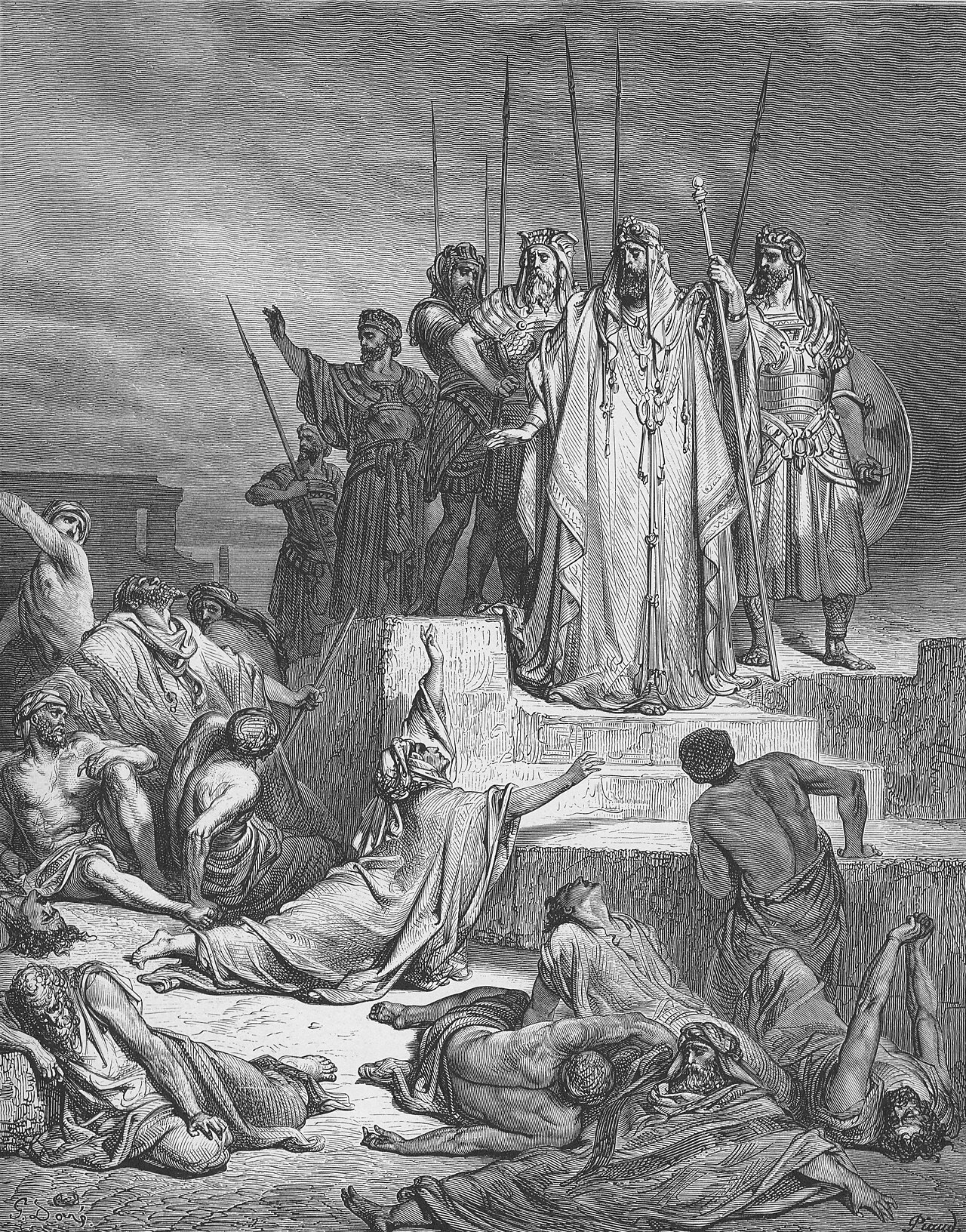
in 2 Kings 6Then the king asked her, “What is the matter?” And she answered, “This woman said to me, ‘Give up your son, that we may eat him, and tomorrow we will eat my son.’
BSB
The same verse in ASV and KJV ▾
ASV
And the king said unto her, What aileth thee? And she answered, This woman said unto me, Give thy son, that we may eat him to-day, and we will eat my son to-morrow.
KJV
And the king said unto her, What aileth thee? And she answered, This woman said unto me, Give thy son, that we may eat him to day, and we will eat my son to morrow.
⋯
This verse in 2 Kings 6
Commentary
6 notes on this verseA commentator
Albert Barnes1798–1870
Notes, Explanatory and Practical, on the Old and New Testaments (1832-1869)
The king had assumed that the cry of the woman was for food. Her manner indicated that it was not so. He therefore proceeded to inquire what she wanted of him. This woman - Both women, it would seem, were present; and the aggrieved one pointed to the other.
This site's exposition
What aileth thee
on 2 Kings 6:28-29
The king asks what troubles her and hears an agreement between two mothers to eat their own sons in turn, one boiled and eaten already, the second hidden once her turn came. Deuteronomy had named this exact horror as the covenant's own last curse on a besieged and disobedient people, thine eye shall be evil toward the son of thy bosom in the siege and in the straitness wherewith thine enemy shall distress thee. The chapter does not soften the scene or explain it away; it reports the curse of Deuteronomy 28 arriving on schedule inside the city's own walls.
The record, by era
The Church Fathers1 voice
"Some time later King Ben-hadad of Aram mustered his entire army; he marched against Samaria and laid siege to it." This is that Ben-hadad who had been condemned to death by God; and Ahab had received the order to execute him. But he spared his …
The Puritans and the Awakening3 voices
Is there anything singular in thy case, or dost thou fare worse than thy neighbours?" Truly yes; she and one of her neighbours had made a barbarous agreement, that, all provisions failing, they should boil and eat her son first and then her neighbour's; hers was eaten (who can think of it without horror?) and now her neighbour hid hers,
quarantine:debris (2026-07-29) — odd-straight-quotes
And the king said unto her, what aileth thee?....
Concerning the sons of the prophets, and their condition and character. The college here spoken of seems to be that at Gilgal, for there Elisha was ( ch. iv. 38 ), and it was near Jordan; and, probably, wherever Elisha resided as many as could of the sons of the prophets flocked to him for the advantage of his instructions, counsels, and prayers.
The words behind it
19 Hebrew wordsEvery Hebrew word of this verse in the order it stands, with what it means and the door to its own study. The last column counts the times a word stands in the whole Bible: the rarer the word, the more the places it appears belong together.
| Hebrew | Sound | Meaning | Word study | In the Bible |
|---|---|---|---|---|
| וַיֹּֽאמֶר־ | vaiyomer- | and he said | H559 → | 5305 times |
| לָ֥הּ | lah | to her | ||
| הַמֶּ֖לֶךְ | hamelekh | the king | H4428 → | 2525 times |
| מַה־ | mah- | what? | H4100 → | 752 times |
| לָּ֑ךְ | lakh | [is] to you | ||
| וַתֹּ֗אמֶר | vatomer | and she said | H559 → | 5305 times |
| הָאִשָּׁ֨ה | haishah | the woman | H802 → | 781 times |
| הַזֹּ֜את | hazot | <the> this | H2063 → | 603 times |
| אָמְרָ֣ה | ʾamerah | she said | H559 → | 5305 times |
| אֵלַ֗י | ʾelai | to me | H413 → | 5510 times |
| תְּנִ֤י | teni | give | H5414 → | 2011 times |
| אֶת־ | ʾet- | <obj.> | H853 → | 10935 times |
| בְּנֵךְ֙ | benekh | son your | H1121 → | 4930 times |
| וְנֹאכְלֶ֣נּוּ | venokhelenu | so we may eat him | H398 → | 810 times |
| הַיּ֔וֹם | haiyom | this day | H3117 → | 2304 times |
| וְאֶת־ | veet | and <obj.> | H853 → | 10935 times |
| בְּנִ֖י | beni | son my | H1121 → | 4930 times |
| נֹאכַ֥ל | nokhal | we will eat | H398 → | 810 times |
| מָחָֽר׃ | machar | tomorrow | H4279 → | 52 times |
וַיֹּֽאמֶר־and he said
vaiyomer-H559 →5305 times
לָ֥הּto her
lah
הַמֶּ֖לֶךְthe king
hamelekhH4428 →2525 times
מַה־what?
mah-H4100 →752 times
לָּ֑ךְ[is] to you
lakh
וַתֹּ֗אמֶרand she said
vatomerH559 →5305 times
הָאִשָּׁ֨הthe woman
haishahH802 →781 times
הַזֹּ֜את<the> this
hazotH2063 →603 times
אָמְרָ֣הshe said
ʾamerahH559 →5305 times
אֵלַ֗יto me
ʾelaiH413 →5510 times
תְּנִ֤יgive
teniH5414 →2011 times
אֶת־<obj.>
ʾet-H853 →10935 times
בְּנֵךְ֙son your
benekhH1121 →4930 times
וְנֹאכְלֶ֣נּוּso we may eat him
venokhelenuH398 →810 times
הַיּ֔וֹםthis day
haiyomH3117 →2304 times
וְאֶת־and <obj.>
veetH853 →10935 times
בְּנִ֖יson my
beniH1121 →4930 times
נֹאכַ֥לwe will eat
nokhalH398 →810 times
מָחָֽר׃tomorrow
macharH4279 →52 times
A shaded row is a word that stands 400 times or fewer in the Bible.
The walk
8 stopsEach card is a verse this one points to, and under it the verses that one points to in turn. Where several paths arrive at the same place, that place is listed first: the text keeps returning to it.
Through
Luke 23:29Look, the days are coming when people will say, ‘Blessed are the barren women, the wombs that never bore, and breasts that never nursed!’
it leads to
- Matthew 24:19
How miserable those days will be for pregnant and nursing mothers!
Reached by 2 separate paths from here.
- Luke 21:23–24
How miserable those days will be for pregnant and nursing mothers! For there will be great distress upon the land and wrath against this people.
- Mark 13:17–19
How miserable those days will be for pregnant and nursing mothers!
- Hosea 9:12–16
Even if they raise their children, I will bereave them of each one. Yes, woe be to them when I turn away from them!
- Hosea 13:16
Samaria will bear her guilt because she has rebelled against her God. They will fall by the sword; their little ones will be dashed to pieces, and their pregnant women ripped open.
- Matthew 24:19
Through
Lamentations 4:10The hands of compassionate women have cooked their own children, who became their food in the destruction of the daughter of my people.
it leads to
- Lamentations 2:20
Look, O LORD, and consider: Whom have You ever treated like this? Should women eat their offspring, the infants they have nurtured? Should priests and prophets be killed in the sanctuary of the Lord?
Reached by 2 separate paths from here.
- Ezekiel 5:10
As a result, fathers among you will eat their sons, and sons will eat their fathers. I will execute judgments against you and scatter all your remnant to every wind.’
Reached by 2 separate paths from here.
- Isaiah 49:15
“Can a woman forget her nursing child, or lack compassion for the son of her womb? Even if she could forget, I will not forget you!
- Lamentations 2:20
Where this verse is studied
On this page
About 2 Kings
This page draws on Albert Barnes, Notes, Explanatory and Practical, on the Old and New Testaments (1832-1869); Ephrem the Syrian, ON THE SECOND BOOK OF KINGS 6:24; John Gill, Exposition of the Old Testament (1748-1763); Keil, The Books of the Kings and Matthew Henry, Commentary on the Whole Bible.