
1 Samuel 9:13
in 1 Samuel 9As soon as you enter the city, you will find him before he goes up to the high place to eat. The people will not eat until he comes, because he must bless the sacrifice; after that, the guests will eat. Go up at once; you will find him.”
BSB
The same verse in ASV and KJV ▾
ASV
As soon as ye are come into the city, ye shall straightway find him, before he goeth up to the high place to eat; for the people will not eat until he come, because he doth bless the sacrifice; and afterwards they eat that are bidden. Now therefore get you up; for at this time ye shall find him.
KJV
As soon as ye be come into the city, ye shall straightway find him, before he go up to the high place to eat: for the people will not eat until he come, because he doth bless the sacrifice; and afterwards they eat that be bidden. Now therefore get you up; for about this time ye shall find him.
⋯
This verse in 1 Samuel 9
Commentary
11 notes on this verseA commentator
Albert Barnes1798–1870
Notes, Explanatory and Practical, on the Old and New Testaments (1832-1869)
Before he go up - By this phrase we see that the high place was in the highest part of the city. Like the “house of the god Berith” Jdg 9:46, it was probably the citadel of Ramah. There was connected with the altar a room large enough for thirty people to dine in 1Sa 9:22.
This site's exposition
some young women coming out to draw water
on 1 Samuel 9:11-13
The young women answer with more detail than the question needed: the sacrifice today, the order of eating and the hour to find him. Their precision reads like a town that knows its prophet's schedule. Saul cannot know that the LORD told Samuel the day before whom to expect, so what looks like local knowledge is the edge of a plan already in motion.
This site's exposition
As soon as you enter the city
John Wesley reads the blessing as thanksgiving joined to prayer that God would accept the offering. Albert Barnes places the high place at the top of the town, with a hall large enough for the thirty guests of verse 22. The guests wait for Samuel.
The record, by era
The Medieval Church2 voices
A commentator
Gregory the DialogistCommentary on 1 Kings, Book 4, Chapter 4 · Written before 604.
proposed
But since we have begun to explain these things spiritually, this can fittingly be understood as spoken concerning the simple. For in the city, one who appears a stranger is thought to be able to address Samuel, but on the high place he is not thought so: because those whom we believe to be simple, we consider to need plain, not lofty instruction. Therefore they ought to hear the holy preachers when they speak plain things to the simple, which they understand: not when they say lofty things, which they can in no way understand.
For the people will not eat until he comes, etc. For the unlearned masses, they say, cannot taste the sweetness of heavenly life, from which they have been exiles for so long, with hope, until he comes who testifies that the kingdom of heaven is …
The Puritans and the Awakening3 voices
Find him - At home and at leisure. To eat - The relicks of the sacrifices. Doth bless - The blessing of this sacrifice seems to have consisted both of thanksgiving, this being a thank-offering, and of prayer to God for its acceptance.
Gibeah of Saul was not twenty miles from Ramah where Samuel dwelt, and was near to Mizpeh where he often judged Israel, and yet, it seems, Saul had lived so very privately, and had taken so little notice of public affairs, that he had never seen Samuel, for when he met him (
quarantine:debris (2026-07-29) — unbalanced-parens
As soon as ye come into the city, ye shall straightway find him,....
3 more voices on this verse
The Puritans and the Awakening1 voice
We should always be ready to give what assistance we can to those that are enquiring after God's prophets, and to further them in their enquiries. Even the maid-servants could tell them, (1.) That there was a sacrifice that day in the high place, it being either an ordinary festival or an extraordinary day of prayer and thanksgiving, with which sacrifices were joined.
The Nineteenth Century2 voices
A commentator
Jamieson, Fausset & Brown1802–1910
Commentary Critical and Explanatory on the Whole Bible (1871)
proposed
as they went up the hill--The modern village, Er-Rameh, lies on an eminence; and on their way they met a band of young maidens going out to the well, which, like all similar places in Palestine, was beyond the precincts of the town.
quarantine:debris (2026-07-29) — starts-lowercase
He doth bless the sacrifice - He alone can perform the religious rites which are used on this occasion. Afterwards they eat that be bidden - Among the Arabs, often a large feast is made of sacrificed camels, etc., and then the people of the vicinity are invited to come and partake of the sacrifice. This is the custom to which allusion is made here.
How the passage was read
What the Jewish commentators add
As you enter the city you… They prolonged their conversation in order to gaze upon Shaul's handsomeness. 7 Maseches Berachos 48b. The girls gave an extraordinarily long answer to a relatively simple question.
This section is reception history: how the passage was read and kept in the Jewish tradition. Where a reading parts from an essential of the Christian faith, the section says so at that point.
Texts and citation data: Sefaria; each excerpt follows its version’s licence. 6 further sources are cited on this chapter that carry no English text this site may quote or only restate the verse.
The words behind it
30 Hebrew wordsEvery Hebrew word of this verse in the order it stands, with what it means and the door to its own study. The last column counts the times a word stands in the whole Bible: the rarer the word, the more the places it appears belong together.
| Hebrew | Sound | Meaning | Word study | In the Bible |
|---|---|---|---|---|
| כְּבֹאֲכֶ֣ם | kevoakhem | when come you | H935 → | 2568 times |
| הָעִ֣יר | hair | the city | H5892 → | 1090 times |
| כֵּ֣ן | ken | thus | H3651 → | 771 times |
| תִּמְצְא֣וּן | timtzeun | you will find ! | H4672 → | 455 times |
| אֹת֡וֹ | ʾoto | <obj.> him | H853 → | 10935 times |
| בְּטֶרֶם֩ | beterem | <in> before | H2962 → | 56 times |
| יַעֲלֶ֨ה | yaaleh | he will go up | H5927 → | 890 times |
| הַבָּמָ֜תָה | habamatah | the high place towards | H1116 → | 102 times |
| לֶאֱכֹ֗ל | leekhol | to eat | H398 → | 810 times |
| כִּ֠י | ki | for | H3588 → | 4482 times |
| לֹֽא־ | lo'- | not | H3808 → | 5168 times |
| יֹאכַ֤ל | yokhal | it will eat | H398 → | 810 times |
| הָעָם֙ | haam | the people | H5971 → | 1873 times |
| עַד־ | ʾad- | until | H5704 → | 1261 times |
| בֹּא֔וֹ | boo | comes he | H935 → | 2568 times |
| כִּֽי־ | ki- | for | H3588 → | 4482 times |
| הוּא֙ | hu' | he | H1931 → | 1879 times |
| יְבָרֵ֣ךְ | yevarekh | he will bless | H1288 → | 330 times |
| הַזֶּ֔בַח | hazevach | the sacrifice | H2077 → | 162 times |
| אַחֲרֵי־ | ʾacharei- | after | H310 → | 715 times |
| כֵ֖ן | khen | thus | H3651 → | 771 times |
| יֹאכְל֣וּ | yokhelu | they will eat | H398 → | 810 times |
| הַקְּרֻאִ֑ים | hakeruim | those [who] were invited | H7121 → | 733 times |
| וְעַתָּ֣ה | veatah | and now | H6258 → | 433 times |
| עֲל֔וּ | ʾalu | go up | H5927 → | 890 times |
| כִּֽי־ | ki- | for | H3588 → | 4482 times |
| אֹת֥וֹ | ʾoto | <obj.> him | H853 → | 10935 times |
| כְהַיּ֖וֹם | khehaiyom | as the day | H3117 → | 2304 times |
| תִּמְצְא֥וּן | timtzeun | you will find ! | H4672 → | 455 times |
| אֹתֽוֹ׃ | ʾoto | <obj.> him | H853 → | 10935 times |
כְּבֹאֲכֶ֣םwhen come you
kevoakhemH935 →2568 times
הָעִ֣ירthe city
hairH5892 →1090 times
כֵּ֣ןthus
kenH3651 →771 times
תִּמְצְא֣וּןyou will find !
timtzeunH4672 →455 times
אֹת֡וֹ<obj.> him
ʾotoH853 →10935 times
בְּטֶרֶם֩<in> before
beteremH2962 →56 times
יַעֲלֶ֨הhe will go up
yaalehH5927 →890 times
הַבָּמָ֜תָהthe high place towards
habamatahH1116 →102 times
לֶאֱכֹ֗לto eat
leekholH398 →810 times
כִּ֠יfor
kiH3588 →4482 times
לֹֽא־not
lo'-H3808 →5168 times
יֹאכַ֤לit will eat
yokhalH398 →810 times
הָעָם֙the people
haamH5971 →1873 times
עַד־until
ʾad-H5704 →1261 times
בֹּא֔וֹcomes he
booH935 →2568 times
כִּֽי־for
ki-H3588 →4482 times
הוּא֙he
hu'H1931 →1879 times
יְבָרֵ֣ךְhe will bless
yevarekhH1288 →330 times
הַזֶּ֔בַחthe sacrifice
hazevachH2077 →162 times
אַחֲרֵי־after
ʾacharei-H310 →715 times
כֵ֖ןthus
khenH3651 →771 times
יֹאכְל֣וּthey will eat
yokheluH398 →810 times
הַקְּרֻאִ֑יםthose [who] were invited
hakeruimH7121 →733 times
וְעַתָּ֣הand now
veatahH6258 →433 times
עֲל֔וּgo up
ʾaluH5927 →890 times
כִּֽי־for
ki-H3588 →4482 times
אֹת֥וֹ<obj.> him
ʾotoH853 →10935 times
כְהַיּ֖וֹםas the day
khehaiyomH3117 →2304 times
תִּמְצְא֥וּןyou will find !
timtzeunH4672 →455 times
אֹתֽוֹ׃<obj.> him
ʾotoH853 →10935 times
A shaded row is a word that stands 400 times or fewer in the Bible.
The walk
8 stopsEach card is a verse this one points to, and under it the verses that one points to in turn. Where several paths arrive at the same place, that place is listed first: the text keeps returning to it.
Through
Matthew 26:26While they were eating, Jesus took bread, spoke a blessing and broke it, and gave it to the disciples, saying, “Take and eat; this is My body.”
it leads to
- 1 Corinthians 11:23–29
For I received from the Lord what I also passed on to you: The Lord Jesus, on the night He was betrayed, took bread,
- Luke 22:18–20
For I tell you that I will not drink of the fruit of the vine from now on until the kingdom of God comes.”
- 1 Corinthians 10:16–17
Is not the cup of blessing that we bless a participation in the blood of Christ? And is not the bread that we break a participation in the body of Christ?
- John 6:33–35
For the bread of God is He who comes down from heaven and gives life to the world.”
- 1 Corinthians 10:4
and drank the same spiritual drink; for they drank from the spiritual rock that accompanied them, and that rock was Christ.
- 1 Corinthians 11:23–29
Through
1 Corinthians 10:30If I partake in the meal with thankfulness, why am I denounced because of that for which I give thanks?
it leads to
- Romans 14:6
He who observes a special day does so to the Lord; he who eats does so to the Lord, for he gives thanks to God; and he who abstains does so to the Lord…
Reached by 2 separate paths from here.
- Romans 14:6
Through
1 Timothy 4:4For every creation of God is good, and nothing that is received with thanksgiving should be rejected,
it leads to
- Romans 14:20
Do not destroy the work of God for the sake of food. All food is clean, but it is wrong for a man to let his eating be a stumbling block.
- 1 Corinthians 10:25
Eat anything sold in the meat market without raising questions of conscience,
- Romans 14:20
Where this verse is studied
On this page
Studies1
About 1 Samuel
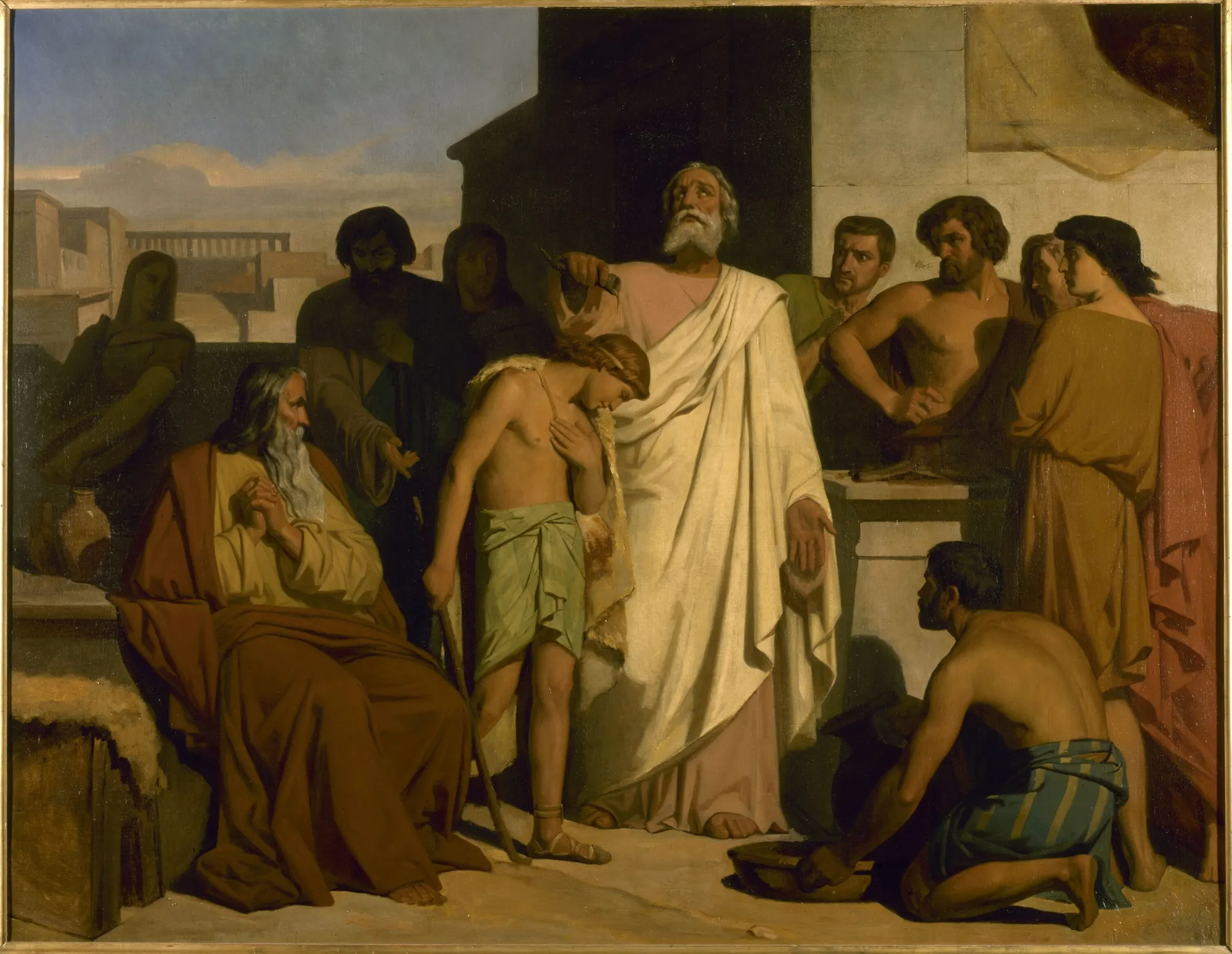
This page draws on Adam Clarke, Commentary on the Bible; Albert Barnes, Notes, Explanatory and Practical, on the Old and New Testaments (1832-1869); Bede, Commentary on Samuel; Gregory the Dialogist, Commentary on 1 Kings, Book 4, Chapter 4; Jamieson, Fausset & Brown, Commentary Critical and Explanatory on the Whole Bible; John Gill, Exposition of the Old Testament (1748-1763); John Wesley, Explanatory Notes upon the Old Testament and Matthew Henry, Commentary on the Whole Bible.