
1 Samuel 24:11
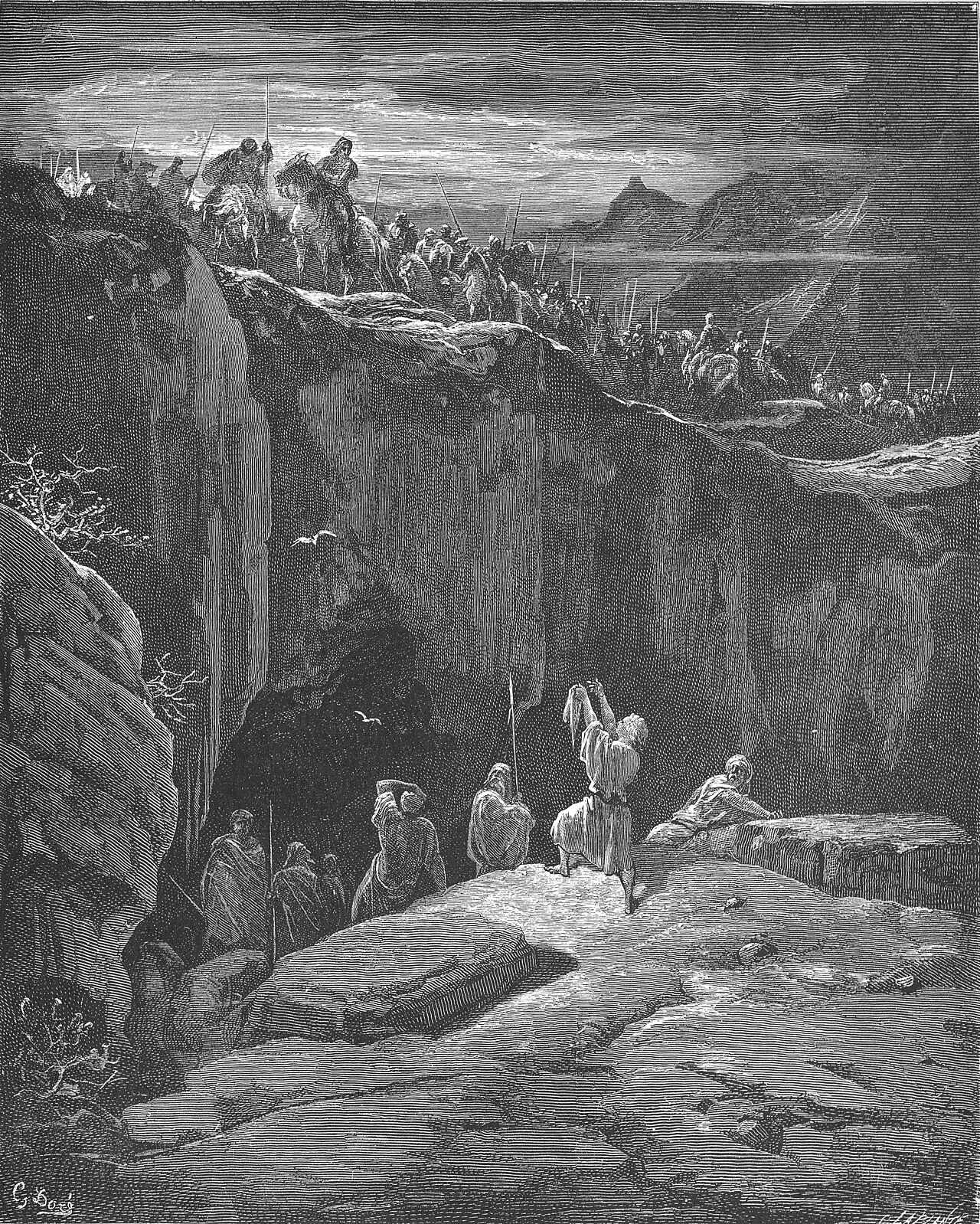
in 1 Samuel 24See, my father, look at the corner of your robe in my hand. For I cut it off, but I did not kill you. See and know that there is no evil or rebellion in my hands. I have not sinned against you, even though you are hunting me down to take my life.
BSB
The same verse in ASV and KJV ▾
ASV
Moreover, my father, see, yea, see the skirt of thy robe in my hand; for in that I cut off the skirt of thy robe, and killed thee not, know thou and see that there is neither evil nor transgression in my hand, and I have not sinned against thee, though thou huntest after my life to take it.
KJV
Moreover, my father, see, yea, see the skirt of thy robe in my hand: for in that I cut off the skirt of thy robe, and killed thee not, know thou and see that there is neither evil nor transgression in mine hand, and I have not sinned against thee; yet thou huntest my soul to take it.
⋯
This verse in 1 Samuel 24
Commentary
11 notes on this verseSaul, therefore, came out of the cave unaware of what had happened, wearing the little garment which had been trimmed all around. David came out behind him in self-assurance, and having seized the hill lying above the cave in advance, held out the end [of Saul's robe] in his hand. This was nothing other than a bloodless trophy against his enemies.
This site's exposition
this day thine eyes have seen
on 1 Samuel 24:10-11
David repeats the anointed argument at verse 10, this day thine eyes have seen how the Lord had delivered thee into mine hand, and some bade me kill thee, but mine eye spared thee, for he is the Lord's anointed. He holds up the skirt itself as evidence a knife could just as easily have written, and calls the difference between the cloth and the man proof that there is neither evil nor transgression in his hand. The closing clause turns the argument on Saul without warning: I have not sinned against thee, yet thou huntest my soul to take it.
This site's exposition
See, my father, look at the corner
Barnes explains that calling Saul father is the respectful address of a younger man, and he compares 2 Kings 5:13. Henry adds that Saul was David's father-in-law as well as his king. Saul answers in kind at verse 16.
The record, by era
The Church Fathers1 voice
So what did David reply? "Your servant, my lord the king." A contest and rivalry then developed as to which one would pay greater respect to the other: one admitted the other to kinship, the other called him lord. What he means is something like this: I am interested in one thing only, your welfare and the progress of virtue. You called me child, and I love and am fond of you if you have me as a servant, provided you set aside your resentment, provided you do not suspect me of any evil or think me to be scheming and warring against you. He fulfilled that apostolic law, note, that bids us excel ourselves in showing one another honor, unlike the general run of people, whose disposition is worse than beasts' and who cannot bear to be the first to greet their neighbor, having the view that they are shamed and insulted if they share a mere greeting with someone.
The Medieval Church1 voice
Rather, my father, see, etc. Rather, says the Lord, my people, since I was called and was the Son of Man to confirm the promises of the fathers, it did not displease me to be incarnate. See and recognize the boundary of your royal state …
The Puritans and the Awakening3 voices
"He is my lord, and the Lord's anointed, whom I ought to protect, and to whom I owe faith and allegiance, and therefore I said, I will not touch a hair of his head." Such a happy command he had of himself that his nature, in the midst of the greatest provocation, was not suffered to rebel against his principles.
), yet, because it was an affront to Saul's royal dignity, he wished he had not done it. Note, It is a good thing to have a heart within us smiting us for sins that seem little; it is a sign that conscience is awake and tender, and will be the means of preventing greater sins.
quarantine:debris (2026-07-29) — leading-punctuation+unbalanced-parens
), for he was not only, as king, the father of his country, but he was, in particular, his father-in-law. From a father one may expect compassion and a favourable opinion. For a prince to seek the ruin of any of his good subjects is as unnatural as for a father to seek the ruin of his own children.
quarantine:debris (2026-07-29) — leading-punctuation+unbalanced-parens
3 more voices on this verse
The Puritans and the Awakening1 voice
Moreover, my father,....
The Nineteenth Century2 voices
A commentator
Jamieson, Fausset & Brown1802–1910
Commentary Critical and Explanatory on the Whole Bible (1871)
He seems to have been naturally susceptible of strong, and, as in this instance, of good and grateful impressions. The improvement of his temper, indeed, was but transient--his language that of a man overwhelmed by the force of impetuous emotions and constrained to admire the conduct, and esteem the character, of one whom he hated and dreaded.
A commentator
Albert Barnes1798–1870
Notes, Explanatory and Practical, on the Old and New Testaments (1832-1869)
proposed
My father - The respectful address of a junior and an inferior (see 2Ki 5:13, and compare 1Sa 24:16; 1Sa 25:8).
How the passage was read
What the Jewish commentators add
On the verses either side of this one
Why do you listen. Why do you accept Do'eg's slander concerning me? 4 Rashi states that Dovid was alluding to Do’eg because Dovid said ‘why do you listen to the man [ אָדָם ]’, in the singular, referring to one individual person.
1 more on this passage, in their own words ▾
My father, indeed see. Meaning, pay attention to the matter, and also see the evidence, for the corner of your robe is in my hand, and I could have killed you. 6 As easily as having cut off the corner of your robe.
This section is reception history: how the passage was read and kept in the Jewish tradition. Where a reading parts from an essential of the Christian faith, the section says so at that point.
Texts and citation data: Sefaria; each excerpt follows its version’s licence. 4 further sources are cited on this chapter that carry no English text this site may quote or only restate the verse.
The words behind it
30 Hebrew wordsEvery Hebrew word of this verse in the order it stands, with what it means and the door to its own study. The last column counts the times a word stands in the whole Bible: the rarer the word, the more the places it appears belong together.
| Hebrew | Sound | Meaning | Word study | In the Bible |
|---|---|---|---|---|
| וְאָבִ֣י | veavi | and O father my | H1 → | 1212 times |
| רְאֵ֔ה | reeh | see | H7200 → | 1300 times |
| גַּ֗ם | gam | also | H1571 → | 769 times |
| רְאֵ֛ה | reeh | see | H7200 → | 1300 times |
| אֶת־ | ʾet- | <obj.> | H853 → | 10935 times |
| כְּנַ֥ף | kenaf | [the] skirt of | H3671 → | 109 times |
| מְעִילְךָ֖ | meilekha | robe your | H4598 → | 28 times |
| בְּיָדִ֑י | beyadi | in hand my | H3027 → | 1618 times |
| כִּ֡י | ki | for | H3588 → | 4482 times |
| בְּכָרְתִי֩ | bekhareti | when cut off I | H3772 → | 288 times |
| אֶת־ | ʾet- | <obj.> | H853 → | 10935 times |
| כְּנַ֨ף | kenaf | [the] skirt of | H3671 → | 109 times |
| מְעִֽילְךָ֜ | meilekha | robe your | H4598 → | 28 times |
| וְלֹ֣א | velo' | and not | H3808 → | 5168 times |
| הֲרַגְתִּ֗יךָ | haragtikha | I killed you | H2026 → | 167 times |
| דַּ֤ע | da' | know | H3045 → | 945 times |
| וּרְאֵה֙ | ureeh | and see | H7200 → | 1300 times |
| כִּי֩ | ki | that | H3588 → | 4482 times |
| אֵ֨ין | ʾein | there not | H369 → | 789 times |
| בְּיָדִ֜י | beyadi | in hand my | H3027 → | 1618 times |
| רָעָ֤ה | raah | [is] evil | H7451 → | 662 times |
| וָפֶ֙שַׁע֙ | vafesha' | and transgression | H6588 → | |
| וְלֹא־ | velo'- | and not | H3808 → | 5168 times |
| חָטָ֣אתִי | chatati | I have sinned | H2398 → | 238 times |
| לָ֔ךְ | lakh | to <the> you | ||
| וְאַתָּ֛ה | veatah | and you | H859 → | 1094 times |
| צֹדֶ֥ה | tzodeh | [are] lying in wait for | H6658 → | |
| אֶת־ | ʾet- | <obj.> | H853 → | 10935 times |
| נַפְשִׁ֖י | nafshi | life my | H5315 → | 754 times |
| לְקַחְתָּֽהּ׃ | lekachtah | to take it | H3947 → | 966 times |
וְאָבִ֣יand O father my
veaviH1 →1212 times
רְאֵ֔הsee
reehH7200 →1300 times
גַּ֗םalso
gamH1571 →769 times
רְאֵ֛הsee
reehH7200 →1300 times
אֶת־<obj.>
ʾet-H853 →10935 times
כְּנַ֥ף[the] skirt of
kenafH3671 →109 times
מְעִילְךָ֖robe your
meilekhaH4598 →28 times
בְּיָדִ֑יin hand my
beyadiH3027 →1618 times
כִּ֡יfor
kiH3588 →4482 times
בְּכָרְתִי֩when cut off I
bekharetiH3772 →288 times
אֶת־<obj.>
ʾet-H853 →10935 times
כְּנַ֨ף[the] skirt of
kenafH3671 →109 times
מְעִֽילְךָ֜robe your
meilekhaH4598 →28 times
וְלֹ֣אand not
velo'H3808 →5168 times
הֲרַגְתִּ֗יךָI killed you
haragtikhaH2026 →167 times
דַּ֤עknow
da'H3045 →945 times
וּרְאֵה֙and see
ureehH7200 →1300 times
כִּי֩that
kiH3588 →4482 times
אֵ֨יןthere not
ʾeinH369 →789 times
בְּיָדִ֜יin hand my
beyadiH3027 →1618 times
רָעָ֤ה[is] evil
raahH7451 →662 times
וָפֶ֙שַׁע֙and transgression
vafesha'H6588 →
וְלֹא־and not
velo'-H3808 →5168 times
חָטָ֣אתִיI have sinned
chatatiH2398 →238 times
לָ֔ךְto <the> you
lakh
וְאַתָּ֛הand you
veatahH859 →1094 times
צֹדֶ֥ה[are] lying in wait for
tzodehH6658 →
אֶת־<obj.>
ʾet-H853 →10935 times
נַפְשִׁ֖יlife my
nafshiH5315 →754 times
לְקַחְתָּֽהּ׃to take it
lekachtahH3947 →966 times
A shaded row is a word that stands 400 times or fewer in the Bible.
The walk
8 stopsEach card is a verse this one points to, and under it the verses that one points to in turn. Where several paths arrive at the same place, that place is listed first: the text keeps returning to it.
Through
2 Kings 5:13Naaman’s servants, however, approached him and said, “My father, if the prophet had told you to do some great thing, would you not have done it? How much more, then, when he tells you,…
it leads to
- 2 Kings 6:21
And when the king of Israel saw them, he asked Elisha, “My father, shall I kill them? Shall I kill them?”
- 2 Kings 13:14
When Elisha had fallen sick with the illness from which he would die, Jehoash king of Israel came down to him and wept over him, saying, “My father, my father, the chariots and horsemen…
- 2 Kings 2:12
As Elisha watched, he cried out, “My father, my father, the chariots and horsemen of Israel!” And he saw Elijah no more. So taking hold of his own clothes, he tore them in two.
- 2 Kings 6:21
Through
1 Samuel 26:18And he continued, “Why is my lord pursuing his servant? What have I done? What evil is in my hand?
it leads to
- 1 Samuel 24:9
and said to Saul, “Why do you listen to the words of men who say, ‘Look, David intends to harm you’?
- 1 Samuel 24:11–14
See, my father, look at the corner of your robe in my hand. For I cut it off, but I did not kill you. See and know that there is no evil or rebellion…
- 1 Samuel 24:9
Through
1 Samuel 23:14And David stayed in the wilderness strongholds and in the hill country of the Wilderness of Ziph. Day after day Saul searched for him, but God would not deliver David into his hand.
it leads to
- Psalms 54:3–4
For strangers rise up against me, and ruthless men seek my life— men with no regard for God. Selah
- Psalms 32:7
You are my hiding place. You protect me from trouble; You surround me with songs of deliverance. Selah
- Psalms 54:3–4
Through
1 Samuel 26:20So do not let my blood fall to the ground far from the presence of the LORD. For the king of Israel has come out to look for a flea, like one who hunts…
it leads to
- 1 Samuel 24:14
Against whom has the king of Israel come out? Whom are you pursuing? A dead dog? A flea?
- 1 Samuel 24:14
About 1 Samuel
This page draws on Albert Barnes, Notes, Explanatory and Practical, on the Old and New Testaments (1832-1869); Bede, Commentary on Samuel; Gregory of Nyssa, ON THE INSCRIPTIONS OF THE PSALMS 2.14.229-30; Jamieson, Fausset & Brown, Commentary Critical and Explanatory on the Whole Bible; John Chrysostom, HOMILIES ON DAVID AND SAUL 3; John Gill, Exposition of the Old Testament (1748-1763) and Matthew Henry, Commentary on the Whole Bible.