
1 Samuel 24:18
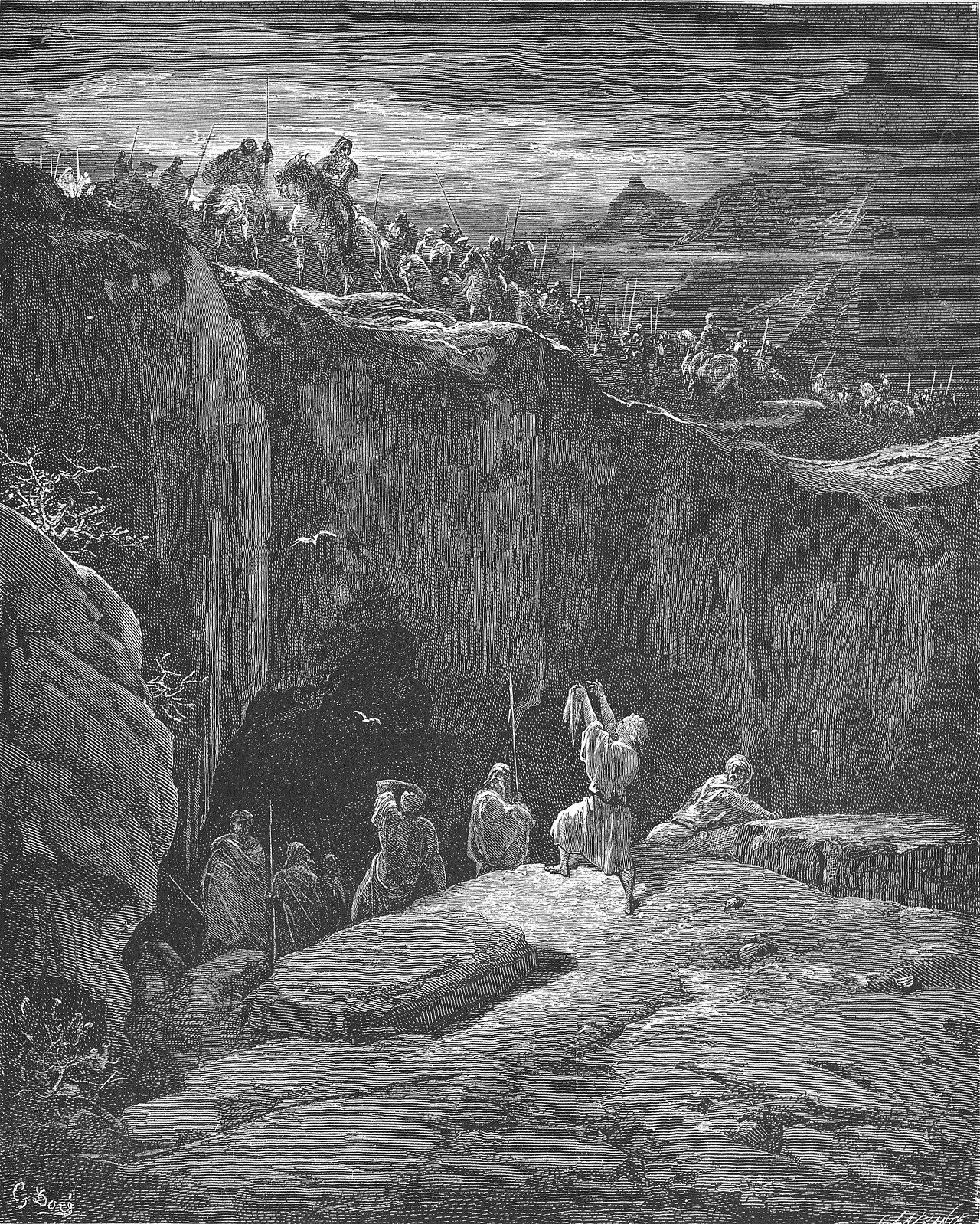
in 1 Samuel 24And you have shown this day how well you have dealt with me; for when the LORD delivered me into your hand, you did not kill me.
BSB
The same verse in ASV and KJV ▾
ASV
And thou hast declared this day how that thou hast dealt well with me, forasmuch as when Jehovah had delivered me up into thy hand, thou killedst me not.
KJV
And thou hast shewed this day how that thou hast dealt well with me: forasmuch as when the Lord had delivered me into thine hand, thou killedst me not.
⋯
This verse in 1 Samuel 24
Commentary
5 notes on this verseNot even this act of benevolence moved Saul, however. Again he gathered an army and again he set out in pursuit, until he was a second time apprehended by David in the cave where he more clearly revealed his own iniquity and made the virtue of David even more resplendent. Envy is the most savage form of hatred. Favors render those who are hostile to us for any other reason more tractable, but kind treatment shown to an envious and spiteful person only aggravates his dislike.
This site's exposition
you have shown this day how well you have dealt with me
on 1 Samuel 24:18-20
Saul states that the LORD delivered him into David's hand and David did not kill him. The confession peaks at verse 20: “Now I know for sure that you will be king.” Clarke notes the bitter edge under the admission, since Saul knew this before and pursued David anyway.
The record, by era
The Puritans and the Awakening3 voices
David Spares Saul in the Cave. 1 And it came to pass, when Saul was returned from following the Philistines, that it was told him, saying, Behold, David is in the wilderness of Engedi.
quarantine:scripture (2026-07-29) — scripture-overlap:94%@v1-3
): " Thou hast shown this day that thou art so far from seeking my hurt that thou hast dealt well with me. " We are too apt to suspect others to be worse affected towards us then really they are, and than perhaps they are proved to be; and when, afterwards, our mistake is discovered, we should be forward to recall our suspicions, as Saul does here.
quarantine:debris (2026-07-29) — leading-punctuation+unbalanced-parens
And thou hast showed this day how that thou hast dealt well with me,....
The words behind it
15 Hebrew wordsEvery Hebrew word of this verse in the order it stands, with what it means and the door to its own study. The last column counts the times a word stands in the whole Bible: the rarer the word, the more the places it appears belong together.
| Hebrew | Sound | Meaning | Word study | In the Bible |
|---|---|---|---|---|
| וְאַתָּה֙ | veat | and you | H859 → | 1094 times |
| הִגַּ֣דְתָּ | higadta | you have told | H5046 → | 370 times |
| הַיּ֔וֹם | haiyom | this day | H3117 → | 2304 times |
| אֵ֛ת | ʾet | <obj.> | H853 → | 10935 times |
| אֲשֶׁר־ | ʾasher- | this: | H834 → | 5497 times |
| עָשִׂ֥יתָה | ʾasitah | you have done | H6213 → | 2628 times |
| אִתִּ֖י | ʾiti | with me | H854 → | 929 times |
| טוֹבָ֑ה | tovah | good | H2896 → | 538 times |
| אֵת֩ | ʾet | <obj.> | H853 → | 10935 times |
| אֲשֶׁ֨ר | ʾasher | [and] this: | H834 → | 5497 times |
| סִגְּרַ֧נִי | sigerani | he delivered up me | H5462 → | 91 times |
| יְהוָ֛ה | yahweh | Yahweh | H3068 → | 6520 times |
| בְּיָדְךָ֖ | beyadekha | in hand your | H3027 → | 1618 times |
| וְלֹ֥א | velo' | and not | H3808 → | 5168 times |
| הֲרַגְתָּֽנִי׃ | haragtani | you killed me | H2026 → | 167 times |
וְאַתָּה֙and you
veatH859 →1094 times
הִגַּ֣דְתָּyou have told
higadtaH5046 →370 times
הַיּ֔וֹםthis day
haiyomH3117 →2304 times
אֵ֛ת<obj.>
ʾetH853 →10935 times
אֲשֶׁר־this:
ʾasher-H834 →5497 times
עָשִׂ֥יתָהyou have done
ʾasitahH6213 →2628 times
אִתִּ֖יwith me
ʾitiH854 →929 times
טוֹבָ֑הgood
tovahH2896 →538 times
אֵת֩<obj.>
ʾetH853 →10935 times
אֲשֶׁ֨ר[and] this:
ʾasherH834 →5497 times
סִגְּרַ֧נִיhe delivered up me
sigeraniH5462 →91 times
יְהוָ֛הYahweh
yahwehH3068 →6520 times
בְּיָדְךָ֖in hand your
beyadekhaH3027 →1618 times
וְלֹ֥אand not
velo'H3808 →5168 times
הֲרַגְתָּֽנִי׃you killed me
haragtaniH2026 →167 times
A shaded row is a word that stands 400 times or fewer in the Bible.
The walk
8 stopsEach card is a verse this one points to, and under it the verses that one points to in turn. Where several paths arrive at the same place, that place is listed first: the text keeps returning to it.
Through
Psalms 31:8You have not delivered me to the enemy; You have set my feet in the open.
it leads to
- Deuteronomy 32:30
How could one man pursue a thousand, or two put ten thousand to flight, unless their Rock had sold them, unless the LORD had given them up?
Reached by 2 separate paths from here.
- Job 36:16
Indeed, He drew you from the jaws of distress to a spacious and broad place, to a table full of richness.
- Psalms 18:19
He brought me out into the open; He rescued me because He delighted in me.
- Psalms 4:1
Answer me when I call, O God of my righteousness! You have relieved my distress; show me grace and hear my prayer.
- 1 Samuel 17:46
This day the LORD will deliver you into my hand. This day I will strike you down, cut off your head, and give the carcasses of the Philistines to the birds of the air…
- Deuteronomy 32:30
Through
1 Samuel 24:10Behold, this day you have seen with your own eyes that the LORD delivered you into my hand in the cave. I was told to kill you, but I spared you and said, ‘I…
it leads to
- 1 Samuel 24:4
So David’s men said to him, “This is the day about which the LORD said to you, ‘Behold, I will deliver your enemy into your hand, that you may do with him as you…
Reached by 2 separate paths from here.
- 1 Samuel 24:4
Through
1 Samuel 23:12So David asked, “Will the citizens of Keilah surrender me and my men into the hand of Saul?” “They will,” said the LORD.
it leads to
- 1 Samuel 23:20
Now, O king, come down whenever your soul desires, and we will be responsible for delivering him into your hand.”
- Psalms 31:8
You have not delivered me to the enemy; You have set my feet in the open.
- 1 Samuel 23:20
Where this verse is studied
About 1 Samuel
This page draws on Adam Clarke, Commentary on the Bible; Basil of Caesarea, CONCERNING ENVY; John Gill, Exposition of the Old Testament (1748-1763) and Matthew Henry, Commentary on the Whole Bible.