
1 Samuel 20:24
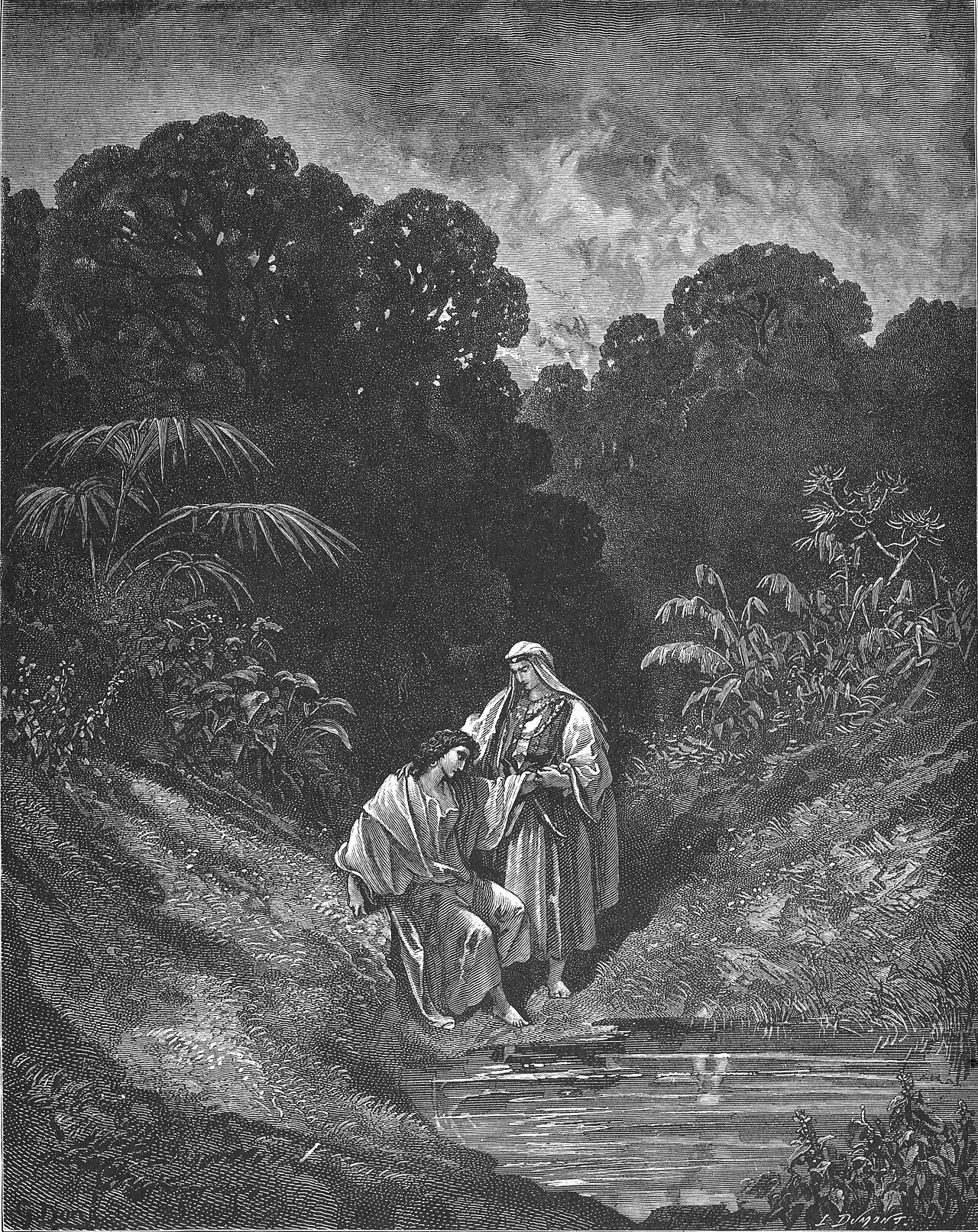
in 1 Samuel 20So David hid in the field, and when the New Moon had come, the king sat down to eat.
BSB
The same verse in ASV and KJV ▾
ASV
So David hid himself in the field: and when the new moon was come, the king sat him down to eat food.
KJV
So David hid himself in the field: and when the new moon was come, the king sat him down to eat meat.
⋯
This verse in 1 Samuel 20
Commentary
3 notes on this verseThis site's exposition
hid himself in the field: and when the new moon
on 1 Samuel 20:24-26
The plan from verses 18 to 23 is carried out exactly, and the feast begins with Saul in his usual seat, Jonathan across from him, Abner at the king's side, and David's place left empty. Saul says nothing the first day, assuming ceremonial uncleanness has kept David from the peace offerings, a reasonable explanation any Israelite would reach for before assuming treachery. The silence itself is telling: only four men sit at that table, so one empty seat cannot go unnoticed for long.
The record, by era
The Medieval Church1 voice
David therefore hid in the field, etc. Christ is hidden in Christians by faith so that He might not be seen by those who have learned only to know, believe, and love earthly and temporal things; and times have come in which the splendor of …
The Puritans and the Awakening1 voice
So David hid himself in the field,....
The words behind it
10 Hebrew wordsEvery Hebrew word of this verse in the order it stands, with what it means and the door to its own study. The last column counts the times a word stands in the whole Bible: the rarer the word, the more the places it appears belong together.
| Hebrew | Sound | Meaning | Word study | In the Bible |
|---|---|---|---|---|
| וַיִּסָּתֵ֥ר | vaiyisater | and he hid himself | H5641 → | 80 times |
| דָּוִ֖ד | david | David | H1732 → | 999 times |
| בַּשָּׂדֶ֑ה | basadeh | in the field | H7704 → | 334 times |
| וַיְהִ֣י | vayhi | and it was | H1961 → | 3559 times |
| הַחֹ֔דֶשׁ | hachodesh | the new moon | H2320 → | 284 times |
| וַיֵּ֧שֶׁב | vaiyeshev | and he sat down | H3427 → | 1079 times |
| הַמֶּ֛לֶךְ | hamelekh | the king | H4428 → | 2525 times |
| אֶל | ʾal- | to | H413 → | 5510 times |
| הַלֶּ֖חֶם | halechem | the food | H3899 → | 298 times |
| לֶאֱכֽוֹל׃ | leekhol | to eat | H398 → | 810 times |
וַיִּסָּתֵ֥רand he hid himself
vaiyisaterH5641 →80 times
דָּוִ֖דDavid
davidH1732 →999 times
בַּשָּׂדֶ֑הin the field
basadehH7704 →334 times
וַיְהִ֣יand it was
vayhiH1961 →3559 times
הַחֹ֔דֶשׁthe new moon
hachodeshH2320 →284 times
וַיֵּ֧שֶׁבand he sat down
vaiyeshevH3427 →1079 times
הַמֶּ֛לֶךְthe king
hamelekhH4428 →2525 times
אֶלto
ʾal-H413 →5510 times
הַלֶּ֖חֶםthe food
halechemH3899 →298 times
לֶאֱכֽוֹל׃to eat
leekholH398 →810 times
A shaded row is a word that stands 400 times or fewer in the Bible.
The walk
8 stopsEach card is a verse this one points to, and under it the verses that one points to in turn. Where several paths arrive at the same place, that place is listed first: the text keeps returning to it.
Through
Proverbs 17:1Better a dry morsel in quietness than a house full of feasting with strife.
it leads to
- Proverbs 21:19
Better to live in the desert than with a contentious and ill-tempered wife.
Reached by 2 separate paths from here.
- Proverbs 15:17
Better a dish of vegetables where there is love than a fattened ox with hatred.
- Psalms 37:16
Better is the little of the righteous than the abundance of many who are wicked.
- Proverbs 21:9
Better to live on a corner of the roof than to share a house with a quarrelsome wife.
- Proverbs 21:19
Through
Proverbs 15:17Better a dish of vegetables where there is love than a fattened ox with hatred.
it leads to
- Proverbs 17:1
Better a dry morsel in quietness than a house full of feasting with strife.
- Proverbs 17:1
Through
Proverbs 4:17For they eat the bread of wickedness and drink the wine of violence.
it leads to
- Proverbs 9:17
“Stolen water is sweet, and bread eaten in secret is tasty!”
- Micah 6:12
For the wealthy of the city are full of violence, and its residents speak lies; their tongues are deceitful in their mouths.
- Proverbs 20:17
Food gained by fraud is sweet to a man, but later his mouth is full of gravel.
- Proverbs 9:17
Where this verse is studied
On this page
About 1 Samuel
Who and where
1 name in this verse with a page on the site.
This page draws on Adam Clarke, Commentary on the Bible; Albert Barnes, Notes on the Old Testament; Bede, Commentary on Samuel and John Gill, Exposition of the Old Testament (1748-1763).