
1 Samuel 16:6
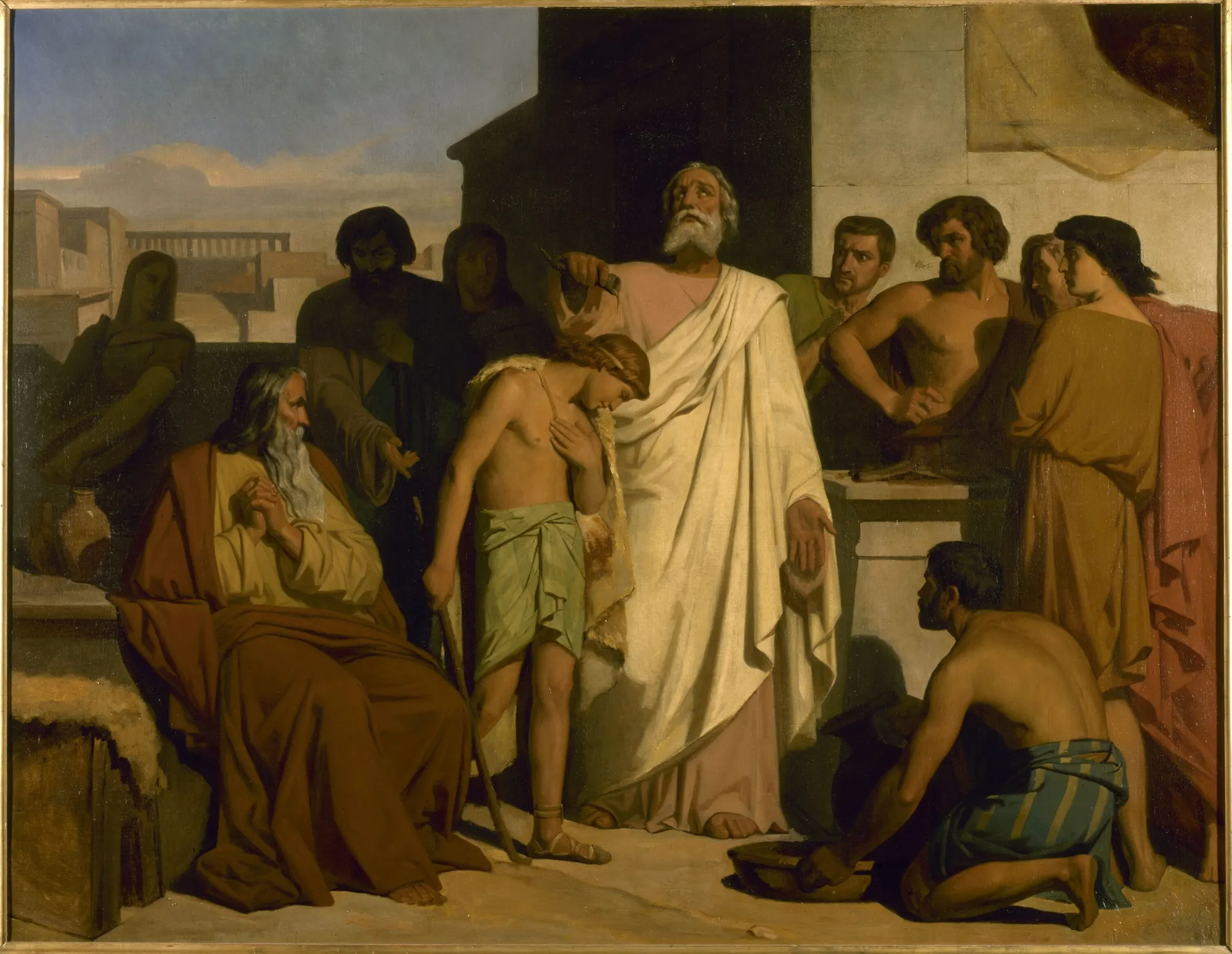
in 1 Samuel 16When they arrived, Samuel saw Eliab and said, “Surely here before the LORD is His anointed.”
BSB
The same verse in ASV and KJV ▾
ASV
And it came to pass, when they were come, that he looked on Eliab, and said, Surely Jehovah’s anointed is before him.
KJV
And it came to pass, when they were come, that he looked on Eliab, and said, Surely the Lord’s anointed is before him.
⋯
This verse in 1 Samuel 16
Commentary
8 notes on this verseAnd it came to pass, when they were come,.... Jesse and his sons, into the house where the entertainment was; and perhaps before they sat down, went into a private apartment by the direction of Samuel, where he acquainted Jesse with the business he came upon: that he looked on Eliab; who was Jesse's firstborn, 1Ch 2:13, called Elihu, 1Ch 27:18. and said, surely the Lord's anointed is before him; or this is the person it is his pleasure should be anointed king.
This site's exposition
When they arrived, Samuel saw Eliab
on 1 Samuel 16:6-7
Samuel looks at Eliab, the firstborn, and says "Surely here before the LORD is His anointed" of him. The LORD answers at once with the chapter’s center, that "man sees the outward appearance, but the LORD sees the heart" within. Saul was chosen by the measure Samuel is using here, taller than any of the people at 10:23, and this verse sets the standard his replacement will be found by.
The record, by era
The Church Fathers3 voices
They have gone beyond the limits of impropriety. They have invented mirrors to reflect all this artificial beautification of theirs, as if it were nobility of character or self-improvement. They should, rather, conceal such deception with a veil. It did the handsome Narcissus no good to gaze on his own image, as the Greek myth tells us. If Moses forbade his people to fashion any image to take the place of God, is it right for these women to study their reflected images for no other reason that to distort the natural features of their faces?In much the same way, when Samuel the prophet was sent to anoint one of the sons of Jesse as king, and when he brought out his chrism as soon as he saw the oldest son, admiring his handsomeness and height, Scripture tells us, "The Lord said to him: 'Look not on his countenance, nor on the height of his stature, because I have rejected him. For man sees those things that appear, but the Lord beholds the heart.' " He finally anointed not the one who was fair in body but the one who was fair of soul. If the Lord places more importance on beauty of soul than on that of the body, what must he think of artificial beautification when he abhors so thoroughly every sort of lie? "We walk by faith, not by sight."
You are human, and so you know other people only from the outside. You think as you see, and you see only what your eyes let you see. But "the eyes of the Lord are lofty." "Man looks on the outward appearance, God looks on the heart." So "the Lord knows them that are his" and roots up the plant which he has not planted. He shows the last to be first, he carries a fan in his hand to purge his floor. Let the chaff of light faith fly away as it pleases before every wind of temptation. So much the purer is the heap of wheat which the Lord will gather into his garner.
He goes to Bethlehem and considers every son of Jesse to be the very person that the Lord was looking for.… He makes the same mistake in each case, and he is reproved in each case, giving evidence of the weakness of the human mind.
The Medieval Church2 voices
A commentator
Gregory the DialogistCommentary on 1 Kings, Book 6, Chapter 3 · Written before 604.
proposed
11. And because we have taught through the sacred scriptures that the Lord shows who should be chosen as bishops, let us now see, as the mysteries of this sacred history speak, what kind of men He shows to be worthy and what kind He rejects. There follows: (Verses 6, 7.) "And when they had come in, he saw Eliab and said: Is this the Lord's anointed before Him? And the Lord said to Samuel: Do not look upon his countenance, nor upon the height of his stature, because I have rejected him, nor do I judge according to the sight of men. For man sees those things which appear, but the Lord beholds the heart." For what does it mean for the wise to enter in, except to pass into the subtle sanctuary of discernment? But he saw Eliab when he entered, because the pastor recognizes that man as worthy of leadership in the holy Church who possesses both the strength of good works and the knowledge of truth. But what does it mean that the Lord commands him not to look upon his stature or his countenance, except that in the holy Church neither works nor knowledge are commended without humility? For what is a person's countenance but the outward manner of life by which he is known? And what is his stature but the height of knowledge by which he is raised to higher things? Whom then does Eliab more fittingly signify than those who do good and are learned, yet are arrogant? Hence Eliab is interpreted as "my God is father." This indeed is the name they dare to presume for themselves. For what does it mean that "my God is father" is said, except that while they vigorously do good works and wisely understand spiritual things, they boast that by singular merit they have passed into the number of the sons of God? For they would say "father" not "mine" but "ours" to the almighty Lord, if through humility they saw themselves in common with the other elect in the order of heavenly birth. […]
And when they had entered, he saw Eliab, etc. He introduces the sons of Jesse, the first, the second, and the third. Among them, none is found worthy to be anointed: because the Synagogue produced doctors of the law, prophets, and psalmists; but all these …
1 more voice on this verse
The Nineteenth Century1 voice
A commentator
Jamieson, Fausset & Brown1802–1910
Commentary Critical and Explanatory on the Whole Bible (1871)
Samuel said, Surely the Lord's anointed is before him--Here Samuel, in consequence of taking his impressions from the external appearance, falls into the same error as formerly (1Sa 10:24).
The words behind it
10 Hebrew wordsEvery Hebrew word of this verse in the order it stands, with what it means and the door to its own study. The last column counts the times a word stands in the whole Bible: the rarer the word, the more the places it appears belong together.
| Hebrew | Sound | Meaning | Word study | In the Bible |
|---|---|---|---|---|
| וַיְהִ֣י | vayhi | and it was | H1961 → | 3559 times |
| בְּבוֹאָ֔ם | bevoam | when came they | H935 → | 2568 times |
| וַיַּ֖רְא | vaiyar' | and he saw | H7200 → | 1300 times |
| אֶת־ | ʾet- | <obj.> | H853 → | 10935 times |
| אֱלִיאָ֑ב | ʾeliav | Eliab | H446 → | 21 times |
| וַיֹּ֕אמֶר | vaiyomer | and he said | H559 → | 5305 times |
| אַ֛ךְ | ʾakh | surely | H389 → | 161 times |
| נֶ֥גֶד | neged | [is] before | H5048 → | 151 times |
| יְהוָ֖ה | yahweh | Yahweh | H3068 → | 6520 times |
| מְשִׁיחֽוֹ׃ | meshicho | anointed his | H4899 → | 39 times |
וַיְהִ֣יand it was
vayhiH1961 →3559 times
בְּבוֹאָ֔םwhen came they
bevoamH935 →2568 times
וַיַּ֖רְאand he saw
vaiyar'H7200 →1300 times
אֶת־<obj.>
ʾet-H853 →10935 times
אֱלִיאָ֑בEliab
ʾeliavH446 →21 times
וַיֹּ֕אמֶרand he said
vaiyomerH559 →5305 times
אַ֛ךְsurely
ʾakhH389 →161 times
נֶ֥גֶד[is] before
negedH5048 →151 times
יְהוָ֖הYahweh
yahwehH3068 →6520 times
מְשִׁיחֽוֹ׃anointed his
meshichoH4899 →39 times
A shaded row is a word that stands 400 times or fewer in the Bible.
The walk
8 stopsEach card is a verse this one points to, and under it the verses that one points to in turn. Where several paths arrive at the same place, that place is listed first: the text keeps returning to it.
Through
1 Samuel 17:13The three older sons of Jesse had followed Saul into battle: The firstborn was Eliab, the second was Abinadab, and the third was Shammah.
it leads to
- 1 Samuel 17:28
Now when David’s oldest brother Eliab heard him speaking to the men, his anger burned against David. “Why have you come down here?” he asked. “And with whom did you leave those few sheep…
Reached by 2 separate paths from here.
- 1 Chronicles 2:13
Jesse was the father of Eliab his firstborn; Abinadab was born second, Shimea third,
- 1 Samuel 17:28
Through
Judges 8:18Next, Gideon asked Zebah and Zalmunna, “What kind of men did you kill at Tabor?” “Men like you,” they answered, “each one resembling the son of a king.”
it leads to
- Judges 4:6
She summoned Barak son of Abinoam from Kedesh in Naphtali and said to him, “Surely the LORD, the God of Israel, is commanding you: ‘Go and march to Mount Tabor, taking with you ten…
- Judges 4:6
Through
1 Chronicles 2:13Jesse was the father of Eliab his firstborn; Abinadab was born second, Shimea third,
it leads to
- 1 Samuel 17:13
The three older sons of Jesse had followed Saul into battle: The firstborn was Eliab, the second was Abinadab, and the third was Shammah.
- 1 Chronicles 27:18
over Judah was Elihu, one of David’s brothers; over Issachar was Omri son of Michael;
- 1 Samuel 16:6–13
When they arrived, Samuel saw Eliab and said, “Surely here before the LORD is His anointed.”
- 1 Samuel 17:13
Through
1 Kings 12:26Jeroboam said in his heart, “Now the kingdom might revert to the house of David.
it leads to
- 2 Chronicles 20:20
Early in the morning they got up and left for the Wilderness of Tekoa. As they set out, Jehoshaphat stood up and said, “Hear me, O people of Judah and Jerusalem. Believe in the…
- 1 Samuel 27:1
David, however, said to himself, “One of these days now I will be swept away by the hand of Saul. There is nothing better for me than to escape to the land of the…
- 2 Chronicles 20:20
Where this verse is studied
On this page
About 1 Samuel
Who and where
1 name in this verse with a page on the site.
This page draws on 9 works. Open the list of works
This page draws on Bede, Commentary on Samuel; Clement of Alexandria, The Instructor Book 3; Gregory the Dialogist, Commentary on 1 Kings, Book 6, Chapter 3; Jamieson Fausset and Brown, Commentary Critical and Explanatory on the Whole Bible; Jamieson, Fausset & Brown, Commentary Critical and Explanatory on the Whole Bible; Jerome, Against the Pelagians 1.33; John Gill, Exposition of the Old Testament (1748-1763); John Gill, Exposition of the Old Testament and Tertullian, PRESCRIPTIONS AGAINST HERETICS 3.