
1 Samuel 16:10
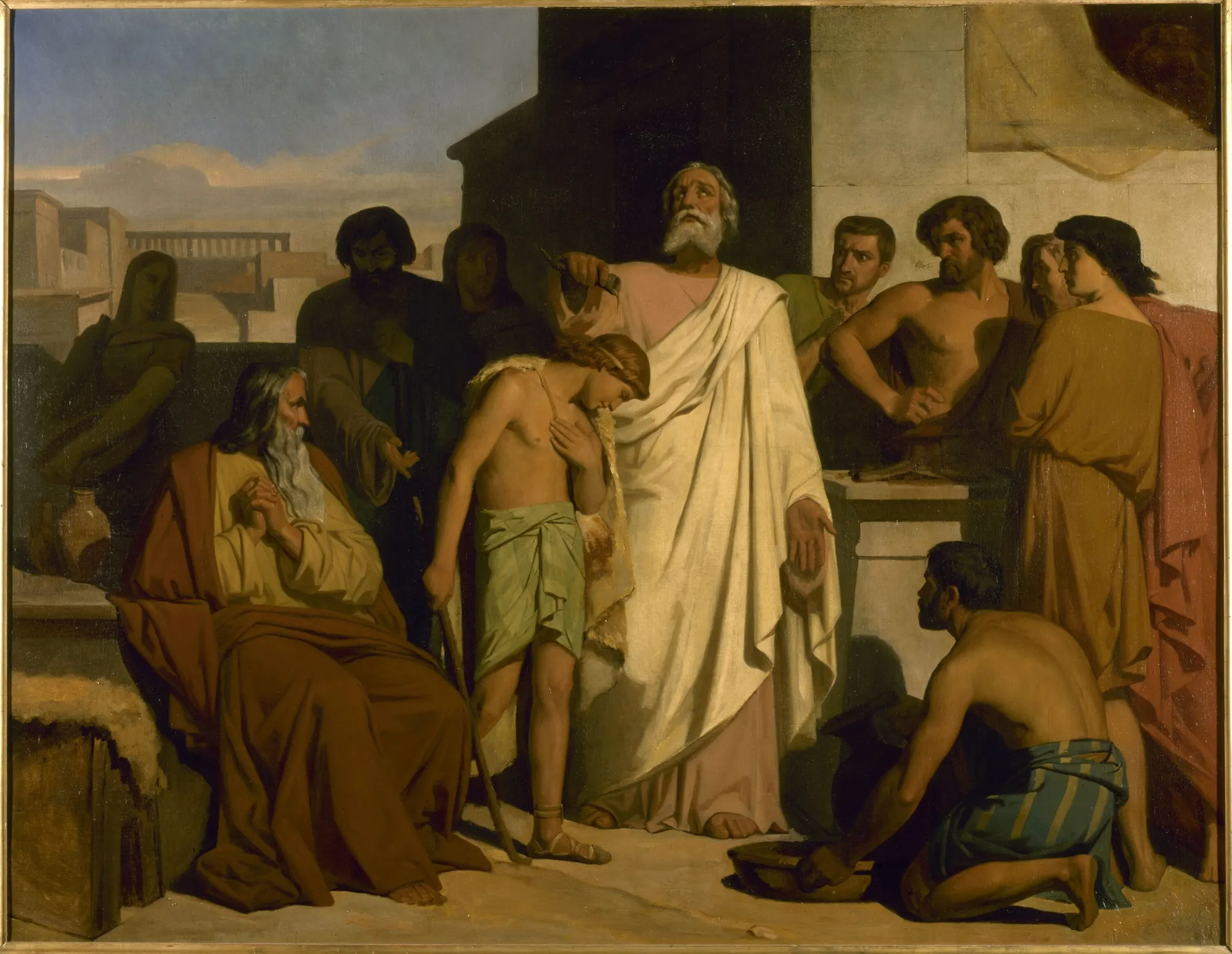
in 1 Samuel 16Thus Jesse made seven of his sons pass before Samuel, but Samuel told him, “The LORD has not chosen any of these.”
BSB
The same verse in ASV and KJV ▾
ASV
And Jesse made seven of his sons to pass before Samuel. And Samuel said unto Jesse, Jehovah hath not chosen these.
KJV
Again, Jesse made seven of his sons to pass before Samuel. And Samuel said unto Jesse, The Lord hath not chosen these.
⋯
This verse in 1 Samuel 16
Commentary
10 notes on this verseAgain Jesse made seven of his sons pass before Samuel,.... Not seven more, for he had but eight sons in all with David, 1Sa 17:12 but four more, which with the other three made seven; three of these four are mentioned by name, Nathanael, Raddai, and Ozem, 1Ch 2:14, but the fourth we nowhere read of; perhaps he died quickly after this, was an obscure person, and of no fame and note, or might be by another woman: and Samuel said unto Jesse, the Lord hath not chosen these; not anyone of them.
This site's exposition
Then Jesse called Abinadab
on 1 Samuel 16:8-10
Abinadab and Shammah pass before Samuel next, and each is met with the same word, that "The LORD has not chosen this one either" among Jesse’s sons. Four more sons follow until seven have stood before the prophet, and none is chosen. The scene repeats on purpose, so that no reader can credit what follows to birth order, appearance, or a father’s favor.
This site's exposition
Jesse made seven of his sons pass before Samuel
John Gill counts the seven sons as the three already named and four more, which fits Jesse's eight sons at 17:12 with David. He finds three of the four named at 1 Chronicles 2:14. The fourth appears nowhere else.
The record, by era
The Medieval Church3 voices
Therefore Jesse brought seven of his sons before Samuel, etc. The number seven is fitting to the law because of the sabbath, just as the number eight is fitting to the Gospel because of the mystery of the resurrection. Therefore, none of those who are …
A commentator
Gregory the DialogistCommentary on 1 Kings, Book 6, Chapter 3 · Written before 604.
proposed
14. Because perfection is usually signified by the number seven, the prophet Isaiah testifies, who, declaring the gifts of the Holy Spirit abiding in our Redeemer, says: "The spirit of the Lord shall rest upon him, the spirit of wisdom and understanding, the spirit of counsel and fortitude, the spirit of knowledge and piety, and the spirit of the fear of the Lord shall fill him" (Isaiah 11:2).
A commentator
Gregory the DialogistCommentary on 1 Kings, Book 6, Chapter 3 · Written before 604.
proposed
28. But among the seven sons of Jesse, the king is not found. For what are the seven sons of Jesse, if not all the perfect ones of the Synagogue? They come to the prophet, but none of them is chosen, because the chosen preacher both looks upon the perfect sons of the Synagogue and believes none of them to be the Redeemer of the human race. He therefore brings forward all the older sons, so that when we look upon all the perfect ones, we may consider the excellence of the Redeemer. Among whom indeed, unless the little one is brought forward, the king is not revealed by the Lord, because surely when we compare great men to our Redeemer, how greatly His dignity surpasses theirs is seen. He is therefore not found among the others, because they are mere men.
The Puritans and the Awakening1 voice
How David at length was pitched upon. He was the youngest of all the sons of Jesse; his name signifies beloved, for he was a type of the beloved Son. How he was in the fields, keeping the sheep (
quarantine:debris (2026-07-29) — unbalanced-parens
The Nineteenth Century1 voice
A commentator
Jamieson, Fausset & Brown1802–1910
Commentary Critical and Explanatory on the Whole Bible (1871)
Samuel said, Surely the Lord's anointed is before him--Here Samuel, in consequence of taking his impressions from the external appearance, falls into the same error as formerly (1Sa 10:24).
2 more voices on this verse
The Nineteenth Century2 voices
Seven of his sons - This certainly was not done publicly; Samuel, Jesse, and his children, must have been in a private apartment, previously to the public feast on the sacrifice; for Samuel says, 1Sa 16:11, We will not sit down till he (David) come.
A commentator
Albert Barnes1798–1870
Notes, Explanatory and Practical, on the Old and New Testaments (1832-1869)
proposed
Seven - i. e., including the three who had already passed. It appears that Jesse had eight sons; but in 1Ch 2:13-15, only seven are ascribed to him.
The words behind it
14 Hebrew wordsEvery Hebrew word of this verse in the order it stands, with what it means and the door to its own study. The last column counts the times a word stands in the whole Bible: the rarer the word, the more the places it appears belong together.
| Hebrew | Sound | Meaning | Word study | In the Bible |
|---|---|---|---|---|
| וַיַּעֲבֵ֥ר | vaiyaaver | and he made pass by | H5674 → | 556 times |
| יִשַׁ֛י | yishai | Jesse | H3448 → | 42 times |
| שִׁבְעַ֥ת | shivat | seven of | H7651 → | 394 times |
| בָּנָ֖יו | banav | sons his | H1121 → | 4930 times |
| לִפְנֵ֣י | lifnei | <to> before | H6440 → | 2123 times |
| שְׁמוּאֵ֑ל | shemuel | Samuel | H8050 → | 141 times |
| וַיֹּ֤אמֶר | vaiyomer | and he said | H559 → | 5305 times |
| שְׁמוּאֵל֙ | shemuel | Samuel | H8050 → | 141 times |
| אֶל־ | ʾel- | to | H413 → | 5510 times |
| יִשַׁ֔י | yishai | Jesse | H3448 → | 42 times |
| לֹא־ | lo'- | not | H3808 → | 5168 times |
| בָחַ֥ר | vachar | he has chosen | H977 → | 171 times |
| יְהוָ֖ה | yahweh | Yahweh | H3068 → | 6520 times |
| בָּאֵֽלֶּה׃ | baeleh | <in> these | H428 → | 746 times |
וַיַּעֲבֵ֥רand he made pass by
vaiyaaverH5674 →556 times
יִשַׁ֛יJesse
yishaiH3448 →42 times
שִׁבְעַ֥תseven of
shivatH7651 →394 times
בָּנָ֖יוsons his
banavH1121 →4930 times
לִפְנֵ֣י<to> before
lifneiH6440 →2123 times
שְׁמוּאֵ֑לSamuel
shemuelH8050 →141 times
וַיֹּ֤אמֶרand he said
vaiyomerH559 →5305 times
שְׁמוּאֵל֙Samuel
shemuelH8050 →141 times
אֶל־to
ʾel-H413 →5510 times
יִשַׁ֔יJesse
yishaiH3448 →42 times
לֹא־not
lo'-H3808 →5168 times
בָחַ֥רhe has chosen
vacharH977 →171 times
יְהוָ֖הYahweh
yahwehH3068 →6520 times
בָּאֵֽלֶּה׃<in> these
baelehH428 →746 times
A shaded row is a word that stands 400 times or fewer in the Bible.
Where this verse is studied
On this page
About 1 Samuel
Who and where
1 name in this verse with a page on the site.
This page draws on Adam Clarke, Commentary on the Bible; Albert Barnes, Notes, Explanatory and Practical, on the Old and New Testaments (1832-1869); Bede, Commentary on Samuel; Gregory the Dialogist, Commentary on 1 Kings, Book 6, Chapter 3; Jamieson, Fausset & Brown, Commentary Critical and Explanatory on the Whole Bible; John Gill, Exposition of the Old Testament (1748-1763); John Gill, Exposition of the Old Testament and Matthew Henry, Commentary on the Whole Bible.