
1 Samuel 13:22
in 1 Samuel 13So on the day of battle not a sword or spear could be found in the hands of the troops with Saul and Jonathan; only Saul and his son Jonathan had weapons.
BSB
The same verse in ASV and KJV ▾
ASV
So it came to pass in the day of battle, that there was neither sword nor spear found in the hand of any of the people that were with Saul and Jonathan: but with Saul and with Jonathan his son was there found.
KJV
So it came to pass in the day of battle, that there was neither sword nor spear found in the hand of any of the people that were with Saul and Jonathan: but with Saul and with Jonathan his son was there found.
⋯
This verse in 1 Samuel 13
Commentary
4 notes on this verseSo it came to pass in the day of battle,.... When that drew near, and they were called to it, and obliged to fight or flee, or surrender: that there were neither sword nor spear found in the hand of any of the people that were with Saul and Jonathan: which was not owing to their leaving them behind in the camp, or casting them away from them through fear, as they followed Saul with trembling, but to the cause now mentioned.
This site's exposition
neither sword nor spear found in the hand
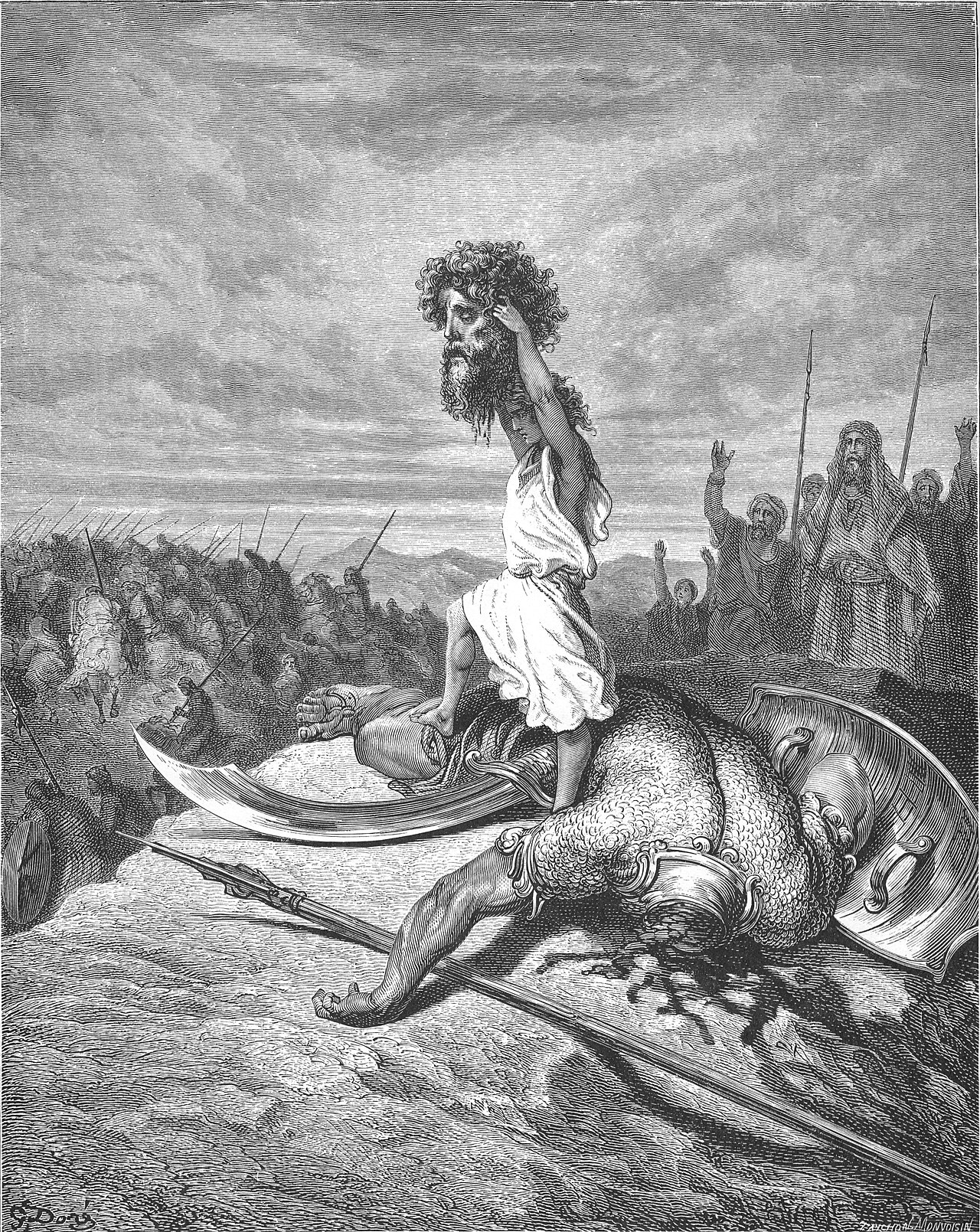
The verse counts the whole camp's weaponry down to two swords, Saul's own and Jonathan's, against a Philistine host numbered in the thousands two verses before. The bow and the sling needed no smith, and Israel was not without those, but the narrator's point is narrower: on the day of pitched battle, only the king and his son carried the blade and spear that close combat required. The same bare phrase, no sword in the hand, will describe David facing Goliath four chapters later, though there it marks a chosen weakness rather than an enforced one.
The record, by era
The Puritans and the Awakening1 voice
on 1 Samuel 13:19-22
They put down all the smiths' shops, transplanted the smiths into their own country, and forbade any Israelite, under severe penalties, to exercise the trade or mystery of working in brass or iron, though they had rich mines of both ( Deut. viii. 9 ) in such plenty that it was said of Asher, his shoes shall be iron and brass, Deut. xxxiii.
The Nineteenth Century1 voice
In the day of battle - these was neither sword nor spear - But if the Israelites enjoyed such profound peace and undisturbed dominion under Samuel, how is it that they were totally destitute of arms, a state which argues the lowest circumstances of oppression and vassalage? In answer to this we may observe, that the bow and the sling were the principal arms of the Israelites; for these they needed no smith: the most barbarous nations, who have never seen iron, have nevertheless bows and arrows; the arrow heads generally made of flint.
The words behind it
19 Hebrew wordsEvery Hebrew word of this verse in the order it stands, with what it means and the door to its own study. The last column counts the times a word stands in the whole Bible: the rarer the word, the more the places it appears belong together.
| Hebrew | Sound | Meaning | Word study | In the Bible |
|---|---|---|---|---|
| וְהָיָה֙ | vehayah | and it was | H1961 → | 3559 times |
| בְּי֣וֹם | beyom | on a day of | H3117 → | 2304 times |
| מִלְחֶ֔מֶת | milchemet | battle | H4421 → | 320 times |
| וְלֹ֨א | velo' | and not | H3808 → | 5168 times |
| נִמְצָ֜א | nimtza' | it was found | H4672 → | 455 times |
| חֶ֤רֶב | cherev | a sword | H2719 → | 413 times |
| וַחֲנִית֙ | vachanit | and a spear | H2595 → | 47 times |
| בְּיַ֣ד | beyad | in [the] hand of | H3027 → | 1618 times |
| כָּל־ | kol- | any of | H3605 → | 5413 times |
| הָעָ֔ם | haam | the people | H5971 → | 1873 times |
| אֲשֶׁ֥ר | ʾasher | which | H834 → | 5497 times |
| אֶת־ | ʾet- | [was] with | H854 → | 929 times |
| שָׁא֖וּל | shaul | Saul | H7586 → | 402 times |
| וְאֶת־ | veet | and with | H854 → | 929 times |
| יוֹנָתָ֑ן | yonatan | Jonathan | H3129 → | 43 times |
| וַתִּמָּצֵ֣א | vatimatze' | and it was found | H4672 → | 455 times |
| לְשָׁא֔וּל | leshaul | to Saul | H7586 → | 402 times |
| וּלְיוֹנָתָ֖ן | uleyonatan | and to Jonathan | H3129 → | 43 times |
| בְּנֽוֹ׃ | beno | son his | H1121 → | 4930 times |
וְהָיָה֙and it was
vehayahH1961 →3559 times
בְּי֣וֹםon a day of
beyomH3117 →2304 times
מִלְחֶ֔מֶתbattle
milchemetH4421 →320 times
וְלֹ֨אand not
velo'H3808 →5168 times
נִמְצָ֜אit was found
nimtza'H4672 →455 times
חֶ֤רֶבa sword
cherevH2719 →413 times
וַחֲנִית֙and a spear
vachanitH2595 →47 times
בְּיַ֣דin [the] hand of
beyadH3027 →1618 times
כָּל־any of
kol-H3605 →5413 times
הָעָ֔םthe people
haamH5971 →1873 times
אֲשֶׁ֥רwhich
ʾasherH834 →5497 times
אֶת־[was] with
ʾet-H854 →929 times
שָׁא֖וּלSaul
shaulH7586 →402 times
וְאֶת־and with
veetH854 →929 times
יוֹנָתָ֑ןJonathan
yonatanH3129 →43 times
וַתִּמָּצֵ֣אand it was found
vatimatze'H4672 →455 times
לְשָׁא֔וּלto Saul
leshaulH7586 →402 times
וּלְיוֹנָתָ֖ןand to Jonathan
uleyonatanH3129 →43 times
בְּנֽוֹ׃son his
benoH1121 →4930 times
A shaded row is a word that stands 400 times or fewer in the Bible.
The walk
8 stopsEach card is a verse this one points to, and under it the verses that one points to in turn. Where several paths arrive at the same place, that place is listed first: the text keeps returning to it.
Through
Zechariah 4:6So he said to me, “This is the word of the LORD to Zerubbabel: Not by might nor by power, but by My Spirit, says the LORD of Hosts.
it leads to
- 2 Chronicles 32:7–8
“Be strong and courageous! Do not be afraid or discouraged before the king of Assyria and the vast army with him, for there is a greater One with us than with him.
- 2 Corinthians 10:4–5
The weapons of our warfare are not the weapons of the world. Instead, they have divine power to demolish strongholds.
- 1 Corinthians 2:4–5
My message and my preaching were not with persuasive words of wisdom, but with a demonstration of the Spirit’s power,
- Psalms 33:16
No king is saved by his vast army; no warrior is delivered by his great strength.
- Isaiah 11:2–4
The Spirit of the LORD will rest on Him—the Spirit of wisdom and understanding, the Spirit of counsel and strength, the Spirit of knowledge and fear of the LORD.
- 2 Chronicles 32:7–8
Through
1 Samuel 17:47And all those assembled here will know that it is not by sword or spear that the LORD saves; for the battle is the LORD’s, and He will give all of you into our…
it leads to
- Psalms 44:6–7
For I do not trust in my bow, nor does my sword save me.
- Zechariah 4:6
So he said to me, “This is the word of the LORD to Zerubbabel: Not by might nor by power, but by My Spirit, says the LORD of Hosts.
- Hosea 1:7
Yet I will have compassion on the house of Judah, and I will save them—not by bow or sword or war, not by horses and cavalry, but by the LORD their God.”
- Psalms 44:6–7
Where this verse is studied
On this page
Studies1
About 1 Samuel
Who and where
2 names in this verse with a page on the site.
- PersonUnited monarchySaulIsrael's first king, head and shoulders above the people; began in humility, ended in rejection — sparing what God devoted, consul…
- PersonEarly monarchyJonathanSon of King Saul who climbed a cliff to rout a garrison on the conviction that nothing restrains Jehovah; cut a covenant of steadf…
This page draws on Adam Clarke, Commentary on the Bible; John Gill, Exposition of the Old Testament (1748-1763); John Gill, Exposition of the Old Testament and Matthew Henry, Commentary on the Whole Bible.