
1 Samuel 13:21
in 1 Samuel 13The charge was a pim for sharpening a plowshare or mattock, a third of a shekel for sharpening a pitchfork or an axe, and a third of a shekel for repointing an oxgoad.
BSB
The same verse in ASV and KJV ▾
ASV
yet they had a file for the mattocks, and for the coulters, and for the forks, and for the axes, and to set the goads.
KJV
Yet they had a file for the mattocks, and for the coulters, and for the forks, and for the axes, and to sharpen the goads.
⋯
This verse in 1 Samuel 13
Commentary
7 notes on this verseYet they had a file - The Hebrew פצירה petsirah, from פצר patsar, to rub hard, is translated very differently by the versions and by critics. Our translation may be as likely as any: they permitted them the use of files, (I believe the word means grindstone), to restore the blunted edges of their tridents, axes, and goads.
This site's exposition
no smith found throughout all the land
on 1 Samuel 13:19-21
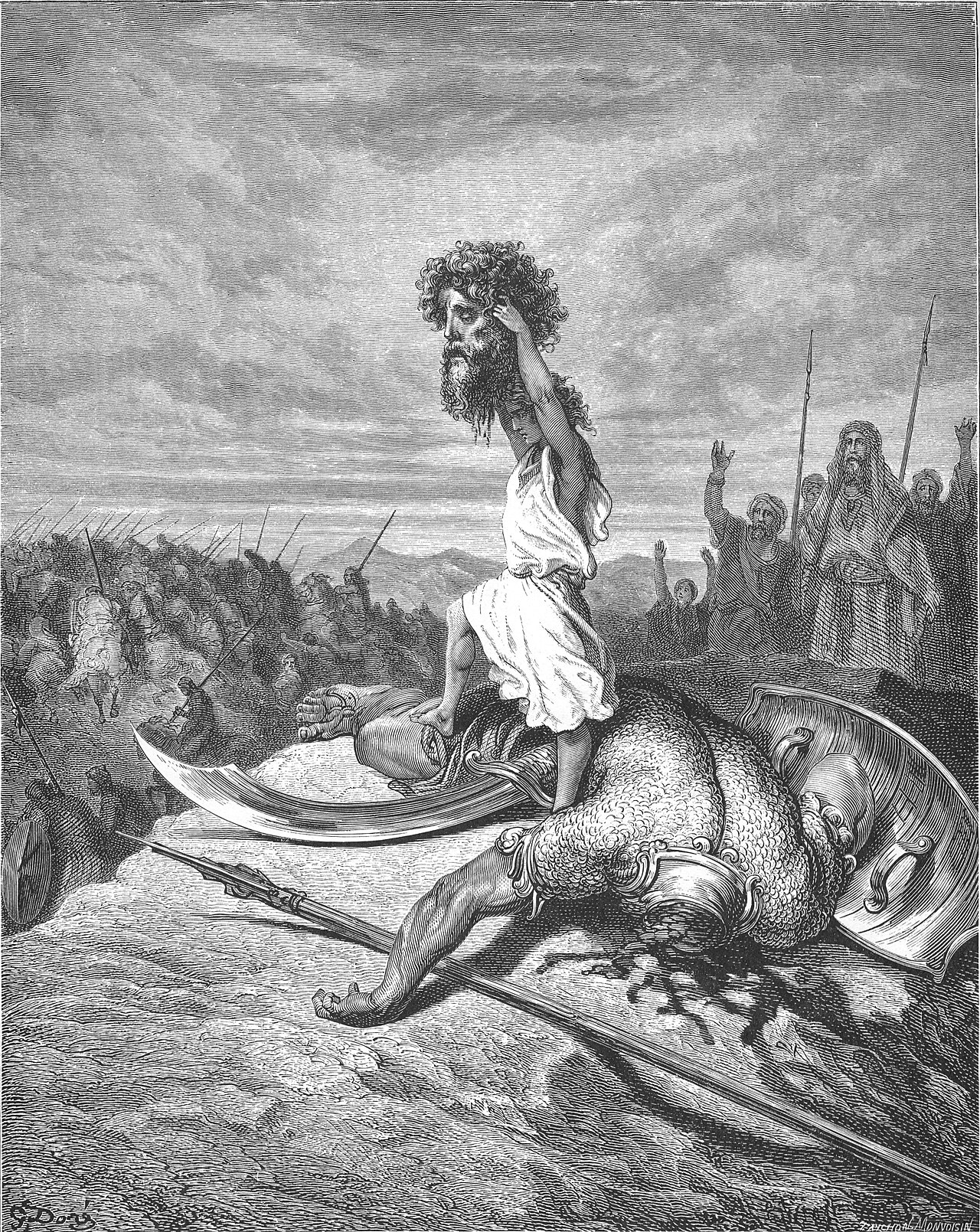
The Philistines' fear is stated as policy, lest the Hebrews make them swords or spears, and the older commentators read it as a deliberate embargo, smiths transplanted and the trade forbidden under penalty though Israel's own hills held iron and brass in plenty. Every plowshare, mattock, axe and goad in Israel had to be carried down to a Philistine smith even to be sharpened, and the file of verse 21 is the one edge tool the text allows an Israelite to keep in his own hand. The monopoly explains what verse 22 states outright, and it is the same disarmed nation standing behind both Jonathan's exploit in the next chapter and David's unarmed answer to Goliath in the seventeenth.
The record, by era
The Church Fathers1 voice
For, as a result of the king's sin [Saul's offering of the sacrifice], fear had pervaded the whole army. The camp of the enemy, which was lying at no great distance, showed them how real the danger was, and no one had the courage to …
The Medieval Church1 voice
A commentator
Gregory the DialogistCommentary on 1 Kings, Book 5, Chapter 3 · Written before 604.
proposed
32. The edges are not said to be bent back or worn down, but blunted. For if they were bent back or worn down, they would cut nothing at all. But a blunted edge, even if it does not quickly cut through everything, does cut certain things placed before it with the delay of labor. So indeed are the hearts of the simple, which, if they do not subtly understand spiritual things, yet because they slowly understand certain things, possess a sharpness of mind that is not keen but blunted.
The Puritans and the Awakening3 voices
They put down all the smiths' shops, transplanted the smiths into their own country, and forbade any Israelite, under severe penalties, to exercise the trade or mystery of working in brass or iron, though they had rich mines of both ( Deut. viii. 9 ) in such plenty that it was said of Asher, his shoes shall be iron and brass, Deut. xxxiii.
), and no doubt the Philistines' smiths brought the Israelites long bills for work done. (2.) How impolitic Saul was, that did not, in the beginning of his reign, set himself to redress this grievance.
quarantine:debris (2026-07-29) — leading-punctuation+unbalanced-parens
Yet they had a file for the mattocks, and for the coulters, and for the forks, and for the axes,....
The words behind it
10 Hebrew wordsEvery Hebrew word of this verse in the order it stands, with what it means and the door to its own study. The last column counts the times a word stands in the whole Bible: the rarer the word, the more the places it appears belong together.
| Hebrew | Sound | Meaning | Word study | In the Bible |
|---|---|---|---|---|
| וְֽהָיְתָ֞ה | vehayetah | and it was | H1961 → | 3559 times |
| הַפְּצִ֣ירָה | hapetzirah | the charge | H6477 → | |
| פִ֗ים | fim | two thirds of a shekel | H6310 → | 498 times |
| לַמַּֽחֲרֵשֹׁת֙ | lamachareshot | for the plowshares | H4281 → | 3 times |
| וְלָ֣אֵתִ֔ים | velaetim | and for the mattocks | H855 → | |
| וְלִשְׁלֹ֥שׁ | velishlosh | and for three | H7969 → | 432 times |
| קִלְּשׁ֖וֹן | kileshon | fork | H7053 → | |
| וּלְהַקַּרְדֻּמִּ֑ים | ulehakkardumim | and for the axes | H7134 → | |
| וּלְהַצִּ֖יב | ulehatziv | and to make straight | H5324 → | 75 times |
| הַדָּרְבָֽן׃ | hadarevan | the goad[s] | H1861 → |
וְֽהָיְתָ֞הand it was
vehayetahH1961 →3559 times
הַפְּצִ֣ירָהthe charge
hapetzirahH6477 →
פִ֗יםtwo thirds of a shekel
fimH6310 →498 times
לַמַּֽחֲרֵשֹׁת֙for the plowshares
lamachareshotH4281 →3 times
וְלָ֣אֵתִ֔יםand for the mattocks
velaetimH855 →
וְלִשְׁלֹ֥שׁand for three
velishloshH7969 →432 times
קִלְּשׁ֖וֹןfork
kileshonH7053 →
וּלְהַקַּרְדֻּמִּ֑יםand for the axes
ulehakkardumimH7134 →
וּלְהַצִּ֖יבand to make straight
ulehatzivH5324 →75 times
הַדָּרְבָֽן׃the goad[s]
hadarevanH1861 →
A shaded row is a word that stands 400 times or fewer in the Bible.
Where this verse is studied
On this page
Studies1
About 1 Samuel
This page draws on Adam Clarke, Commentary on the Bible; Albert Barnes, Notes on the Old Testament; Gregory the Dialogist, Commentary on 1 Kings, Book 5, Chapter 3; John Gill, Exposition of the Old Testament (1748-1763); Matthew Henry, Commentary on the Whole Bible and Sulpicius Severus, SACRED HISTORY 1.33.