
1 Kings 3:8
in 1 Kings 3Your servant is here among the people You have chosen, a people too numerous to count or number.
BSB
The same verse in ASV and KJV ▾
ASV
And thy servant is in the midst of thy people which thou hast chosen, a great people, that cannot be numbered nor counted for multitude.
KJV
And thy servant is in the midst of thy people which thou hast chosen, a great people, that cannot be numbered nor counted for multitude.
⋯
This verse in 1 Kings 3
Commentary
5 notes on this verseA commentator
Albert Barnes1798–1870
Notes, Explanatory and Practical, on the Old and New Testaments (1832-1869)
Compare the marginal references. Solomon regards the promises as fulfilled in the existing greatness and glory of the Jewish nation.
This site's exposition
thy people which thou hast chosen
on 1 Kings 3:8-9
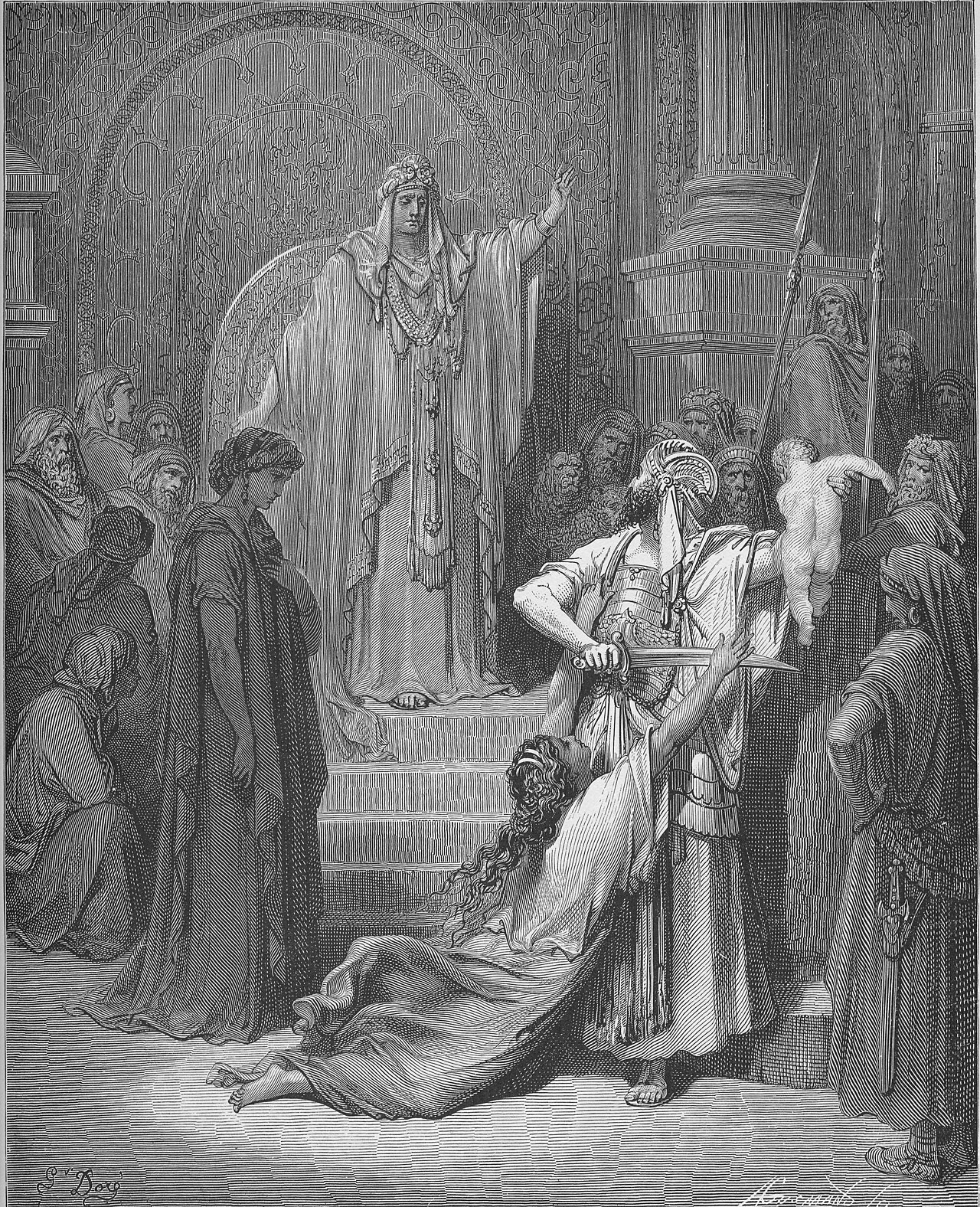
Solomon calls Israel a great people that cannot be numbered nor counted, echoing the promise made to Abraham of a seed too many to count, and grounds his request in the size of the task rather than his own ambition. What he asks is an understanding heart to judge, literally a hearing heart in the Hebrew, fit to discern between good and bad. That phrase, discern between good and bad, reaches forward to the very case the chapter closes with, two claims that sound alike until a hearing heart tells them apart.
The record, by era
The Puritans and the Awakening3 voices
I know not how to go out or come in as I should, nor to do so much as the common daily business of the government, much less what to do in a critical juncture." Note, Those who are employed in public stations ought to be very sensible of the weight and importance of their work and their own insufficiency for it, and then they are qualified for receiving divine instruction.
quarantine:debris (2026-07-29) — odd-straight-quotes
In the midst - Is set over them to rule and guide them. A metaphor from the overseer of divers workmen, who usually is in the midst of them, that he may the better observe how each of them discharges his office.
And thy servant is in the midst of thy people which thou hast chosen,....
The words behind it
13 Hebrew wordsEvery Hebrew word of this verse in the order it stands, with what it means and the door to its own study. The last column counts the times a word stands in the whole Bible: the rarer the word, the more the places it appears belong together.
| Hebrew | Sound | Meaning | Word study | In the Bible |
|---|---|---|---|---|
| וְעַ֨בְדְּךָ֔ | veavdekha | and servant your | H5650 → | 799 times |
| בְּת֥וֹךְ | betokh | [is] in among | H8432 → | 418 times |
| עַמְּךָ֖ | ʾamekha | people your | H5971 → | 1873 times |
| אֲשֶׁ֣ר | ʾasher | which | H834 → | 5497 times |
| בָּחָ֑רְתָּ | bachareta | you have chosen | H977 → | 171 times |
| עַם־ | ʾam- | a people | H5971 → | 1873 times |
| רָ֕ב | rav | numerous | H7227 → | 454 times |
| אֲשֶׁ֧ר | ʾasher | which | H834 → | 5497 times |
| לֹֽא־ | lo'- | not | H3808 → | 5168 times |
| יִמָּנֶ֛ה | yimaneh | it will be numbered | H4487 → | 28 times |
| וְלֹ֥א | velo' | and not | H3808 → | 5168 times |
| יִסָּפֵ֖ר | yisafer | it will be counted | H5608 → | 159 times |
| מֵרֹֽב׃ | mero | from multitude | H7230 → | 149 times |
וְעַ֨בְדְּךָ֔and servant your
veavdekhaH5650 →799 times
בְּת֥וֹךְ[is] in among
betokhH8432 →418 times
עַמְּךָ֖people your
ʾamekhaH5971 →1873 times
אֲשֶׁ֣רwhich
ʾasherH834 →5497 times
בָּחָ֑רְתָּyou have chosen
bacharetaH977 →171 times
עַם־a people
ʾam-H5971 →1873 times
רָ֕בnumerous
ravH7227 →454 times
אֲשֶׁ֧רwhich
ʾasherH834 →5497 times
לֹֽא־not
lo'-H3808 →5168 times
יִמָּנֶ֛הit will be numbered
yimanehH4487 →28 times
וְלֹ֥אand not
velo'H3808 →5168 times
יִסָּפֵ֖רit will be counted
yisaferH5608 →159 times
מֵרֹֽב׃from multitude
meroH7230 →149 times
A shaded row is a word that stands 400 times or fewer in the Bible.
The walk
8 stopsEach card is a verse this one points to, and under it the verses that one points to in turn. Where several paths arrive at the same place, that place is listed first: the text keeps returning to it.
Through
Genesis 15:5And the LORD took him outside and said, “Now look to the heavens and count the stars, if you are able.” Then He told him, “So shall your offspring be.”
it leads to
- Exodus 32:13
Remember Your servants Abraham, Isaac, and Israel, to whom You swore by Your very self when You declared, ‘I will make your descendants as numerous as the stars in the sky, and I will…
Reached by 2 separate paths from here.
- Genesis 22:17
I will surely bless you, and I will multiply your descendants like the stars in the sky and the sand on the seashore. Your descendants will possess the gates of their enemies.
Reached by 2 separate paths from here.
- Hebrews 11:12
And so from one man, and he as good as dead, came descendants as numerous as the stars in the sky and as countless as the sand on the seashore.
- Romans 4:18
Against all hope, Abraham in hope believed and so became the father of many nations, just as he had been told, “So shall your offspring be.”
- Exodus 32:13
Through
Genesis 22:17I will surely bless you, and I will multiply your descendants like the stars in the sky and the sand on the seashore. Your descendants will possess the gates of their enemies.
it leads to
- Genesis 15:5
And the LORD took him outside and said, “Now look to the heavens and count the stars, if you are able.” Then He told him, “So shall your offspring be.”
- Genesis 24:60
And they blessed Rebekah and said to her, “Our sister, may you become the mother of thousands upon thousands. May your offspring possess the gates of their enemies.”
- Jeremiah 33:22
As the hosts of heaven cannot be counted and as the sand on the seashore cannot be measured, so too will I multiply the descendants of My servant David and the Levites who minister…
- Genesis 26:4
I will make your descendants as numerous as the stars in the sky, and I will give them all these lands, and through your offspring all nations of the earth will be blessed,
- Genesis 15:5
Where this verse is studied
On this page
About 1 Kings
This page draws on Albert Barnes, Notes, Explanatory and Practical, on the Old and New Testaments (1832-1869); John Gill, Exposition of the Old Testament; John Gill, Exposition of the Old Testament (1748-1763); John Wesley, Explanatory Notes upon the Old Testament; Keil, The Books of the Kings and Matthew Henry, Commentary on the Whole Bible.