
1 Kings 17:10
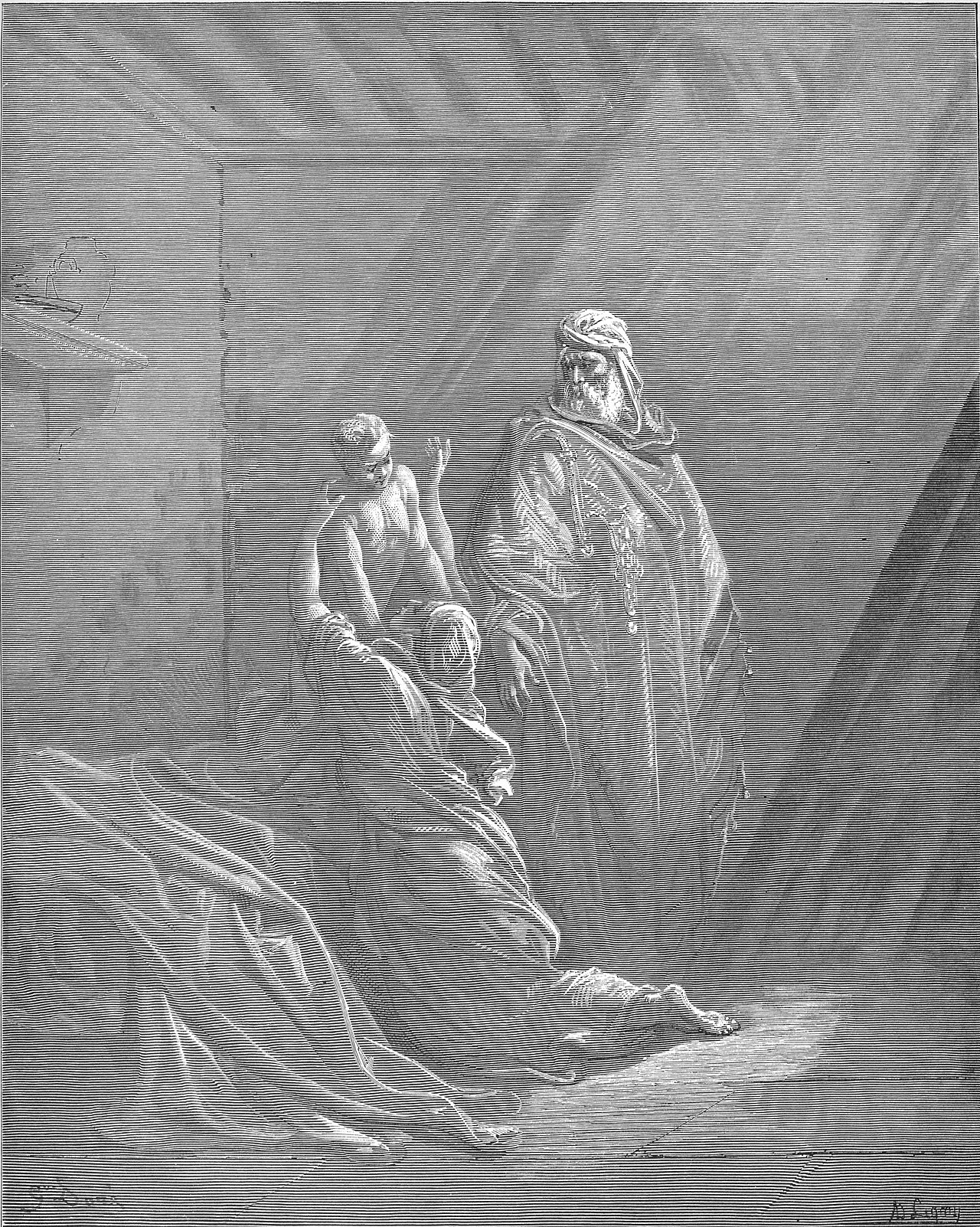
in 1 Kings 17So Elijah got up and went to Zarephath. When he arrived at the city gate, there was a widow gathering sticks. Elijah called to her and said, “Please bring me a little water in a cup, so that I may drink.”
BSB
The same verse in ASV and KJV ▾
ASV
So he arose and went to Zarephath; and when he came to the gate of the city, behold, a widow was there gathering sticks: and he called to her, and said, Fetch me, I pray thee, a little water in a vessel, that I may drink.
KJV
So he arose and went to Zarephath. And when he came to the gate of the city, behold, the widow woman was there gathering of sticks: and he called to her, and said, Fetch me, I pray thee, a little water in a vessel, that I may drink.
⋯
This verse in 1 Kings 17
Commentary
8 notes on this verseTo her Elijah was sent, that he might still live upon Providence as much as he did when the ravens fed him. It was in compassion to the low estate of his handmaiden that God sent the prophet to her, not to beg of her, but to board with her, and he would pay well for his table. (2.) That she was very humble and industrious.
This site's exposition
the word of the Lord came unto him, saying
on 1 Kings 17:8-10
When Cherith fails, the word comes a second time and sends Elijah further still, to Zarephath in Sidon itself, inside the territory of Jezebel's own father. Barnes notes Zarephath's dependence on Sidon from the Assyrian inscriptions and suggests the prophet is sent to the one place least likely for Ahab to search. Wesley reads the sequence as provision from an unclean bird and then from a Gentile in turn, and Jesus draws the same widow into his own preaching at Nazareth, naming her against the many widows in Israel in the days of Elias.
The record, by era
The Church Fathers2 voices
Let us further see where blessed Elijah found that widow, dearly beloved. She had gone out to get water and to pick up sticks of wood. Let us now consider what the water and the wood signify. We know that both are very pleasing and necessary for the church, as it is written: "He is like a tree planted near running water." In the wood is shown the mystery of the cross, in the water the sacrament of baptism. Therefore, she had gone out to gather two sticks of wood, for thus she replied to blessed Elijah when he asked her for food: "As the Lord lives, I have nothing but a handful of meal and a little oil in a cruse; and behold, I am going out to gather two sticks that I may make food for me and my son … and we will eat it and die." The widow typified the church, as I said above; the widow's son prefigured the Christian people. Thus, when Elijah came, the widow went out to gather two sticks of wood. Notice, brothers, that she did not say three or four, nor only one stick; but she wanted to gather two sticks. She was gathering two sticks of wood because she received Christ in the type of Elijah; she wanted to pick up those two pieces because she desired to recognize the mystery of the cross. Truly, the cross of our Lord and Savior was prepared from two pieces of wood, and so that widow was gathering two sticks because the church would believe in him who hung on two pieces of wood. For this reason that widow said, "I am gathering two sticks that I may make food for me and my son, and we will eat it and die." It is true, beloved; no one will merit to believe in Christ crucified unless he dies to this world. For if a person wishes to eat the body of Christ worthily, he must die to the past and live for the future.
When Elijah reached the gate of Zarephath, he met a woman and immediately realized, through the Holy Spirit, that she was the widow about whom God had talked to him. She was there and looked at him. It seems to me that Elijah had asked …
The Puritans and the Awakening3 voices
), and, by what is here related of what passed between Elijah and her, we find, 1. Her case and character; and it appears, (1.) That she was very poor and necessitous.
quarantine:debris (2026-07-29) — leading-punctuation+unbalanced-parens
So he arose, and went to Zarephath,....
Her mind was brought to her condition, and she complained not of the hardship she was brought to, nor quarrelled with the divine Providence for withholding rain, but accommodated herself to it as well as she could. Such as are of this temper in a day of trouble are best prepared for honour and relief from God.
1 more voice on this verse
The Nineteenth Century1 voice
A commentator
Jamieson, Fausset & Brown1802–1910
Commentary Critical and Explanatory on the Whole Bible (1871)
proposed
Meeting, at his entrance into the town, the very woman who was appointed by divine providence to support him, his faith was severely tested by learning from her that her supplies were exhausted and that she was preparing her last meal for herself and son.
How the passage was read
What the Jewish commentators add
Please bring me a little water. He was unable to identify the widow. According to the Midrash, this widow was the mother of Yonah the son of Amitai, the prophet.—Radak about whom the Holy One Blessed Is He, had told him.
This section is reception history: how the passage was read and kept in the Jewish tradition. Where a reading parts from an essential of the Christian faith, the section says so at that point.
Texts and citation data: Sefaria; each excerpt follows its version’s licence. 5 further sources are cited on this chapter that carry no English text this site may quote or only restate the verse.
The words behind it
23 Hebrew wordsEvery Hebrew word of this verse in the order it stands, with what it means and the door to its own study. The last column counts the times a word stands in the whole Bible: the rarer the word, the more the places it appears belong together.
| Hebrew | Sound | Meaning | Word study | In the Bible |
|---|---|---|---|---|
| וַיָּ֣קָם׀ | vaiyakom | and he arose | H6965 → | 628 times |
| וַיֵּ֣לֶךְ | vaiyelekh | and he went | H1980 → | 1546 times |
| צָרְפַ֗תָה | tzarefatah | Zarephath towards | H6886 → | |
| וַיָּבֹא֙ | vaiyavo' | and he came | H935 → | 2568 times |
| אֶל־ | ʾel- | to | H413 → | 5510 times |
| פֶּ֣תַח | petach | [the] entrance of | H6607 → | 164 times |
| הָעִ֔יר | hair | the city | H5892 → | 1090 times |
| וְהִנֵּֽה־ | vehineh- | and there! | H2009 → | 843 times |
| שָׁ֛ם | sham | there | H8033 → | 834 times |
| אִשָּׁ֥ה | ʾishah | a woman | H802 → | 781 times |
| אַלְמָנָ֖ה | ʾalmanah | a widow | H490 → | 56 times |
| מְקֹשֶׁ֣שֶׁת | mekosheshet | [was] gathering | H7197 → | |
| עֵצִ֑ים | ʾetzim | wood<s> | H6086 → | 328 times |
| וַיִּקְרָ֤א | vaiyikra' | and he called out | H7121 → | 733 times |
| אֵלֶ֙יהָ֙ | ʾeleiha | to her | H413 → | 5510 times |
| וַיֹּאמַ֔ר | vaiyomar | and he said | H559 → | 5305 times |
| קְחִי־ | kechi- | get | H3947 → | 966 times |
| נָ֨א | na' | please | H4994 → | 404 times |
| לִ֧י | li | for me | ||
| מְעַט־ | meat- | a little of | H4592 → | |
| מַ֛יִם | mayim | water | H4325 → | 581 times |
| בַּכְּלִ֖י | bakeli | in <the> vessel | H3627 → | 325 times |
| וְאֶשְׁתֶּֽה׃ | veeshteh | so I may drink | H8354 → | 217 times |
וַיָּ֣קָם׀and he arose
vaiyakomH6965 →628 times
וַיֵּ֣לֶךְand he went
vaiyelekhH1980 →1546 times
צָרְפַ֗תָהZarephath towards
tzarefatahH6886 →
וַיָּבֹא֙and he came
vaiyavo'H935 →2568 times
אֶל־to
ʾel-H413 →5510 times
פֶּ֣תַח[the] entrance of
petachH6607 →164 times
הָעִ֔ירthe city
hairH5892 →1090 times
וְהִנֵּֽה־and there!
vehineh-H2009 →843 times
שָׁ֛םthere
shamH8033 →834 times
אִשָּׁ֥הa woman
ʾishahH802 →781 times
אַלְמָנָ֖הa widow
ʾalmanahH490 →56 times
מְקֹשֶׁ֣שֶׁת[was] gathering
mekosheshetH7197 →
עֵצִ֑יםwood<s>
ʾetzimH6086 →328 times
וַיִּקְרָ֤אand he called out
vaiyikra'H7121 →733 times
אֵלֶ֙יהָ֙to her
ʾeleihaH413 →5510 times
וַיֹּאמַ֔רand he said
vaiyomarH559 →5305 times
קְחִי־get
kechi-H3947 →966 times
נָ֨אplease
na'H4994 →404 times
לִ֧יfor me
li
מְעַט־a little of
meat-H4592 →
מַ֛יִםwater
mayimH4325 →581 times
בַּכְּלִ֖יin <the> vessel
bakeliH3627 →325 times
וְאֶשְׁתֶּֽה׃so I may drink
veeshtehH8354 →217 times
A shaded row is a word that stands 400 times or fewer in the Bible.
The walk
8 stopsEach card is a verse this one points to, and under it the verses that one points to in turn. Where several paths arrive at the same place, that place is listed first: the text keeps returning to it.
Through
Hebrews 11:37They were stoned, they were sawed in two, they were put to death by the sword. They went around in sheepskins and goatskins, destitute, oppressed, and mistreated.
it leads to
- 2 Chronicles 24:21
But they conspired against Zechariah, and by order of the king, they stoned him in the courtyard of the house of the LORD.
- Jeremiah 26:23
They brought Uriah out of Egypt and took him to King Jehoiakim, who had him put to the sword and his body thrown into the burial place of the common people.
- 1 Kings 19:10
“I have been very zealous for the LORD, the God of Hosts,” he replied, “but the Israelites have forsaken Your covenant, torn down Your altars, and killed Your prophets with the sword. I am…
- 2 Chronicles 24:21
Through
2 Corinthians 11:27in labor and toil and often without sleep, in hunger and thirst and often without food, in cold and exposure.
it leads to
- 2 Corinthians 6:5
in beatings, imprisonments, and riots; in labor, sleepless nights, and hunger;
- Philippians 4:12
I know how to live humbly, and I know how to abound. I am accustomed to any and every situation—to being filled and being hungry, to having plenty and having need.
- 1 Thessalonians 2:9
Surely you recall, brothers, our labor and toil. We worked night and day so that we would not be a burden to anyone while we proclaimed to you the gospel of God.
- 2 Thessalonians 3:8
nor did we eat anyone’s food without paying for it. Instead, in labor and toil, we worked night and day so that we would not be a burden to any of you.
- 2 Corinthians 6:5
Through
John 4:7When a Samaritan woman came to draw water, Jesus said to her, “Give Me a drink.”
it leads to
- Matthew 10:42
And if anyone gives even a cup of cold water to one of these little ones because he is My disciple, truly I tell you, he will never lose his reward.”
- Matthew 10:42
Where this verse is studied
On this page
Studies1
About 1 Kings
Who and where
2 names in this verse with a page on the site.
- PersonDivided kingdomElijahThe Tishbite who shut heaven for three years and a half, called down fire on Carmel, heard the still small voice at Horeb, and wen…
- PlaceSidonZarephathThe Sidonian town where a starving Gentile widow shared her last meal with Elijah and her jar of flour did not run out, the story…
This page draws on Albert Barnes, Notes, Explanatory and Practical, on the Old and New Testaments; Augustine of Hippo, SERMON 124.3; Ephrem the Syrian, ON THE FIRST BOOK OF KINGS 17:2; Jamieson, Fausset & Brown, Commentary Critical and Explanatory on the Whole Bible; John Gill, Exposition of the Old Testament (1748-1763); John Wesley, Explanatory Notes upon the Old Testament and Matthew Henry, Commentary on the Whole Bible.