
A boy's question, carried to the throne
The Lamb
A son walking up a mountain asks his father where the lamb is. His father answers with a promise instead of an animal. The rest of the Bible is that promise being kept.
The chain
Walk the thread
Stop 1 of 9
Where is the lamb?
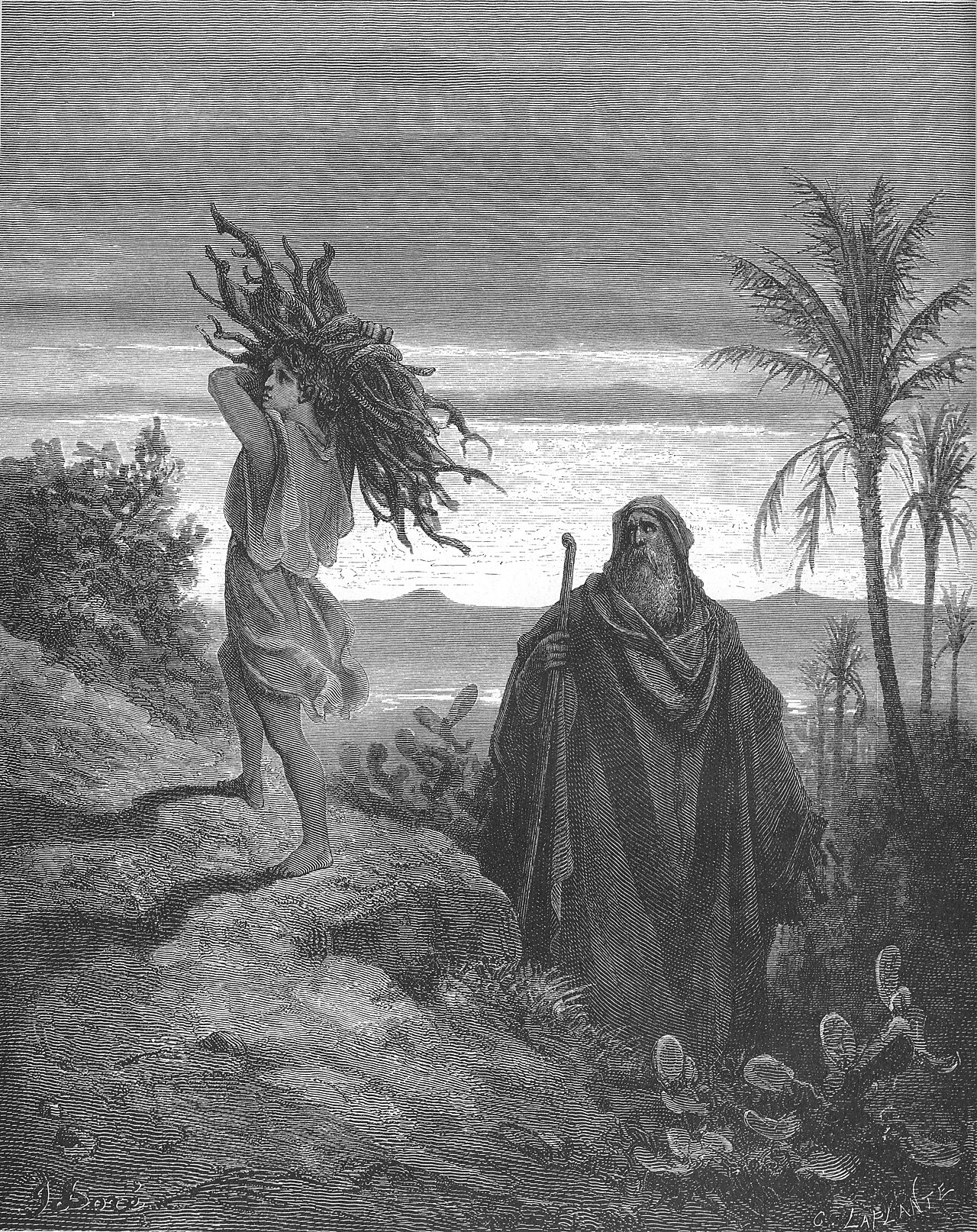
Then Isaac said to his father Abraham, “My father!” “Here I am, my son,” he replied. “The fire and the wood are here,” said Isaac, “but where is the lamb for the burnt offering?” Abraham answered, “God Himself will provide the lamb for the burnt offering, my son.” And the two walked on together.
Genesis 22:7–8BSB Isaac asks the question the canon will spend sixty-five more books answering — 'where is the lamb for a burnt-offering?' — and Abraham does not point at anything: 'God will provide himself the lamb for a burnt-offering, my son.' The noun is שֶׂה (seh, H7716), one of a flock. The wood Isaac is carrying is עֵץ (H6086), the same noun the Trees thread follows to Calvary.
Commentary on Genesis 22:7–82 voices
And Abraham said, my son, God will provide himself a lamb for a burnt offering,....
John Gill· Exposition of the Old Testament (1748-1763)Reformed
Therefore he brings his well-beloved son to be sacrificed, and offered promptly him whom he had received late; nor is he restrained by being called by the name of father, when his son called him "Father," and he replied, "My son." Dear pledges of love are these names, but the commands of God are loved still more. And so although their hearts felt for each other, their purpose remained firm.
Ambrose of Milan· On the Decease of His Brother Satyrus, Book 2, Section 97, 397Patristic
Stop 2 of 9
A lamb for a household
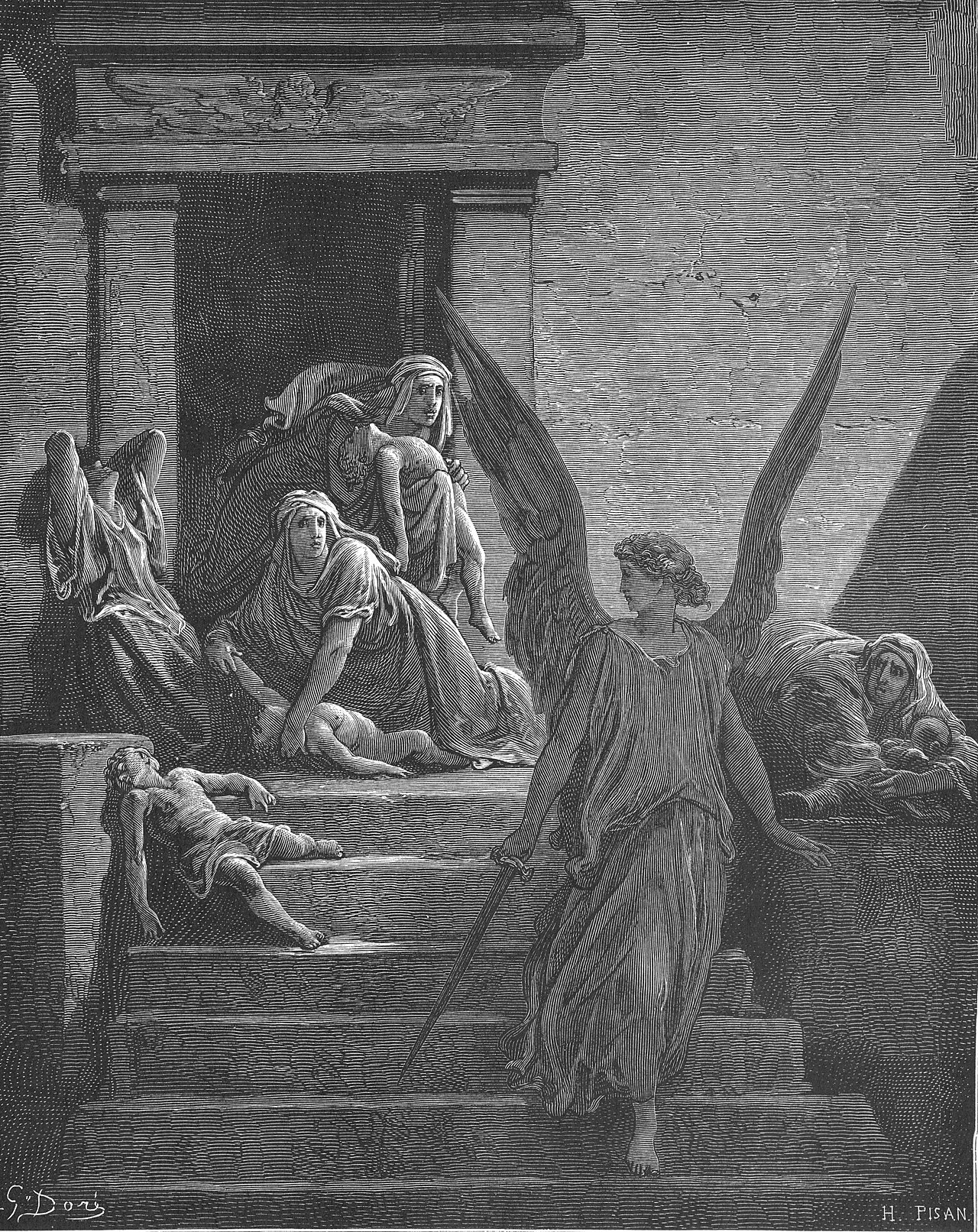
Tell the whole congregation of Israel that on the tenth day of this month each man must select a lamb for his family, one per household. If the household is too small for a whole lamb, they are to share with the nearest neighbor based on the number of people, and apportion the lamb accordingly. Your lamb must be an unblemished year-old male, and you may take it from the sheep or the goats. You must keep it until the fourteenth day of the month, when the whole assembly of the congregation of Israel will slaughter the animals at twilight. They are to take some of the blood and put it on the sides and tops of the doorframes of the houses where they eat the lambs.
Exodus 12:3–7BSB The lamb is now a national ordinance and a domestic one at the same time — 'a lamb for a household' — chosen on the tenth day, kept until the fourteenth, killed at even, its blood put 'on the two side-posts and on the lintel.' שֶׂה (H7716) is tagged in ten verses of Exodus, more than in any other book.
Commentary on Exodus 12:3–72 voices
Your lamb shall be without blemish,.... Without any spot or defect in it. Maimonides (h) reckons no less than fifty blemishes in a creature, anyone of which makes it unfit for sacrifice, see Lev 21:
John Gill· Exposition of the Old Testament (1748-1763)Reformed
And if the household be too little for the lamb,....
John Gill· Exposition of the Old Testament (1748-1763)Reformed
Stop 3 of 9
Two lambs, every day, continually
This is what you are to offer regularly on the altar, each day: two lambs that are a year old. Offer one lamb in the morning and the other at twilight.
Exodus 29:38–39BSB Passover was once a year; this is 'day by day continually' — one lamb in the morning, one at even, for as long as the tabernacle stands. Exodus 29:42 calls it 'a continual burnt-offering throughout your generations.' The figure is no longer an event but a rhythm.
Commentary on Exodus 29:38–392 voices
The one lamb thou shalt offer in the morning,....
John Gill· Exposition of the Old Testament (1748-1763)Reformed
One lamb thou shalt offer in the morning - These two lambs, one in the morning, and the other in the evening, were generally termed the morning and evening daily sacrifices, and were offered from the time of their settlement in the promised land to the destruction of Jerusalem by the Romans. The use of these sacrifices according to the Jews was this: The morning sacrifice made atonement for the sins committed in the night, and the evening sacrifice expiated the sins committed during the day.
Adam Clarke· Commentary on the Bible, 1832Evangelical
Stop 4 of 9
Dumb before the shearers
He was oppressed and afflicted, yet He did not open His mouth. He was led like a lamb to the slaughter, and as a sheep before her shearers is silent, so He did not open His mouth.
Isaiah 53:7BSB For the first time the lamb is a person: 'as a lamb that is led to the slaughter, and as a sheep that before its shearers is dumb, so he opened not his mouth.' Silence is the detail Isaiah repeats twice in one verse.
Commentary on Isaiah 53:71 voice
Like a lamb that is led to the slaughter, and like a sheep before its shearers is silent, so he did not open his mouth. This testimony is about the Ethiopian eunuch, who was riding in a chariot of Queen Candace while reading the book of Acts (Chapter 8 and following). He did not understand what he was reading, but with the help of Philip, he came to understand the passion and the name of the Savior. He was immediately baptized in the blood of the Lamb that he had been reading about and deserved to be called a man.
Jerome· Commentary on Isaiah, 420Patristic
Stop 5 of 9
Behold, the Lamb of God
The next day John saw Jesus coming toward him and said, “Look, the Lamb of God, who takes away the sin of the world!
John 1:29BSB John points and names it: 'Behold, the Lamb of God, that taketh away the sin of the world!' His word is ἀμνός (amnos, G286), and in the tagged Greek New Testament that word stands in exactly four verses — John 1:29, John 1:36, Acts 8:32, and 1 Peter 1:19. Every one of the four is about the same person, and the Acts verse is a man reading Isaiah 53 aloud.
Commentary on John 1:291 voice
Abel knew how to divide when he offered a sacrifice from "the firstlings of his flock," teaching that the gifts of the earth, which had degenerated in the sinner, will not please God. But those in which the grace of the divine mystery shone forth will please him. And so he prophesied that we were to be redeemed from fault through the passion of the Lord, of whom it is written: "Here is the lamb of God who takes away the sin of the world." Thus, too, he made an offering from the firstlings, that he might signify the firstborn.
Ambrose of Milan· On the Sacrament of the Incarnation of the Lord 1.4, 397Patristic
Stop 6 of 9
Our passover
Get rid of the old leaven, that you may be a new unleavened batch, as you really are. For Christ, our Passover lamb, has been sacrificed.
1 Corinthians 5:7BSB Paul does not argue the identification; he assumes his readers already hold it, and reasons from it to how a church should live: 'For our passover also hath been sacrificed, even Christ.' Exodus 12 has become an ethic.
Commentary on 1 Corinthians 5:72 voices
That he who has attained to trust, having put off the former man, ought to regard only celestial and spiritual things, and to give no heed to the world which he has already renounced... Also in the same place: "Love not the world, neither the things that are in the world. If any man loveth the world, the love of the Father is not in him.
Cyprian· Treatise XII. Three Books of Testimonies Against the Jews., 258Patristic
Purge out therefore the old leaven,.... Meaning either the incestuous person, whose crime might well be compared to sour "leaven", and be called old because of his long continuance in it; whom the apostle would have removed from them; this is properly the act of excommunication, which that church was to perform, as a quite distinct thing from what the apostle himself determined to do.
John Gill· Exposition of the New Testament (1746-1748)Reformed
Stop 7 of 9
Without blemish and without spot
but with the precious blood of Christ, a lamb without blemish or spot.
1 Peter 1:19BSB Peter reaches back to the selection rule of Exodus 12:5 — 'Your lamb shall be without blemish' — and applies it to the price of redemption: 'as of a lamb without blemish and without spot, even the blood of Christ.' This is the fourth and last ἀμνός verse in the New Testament.
Commentary on 1 Peter 1:191 voice
" And, for fear you should fly to that statement for a licence to fornication, on the ground that you will be sinning against a thing which is yours, not the Lord's, he takes you away from yourself, and awards you, according to his previous disposition, to Christ: "And ye are not your own; "immediately opposing (thereto), "for bought ye are with a price"-the blood, to wit, of the Lord: "glorify and extol the Lord in your body.
Tertullian· On Modesty, 220Patristic
Stop 8 of 9
A Lamb standing, as though it had been slain
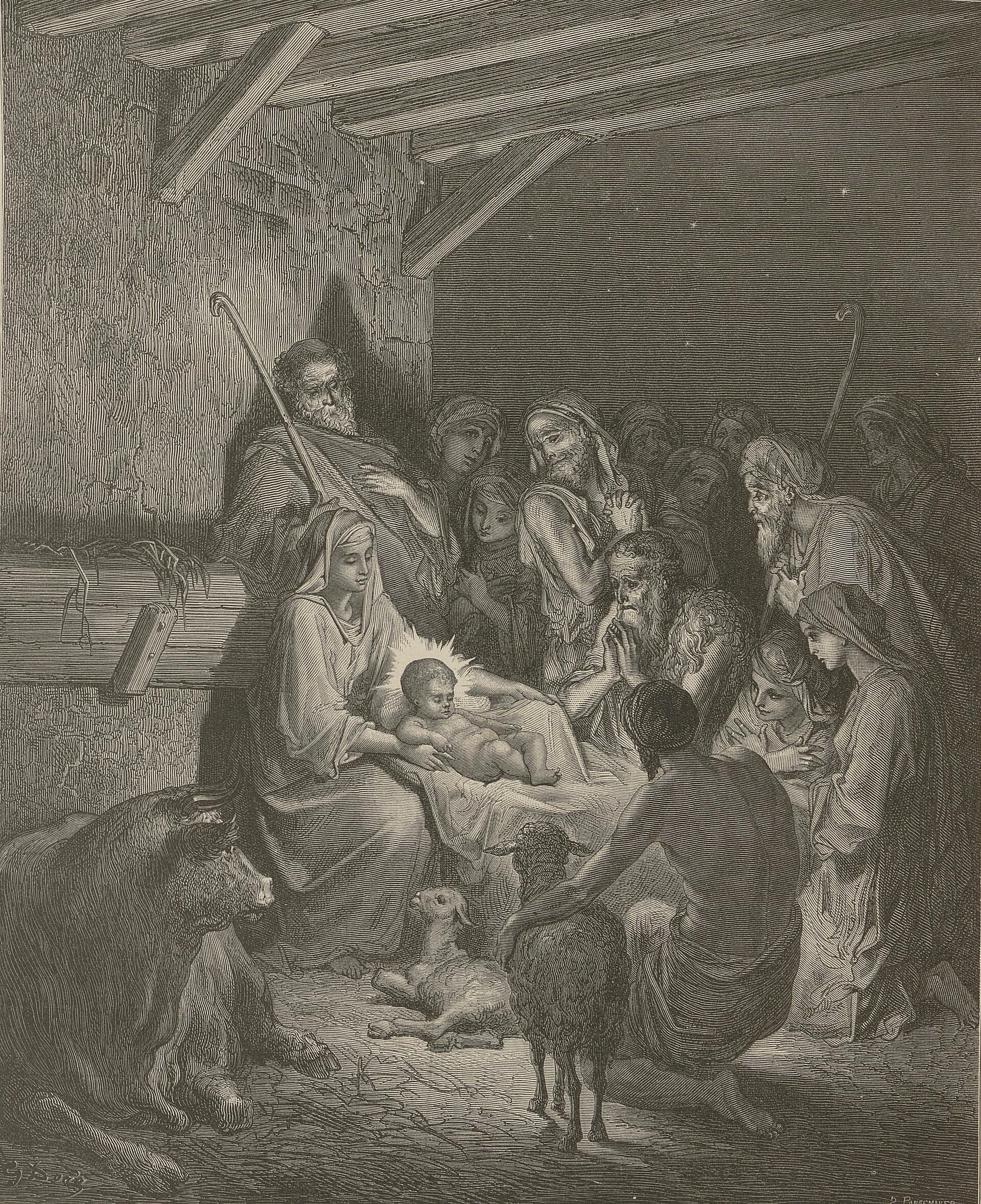
Then I saw a Lamb who appeared to have been slain, standing in the center of the throne, encircled by the four living creatures and the elders. The Lamb had seven horns and seven eyes, which represent the seven Spirits of God sent out into all the earth.
Revelation 5:6BSB The word changes. John's Revelation drops ἀμνός for ἀρνίον (arnion, G721) — the diminutive, a little lamb — and then uses it as the throne-name: of the twenty-eight verses in the tagged Greek New Testament that carry ἀρνίον, twenty-seven are in Revelation. The posture is the paradox: standing, and slain.
Commentary on Revelation 5:62 voices
And I beheld, and, lo, in the midst of the throne and of the four beasts,....
John Gill· Exposition of the New Testament (1746-1748)Reformed
John also, the Lord's disciple, when beholding the sacerdotal and glorious advent of His kingdom, says in the Apocalypse: "I turned to see the voice that spake with me.
Irenaeus· Irenaeus Against Heresies Book 4, 202Patristic
Stop 9 of 9
The lamp thereof is the Lamb
And the city has no need of sun or moon to shine on it, because the glory of God illuminates the city, and the Lamb is its lamp.
Revelation 21:23BSB The last stop is not an altar. 'And the city hath no need of the sun, neither of the moon, to shine upon it: for the glory of God did lighten it, and the lamp thereof is the Lamb.' Isaac's question is answered by a light source — and the same verse is where the Light thread ends.
Commentary on Revelation 21:231 voice
And in that he says that the sun is not necessary in the city, he shows, evidently, that the Creator as the immaculate light shines in the midst of it, whose brightness no mind has been able to conceive, nor tongue to tell.
Victorinus of Pettau· Commentary on the Apocalypse of the Blessed John, 304Patristic