
Psalm 118
29 verses · David and others · 10th to 5th century BC · Wisdom and poetry
The stone the builders rejected has become the cornerstone.
Introduction
Author unstated, the Close of the Hallel, Book 5: The return and the great Hallelujah, Poetry, Psalms Overview.
This psalm closed the songs sung at the Passover meal, and it may be the hymn Jesus and His disciples sang before they left for the Mount of Olives. Its writer is not named. It follows a man rescued from mortal danger as he comes up to the temple, asks to be let in, and gives thanks at the altar. Listen for the call and answer between the one arriving and the people inside. Listen also for the lines the crowds in the Gospels shouted and the words Jesus applied to Himself.
Context
- Who
- Israelites at the feast, singing a rescued man's words back to him as he came through the gate
- What
- A song of thanksgiving sung in procession, as a rescued man comes through the temple gate to the altar.
- Where
- The gates and the altar of the temple in Jerusalem.
- When
- Sung at the close of the Passover songs in the second temple period, with the author and the occasion unnamed.
- Why
- To close the Passover songs with thanks for rescue and to give the whole congregation the refrain of His loving devotion.
Historical context
The psalm closes the Hallel, so it was the last thing sung at the Passover meal, and Matthew 26:30 records that Jesus and the disciples sang a hymn after the meal before going out to the Mount of Olives. Its shape is a procession. The singer reports a rescue, arrives at a gate at verse 19, asks to be let in, and is answered at verse 20 with the gate's own condition, and verse 27 puts him at the altar. Verse 25 is hoshia na in the Hebrew, save us now, which came into Greek and then English as Hosanna, the background to the crowd's shout at Matthew 21:9. A stone rejected by the builders at verse 22 was one set aside as the wrong shape for the course being laid, and the head of the corner is the stone that sets the line two walls are built to.
Significance
For a congregation at the feast this psalm was a rescued man walking in among them, and the four calls at the start let Israel, the priests and every God fearer say the same line about the same loyalty before his story began. The line they would have carried away is verse 17, which gives the reason for living as testimony, and verse 18 admits the discipline was severe.
This chapter in Jewish lifeWhat this chapter is in Jewish life and reading.
What is done
This psalm closes the Hallel, Psalms 113 to 118, and it carries the moment of the set a reader is most likely to have seen. At Tabernacles the lulav is waved during the Hallel, and the Mishnah records Rabbi Akiva watching Rabban Gamliel and Rabbi Yehoshua wave only at the cry of verse 25, where the rest of the people waved at more of the set (Mishnah Sukkah 3:9, as this site records it at src/app/featured/the-hallel/page.tsx).
The rest of the set's occasions stand behind this psalm too: the Temple court at the killing of the lambs, the fourth cup at the table with the blessing of song, the second Passover, the days of Dedication and the New Moon (Mishnah Pesachim 5:7, 10:6-7 and 9:3, and Mishnah Taanit 4:5). The corpus carries the Jerusalem Talmud on verse 25 at Sukkah 4:3:1.
How it is read
Rashi reads the psalm as the voice of the congregation of Israel, and the enemies in it as the nations at the last war. The surrounding nations of verse 10 he places in "the war of Gog and Magog, when all the nations will be there", citing Zechariah 14:2 (Rashi on Psalms 118:10:1, Rashi on Psalms, The Judaica Press complete Tanach with Rashi, translated by A. J. Rosenberg, CC-BY).
Verse 17 he reads in the same voice. The one who will live and not die is "the congregation of Israel", which will not die an eternal death as the other peoples do, and the chastening of verse 18 is the exile, where the iniquities were expiated (Rashi on Psalms 118:17:1 and 118:18:1, same edition). Those who fear the Lord in verse 4 he identifies as the Levites, out of Exodus 32:26 (Rashi on Psalms 118:4:1).
Verse 22 is where the Jewish and the Christian readings part, and the parting is plain in four words. Rashi reads the stone the builders rejected as "a people that was humble among the peoples", which is Israel (Rashi on Psalms 118:22:1, same edition). The New Testament reads the same verse of Christ, and this site holds that reading. Both take the verse as a promise that what was rejected is set at the head, and they part over who the stone is.
Ibn Ezra carries nine comments for which Sefaria holds no English version, and they are cited by reference (Ibn Ezra on Psalms 118:1:1 and the eight references beside it).
What the rabbis say
Rashi passes on one aggadic tradition here, about the right hand of verse 16. He reports from the Midrash Aggadah that God created the celestial beings with His right hand, so that death has no power over them, reading it with Isaiah 48:13, where the hand that laid the foundation of the earth is the left and the hand that measured the heavens is the right. The same right hand, the teaching runs, will raise the righteous in the future and they will live forever (Rashi on Psalms 118:16:1, same edition). The site reports it as what the rabbis taught.
The corpus records forty places where the Midrash and the Talmud cite this psalm, thirty seven under Midrash and three under Talmud, and it carries the locator for each one with no text. The Jerusalem Talmud cites verse 1 at Avodah Zarah 4:1:5, verse 24 at Megillah 2:6:2 and verse 25 at Sukkah 4:3:1.
Midrash Tehillim treats this psalm more often than any other in these thirty chapters, at 118:4, 118:5, 118:6, 118:7, 118:8, 118:10, 118:11, 118:14 and 118:16, and reads its verses from four other psalms at 11:1, 37:2, 78:2 and 118:16. Devarim Rabbah reads verse 17 at 11:5 and 11:8, and Esther Rabbah reads the rejected stone at 7:10. The site reports where the rabbis cite the verse and reports no saying, because the locator carries none.
Sources: The Mishnah, Sukkah 3:9, Pesachim 5:7, 9:3 and 10:6-7, and Taanit 4:5, as recorded at src/app/featured/the-hallel/page.tsx, about AD 200; Rashi, Rashi on Psalms 118, in The Judaica Press complete Tanach with Rashi, translated by A. J. Rosenberg, CC-BY; Ibn Ezra, Ibn Ezra on Psalms 118, cited by reference; Sefaria holds no English version; The Midrash and the Talmud, the forty locators on Psalms 118 in scripts/data/sources/sefaria/psalms/118.json.
Psalms 118:1-4
Give thanks to the LORD, for He is good: The refrain is one line, that His loving devotion endures forever, and four voices are told to say it. Israel says it, then the house of Aaron, the priests, then all who fear the LORD. The circle widens at each call.
Psalms 118:1
“O give thanks unto the Lord. The grateful hero feels that he cannot himself alone sufficiently express his thankfulness, and therefore he calls in the aid of others. Grateful hearts are greedy of men's tongues, and would monopolize them all for God's glory. The whole nation was concerned in David's triumphant accession, and therefore it was right that they should unite in his adoring song of praise. The thanks were to be rendered unto Jehovah alone, and not to the patience or valour of the hero himself.”
Charles Spurgeon · The Treasury of David, Vol. 5 (1878)Particular Baptist
ConnectionsPsalms 118:29
Let Israel say: Israel is called first to say the refrain, the nation with the longest record of that loving devotion. Spurgeon traced the record: Israel sinned in Egypt, provoked God in the wilderness and strayed under the judges, and the LORD kept them. The refrain is Israel's own history.
Psalms 118:2
“Let Israel now say, that his mercy endureth for ever. God had made a covenant with their forefathers, a covenant of mercy and love, and to that covenant he was faithful evermore. Israel sinned in Egypt, provoked the Lord in the wilderness, went astray again and again under the judges, and transgressed at all times; and yet the Lord continued to regard them as his people, to favour them with his oracles, and to forgive their sins. He speedily ceased from the chastisements which they so richly deserved, because he had a favour towards them.”
Charles Spurgeon · The Treasury of David, Vol. 5 (1878)Particular Baptist
Let the house of Aaron say: The priests are named second, the house that served at the altar for Israel. Gill extended the call past Aaron's house to every believer, a priest to God who offers praise as a sacrifice, as 1 Peter 2:5 describes. The same three groups stood in Psalm 115:9 to 11.
Psalms 118:3
“Let the house of Aaron now say, that his mercy endureth for ever. The priests and Levites that blessed the people, and taught them the knowledge of divine things; but not these literally, at least not only these, since the priesthood of Aaron is changed, and the law of it abrogated, and all believers are now priests unto God, and offer up spiritual sacrifices to him; and particularly the sacrifice of praise for his grace and mercy, the perpetuity of which they should publish and proclaim all abroad.”
Let those who fear the LORD say: Fear of the LORD is the one qualification here. John Gill, following Aben Ezra, read those who fear the LORD as everyone of any people who fears Him, with proselytes as one part. Psalm 103:11 sets the same loving devotion over those who fear Him as high as the heavens.
Psalms 118:4
“Let them now that fear the Lord say, that his mercy endureth for ever. Not the proselytes to the Jewish religion only, but all that feared the Lord among all people, as Aben Ezra observes; such as fear the Lord and his goodness, and have had an experience of his grace and mercy, which has caused them to fear him; and to whom the mercy of God is great, and on whom it is from everlasting to everlasting; and therefore should speak well of it, and set their seal to it, that it abides for ever; see Psa 103:11.”
Psalms 118:5-7
In my distress I called to the LORD: The Hebrew moves from a tight place into merchav, open ground. Twice he says the LORD is on his side, and the second time he calls Him his helper. Hebrews 13:6 carries the same confession, the Lord is my helper, what can man do to me.
Psalms 118:5
“I called upon the Lord in distress, or, "out of anguish I invoked Jah." Nothing was left him but prayer, his agony was too great for aught beside; but having the heart and the privilege to pray he possessed all things. Prayers which come out of distress generally come out of the heart, and therefore they go to the heart of God. It is sweet to recollect our prayers, and often profitable to tell others of them after they are heard. Prayer may be bitter in the offering, but it will be sweet in the answering.”
Charles Spurgeon · The Treasury of David, Vol. 5 (1878)Particular Baptist
1 more voice on this verse
Psalms 118:5
“I called upon the Lord in distress,.... Or "out of that strait" (q); when David was encompassed by Saul and his men, or when at the court of Achish, or when his own people talked of stoning him.”
What can man do to me?: Spurgeon gave two renderings of on my side: the LORD for him, fighting his battle, and the LORD to him, his own possession. Psalm 56:11 asks the same question from a man who trusts in God. Romans 8:31 asks a like question.
Psalms 118:6
“And how should Christ, who said to Abraham, "Fear not, for I am with you," and encouraged Moses against Pharaoh and said to the son of Nun, "Be strong and of a good courage," himself be terrified before Herod and Pilate? Furthermore, did he who helps others overcome fear (for "the Lord," says Scripture, "is on my side, I will not fear what people shall do to me"), fear governors, who are mortals? Was he who himself encountered death terrified of death?”
Athanasius of Alexandria · written before 373 · Discourses Against the Arians 3.29.54patristic
1 more voice on this verse
Psalms 118:6
“The Lord is on my side, or, he is "for me." Once his justice was against me, but now he is my reconciled God, and engaged on my behalf. The Psalmist naturally rejoiced in the divine help; all men turned against him, but God was his defender and advocate, accomplishing the divine purposes of his grace. The expression may also be translated "to me, "that is to say, Jehovah belongs to me, and is mine. What infinite wealth is here! If we do not magnify the Lord we are of all men most brutish. I will not fear.”
Charles Spurgeon · The Treasury of David, Vol. 5 (1878)Particular Baptist
Cross references
Psalms 118:6
- Quoted inHebrews 13:6So we say with confidence: “The Lord is my helper; I will not be afraid. What can man do to me?”
'The Lord is my helper, and I will not fear what man shall do unto me'
He is my helper: The Hebrew sets the LORD among those who help, and Spurgeon and Gill read it that way: God on the psalmist's side among his helpers. Gill thought of the four hundred men with David at 1 Samuel 22:2. God stands among the helpers.
Psalms 118:7
“The Lord taketh my part with them that help me. Jehovah condescended to be in alliance with the good man and his comrades; his God was not content to look on, but he took part in the struggle. What a consolatory fact it is that the Lord takes our part, and that when he raises up friends for us he does not leave them to fight for us alone, but he himself as our chief defender deigns to come into the battle and wage war on our behalf.”
Charles Spurgeon · The Treasury of David, Vol. 5 (1878)Particular Baptist
Psalms 118:8-9
It is better to take refuge in the LORD: Twice the psalm says the same thing, that refuge in the LORD is better than trust in man, and then better than trust in princes. The verb is chasah, to take refuge, the act of running somewhere for cover. The ordinary man and the ruler stand together here.
Psalms 118:8
“It is better to trust in the Lord than to put confidence in man. It is better in all ways, for first of all it is wiser: God is infinitely more able to help, and more likely to help, than man, and therefore prudence suggests that we put our confidence in him above all others. It is also morally better to do so, for it is the duty of the creature to trust in the Creator.”
Charles Spurgeon · The Treasury of David, Vol. 5 (1878)Particular Baptist
than to trust in princes: Princes are the men a nation would trust, with power to save and honor to keep their word, as Gill put it. Spurgeon said a gilded weathervane turns as easily as a plain one, and Psalm 146:3 gives the same warning. Refuge in the LORD is the better trust.
Psalms 118:9
“It is better to trust in the Lord than to put confidence in princes. These should be the noblest of men, chivalrous in character, and true to the core. The royal word should be unquestionable. They are noblest in rank and mightiest in power, and yet as a rule princes are not one whit more reliable than the rest of mankind. A gilded vane turns with the wind as readily as a meaner weathercock. Princes are but men, and the best of men are poor creatures.”
Charles Spurgeon · The Treasury of David, Vol. 5 (1878)Particular Baptist
Psalms 118:10-12
All the nations surrounded me: Three times the enemy closes in, on every side, and like a swarm of bees. Each of the three rounds ends the same way, the cutting off done in the name of the LORD. Burning thorns flare and die fast.
Psalms 118:10
“David says this as a type of Christ, who triumphed over the powers of darkness, destroyed them, and made a show of them openly. [3.] He triumphs in an assurance of the continuance of his comfort, his victory, and his life.”
Matthew Henry · Commentary on the Whole Bible (1707-1721)puritan
They surrounded me on every side: The Hebrew doubles the verb, surrounded and surrounded again. Spurgeon pictured the nations of verse 10 closing in rank behind rank on every side, shutting the psalmist in as within a wall. In the name of the LORD the ring is cut.
Psalms 118:11
“They compassed me about; yea, they compassed me about. He had such a vivid recollection of his danger that his enemies seem to live again in his verses. We see their fierce array, and their cruel combination of forces. They made a double ring, they surrounded him in a circle of many ranks, they not only talked of doing so, but they actually shut him up and enclosed him as within a wall.”
Charles Spurgeon · The Treasury of David, Vol. 5 (1878)Particular Baptist
They swarmed around me like bees: Bees sting and die, and Henry saw the attack ending in the ruin of the nations that made it. Gill pointed to Deuteronomy 1:44, where the Amorites chased Israel like a swarm of bees. The swarm is loud, many and brief.
Psalms 118:12
“They compassed me about like bees, so numerous were they, so noisy, so vexatious; they came flying upon him, came upon him in swarms, set upon him with their malignant stings; but it was to their own destruction, as the bee, they say, loses her life with her sting, Animamque in vulnere ponit--She lays down her life in the wound. Lord, how are those increased that trouble me!”
Matthew Henry · Commentary on the Whole Bible (1707-1721)puritan
2 more voices on this verse
Psalms 118:12
“They compassed me about like bees. They seemed to be everywhere, like a swarm of bees, attacking him at every point; nimbly flying from place to place, stinging him meanwhile, and inflicting grievous pain. They threatened at first to baffle him: what weapon could he use against them? They were so numerous, so inveterate; so contemptible, yet so audacious; so insignificant and yet so capable of inflicting agony, that to the eye of reason there appeared no possibility of doing anything with them.”
Charles Spurgeon · The Treasury of David, Vol. 5 (1878)Particular Baptist
Psalms 118:12
“They compassed me about like bees,.... In great numbers (w); as a swarm of bees, which, being irritated and provoked, will fly upon persons in a body, and with great fury; to which the Amorites and the Assyrian army were compared, Deu 1:44. They will attack horses and kill them, as Aristotle (x) says; and places besieged have been delivered by throwing out hives of bees among the besiegers (y): and yet as they are feeble creatures, so by striking they lose their sting; and either die very quickly, or however become useless.”
Psalms 118:13-14
I was pushed so hard I was falling: He was pushed to the point of falling, and the LORD helped him. The line about strength and song is Exodus 15:2 in the Berean, the song at the Red Sea put in this psalm's mouth. Delitzsch marks the same line at Isaiah 12:2.
Psalms 118:13
“Thou hast thrust sore at me, that I might fall,.... Or "pushing, thou hast pushed me (a), that I might fall": an apostrophe to some particular enemy, as Saul was to David; who thrust sore at him to take away his life, by casting a javelin at him; speaking to his servants to kill him; sending messengers to watch his house and slay him, and by, pursuing him from place to place.”
1 more voice on this verse
Psalms 118:13
“Thrusting thou hast thrust at me (so the word is), so that I was ready to fall. Satan is the great enemy that thrusts sorely at us by his temptations, to cast us down from our excellency, that we may fall from our God and from our comfort in him; and, if Go had not upheld us by his grace, his thrusts would have been fatal to us.”
Matthew Henry · Commentary on the Whole Bible (1707-1721)puritan
The LORD is my strength and my song: Spurgeon split the pair by time: strength while the fight lasted and song once it was over. Matthew Henry pointed to the last clause, where the LORD has become salvation itself, more than a helper who brings it. The credit goes to the LORD.
Psalms 118:14
“The Lord my strength and song, my strength while I was in the conflict, my song now that it is ended; my strength against the strong, and my song over their defeat. He is far from boasting of his own valour; he ascribes his victory to its real source, he has no song concerning his own exploits, but all his peans are unto Jehovah Victor, the Lord whose right hand and holy arm had given him the victory. And is become my salvation.”
Charles Spurgeon · The Treasury of David, Vol. 5 (1878)Particular Baptist
1 more voice on this verse
Psalms 118:14
“But, if he be both to us, we have abundant reason to triumph in him; for, he be our strength and our song, he has become not only our Saviour, but our salvation; for his being our strength is our protection to the salvation, and his being our song is an earnest and foretaste of the salvation. [2.] He triumphs over his enemies.”
Matthew Henry · Commentary on the Whole Bible (1707-1721)puritan
Psalms 118:15-16
Shouts of joy and salvation resound: The shouting is in the tents of the righteous, the ordinary dwellings of the people. One line carries it, the right hand of the LORD, which performs with valor and is exalted. The psalm says it three times in two verses.
Psalms 118:15
“There is salvation; safety from evil, earnests of eternal salvation, which has come to this house, Luke xix. Where there is salvation there is cause for rejoicing, for continual joy in God. Holy joy is called the joy of salvation, for in that there is abundant matter for joy.”
Matthew Henry · Commentary on the Whole Bible (1707-1721)puritan
The right hand of the LORD is exalted!: Exalted can mean lifted to strike or lifted in praise, and Spurgeon kept both. John Gill heard in it the song at the sea, where Exodus 15:6 says the right hand of the LORD shattered the enemy. The hand that fights is the hand that is praised.
Psalms 118:16
“The right hand of the Lord is exalted,.... Lifted up, very eminent and conspicuous, easily to be observed in the instances before given, and become great and glorious in power; see Exo 15:6. The power of God is superior to all enemies; and is beyond conception and expression; and is able to do for his people above all they are able to ask or think; the right hand of the Lord doth valiantly: or "acts powerfully".”
2 more voices on this verse
Psalms 118:16
“The right hand of the Lord is exalted, lifted up to smite the enemy, or extolled and magnified in the eyes of his people. It is the Lord's right hand, the hand of his skill, the hand of his greatest power, the hand which is accustomed to defend his saints. When that is lifted up, it lifts up all who trust in him, and it casts down all who resist him. The right hand of the Lord doeth valiantly.”
Charles Spurgeon · The Treasury of David, Vol. 5 (1878)Particular Baptist
Psalms 118:16
“And there are some who suppose that God is fashioned after a bodily manner, when they read of his hand or finger, and they do not observe that these things are written not because of any fashion of a body, since in the godhead there are neither members nor parts, but they are expressions of the oneness of the godhead, that we may believe that it is impossible for either the Son or the Holy Spirit to be separated from God the Father; since the fullness of the godhead dwells as it were bodily in the substance of the Trinity.”
Ambrose of Milan · written before 397 · On the Holy Spirit 2.7.69patristic
Psalms 118:17-18
I will not die, but I will live: The psalmist says he will live, and the reason he gives is to proclaim what the LORD has done. The verb in verse 18 is yasar, to discipline, and it stands twice in a row, which is where severely comes from. The discipline stopped short of death.
Psalms 118:17
“I shall not die, but live. His enemies hoped that he would die, and perhaps he himself feared he should perish at their hand: the news of his death may have been spread among his people, tor the tongue of rumour is ever ready with ill news, the false intelligence would naturally cause great sorrow and despondency, but he proclaims himself as yet alive and as confident that he shall not fall by the hand of the destroyer.”
Charles Spurgeon · The Treasury of David, Vol. 5 (1878)Particular Baptist
2 more voices on this verse
Psalms 118:17
Thus it is that sinners, and all those who are aliens from the catholic church, heretics and schismatics, since they are excluded from glorifying [God] with the saints, cannot properly even continue to be observers of the feasts. But the righteous person, although he appears dying to the world, uses boldness of speech, saying, "I shall not die but live and narrate all your marvelous deeds."
Athanasius of Alexandria · written before 373 · Festal Letters 7:4patristic
Psalms 118:17
“I shall not die, but live,.... Not that he should never die, David knew he should; but that his present afflictions would not issue in death; or he should not die by the hands of his enemies, he sometimes feared he should; but now believed he should live, as he did, to a good old age: he knew he should live spiritually and eternally, and not die a second death; and so may all true believers and members of Christ say.”
The LORD disciplined me severely: Verse 13 described the enemy pushing hard, and verse 18 gives the same event from God's side, as discipline. Spurgeon called it faith's version of the attack, as Job's sorrows came through Satan and were still the LORD's chastening. Paul echoes the line at 2 Corinthians 6:9.
Psalms 118:18
Consider the carefulness and the wisdom and the power of this Educator [Christ]: "He shall not judge according to appearance or reprove according to gossip, but he shall render judgment with humility and shall reprove the sinners of the earth." And through the lips of David, he says, "The Lord chastising has chastised me, but he has not delivered me over to death." Indeed, the very act of being chastised, and being educated by the Lord as a child, means deliverance from death. Again, he says through the same psalmist: "You shall rule them with a rod of iron."
Clement of Alexandria · written before 215 · The Instructor Book 1patristic
3 more voices on this verse
Psalms 118:18
“The Lord hath chastened me sore. This is faith's version of the former passage, "Thou hast thrust sore at me; "for the attacks of the enemy are chastisements from the hand of God. The devil tormented Job for his own purposes, but in reality the sorrows of the patriarch were chastisements from the Lord. "Chastening, Jah hath chastened me, "says our poet: as much as to say that the Lord had smitten him very severely, and made him sorrowfully to know the full weight of his rod.”
Charles Spurgeon · The Treasury of David, Vol. 5 (1878)Particular Baptist
Psalms 118:18
“The Lord hath chastened me sore,.... Or, "in chastening hath chastened me" (d). David was exercised with many afflictions; and though these were sore ones to the flesh, yet they were only the chastenings of a Father, and were all in love and for his good; as are all the afflictions of God's people; for whom he loves he chastens.”
Psalms 118:18
“As dying, and behold we live; as chastened, and not killed. We ought not therefore, when we are chastened sorely, immediately to despair of life, for God sometimes, in appearance, turns men to destruction, and yet says, Return; says unto them, Live. This also is applicable to Jesus Christ.”
Matthew Henry · Commentary on the Whole Bible (1707-1721)puritan
Psalms 118:19-21
Open to me the gates of righteousness: The psalm arrives at a gate and asks to be let in. Verse 20 gives the gate's own condition, that the righteous enter, and verse 21 gives the ground of the asking, that the LORD answered him. Verses 14 and 21 end on the same Hebrew word, salvation.
Psalms 118:19
And it is not incredible that the gates that are said to open spontaneously are referred obscurely by some to the words "Open to me the gates of righteousness, that I may go into them and praise the Lord; this gate of the Lord, into it the righteous shall enter"; and again, to what is said in the ninth psalm, "You that lift me up from the gates of death, that I may show forth all your praise in the gates of the daughter of Zion."
Origen of Alexandria · written before 253 · Against Celsus 6:36patristic
2 more voices on this verse
Psalms 118:19
“Open to me the gates of righteousness,.... The doors of the sanctuary or tabernacle, so called, because none but righteous persons might enter in at them, or who were clean in a ceremonial sense; and because sacrifices of righteousness were here offered. The words are addressed to the porters, or Levites, that kept the doors of the tabernacle, to open them. The Targum is, "open to me the gates of the city of righteousness;'' Jerusalem, so called Isa 1:26; the gates of which were opened to David, when he took it from the Jebusites.”
Psalms 118:19
“The psalmist desires admission into the sanctuary of God, there to celebrate the glory of him that cometh in the name of the Lord: Open to me the gates of righteousness. So the temple-gates are called, because they were shut against the uncircumcised, and forbade the stranger to come nigh, as the sacrifices there offered are called sacrifices of righteousness.”
Matthew Henry · Commentary on the Whole Bible (1707-1721)puritan
This is the gate of the LORD: Henry read the gate of the LORD as the temple entrance, shut to the uncircumcised and open to the righteous who enter. Spurgeon pictured the psalmist pausing under its arch out of love for the house of the LORD. Jesus calls Himself the gate at John 10:9.
Psalms 118:20
“This gate of the Lord, into which the righteous shall enter. Psalmist loves the house of God so well that he admires the very gate thereof, and pauses beneath its arch to express his affection for it. He loved it because it was the gate of the Lord, he loved it because it was the gate of righteousness, because so many godly people had already entered it, and because in all future ages such persons will continue to pass through its portals.”
Charles Spurgeon · The Treasury of David, Vol. 5 (1878)Particular Baptist
1 more voice on this verse
Psalms 118:20
“The righteous - As David was a type of Christ and the temple of heaven, so this place hath a farther prospect than David, and relates to Christ's ascending into heaven, and opening the gates of that blessed temple, both for himself and for all believers.”
John Wesley · Explanatory Notes upon the Old Testament (1765)evangelical
I will give You thanks: Inside the gate, the psalmist turns from speaking about the LORD to give thanks to Him. Spurgeon read the shift to You as a man who now senses the presence of God and speaks to Him directly. The LORD who answered in verse 5 is thanked in person.
Psalms 118:21
“I will praise thee, for thou hast heard me,.... Here the psalmist reassumes his part in this song, and determines to praise the Lord for hearing him when in distress, and when he was encompassed with his enemies, and for delivering him out of their hands; and art become my salvation; the author of it, and therefore deserving of praise; and who is no other than the Messiah Jesus, who is described in the next verse.”
2 more voices on this verse
Psalms 118:21
“Having entered, the champion exclaims, I will praise thee, not "I will praise the Lord, "for now he vividly realizes the divine presence, and addresses himself directly to Jehovah, whom his faith sensibly discerns. How well it is in all our songs of praise to let the heart have direct and distinct communion with God himself! The Psalmist's song was personal praise too:—" I will praise thee"; resolute praise, for he firmly resolved to offer it; spontaneous praise, for he voluntarily and cheerfully rendered it, and continuous praise, for he did not intend soon to have done with it.”
Charles Spurgeon · The Treasury of David, Vol. 5 (1878)Particular Baptist
Psalms 118:21
“Those that saw Christ's day at so great a distance saw cause to praise God for the prospect; for in him they saw that God had heard them, had heard the prayers of the Old-Testament saints for the coming of the Messiah, and would be their salvation.”
Matthew Henry · Commentary on the Whole Bible (1707-1721)puritan
The stone the builders rejected: A stone the builders threw out became the one the building turns on. Jesus quotes it at Matthew 21:42, and Peter says at Acts 4:11 that this stone is Jesus, rejected by the builders and now the cornerstone. Acts 4:10 names Him as the one God raised.
Psalms 118:22
“Likewise at the setting of the sun and at the end of the day necessarily there must again be prayer. For since Christ is the true Sun and the true Day, as the sun and the day of the world recede, when we pray and petition that the light come on us again, we pray for the coming of Christ to provide us with the grace of eternal light. Moreover, the Holy Spirit in the Psalms declares that Christ is called the Day. He says, "The stone that the builders rejected has become the cornerstone.”
Cyprian · written before 258 · Treatise IV. On the Lord's Prayer 35patristic
3 more voices on this verse
Psalms 118:22
“The stone which the builders refused is become the head stone of the corner. Here the people magnify God for bringing his chosen servant into the honourable office, which had been allotted to him by divine decree. A wise king and valiant leader is a stone by which the national fabric is built up. David had been rejected by those in authority, but God had placed him in a position of the highest honour and the greatest usefulness, making him the chief cornerstone of the state.”
Charles Spurgeon · The Treasury of David, Vol. 5 (1878)Particular Baptist
Psalms 118:22
“This was a disgrace to Christ, but it proved the ruin of those that thus made light of him. Rejecters of Christ are rejected of God. He has become the headstone of the corner; he is advanced to the highest degree both of honour and usefulness, to be above all, and all in all.”
Matthew Henry · Commentary on the Whole Bible (1707-1721)puritan
Psalms 118:22
“Head stone - The chief stone in the whole building, by which the several parts of the building are upheld and firmly united together. Thus David united all the tribes and families of Israel: and thus Christ united Jews and Gentiles together. And therefore this place is justly expounded of Christ, Mark xii, 10 Acts iv, 11 Rom. ix, 32 Eph. ii, 20.”
John Wesley · Explanatory Notes upon the Old Testament (1765)evangelical
Cross references
Psalms 118:22
- Quoted in1 Peter 2:7To you who believe, then, this stone is precious. But to those who do not believe, “The stone the builders rejected has become the cornerstone,”
'The stone which the builders disallowed... head of the corner'
- Quoted inActs 4:11“This Jesus is ‘the stone you builders rejected, which has become the cornerstone.’”
'the stone... set at nought of you builders' (before the Sanhedrin)
- Quoted inLuke 20:17“But Jesus looked directly at them and said, “Then what is the meaning of that which is written: ‘The stone the builders rejected has become the cornerstone’?”
'The stone which the builders rejected' ('what is this then that is written')
- Quoted inMark 12:10“Have you never read this Scripture: ‘The stone the builders rejected has become the cornerstone.”
'the stone which the builders rejected' ('have ye not read this scripture')
- Quoted inMatthew 21:42“Jesus said to them, “Have you never read in the Scriptures: ‘The stone the builders rejected has become the cornerstone. This is from the Lord, and it is marvelous in our eyes’?”
'The stone which the builders rejected' ('did ye never read in the scriptures')
Connections1 Peter 2:7, Acts 4:11, Matthew 21:42
Psalms 118:23-24
This is from the LORD: The reversal is marvelous in our eyes, and the psalm credits it to the LORD. Verse 24 names one day, the day the LORD has made, and the singers are told to rejoice in it. The day named is the day of this deliverance.
Psalms 118:23
“This is the Lord'S doing. The exalted position of Christ in his church is not the work of man, and does not depend for its continuation upon any builders or ministers; God himself has wrought the exaltation of our Lord Jesus. Considering the opposition which comes from the wisdom, the power, and the authority of this world, it is manifest that if the kingdom of Christ be indeed set up and maintained in the world it must be by supernatural power. Indeed, it is so even in the smallest detail.”
Charles Spurgeon · The Treasury of David, Vol. 5 (1878)Particular Baptist
This is the day that the LORD has made: The day follows the cornerstone of verse 22, the day the rejected stone was set in place. Spurgeon read it first as David's enthronement and then as the resurrection of Jesus, a new day of God's own making. The rejoicing belongs to that day.
Psalms 118:24
“This is the day which the Lord hath made. A new era has commenced. The day of David's enthronement was the beginning of better times for Israel; and in a far higher sense the day of our Lord's resurrection is a new day of God's own making, for it is the dawn of a blessed dispensation. No doubt the Israelitish nation celebrated the victory of its champion with a day of feasting, music and song; and surely it is but meet that we should reverently keep the feast of the triumph of the Son of David.”
Charles Spurgeon · The Treasury of David, Vol. 5 (1878)Particular Baptist
Psalms 118:25-26
O LORD, save us, we pray: Save us, we pray is hoshia na in the Hebrew, the Hosanna the crowds shouted at Matthew 21:9. The next line blesses the one coming in the name of the LORD, and Jesus turns it forward at Matthew 23:39 over Jerusalem. The answer comes from the house of the LORD.
Psalms 118:25
“Save now, I beseech thee, O Lord. Hosanna! God save our king! Let David reign! Or as we who live in these latter days interpret it, —Let the Son of David live for ever, let his saving help go forth throughout all nations. This was the peculiar shout of the feast of tabernacles; and so long as we dwell here below in these tabernacles of clay we cannot do better than use the same cry. Perpetually let us pray that our glorious King may work salvation in the midst of the earth.”
Charles Spurgeon · The Treasury of David, Vol. 5 (1878)Particular Baptist
1 more voice on this verse
Psalms 118:25
“Save now--Hebrew, "Hosanna" (compare Ps 115:2, &c., as to now) a form of prayer (Ps 20:9), since, in our use, of praise.”
Jamieson, Fausset & Brown · Commentary Critical and Explanatory on the Whole Bible (1871)reformed
Cross references
Psalms 118:25
- Quoted inJohn 12:13They took palm branches and went out to meet Him, shouting: “Hosanna!” “Blessed is He who comes in the name of the Lord!” “Blessed is the King of Israel!”
'Hosanna: Blessed is the King of Israel' (triumphal entry)
ConnectionsJohn 12:13
Blessed is he who comes in the name of the LORD: At Luke 19:38 the crowd gives the line a title: blessed is the King who comes in the Lord's name. Gill noted that the crowd used it as Jesus entered Jerusalem for His last Passover. Spurgeon called Him the Coming One, come and still to come.
Psalms 118:26
“Blessed is he that cometh in the name of the Lord. The champion had done everything "in the name of the Lord": in that name he had routed all his adversaries, and had risen to the throne, and in that name he had now entered the temple to pay his vows. We know who it is that cometh in the name of the Lord beyond all others. In the Psalmist's days he was The Coming One, and he is still The Coming One, though he hath already come.”
Charles Spurgeon · The Treasury of David, Vol. 5 (1878)Particular Baptist
1 more voice on this verse
Psalms 118:26
“Blessed - We pray that God would bless his person and government. Cometh - To the throne; or from his Father into the world: who is known by the name of him that cometh or was to come, and of whom this very word is used, Gen. xlix, 10 Isaiah xxxv, 4.”
John Wesley · Explanatory Notes upon the Old Testament (1765)evangelical
Cross references
Psalms 118:26
- Quoted inLuke 19:38“Blessed is the King who comes in the name of the Lord!” “Peace in heaven and glory in the highest!”
'Blessed be the King that cometh in the name of the Lord'
- Quoted inMark 11:9The ones who went ahead and those who followed were shouting: “Hosanna!” “Blessed is He who comes in the name of the Lord!”
'Blessed is he that cometh in the name of the Lord' (triumphal entry)
- Quoted inMatthew 21:9The crowds that went ahead of Him and those that followed were shouting: “Hosanna to the Son of David!” “Blessed is He who comes in the name of the Lord!” “Hosanna in the highest!”
'Hosanna... Blessed is he that cometh in the name of the Lord'
- Quoted inMatthew 23:39For I tell you that you will not see Me again until you say, ‘Blessed is He who comes in the name of the Lord.’”
'Blessed is he that cometh in the name of the Lord' (lament over Jerusalem)
ConnectionsMatthew 21:9
Psalms 118:27-29
The LORD is God: The festal sacrifice is bound to the horns of the altar with cords, the animal tied at the corner where it is killed. The confession doubles, You are my God, twice over, and Exodus 15:2 closes the same way with I will exalt Him. Verse 29 is verse 1 again.
Psalms 118:27
“The Lord - Or, The mighty God, as this name of God signifies, and as he shewed himself to be by this, his wonderful work. Who - Who hath scattered our dark clouds, and put us into a state of peace, and safety, and happiness. The horns - These are supposed to be made for this very use, that the beasts should be bound and killed there.”
John Wesley · Explanatory Notes upon the Old Testament (1765)evangelical
1 more voice on this verse
Psalms 118:27
“God is the Lord, which hath shewed us light, or "God is Jehovah, "the only living and true God. There is none other God but he. The words may also be rendered, "Mighty is Jehovah." Only the power of God could have brought us such light and joy as spring from the work of our Champion and King.”
Charles Spurgeon · The Treasury of David, Vol. 5 (1878)Particular Baptist
You are my God, and I will give You thanks: Spurgeon read the doubled You are my God as an exchange: the LORD exalted the psalmist, and the psalmist answers by exalting Him. He heard the exchange in Jesus' prayer at John 17:1, that the Father glorify the Son so the Son may glorify Him. Thanks returns what was given.
Psalms 118:28
Thou art my God, and I will praise thee, my mighty God who hath done this mighty and marvellous thing. Thou shalt be mine, and all the praise my soul is capable of shall be poured forth at thy feet. Thou art my God, I will exalt thee. Thou hast exalted me, and as far as my praises can do it, I will exalt thy name. Jesus is magnified, and he magnifies the Father according to his prayer, "Father, the hour is come; glorify thy Son, that thy Son also may glorify thee."
Charles Spurgeon · The Treasury of David, Vol. 5 (1878)Particular Baptist
1 more voice on this verse
Psalms 118:28
“In him it is that God is good to man and that his mercy endures for ever; in him the covenant of grace is made, and in him it is made sure, made good, and made an everlasting covenant.”
Matthew Henry · Commentary on the Whole Bible (1707-1721)puritan
Give thanks to the LORD, for He is good: The closing line repeats the opening one. Gill counted what stands between them as proof: the answered distress, the enemies cut off, the life spared and the rejected stone made the cornerstone. Spurgeon pictured the three groups of verses 2 to 4 joined in one hymn.
Psalms 118:29
“O give thanks unto the Lord, for he is good,.... And thus the psalm ends as it began; there having been given many instances of the divine goodness, in hearing and delivering the psalmist when in distress; saving him from his enemies, when compassed about with them; sparing his life, when in great danger; and especially in making the stone rejected by the builders the head of the corner; for his mercy endureth for ever; the above instances are proofs of it; and still it continues, and will for evermore.”
1 more voice on this verse
Psalms 118:29
“O give thanks unto the Lord; for he is good: for his mercy endureth for ever. The Psalm concludes as it began, making a complete circle of joyful adoration. We can well suppose that the notes at the close of the loud hallelujah were more swift, more sweet, more loud than at the beginning. To the sound of trumpet and harp, Israel, the house of Aaron, and all that feared the Lord, forgetting their distinctions, joined in one common hymn, testifying again to their deep gratitude to the Lord's goodness, and to the mercy which is unto eternity.”
Charles Spurgeon · The Treasury of David, Vol. 5 (1878)Particular Baptist
How this psalm is built
The form: A processional thanksgiving, sung on the way to the gates of the LORD's house, as Delitzsch classes it.
A Out of a tight place he called, and the LORD set him in the open
Psalm 118:5
B All the nations surround him, and he cuts them off in the name of the LORD
Psalm 118:10-12
C The LORD is my strength and my song, and He has become my salvation
Psalm 118:14
D I will not die but live, and I will proclaim what the LORD has done
Psalm 118:17
C′ You are my God and I will give You thanks, You are my God and I will exalt You
Psalm 118:28
B′ The stone the builders rejected has become the cornerstone
Psalm 118:22-23
A′ He asks for the gates of righteousness to be opened so he may enter
Psalm 118:19-20
The patterns in this chapter
| Device | What it does | Where to see it |
|---|---|---|
| His loving devotion endures forever | The line stands four times at the opening, in verses 1 to 4, and once more at verse 29. Israel says it, then the house of Aaron, then all who fear the LORD, so the circle widens at each call before the psalm's own story begins.Charles Spurgeon, The Treasury of David, Vol. 5, 1878, on Psalm 118:1. | Psalm 118:1, Psalm 118:2, Psalm 118:3, Psalm 118:4, Psalm 118:29 |
| Verse 1 said again at verse 29 | The psalm's last verse is its first verse repeated word for word. Everything between is held inside one sentence of thanks, and the reader who arrives at the end is returned to the beginning.Franz Delitzsch, Biblical Commentary on the Psalms, 1871, on Psalm 118:29. | Psalm 118:1, Psalm 118:29 |
| In the name of the LORD I cut them off | Verses 10, 11 and 12 each close the same way. The enemy surrounds him on every side and like a swarm of bees, and each round ends with the cutting off done in the name of the LORD rather than by his own hand.Albert Barnes, Notes, Explanatory and Practical, on the Old and New Testaments, 1832 to 1869, on Psalm 118:10. | Psalm 118:10, Psalm 118:11, Psalm 118:12 |
| The right hand of the LORD, three times in two verses | Verses 15 and 16 name the right hand of the LORD three times, exalted and performing with valor. The shouting is in the tents of the righteous, the ordinary dwellings of the people rather than a sanctuary.John Gill, Exposition of the Old Testament, 1748 to 1763, on Psalm 118:15. | Psalm 118:15, Psalm 118:16 |
| The rejected stone | A stone the builders threw out became the one the building turns on. Jesus quotes it at Matthew 21:42 against the chief priests, and Peter says at Acts 4:11 that this stone is Jesus, rejected by the builders and now the cornerstone.Albert Barnes, Notes, Explanatory and Practical, on the Old and New Testaments, 1832 to 1869, on Psalm 118:22. | Psalm 118:22, Psalm 118:23 |
| The approach to the gate | The psalm moves from distress in a tight place at verse 5 out to open ground, through the surrounding enemies, to a gate at verse 19, through it at verse 20, and to the altar at verse 27. The move out of the narrow place ends at the gate the righteous enter by.Franz Delitzsch, Biblical Commentary on the Psalms, 1871, on Psalm 118:19. | Psalm 118:5, Psalm 118:19, Psalm 118:20, Psalm 118:27 |
The prophecy and the New Testament's use
7 more paragraphs on the patterns
No psalm outside Psalm 110 is put to more use in the Gospels. Verse 22, the stone the builders rejected, is quoted by Jesus at Matthew 21:42 against the chief priests at the end of the parable of the tenants, by Peter at Acts 4:11 before the same council, and at 1 Peter 2:7. Verses 25 and 26 are the Palm Sunday cry at Matthew 21:9, and Jesus turns verse 26 forward over Jerusalem at Matthew 23:39, saying they will not see Him again until they say it. Verse 6 is carried into Hebrews 13:6 as the Christian's own confession.
The line it shares with the exodus
Verse 14, the LORD is my strength and my song and He has become my salvation, stands word for word at Exodus 15:2 in the song at the Red Sea, and Delitzsch marks the same line at Isaiah 12:2. A psalm sung at Passover puts the Red Sea song into the mouth of one rescued man.
The centre
Verse 17 is the psalm's turning point and its most quoted personal line. I will not die but live, and I will proclaim what the LORD has done. The reason given for living is not relief but testimony, and verse 18 adds that the discipline was severe and stopped short of death.
The two ways of reading the stone
Whether the psalm's own singer understood himself as the stone is debated. The plain reading takes it as a proverb the rescued man applies to his own reversal, a man the leaders had written off now standing at the head. The messianic reading, which Barnes holds and which the apostles use, takes the line as pointing past its speaker. Both readings can stand together, since the apostles' use does not require that the psalmist saw what they saw.
Keep studying
Studies10
People and groups1
Sources for this chapter
The summary
Jamieson, Fausset & Brown, Commentary Critical and Explanatory; John Calvin, Commentaries; John Wesley, Notes on the Old Testament and Matthew Henry, Complete Commentary.
The context
Charles Spurgeon, The Treasury of David on Psalm 118 and Franz Delitzsch, Biblical Commentary on the Prophecies of Isaiah.
The form and classifications
Albert Barnes, Notes, Explanatory and Practical, on the Old and New Testaments, 1832 to 1869, on Psalm 118:22; Charles Spurgeon, The Treasury of David, Vol. 5, 1878, on Psalm 118:1 and Franz Delitzsch, Biblical Commentary on the Psalms, 1871, on Psalm 118:19.
The exposition
Albert Barnes, Notes on the Book of Psalms; Charles Spurgeon, The Treasury of David; Franz Delitzsch, Biblical Commentary on the Psalms; John Gill, Exposition of the Old Testament and Matthew Henry, Commentary on the Whole Bible.
The painting
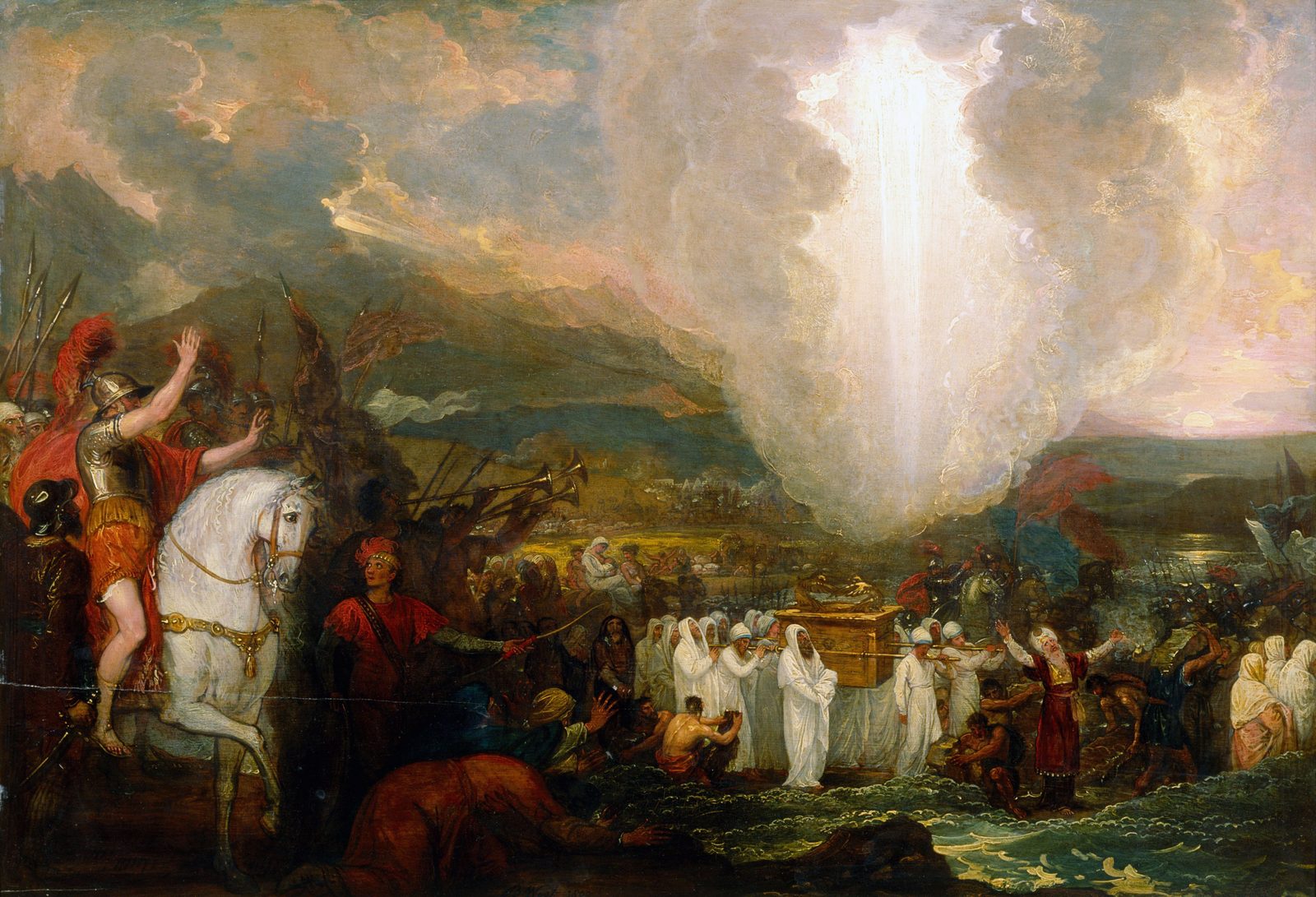
Joshua passing the River Jordan with the Ark of the Covenant. Benjamin West, 1800. Wikimedia Commons. Public domain.