
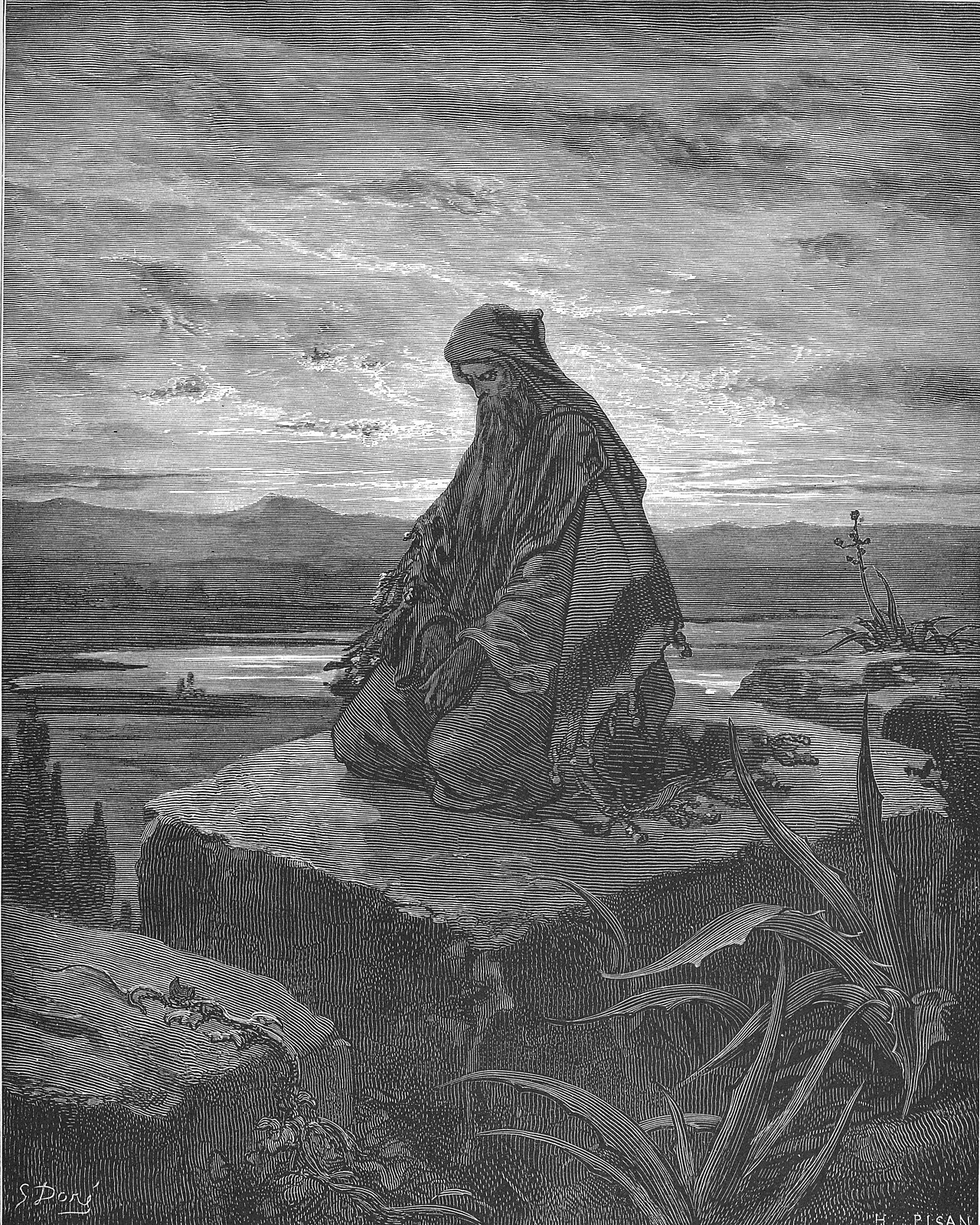
Isaiahchapter 48
22 verses · Isaiah · 8th century BC · The Prophets
See, I have refined you, but not as silver; I have tested you in the furnace of affliction.
Introduction
Isaiah, The Prophets, Isaiah Overview.
Isaiah wrote this chapter for the generation that would be told to leave Babylon, a people who used the LORD's name out of habit. It closes the first part of the book of comfort with a plain account of their stubbornness. God explains why He told them events long before they happened, and why He now tells them new things. Listen for the note of regret about what they could have had. The chapter ends with the order to go out from Babylon with singing.
Context
- Who
- Exiles who swore by the LORD's name out of habit rather than truth
- What
- A rebuke of Israel's stubbornness and the command to leave Babylon.
- Where
- Spoken to the exiles in Babylon, looking to the road out of the city and the desert beyond it.
- When
- Spoken about 700 to 690 BC by the book's own reading, and addressed to the generation freed in 538 BC.
- Why
- To show that God foretold events so His people could not credit an idol, and to send them out with praise.
Historical context
The furnace is a metalworker's furnace. Silver was refined by melting the ore with lead in a crucible so the impurities were drawn off and the bright metal left behind. God says he refined them, but not with silver, that is, not by the silver process and not for a profit, and chose them in the furnace of affliction. The exile is described as a smelting operation with a purpose.
Show the rest of the historical context, 4 more paragraphs
The description of their stubbornness uses a farm animal. Your neck is an iron sinew and your brow is bronze, the ox that will not bend its neck for the yoke and drives its head against the goad. Anyone who had worked a stubborn animal knew the feeling exactly.
The reason God announced things in advance is stated bluntly, and it is not flattering. I declared them to you from the beginning; before it came to pass I showed you, so that you could not say, my idol has done them. He knew they would credit a statue, so he dated the prediction.
Then something new: from this time I make you hear new things, hidden things you have not known, created now and not long ago, so you cannot say, behold, I knew them. There is a difference between fulfilled prediction and fresh revelation, and the chapter marks it.
The command at the end is the departure order, and it comes with an instruction about how to leave: go out of Babylon, flee from the Chaldeans, with a voice of singing declare it, tell it out to the end of the earth, say, the LORD has redeemed his servant Jacob. And the guarantee is the wilderness precedent, they did not thirst when he led them through the deserts; he made water flow from the rock for them; he split the rock and the water gushed out.
Significance
The first hearers are described without flattery: called by the name of Israel, swearing by the LORD's name and making mention of the God of Israel, but not in truth or righteousness. Religious identity intact, everything under it hollow.
Show the rest of the significance, 1 more paragraph
And the regret God expresses is a father's. Oh that you had listened to my commandments, then your peace would have been like a river, and your righteousness like the waves of the sea. A river runs whether or not it rains that week, and the waves do not stop. That was on offer, and it was refused.
This chapter in Jewish lifeWhat this chapter is in Jewish life and reading.
What is done
The site's own table in src/lib/hebraic/readings.ts, probed for this lane, printed no weekly portion and no Haftarah from this chapter, and no festival reading for the book. That table carries the Haftarah of each of the fifty-four weekly portions and the books read whole at the feasts, and it carries nothing for the special Sabbaths or the fast days. This card therefore names no public reading of the chapter and leaves that question to a source that holds those readings.
The corpus joins the chapter to the weeks of the Torah portions through the works arranged by portion. Under the fourth verse it carries Midrash Tanchuma, Terumah 11:6. Under the ninth verse it carries Midrash Tanchuma Buber, Bamidbar 30:1 and Midrash Tanchuma, Bamidbar 24:1. Under the thirteenth verse it carries Bereshit Rabbati, Parashat Bereshit 30.
How it is read
Two commentators on this chapter carry English in the corpus. Rashi is quoted from The Judaica Press complete Tanach with Rashi, translated by A. J. Rosenberg, which Sefaria reports as CC-BY, and every quotation of it is held to fifty words or fewer because the translation is modern. Ibn Ezra is quoted from the version Sefaria titles Commentary of Ibn Ezra on Isaiah - trans. by M. Friedlander, 1873, which it reports as Public Domain.
Rashi reads the chapter as addressed to a named part of the people. "The two tribes destined to go in exile to Babylon". The house of Jacob called by the name of Israel is Benjamin, which bears the general name of the tribes (Rashi on Isaiah 48:1:1 and 48:1:2). Their leaning on the God of Israel he places in the days of Hezekiah, and he says it kept them from exile until Nebuchadnezzar and gave them a redemption through Cyrus (Rashi on Isaiah 48:2:1).
The reason for prophecy is the chapter's argument, and both commentators state it the same way. God told the events before they came so that Israel could not credit them to an idol (Rashi on Isaiah 48:4:1). Ibn Ezra gives the same connection between the prediction and Israel's obstinacy (Ibn Ezra on Isaiah 48:5:1). The first things of the third verse Rashi names as the redemption from Egypt and Hezekiah's deliverance from Sennacherib (Rashi on Isaiah 48:3:1).
The furnace of the tenth verse gets a short and sharp note. "Not with the fire of Gehinnom, as silver is refined through fire". The redemption of the fifteenth verse he reads forward to the last exile and the four corners of the earth (Rashi on Isaiah 48:10:1 and 48:15:1). Ibn Ezra marks the turn at the twentieth verse: "Now the prophet addresses those in exile". The water from the rock of the next verse he reads as water "Where no water had been before". Rashi names the wicked of the last verse as Nebuchadnezzar and his seed (Ibn Ezra on Isaiah 48:20:1 and 48:21:1; Rashi on Isaiah 48:22:1).
What the rabbis say
The corpus carries forty rabbinic locators on this chapter and the text of none, so each is cited and linked here rather than quoted. On the second verse it holds Chagigah 16a:3. On the fourth verse it holds Midrash Tanchuma, Terumah 11:6. On the fifth verse it holds Devarim Rabbah 2:18. On the ninth verse it holds Bamidbar Rabbah 5:6, Midrash Lekach Tov, Genesis 31:39:3, Midrash Tanchuma Buber, Bamidbar 30:1 and Midrash Tanchuma, Bamidbar 24:1. On the tenth verse it holds Chagigah 9b:12, Ein Yaakov (Glick Edition), Khagigah 1:20, Ein Yaakov, Khagigah 1:15 and Ein Yaakov, Pesakhim 10:23.
On the eleventh verse it holds Avot DeRabbi Natan, Recension B 22:4, Ein Yaakov (Glick Edition), Pesakhim 10:11 and Ein Yaakov (Glick Edition), Sanhedrin 11:48. It holds Mekhilta DeRabbi Yishmael, Tractate Vayehi Beshalach 4:13 there as well. On the twelfth verse it holds Aggadat Bereshit 84:1, Aggadat Bereshit 84:2, Jerusalem Talmud Sotah 7:4:9 and Midrash Aggadah, Numbers 1:5:1. On the thirteenth verse it holds Bereshit Rabbah 1:15, Bereshit Rabbati, Parashat Bereshit 30 and Chagigah 12a:17. On the fifteenth verse it holds Vayikra Rabbah 1:9 and Yalkut Shimoni on Torah 428:2.
On the sixteenth verse it holds Bereshit Rabbah 47:9, Ein Yaakov (Glick Edition), Moed Katan 3:1 and Ein Yaakov, Moed Katan 3:5. On the seventeenth verse it holds Bamidbar Rabbah 17:1, Ein Yaakov (Glick Edition), Makkot 2:6 and Ein Yaakov, Makkot 2:9. On the eighteenth verse it holds Avodah Zarah 5a:20, Bamidbar Rabbah 5:9 and Berakhot 6a:1. On the nineteenth verse it holds Mekhilta DeRabbi Yishmael, Tractate Nezikin 18:22 and Yalkut Shimoni on Torah 349:6. On the twentieth verse it holds Aggadat Bereshit 72:1. On the twenty-second verse it holds Aggadat Bereshit 2:2, Bamidbar Rabbah 11:7 and Chagigah 15a:13.
One more, Sanhedrin 92b:1, carries the anchor Isaiah 48:31, which this lane could not match to a verse. What each of them teaches is a saying of the rabbis, and is reported as theirs wherever this site quotes one. The quotations wait on a fetch that carries the text.
Sources: Rashi, Rashi on Isaiah 48:1:1 to 48:22:1, The Judaica Press complete Tanach with Rashi, translated by A. J. Rosenberg, reported CC-BY; Ibn Ezra, Ibn Ezra on Isaiah 48:2:1 to 48:21:1, Commentary of Ibn Ezra on Isaiah - trans. by M. Friedlander, 1873, reported Public Domain; The Sefaria corpus, scripts/data/sources/sefaria/isaiah/48.json, the 40 Talmud and Midrash locators of this chapter; The site's own files, src/lib/hebraic/readings.ts, printing no portion and no Haftarah for this chapter and no festival reading for this book.
The heads below are this chapter's scenes. The numbered points under each are its verses.
I Declared It Long Before; Refined in the Furnace of Affliction
Isaiah 48:1-2
“Listen to this, O house of Jacob” turns the trial on the people. They “swear by the name of the LORD” as they “invoke the God of Israel”, and the charge follows, “but not in truth or righteousness”. The oath and the confession stand while truth and righteousness are absent.
Isaiah 48:1
“Hear ye this - This is an address to the Jews regarded as in Babylon, and is designed to remind them of their origin, and of their privileges as the descendants of Jacob, and having the name of Israel (compare the notes at Isa 43:1). And are come forth out of the waters of Judah - This metaphor is taken from a fountain which sends forth its streams of water, and the idea is, that they owed their origin to Judah, as the streams flowed from a fountain.”
1 more voice on this verseWhat preachers and commentators have said about this verse, in their own words.
Isaiah 48:1
“It was all in vain; for it was all a jest; it was not in truth and righteousness. Their hearts were not true nor right in these professions. Note, All our religious professions avail nothing further than they are made in truth and righteousness.”
Matthew Henry · Commentary on the Whole Bible (1707-1721)puritan
call yourselves after the holy city: Barnes takes the opening word in the sense of although, so the verse extends the charge of verse 1. The holy city was Jerusalem, called holy for the temple, the ark and the presence of God there. Their claim leaned on that presence.
Isaiah 48:2
“For they call themselves of the holy city - Of Jerusalem (see Isa 52:1; Neh 11:1; Mat 4:5; Mat 27:53; Rev. 21:2-27). The word rendered ‘for’ here, (כי kı̂y) means, as it often does, “although”; and the sense is, although they call themselves of the holy city, they do not worship God in sincerity and truth. Jerusalem was called ‘the holy city,’ because the temple, the ark, and the symbol of the divine presence were there, and it was the place where God was worshipped.”
Isaiah 48:3-5
I foretold the former things long ago: “I foretold the former things long ago” carries on the argument from prediction. Verse 4 gives the reason, “your neck is iron and your forehead is bronze”, the stubbornness Moses names in Israel. Verse 5 states the purpose, so that Israel could not claim, “My idol has done this”.
Isaiah 48:3
“I have declared the former things - That is, in former times I have predicted future events by the prophets, which have come to pass as they were foretold. Though the fulfillment might have appeared to be long delayed, yet it came to pass at the very time, showing it to be an exact fulfillment of the prophecy. The design of thus referring to the former predictions is, to remind them of their proneness to disregard his declarations, and to recall to their attention the fact that all that he said would be certainly accomplished.”
1 more voice on this verse
Isaiah 48:3
“Nothing material happened to their nation from its original which was not prophesied of before--their bondage in Egypt, their deliverance thence, the situation of their tribes in Canaan, &c. All these things went forth out of God's mouth and he showed them. Herein they were honoured above any nation, and even their curiosity was gratified.”
Matthew Henry · Commentary on the Whole Bible (1707-1721)puritan
your neck is iron: Gill reads the iron neck as people unwilling to bear the yoke of God, the bronze forehead as a face that cannot blush at sin. Barnes draws the purpose from it. The LORD foretold so much, so plainly, for a people prone to unbelief.
Isaiah 48:4
“Because I knew that thou art obstinate,.... Or "hard" (a), hard hearted, an obdurate and rebellious people, contradicting and gainsaying: and thy neck is as an iron sinew; stiffnecked, inflexible, not compliant with the will of God, and his commands; unwilling to admit his yoke, and bear it: and thy brow brass; impudent, not ashamed of sin, nor blushing at it, refusing to receive correction for it, having a whore's forehead.”
1 more voice on this verse
Isaiah 48:4
“Because I knew that thou art obstinate - I made these frequent predictions, and fulfilled them in this striking manner, because I knew that as a people, you were prone to unbelief, and in order that you might have the most full and undoubted demonstration of the truth of what was declared.”
Henry sets out the test. Had the idols brought the deliverance, their own prophets would have foretold it, and only the prophets of the LORD did. Aquinas compares Hosea 2, where Israel credits her lovers with her bread.
Isaiah 48:5
“I have even from the beginning declared it to thee - He had foretold future events, so that they had abundant demonstration thai he was the true God, and so that they could not be under a mistake in regard to the source of their deliverances from danger. Mine idol hath done them - The idols and molten images had not foretold these events and when they came to pass, it could not, therefore, be pretended that they had been produced by idols.”
2 more voices on this verse
Isaiah 48:5
“But they would now be for ever precluded from saying this; for, if the idols had done it, the prophets of the idols would have foretold it; but, the prophets of the Lord having foretold it, it was no doubt the power of the Lord that effected it.”
Matthew Henry · Commentary on the Whole Bible (1707-1721)puritan
Isaiah 48:5
“And then from this, he draws the reason: I foretold; as if to say: that you were prone to idolatry, I foretold, lest you ascribe my benefits to idols: I will go after my lovers, that give me my bread (Hos 2:5).”
Thomas Aquinas · written before 1274 · Commentary on Isaiahpatristic
Isaiah 48:6-8
You have heard these things: “You have heard these things” presses the house to testify, and the LORD adds new evidence, “hidden things unknown to you”. Verse 7 fixes the timing, “They are created now”, which removes any excuse. Verse 8 traces the stubbornness to birth, “you have been called a rebel from birth”.
Isaiah 48:6
“Thou hast heard, see all this “Thou didst hear it beforehand; behold, the whole is accomplished” - For חזה chazeh, see, a MS. has הזה hazzeh, this; thou hast heard the whole of this: the Syriac has וחזית vechazith, “thou hast heard, and thou hast seen, the whole.” Perhaps it should be הנה hinneh, behold. In order to express the full sense, I have rendered it somewhat paraphrastically.”
Adam Clarke · Commentary on the Bible (1810-1826)evangelical
1 more voice on this verse
Isaiah 48:6
“Thou hast heard the prophecy; see the accomplishment of it, and observe whether the word and works of God do not exactly agree; and will you not declare it, that as you have heard so you have seen? Will you not own that the Lord is the true God, the only true God, that he has the knowledge and power which no creature has and which none of the gods of the nations can pretend to?”
Matthew Henry · Commentary on the Whole Bible (1707-1721)puritan
They are created now: Gill notes that Cyrus was still unborn, so the new things are called created now for the certainty of what the LORD had spoken. Aben Ezra, cited by Barnes, reads created as decreed. Rosenmuller takes it of things now revealed to Israel.
Isaiah 48:7
“They are created now - The Septuagint renders this, Νῦν γίνεται nun ginetai - ‘Done now;’ and many expositors interpret it in the sense that they are now brought into light, as if they were created. Aben Ezra renders it, ‘They are decreed and determined by me.’ Rosenmuller supposes that it refers to the revelation, or making known those things.”
your ears have not been open: To open the ear, as Jamieson, Fausset and Brown note, means obedient attention, the same picture used of the Servant in Isaiah 50:5. Maurer reads the closed ear another way. The things were kept from Israel beforehand, lest a perverse people twist them.
Isaiah 48:8
"To open the ear" denotes obedient attention (Isa 50:5); or, "was not opened" to receive them; that is, they were not declared by Me to thee previously, since, if thou hadst been informed of them, such is thy perversity, thou couldst not have been kept in check [MAURER].
Jamieson, Fausset & Brown · Commentary Critical and Explanatory on the Whole Bible (1871)reformed
2 more voices on this verse
Isaiah 48:8
“In Symmachus's translation: "And you, though faithless to the covenant, were called from the womb," so that not through you but through my merciful love I foretold and showed to you the things that would come to destroy your enemies, hurrying to save you in every engagement with them.”
Eusebius of Caesarea · written before 339 · Commentary on Isaiah 2:33patristic
Isaiah 48:8
“This is applicable to particular persons. We are all born children of disobedience; we were called transgressors from the womb, and therefore it is easy to foresee that we shall deal treacherously, very treacherously. Where original sin is actual sin will follow of course.”
Matthew Henry · Commentary on the Whole Bible (1707-1721)puritan
Isaiah 48:9-11
I will delay My wrath: “For the sake of My name I will delay My wrath” turns the chapter from indictment to mercy. Verse 10 names the discipline applied, “I have tested you in the furnace of affliction”. Verse 11 doubles the ground, “For My own sake, My very own sake, I will act”.
Isaiah 48:9
“'For my name's sake will I defer mine anger, and for my praise will I refrain for thee, that I cut thee not off. Behold, I have refined thee, but not with silver; I have chosen thee in the furnace of affliction. For mine own sake, even for mine own sake, will I do it: for how should my name be polluted? and I will not give my glory unto another.''Isaiah 48:9-11. THE PEOPLE OF ISRAEL in all their generations were full of evil.”
2 more voices on this verse
Isaiah 48:9
“Their captivity was the punishment of their iniquity; and if, when he had them in Babylon, he had left them to pine away and perish there, and made the desolations of their country perpetual, he would only have dealt with them according to their sins, and it was what such a sinful people might expect from an angry God.”
Matthew Henry · Commentary on the Whole Bible (1707-1721)puritan
Isaiah 48:9
“For my name’s sake - (See the notes at Isa 43:25; compare Isa 66:5). It is possible that the design of this verse may be, to answer an objection. ‘If the character of the nation is such, it might be said, ‘why should God desire to restore them again to their own land? If their sins have been so great as to make these heavy judgments proper, why not suffer them to remain under the infliction of the deserved judgment?”
tested you in the furnace of affliction: Clarke notes a manuscript that reads tried for chosen, the sense the Berean text gives as tested. The silver divides readers. Spurgeon hears a furnace of affliction finer than silver's, and Aquinas hears Israel refined in vain, where silver would come out pure.
Isaiah 48:10
“THE Lord refines His people, but He exercises great discrimination as to the means by which He does so. A silver furnace is one of the very best for the removal of dross and would seem to be well adapted for refining the most precious things, but it is not choice enough for the Lord's purpose with His people. It is prepared with extreme care and has great separating power, but the purging away of sin needs greater care and more cleansing energy than a silver refinery can supply.”
1 more voice on this verse
Isaiah 48:10
“I have chosen thee “I have tried thee” - For בחרתיך becharticha, “I have chosen thee,” a MS. has בחנתיך bechanticha, “I have tried thee.” And so perhaps read the Syriac and Chaldee interpreters; they retain the same word בחרתך bechartach; but in those languages it signifies, I have tried thee. ככסף kecheseph, quasi argentum, “as silver.” Vulgate.”
Adam Clarke · Commentary on the Bible (1810-1826)evangelical
yield My glory to another: Henry hears the LORD defamed in Babylon itself, where Belshazzar profaned the holy vessels and gave praise to his idols. Jerome reads the glory the same way. Left in exile, Israel would seem to be oppressed by idols, and the LORD's glory would pass to another.
Isaiah 48:11
“For mine own sake, even for mine own sake, will I do it,.... Defer his anger, not cut off his people and destroy them, but redeem and save them: this, in the literal sense, respects the redemption and deliverance of the Jews by Cyrus from the Babylonish captivity; which the Lord did, not for any deserts of theirs, but for the sake of his own honour and glory; or, as the Targum, "for my name, and for my word;'' which is repeated here again and again for the confirmation of it, and that it might be more observed.”
1 more voice on this verse
Isaiah 48:11
“This was plainly the language of Belshazzar's revels, when he profaned the holy vessels of God's temple at the same time that he praised his idols ( Dan. v. 2, 4 ), and of the Babylonians' demand ( Ps. cxxxvii. 3 ), Sing us one of the songs of Zion. God will therefore deliver his people, because he will not suffer his glory to be thus given to another.”
Matthew Henry · Commentary on the Whole Bible (1707-1721)puritan
Go Ye Forth from Babylon: No Peace to the Wicked
Isaiah 48:12-13
Listen to Me, O Jacob, and Israel: “Listen to Me, O Jacob, and Israel” renews the summons, and the self-description carries the weight, “I am the first, and I am the last”. The book repeats this claim through its trial chapters. Verse 13 grounds it in creation, “My own hand founded the earth”.
Isaiah 48:12
“O Jacob “O Jacob, my servant” - After יעקב yaakob, a MS. of Kennicott’s, two of De Rossi’s, and the two old editions of 1486 and 1488, add the word עבדי abdi, “my servant,” which is lost out of the present text; and there is a rasure in its place in another ancient MS. The Jerusalem Talmud has the same word. I also am the last “I am the last” - For אף אני aph ani, “even I,” two ancient MSS. and the ancient Versions, read ואני veani, “and I;” more properly.”
Adam Clarke · Commentary on the Bible (1810-1826)evangelical
My right hand spread out the heavens: Barnes takes the spread heavens as measured with the palm, the picture of Isaiah 40:12. Cyril and Gill read the hand and right hand of God as the Son, the Word by whom the earth was founded. Their Maker is able to deliver Israel.
Isaiah 48:13
“Mine hand also hath laid ... - I am the Creator of all things, and I have all power, and am abundantly able to deliver you from all your foes. And my right hand hath spanned the heavens - Margin, ‘The palm of my right hand hath spread out.’ The sense is, that he by his right hand had spanned, or measured the heavens. The phrase is designed to show his greatness and his power (see the notes at Isa 40:12). When I call unto them - (See the note at Isa 40:26).”
1 more voice on this verse
Isaiah 48:13
Now the hand and the right arm is what God the Father calls his Son. And we often find him so called throughout Scripture. The divine Moses said, "Your right hand has been glorified in might, your right hand has shattered the enemies," and David the blessed said, "May your hand be strengthened, may your right arm be lifted up."
Cyril of Alexandria · written before 444 · Commentary on Isaiah 4:3.48:12-13patristic
Isaiah 48:14-16
Come together, all of you, and listen: Verse 14 names the instrument who “will carry out His desire against Babylon”, traditionally Cyrus, named at 44:28. Verse 16 closes in an unnamed voice, “And now the Lord GOD has sent me, accompanied by His Spirit”. Some take the speaker as the prophet, others as a fuller voice.
Isaiah 48:14
“Which among them hath declared these things “Who among you hath predicted these things” - For בהם bahem, “among them,” twenty-one MSS., nine ancient, and two editions, one of them that of the year 1488, fourteen of De Rossi’s, and one ancient of my own, have בכם bachem, “among you;” and so the Syriac.”
Adam Clarke · Commentary on the Bible (1810-1826)evangelical
he will succeed in his mission: Barnes reads I have brought him as the LORD leading Cyrus on through his conquests, the chosen ally of verse 14. Aquinas limits his success to the mission against Babylon. Read without that limit, he says with Jerome, the words fit Christ alone.
Isaiah 48:15
“I, even I, have spoken - The word ‘I’ is repeated to give emphasis, and to furnish the utmost security that it should be certainly accomplished. It means, that Yahweh, and he alone, had declared this, and that it was entirely by his power that Cyrus had been raised up, and had been made prosperous. Yea, I have called him - (See the note at Isa 41:2). I have brought him - I have led him on his way in his conquests.”
from the time it happened: Wesley reads I was there as God present to bring about what He had foretold. Clarke notes a manuscript that adds O nations to the call to come near, fitting a trial aimed at the idols. Wesley takes the one sent as Isaiah, a type of Christ.
Isaiah 48:16
“From the time - From the time that I first spoke of it, I am or was there, to effect what I had foretold. The Lord - God by his Spirit. Me - The prophet Isaiah; who was a type of Christ, and so this may have a respect to him also.”
John Wesley · Explanatory Notes upon the Old Testament (1765)evangelical
2 more voices on this verse
Isaiah 48:16
“Come ye near unto me - After the word קרבו kirbu, “draw near,” a MS. adds גוים goyim, “O ye nations;” which, as this and the two preceding verses are plainly addressed to the idolatrous nations, reproaching their gods as unable to predict future events, is probably genuine. Hear ye this “And hear ye this” - A MS. adds the conjunction, ושמעו vashimu; and so the Septuagint, Syriac, and Vulgate.”
Adam Clarke · Commentary on the Bible (1810-1826)evangelical
Isaiah 48:16
“22 There is no peace, saith the L ORD , unto the wicked. Here, as before, Jacob and Israel are summoned to hearken to the prophet speaking in God's name, or rather to God speaking in and by the prophet, and that as a type of the great prophet by whom God has in these last days spoken unto us, and that is sufficient: Come near therefore, and hear this.”
Matthew Henry · Commentary on the Whole Bible (1707-1721)puritan
Isaiah 48:17-19
Thus says the LORD your Redeemer: “Thus says the LORD your Redeemer” opens with the covenant intention. Verse 18 turns to lament, “If only you had paid attention to My commandments, your peace would have been like a river”. Verse 19 extends the loss, “as countless as the sand”, the promise to Abraham’s line forfeited.
Isaiah 48:17
“Thy Redeemer - (see the notes at Isa 41:14; Isa 43:1). Which teacheth thee to profit - Teaching you what things will most conduce to your welfare. The reference hero is chiefly to the afflictions which they suffered in Babylon. Which leadeth thee - I am thy conductor and guide. God taught them, as he does his people now, by his Providence, his revealed word, and his Spirit, the way in which they ought to go. It is one of his characteristics that he is the guide and director of his people.”
1 more voice on this verse
Isaiah 48:17
“Teacheth - Who from time to time have made known to thee, all necessary doctrines; which, if observed by thee, would have been infinitely profitable to thee, both for this life and that to come. So that it is not my fault, but thine own, if thou dost not profit.”
John Wesley · Explanatory Notes upon the Old Testament (1765)evangelical
your peace would have been like a river: Barnes draws a plain doctrine from the wish: God desires His people to pay attention to His commandments and takes no pleasure in their punishment. Spurgeon hears the LORD Himself in the lament. Peace like a river and righteousness like the sea were the gifts He meant to give.
Isaiah 48:18
“O that thou hadst heardened to my commandments! - This expresses the earnest wish and desire of God. He would greatly have preferred that they should have kept his law. He had no wish that they should sin, and that these judgments should come upon them. The doctrine taught here is, that God greatly prefers that people should keep his laws. He does not desire that they should be sinners, or that they should be punished. It was so with regard to the Jews; and it is so with regard to all.”
1 more voice on this verse
Isaiah 48:18
“FROM this verse we may learn that when God smites men on account of sin it gives Him no pleasure. The voice which speaks is not that of the seraphic Prophet, but it is the voice of the Lord God of the prophets Himself. The manner is not merely the majestic formula, "Thus says Jehovah," but it is supplemented with words intended to remind us of His graciousness and His goodwill.”
countless as the sand: Jamieson, Fausset and Brown mark the shift from your offspring to their name, cut off as a nation during the exile in Babylon. Barnes reads the countless descendants as the fruit of obedience. Vice, war and disease thin a nation, he notes, while obedience makes it numerous.
Isaiah 48:19
“JEROME, Chaldee, and Syriac support English Version. his name . . . cut off--transition from the second person, "thy," to the third "his." Israel's name was cut off "as a nation" during the Babylonish captivity; also it is so now, to which the prophecy especially looks (Ro 11:20).”
Jamieson, Fausset & Brown · Commentary Critical and Explanatory on the Whole Bible (1871)reformed
1 more voice on this verse
Isaiah 48:19
“Thy seed also - Instead of being reduced to a small number by the calamities incident to war, and being comparatively a small and powerless people sighing in captivity, you would have been a numerous and mighty nation. This is another of the blessings which would have followed from obedience to the commands of God; and it proves that a people who are virtuous and pious will become numerous and mighty. Vice, and the diseases, the wars, and the divine judgments consequent on vice, tend to depopulate a nation, and to make it feeble.”
Isaiah 48:20-22
Leave Babylon! Flee from the Chaldeans!: Verse 20 turns lament into a marching order, “Leave Babylon”. Verse 21 recalls the wilderness, “He split the rock, and water gushed out”, tying the new exodus to the first. Verse 22 closes, “There is no peace,” says the LORD, “for the wicked,” a sentence the book repeats at 57:21.
Isaiah 48:20
“Let them all know then, [1.] That those whom God owns for his are such as he has dearly bought and paid for: The Lord has redeemed his servant Jacob; he has done it formerly, when he brought them out of Egypt, and now he is about to do it again. Jacob was God's servant, and therefore he redeemed him; for what had other masters to do with God's servants?”
Matthew Henry · Commentary on the Whole Bible (1707-1721)puritan
He split the rock: Gill carries the picture onto the road home from Babylon, where the LORD led the exiles through the deserts and supplied their thirst. Henry notes that providence can do the work of a miracle. He reads the water that flowed from the split rock as grace from Christ.
Isaiah 48:21
“And they thirsted not when he led them through the deserts,.... As when he led the people of Israel through the wilderness to Canaan's land, though they sometimes thirsted for want of water, yet they were supplied with it, by which their thirst was extinguished, to which the reference here is. So when they came out of Babylon, and passed through the waste and desert places which lay between that and Judea, they were supplied with all necessaries.”
2 more voices on this verse
Isaiah 48:21
“And they thirsted not - This is a part of that for which they would be called to celebrate his name. It was not merely that he had redeemed them, but that he had abundantly provided for their needs in the desert, and guided them safe through the pathless wilderness to their own land (see the notes at Isa 35:6-7; Isa 41:17-18).”
Isaiah 48:21
“God does his work as effectually by marvellous providences as by miracles, though perhaps they are not so much taken notice of. This is applicable to those treasures of grace laid up for us in Jesus Christ, from which all good flows to us as the water did to Israel out of the rock, for that rock is Christ.”
Matthew Henry · Commentary on the Whole Bible (1707-1721)puritan
Clarke takes peace here in the sense of prosperity, and the Septuagint renders it as rejoicing. Wesley reads the line as a limit set on the promise to Jacob. The wicked have no share in the peace just proclaimed.
Isaiah 48:22
“There is no peace, saith the Lord, unto the wicked - See below, note on Isa 57:21 (note). As the destruction of Babylon was determined, God commands his people to hasten out of it; for, saith the Lord, there is no peace (prosperity) to the wicked; ουκ εστι χαιρειν τοις ασεβεσιν, λεγει Κυριος. - Sept. “There is no rejoicing or prosperity to the wicked saith the Lord.” Their is not pese to unrytous men seith the Lord. - Old MS. Bible.”
Adam Clarke · Commentary on the Bible (1810-1826)evangelical
1 more voice on this verse
Isaiah 48:22
“No peace - God having foretold that peace which he would give to his servant Jacob, adds an explication; and declares, that wicked men should not enjoy the benefit of this mercy.”
John Wesley · Explanatory Notes upon the Old Testament (1765)evangelical
Keep studying
Places1
Sources for this chapter
The summary
Jamieson, Fausset & Brown, Commentary Critical and Explanatory; John Calvin, Commentaries; John Wesley, Notes on the Old Testament and Matthew Henry, Complete Commentary.
The exposition
Adam Clarke, Commentary on the Bible; Albert Barnes; Charles Spurgeon; Cyril of Alexandria, COMMENTARY ON ISAIAH 4:3.48:12-13; Franz Delitzsch, Biblical Commentary on the Prophecies of Isaiah; Jamieson, Fausset & Brown, Commentary Critical and Explanatory on the Whole Bible; Jerome, Commentary on Isaiah; John Calvin, Commentary on the Book of the Prophet Isaiah; John Gill; John Wesley, Explanatory Notes upon the Old Testament; Matthew Henry, Commentary on the Whole Bible and Thomas Aquinas, Commentary on Isaiah.