
Isaiah 53:4 · Symbol · Illness and Pain
The Words Choli and Astheneia
Choli names the sickness of a body or of a nation in the Hebrew Bible, and astheneia names weakness of body and of flesh in the New Testament.
Therapeuo, the verb the Gospels use for healing, is glossed first as waiting on someone as a servant.
Surely He took on our infirmities and carried our sorrows; yet we considered Him stricken by God, struck down and afflicted.
- The word
- חֳלִי (choli), H2483
- First appears
- Deuteronomy 7:15 “And the LORD will remove from you all…”
Summary
The two nouns meet in one text, where Matthew quotes Isaiah's song of the Servant over an evening of healing. Around that meeting stand the sicknesses the Law promised to remove or to send, the kings who fell ill, the sick whom Jesus healed, and the weakness in which Paul found the power of Christ. The sense of each word moves between the body, the nation and the soul.
- Choli first stands in the promise of Deuteronomy 7:15 that the LORD will take sickness away from His obedient people.
- In the Gospels astheneia is the long sickness of the man at Bethesda, the bent woman and Lazarus, and in the letters it is Paul's illness and the frailty of human nature.
- Matthew 8:17 renders Isaiah's choli with astheneia and Isaiah's word for pains with nosos, disease.
- A word's sense comes from its use, and the verb of Moses' plea for favor in Exodus 32:11 is filed under chalah.
Choli in the Promise of the Covenant
The noun for sickness enters the Hebrew Bible in a blessing of Deuteronomy.
The Words Choli and Astheneia studies the Hebrew and Greek nouns the Bible uses for sickness and weakness. It belongs to the trial of illness and pain, whose words it follows into their verses.
The question it answers is what these words name and how they move from the body to the nation, to the Servant of Isaiah and to the believer. It gives the word family with the count of each word's uses, choli in the Law, the kings and the prophets, and Isaiah 53 with its use in Matthew. It also follows astheneia through the Gospels and the letters and gives two cautions in reading the words.
And the LORD will remove from you all sickness. He will not lay upon you any of the terrible diseases you knew in Egypt, but He will inflict them on all who hate you.Moses sets this promise among the blessings Israel would receive for keeping the LORD's commands.
Its reverse stands among the curses of Deuteronomy 28, where the LORD will bring “every sickness and plague not recorded in this Book of the Law, until you are destroyed” (Deuteronomy 28:61).
Eight Words for Sickness, Weakness and Healing
Chalah and therapeuo stand most often, and malakia least.
Choli and astheneia stand beside six kin words, from the Hebrew verb chalah to the Greek verb of healing.
| Word | Sense | Uses | A verse and the form there |
|---|---|---|---|
| Hebrew words | |||
| choli, חֳלִי, H2483 | malady; sickness | 24 | Isaiah 53:4, cholayenu, our infirmities |
| chalah, חָלָה, H2470 | to be worn; to be weak or sick | 76 | Ezekiel 34:4, ha-cholah, the sick |
| Greek words | |||
| astheneia, ἀσθένεια, G769 | feebleness of mind or body | 24 | 2 Corinthians 12:9, astheneia, weakness |
| astheneo, ἀσθενέω, G770 | to be feeble in any sense | 33 | James 5:14, asthenei, sick |
| asthenes, ἀσθενής, G772 | strengthless | 26 | 1 Corinthians 11:30, astheneis, weak |
| nosos, νόσος, G3554 | a malady | 10 | Matthew 8:17, nosous, diseases |
| malakia, μαλακία, G3119 | softness; debility | 3 | Matthew 4:23, malakian, sickness |
| therapeuo, θεραπεύω, G2323 | to relieve of disease | 43 | Mark 6:13, etherapeuon, healed |
asthenes, ἀσθενής, G772, nosos, νόσος, G3554, malakia, μαλακία, G3119, therapeuo, θεραπεύω, G2323
Choli From the Law to the Prophets
The noun names the sickness of a son, of kings and of a whole people.
The 6 texts in canon order.
1A son whose sickness grew worse
- 1 Kings 17:17
2A king who sought only the physicians
- 2 Chronicles 16:12
3A king struck with an incurable disease
- 2 Chronicles 21:18 to 19
- Psalm 41:3
5A king's writing after his illness
- Isaiah 38:9
6A nation that saw its sickness
- Hosea 5:13
Each station opens its verse page.
After Deuteronomy the noun gathers in the histories of the kings and in the prophets. It names a sickness that kills, a sickness that is healed and, in Hosea and Jeremiah, the sickness of the nation itself.
A SON WHOSE SICKNESS GREW WORSE
The son of the widow who housed Elijah fell ill, and his sickness grew worse “until no breath remained in him”.
A KING WHO SOUGHT ONLY THE PHYSICIANS
Asa's feet were diseased in the thirty-ninth year of his reign, and in his illness he sought only the physicians and did not seek the LORD.
A KING STRUCK WITH AN INCURABLE DISEASE
The LORD afflicted Jehoram of Judah with a disease of the bowels that lasted two full years until he died.
A BED OF SICKNESS
The psalm promises that the LORD will sustain the sufferer on his bed of illness and restore him.
A KING'S WRITING AFTER HIS ILLNESS
Hezekiah wrote after he recovered, and Isaiah heads the writing with a line that names his choli.
A NATION THAT SAW ITS SICKNESS
Hosea uses choli for Ephraim, who saw his sickness and turned to Assyria for a cure that could not come.
A king struck with an incurable disease, A bed of sickness, A king's writing after his illness, A nation that saw its sickness
Albert Barnes, in his Notes on the Old Testament, wrote that in his illness “Asa placed undue reliance upon the aid of man”.
Two Cautions in Reading the Words
A shared number and a wide noun each call for care.
Chalah and the plea of MosesH2470; Exodus 32:11
In Exodus 32:11 “Moses sought the favor of the LORD his God”, and the verb there carries the number H2470. Word for word the verse says Moses entreated the face of the LORD. Reading sickness into his plea because the verb carries that number would carry a root sense into a use, the root fallacy.
Astheneia is wider than sicknessG769
The Berean renders astheneia as “invalid” in John 5:5, “disability” in Luke 13:12 and “weakness” in Romans 8:26. Paul also speaks of “the weakness of your flesh” (Romans 6:19), and Hebrews says the high priest “himself is beset by weakness” (Hebrews 5:2).
Astheneia in the Gospels and the Letters
From a sick man in Jerusalem to the high priest of Hebrews, the noun names a weakness borne.
One man there had been an invalid for thirty-eight years.John uses astheneia for the condition of the man Jesus healed at Bethesda in Jerusalem.
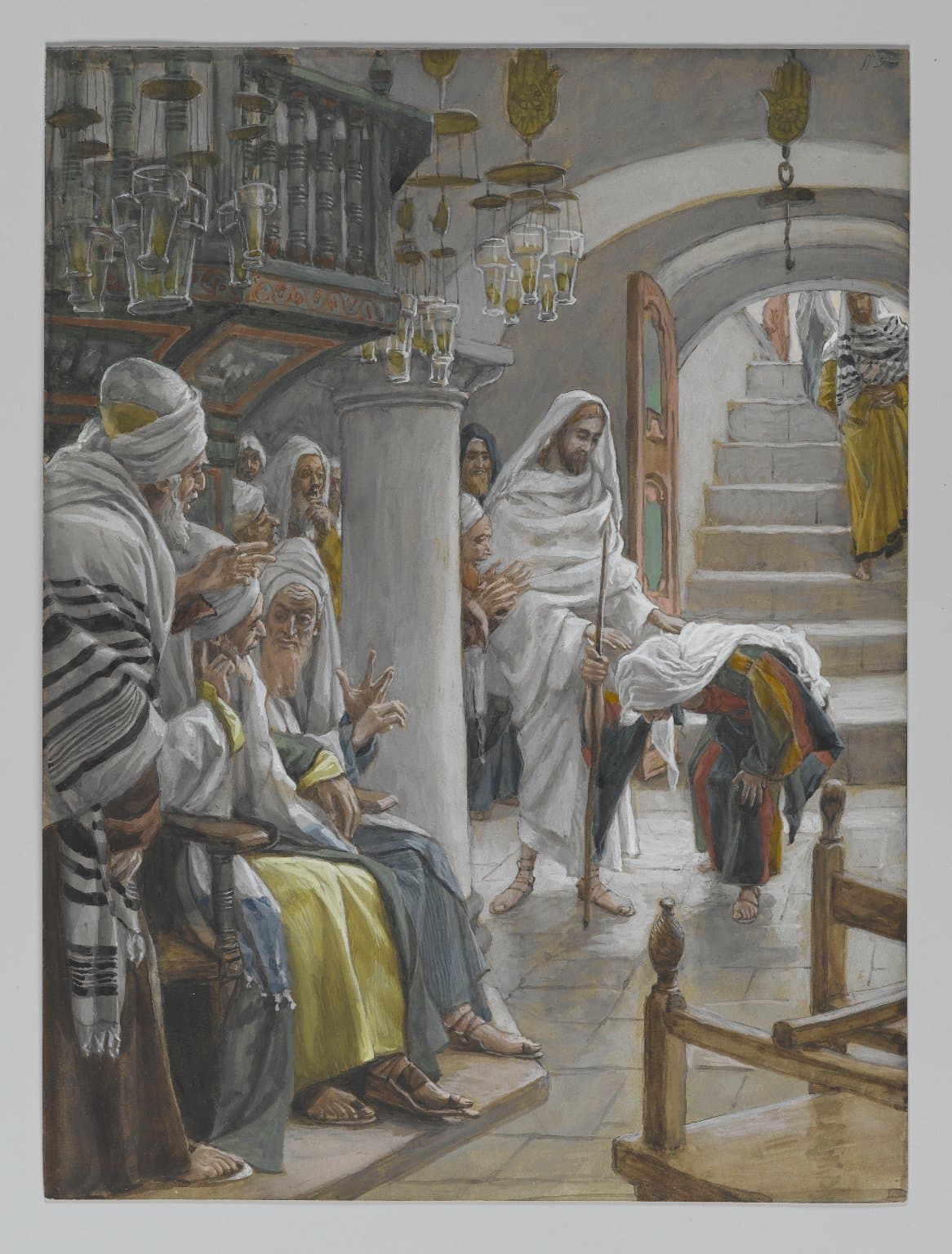
and a woman there had been disabled by a spirit for eighteen years. She was hunched over and could not stand up straight.Luke uses astheneia for the bent woman's disability, which Jesus ended in a synagogue on the Sabbath.
In John 11:4 the noun names the sickness of Lazarus. Jesus said of it, “This sickness will not end in death”. Paul uses the noun of the illness in which he first preached to the Galatians (Galatians 4:13) and of the body that is “sown in weakness” and “raised in power” (1 Corinthians 15:43).
In the same way, the Spirit helps us in our weakness. For we do not know how we ought to pray, but the Spirit Himself intercedes for us with groans too deep for words.Paul uses astheneia for the weakness that cannot even pray rightly, and he gives the Spirit's help as its answer.
For we do not have a high priest who is unable to sympathize with our weaknesses, but we have one who was tempted in every way that we are, yet was without sin.Hebrews uses the plural of astheneia for what the high priest shares with His people.
The noun stands twice in the Lord's answer to Paul and Paul's reply, “My power is perfected in weakness” and “I will boast all the more gladly in my weaknesses” (2 Corinthians 12:9).
Romans 8:26, Hebrews 4:15
The Servant and Our Sicknesses
Isaiah names the Servant with choli, and Matthew carries the word into the Greek.
He was despised and rejected by men, a man of sorrows, acquainted with grief. Like one from whom men hide their faces, He was despised, and we esteemed Him not.The verse describes the Servant with choli before the next verse says He took it on Himself for others.
Choli is the noun behind “acquainted with grief” in Isaiah 53:3, in the King James Version (“a man of sorrows, and acquainted with grief”) as in the Berean. The other noun of the phrase, makob, is the word behind “sorrows”. In Isaiah 53:4 the Berean renders the plural of choli as “infirmities”, and the Hebrew reads, word for word, our sicknesses.
This was to fulfill what was spoken through the prophet Isaiah: “He took on our infirmities and carried our diseases.”Matthew gives Isaiah 53:4 in Greek, the verse where the two words of this study meet.
In Matthew's Greek the Servant takes our astheneias and bears our nosous, so the sicknesses become infirmities and the pains become diseases. It follows an evening on which Jesus “healed all the sick” (Matthew 8:16).
Adam Clarke, in his Commentary on the Bible, held that “The text in Isaiah refers properly to the taking away of sin; and this in the evangelist, to the removal of corporeal afflictions”. The question of healing in the atonement turns on this text.
Voices on the Words
Two teachers on the texts where the words meet the work of Christ.
died 444 · Cyril of Alexandria
COMMENTARY ON LUKE, HOMILY 96
The quotation1 quotation
“The incarnation of the Word and his assumption of human nature took place for the overthrow of death, destruction and the envy harbored against us by the wicked Serpent, who was the first cause of evil. This plainly is proved to us by facts themselves. He set free the daughter of Abraham from her protracted sickness, calling out and saying, ‘Woman, you are loosed from your infirmity.’ A speech most worthy of God, and full of supernatural power! With the royal inclination of his will, he drives away the disease. He also lays his hands upon her.”
Cyril of Alexandria · Commentary on Luke, Homily 96 · on Luke 13:12 to 13Patristic
1662 to 1714 · Matthew Henry
Commentary on the Whole Bible
The quotation1 quotation
“Christ bore away sin by the merit of his death, and bore away sickness by the miracles of his life; nay, though those miracles are ceased, we may say, that he bore our sicknesses then, when he bore our sins in his own body upon the tree; for sin is both the cause and the sting of sickness.”
Matthew Henry · Commentary on the Whole Bible · on Matthew 8:17Puritan
Books to Read Next
The reference work that numbered the words is free to read.
The Exhaustive Concordance of the Bible
James Strong · 1890
Strong numbered every Hebrew and Greek word of the Bible in this concordance, and H2483 and G769 are his numbers for choli and astheneia.
Read on archive.orgSickness Named and Borne
The two nouns end where the Servant and the apostle stand.
From the curse of Deuteronomy to the Servant of Isaiah, the Bible's words for sickness point to the One who took sickness up.
Sources
Scripture is the Berean Standard Bible.
- The Holy Bible, King James Version (1611)
- STEP Bible, Translators Amalgamated Greek New Testament and the tagged Hebrew Bible (Tyndale House, Cambridge), CC BY 4.0.
- STEP Bible brief lexicons of Extended Strongs for Greek and Hebrew (Tyndale House, Cambridge), CC BY 4.0, with the Strong's glosses.
- Adam Clarke, Commentary on the Bible (1832), on Matthew 8:17.
- Albert Barnes, Notes, Explanatory and Practical, on the Old Testament, on 2 Chronicles 16:12.
- Matthew Henry, Commentary on the Whole Bible (1710), on Matthew 8:17.
- Cyril of Alexandria, Commentary on Luke, Homily 96.
- James Strong, The Exhaustive Concordance of the Bible (1890)
Keep Studying
Studies2
People and groups13
Show the next 6 titles
Show the next 1 title
Doctrines3
In this trial5
Trials of life1