
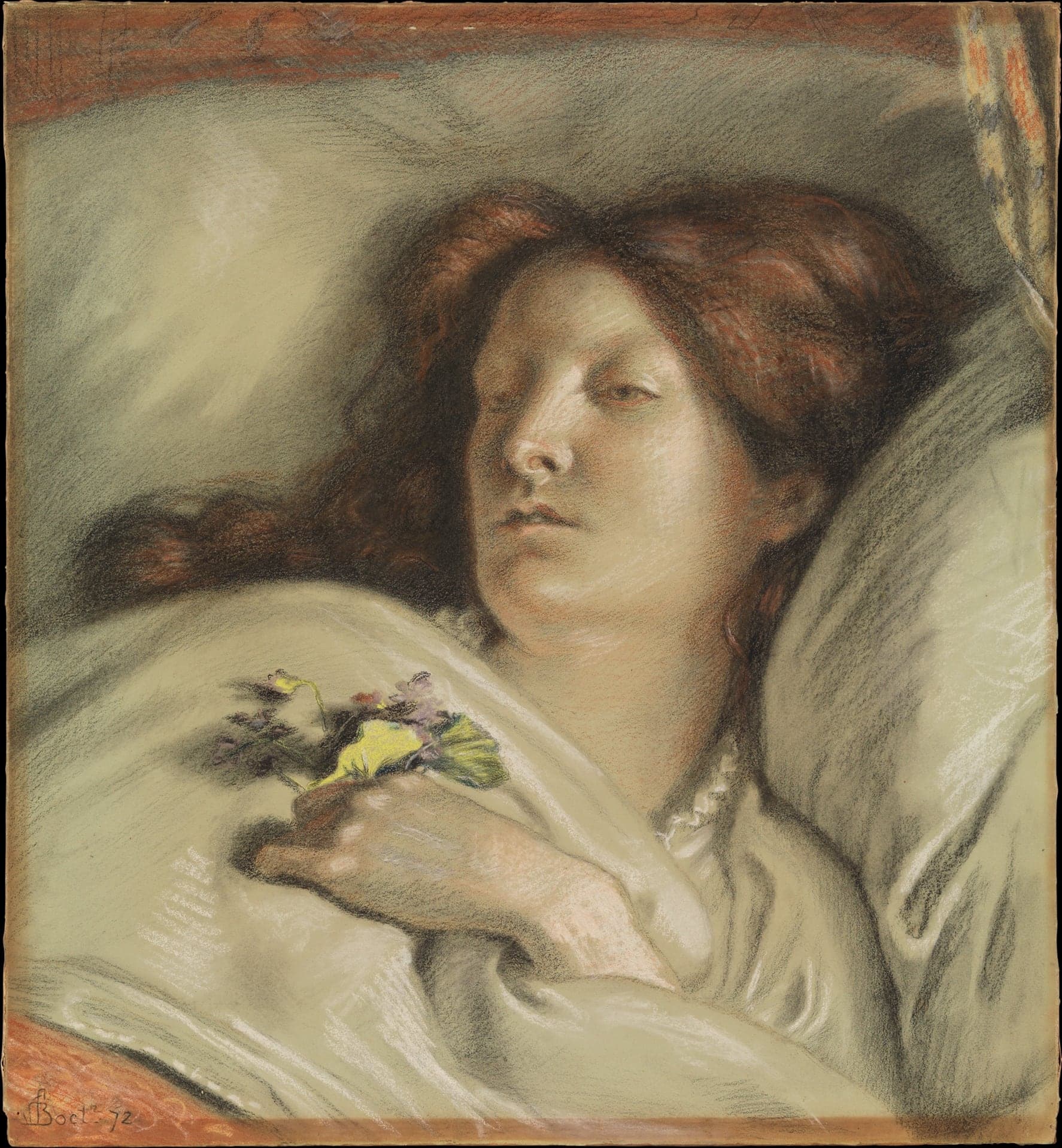
2 Corinthians 4:16 · Subject · Illness and Pain
Pain and Faith in the Body
Eight peer-reviewed papers published from 1999 to 2022 bear on religious coping, and seven of them study pain.
Patients living with chronic pain told researchers that they felt more abandoned by God than the general population does.
Therefore we do not lose heart. Though our outer self is wasting away, yet our inner self is being renewed day by day.
- Books
- 2 Corinthians, Romans
- Hold in memory
- 2 Corinthians 4:16
Summary
Faith can both steady and wound a person in pain. In this research its clearest ties are to mood, adjustment and support, and its tie to the amount of pain people report is weak and disputed. Researchers have looked for these ties in laboratories, in pain clinics, in daily diaries and in reviews of many studies.
- Religious coping is the use of faith to meet a hardship, and researchers divide it into positive and negative methods.
- Most of the clinical evidence comes from people measured at a single moment, which can show an association and cannot show a cause.
- None of these studies tests whether God answers prayer for the sick, and none sets prayer in the place of medical care.
Scripture Before the Studies
Paul's letters set the body's suffering inside the hope of glory.
Pain and Faith in the Body sets out what peer-reviewed research has found about faith and chronic pain. It belongs to the trial of illness and pain because many believers live for years with pain that prayer has not removed, and they ask whether their faith changes how they bear it.
The question it answers is what the studies of religious coping and pain report, and what they cannot report. It gives the texts the science sits beside and a table of the eight studies. It then gives how religious coping is measured, how the trials of spiritual meditation were run, what the studies of people living with pain add, and how the two reviews were made. The studies corroborate and never ground what Scripture teaches.
For our light and momentary affliction is producing for us an eternal weight of glory that is far beyond comparison. So we fix our eyes not on what is seen, but on what is unseen. For what is seen is temporary, but what is unseen is eternal.Paul wrote these lines out of his own hardships, and they set the frame within which a believer reads the research on pain.
We know that the whole creation has been groaning together in the pains of childbirth until the present time. Not only that, but we ourselves, who have the firstfruits of the Spirit, groan inwardly as we wait eagerly for our adoption as sons, the redemption of our bodies.Paul places believers who have the Spirit among those who suffer in this age, and the research studies such believers.
Eight Studies Side by Side
Two were laboratory trials, three surveyed people living with pain, two were systematic reviews, and one built a measure of religious coping.
The studies differ most in design, from a cold-water task in a laboratory to a review of twenty studies.
| Study | Design and sample | What the abstract reports |
|---|---|---|
| Bush and others, Applied Psychophysiology and Biofeedback, 1999 (PMID 10789001) | 61 patients of a midwestern pain clinic, surveyed | Positive religious coping went with positive affect; negative religious coping was not significantly associated with the outcomes. |
| Pargament, Koenig and Perez, Journal of Clinical Psychology, 2000 (PMID 10775045) | College students facing a negative life event, then hospitalized elderly patients | Religious coping explained adjustment beyond demographics, prayer frequency and church attendance. |
| Keefe and others, Journal of Pain, 2001 (PMID 14622831) | 35 people with rheumatoid arthritis, a daily diary for 30 days | On days they rated their spiritual coping as effective, joint pain and low mood were much less likely. |
| Wachholtz and Pargament, Journal of Behavioral Medicine, 2005 (PMID 16049627) | A laboratory trial of three methods; the abstract gives no sample size | The spiritual meditation group tolerated pain almost twice as long as the others, with less anxiety and better mood. |
| Rippentrop and others, Pain, 2005 (PMID 15979795) | 122 patients with chronic musculoskeletal pain, surveyed | Religion and spirituality were unrelated to pain intensity and life interference, and several measures of faith predicted mental health. |
| Wachholtz and Pargament, Journal of Behavioral Medicine, 2008 (PMID 18551362) | 83 frequent migraine sufferers, four methods | The spiritual meditation group had fewer headaches, less anxiety and more pain tolerance than the other three. |
| Najem and others, Pain Physician, 2021 (PMID 34793635) | A systematic review of ten studies, nine of them cross-sectional | Low evidence and conflicting results for links between religiosity and pain intensity, disability or pain-related thinking. |
| Ferreira-Valente and others, Journal of Religion and Health, 2022 (PMID 31535274) | A systematic review of 20 studies | Faith went with better psychological function, and religious and spiritual well-being with less pain, though weakly. |
Najem and others, Pain Physician, 2021 (PMID 34793635), Ferreira-Valente and others, Journal of Religion and Health, 2022 (PMID 31535274)
How Religious Coping Is Measured
The RCOPE names the methods by which people draw on faith in hardship, one by one.
Kenneth Pargament and his colleagues set out to measure "the full range of religious coping methods, including potentially helpful and harmful religious expressions."
Better adjustment went with benevolent religious reappraisals, religious forgiveness and seeking religious support. Poorer adjustment went with "reappraisals of God's powers, spiritual discontent, and punishing God reappraisals."
How the Meditation Trials Were Run
Amy Wachholtz and Kenneth Pargament tested spiritual meditation against secular methods.
In the first trial each participant learned one technique and practised it for twenty minutes a day for two weeks. Back in the laboratory they practised once more and then held a hand in water at 2 degrees Celsius for as long as they could endure it.
The second trial took people new to meditation and had them practise for twenty minutes a day for a month. Before and after, the researchers measured tolerance with a cold pressor task and recorded how often the headaches came.
Both trials were short, and their abstracts report no later follow-up.
Living with Chronic Pain
Three studies of 1999 to 2005 asked people already living with pain how they drew on their faith.
A pain clinic in the MidwestBush and others, 1999
Participants described their pain and reported which religious and nonreligious coping strategies they used. Nonreligious cognitive-behavioral strategies were also tied to outcomes, and the authors urged practitioners to assess their pain patients' "religious appraisals and religious coping".
Thirty days with rheumatoid arthritisKeefe and others, 2001
The diary held standard measures of spiritual experience, religious and spiritual pain coping, coping efficacy, pain, mood and social support. Participants reported positive coping far more often than negative coping, and those for whom religion was central in coping reported much more social support. The authors called the study preliminary.
Chronic musculoskeletal painRippentrop and others, 2005
The team measured faith with a new measure of religion and spirituality made for research on health outcomes. Private religious practice, such as prayer and meditation, was more common among patients in worse physical health, and the authors read it as a way of coping with poor health. They concluded that faith "may have both costs and benefits for the health of those with chronic pain."
How the Reviews Were Made
Each review registered its method in advance and had two reviewers read the studies independently.
Ferreira-Valente and colleagues took experimental and observational studies of adults with chronic pain, and they also asked whether faith changes how beliefs and coping bear on pain, which none of the studies had tested. They concluded that "viewing oneself as being 'spiritual,' regardless of religion, may contribute to positive psychological adjustment".
Najem and colleagues searched four databases, followed the PRISMA reporting guidelines and judged each study's risk of bias with the Newcastle Ottawa Scale. They named their own limits: "The number of included studies was small, with a low level of evidence, and a possible risk of bias."
The Strength of the Heart
Psalm 73 is a believer's account of a crisis of faith resolved in the presence of God.
The psalmist reached this confession after he had envied the prosperity of the wicked and then entered God's sanctuary (Psalm 73:3 and Psalm 73:17).
My flesh and my heart may fail, but God is the strength of my heart and my portion forever.This confession stands last because it names the strength that outlasts the failing body.
Sources
Scripture is the Berean Standard Bible.
- Bush EG, Rye MS, Brant CR, Emery E, Pargament KI, Riessinger CA. Religious coping with chronic pain. Applied Psychophysiology and Biofeedback 1999;24(4):249 to 260, abstract.
- Pargament KI, Koenig HG, Perez LM. The many methods of religious coping: development and initial validation of the RCOPE. Journal of Clinical Psychology 2000;56(4):519 to 543, abstract.
- Keefe FJ, Affleck G, Lefebvre J, and others. Living with rheumatoid arthritis: the role of daily spirituality and daily religious and spiritual coping. Journal of Pain 2001;2(2):101 to 110, abstract.
- Wachholtz AB, Pargament KI. Is spirituality a critical ingredient of meditation? Journal of Behavioral Medicine 2005;28(4):369 to 384, abstract.
- Rippentrop EA, Altmaier EM, Chen JJ, Found EM, Keffala VJ. The relationship between religion/spirituality and physical health, mental health, and pain in a chronic pain population. Pain 2005;116(3):311 to 321, abstract.
- Wachholtz AB, Pargament KI. Migraines and meditation: does spirituality matter? Journal of Behavioral Medicine 2008;31(4):351 to 366, abstract.
- Najem C, Mukhtar NB, Ayoubi F, and others. Religious beliefs and attitudes in relation to pain, pain-related beliefs, function, and coping in chronic musculoskeletal pain: a systematic review. Pain Physician 2021;24(8):E1163 to E1176, abstract.
- Ferreira-Valente A, Sharma S, Torres S, and others. Does religiosity/spirituality play a role in function, pain-related beliefs, and coping in patients with chronic pain? A systematic review. Journal of Religion and Health 2022;61(3):2331 to 2385, abstract.