
Ruth 3:6
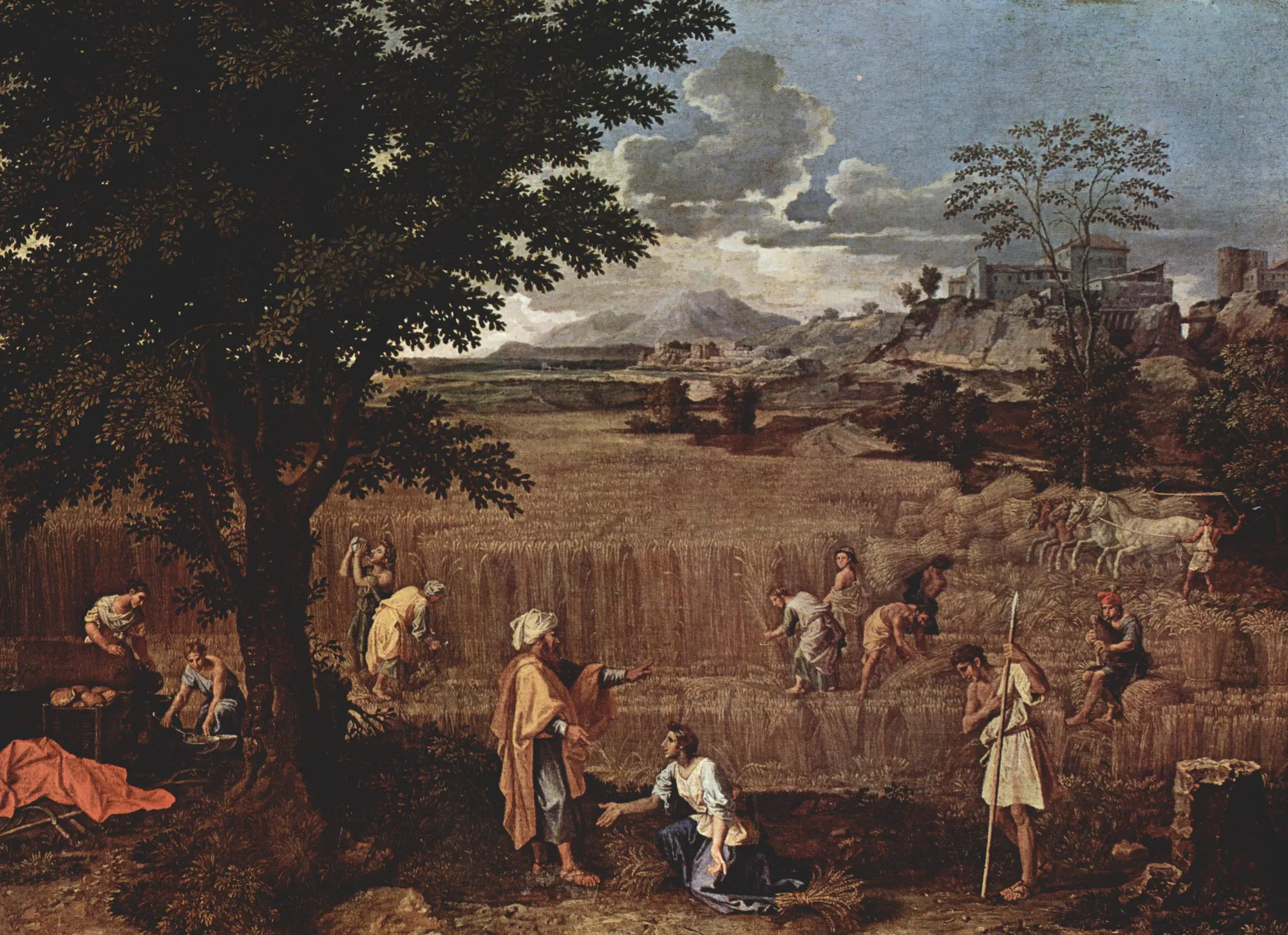
in Ruth 3So she went down to the threshing floor and did everything her mother-in-law had instructed her to do.
BSB
The same verse in ASV and KJV ▾
ASV
And she went down unto the threshing-floor, and did according to all that her mother-in-law bade her.
KJV
And she went down unto the floor, and did according to all that her mother in law bade her.
⋯
This verse in Ruth 3
Commentary
2 notes on this verseThis site's exposition
So she went down to the threshing floor
on Ruth 3:6-8
The narrator says she "did everything her mother-in-law had instructed her to do", which is how this book handles obedience. Matthew Henry grants the scene looked like evil and he cannot fully justify it. Adam Clarke reads a customary approach only a man like Boaz could safely meet.
The record, by era
The Puritans and the Awakening1 voice
And she went down unto the floor,.... From the city of Bethlehem, from her mother-in-law's house there, to the threshingfloor of Boaz, which was at some distance from it, and lower: and did according to all that her mother in law bade her; both before she went, and after: she washed and anointed herself, and put on her best clothes before she went down, and when she was there took care not to make herself known to any, especially to Boaz, and marked the place where he lay down after he had supped.
The words behind it
7 Hebrew wordsEvery Hebrew word of this verse in the order it stands, with what it means and the door to its own study. The last column counts the times a word stands in the whole Bible: the rarer the word, the more the places it appears belong together.
| Hebrew | Sound | Meaning | Word study | In the Bible |
|---|---|---|---|---|
| וַתֵּ֖רֶד | vatered | and she went down | H3381 → | |
| הַגֹּ֑רֶן | hagoren | the threshing floor | H1637 → | 36 times |
| וַתַּ֕עַשׂ | vataas | and she did | H6213 → | 2628 times |
| כְּכֹ֥ל | kekhol | according to all | H3605 → | 5413 times |
| אֲשֶׁר־ | ʾasher- | that | H834 → | 5497 times |
| צִוַּ֖תָּה | tzivatah | she had commanded her | H6680 → | 494 times |
| חֲמוֹתָֽהּ׃ | chamotah | mother-in-law her | H2545 → | 11 times |
וַתֵּ֖רֶדand she went down
vateredH3381 →
הַגֹּ֑רֶןthe threshing floor
hagorenH1637 →36 times
וַתַּ֕עַשׂand she did
vataasH6213 →2628 times
כְּכֹ֥לaccording to all
kekholH3605 →5413 times
אֲשֶׁר־that
ʾasher-H834 →5497 times
צִוַּ֖תָּהshe had commanded her
tzivatahH6680 →494 times
חֲמוֹתָֽהּ׃mother-in-law her
chamotahH2545 →11 times
A shaded row is a word that stands 400 times or fewer in the Bible.
The walk
8 stopsEach card is a verse this one points to, and under it the verses that one points to in turn. Where several paths arrive at the same place, that place is listed first: the text keeps returning to it.
Through
Exodus 20:12Honor your father and mother, so that your days may be long in the land that the LORD your God is giving you.
it leads to
- Ephesians 6:1–3
Children, obey your parents in the Lord, for this is right.
- Colossians 3:20
Children, obey your parents in everything, for this is pleasing to the Lord.
- Deuteronomy 5:16
Honor your father and your mother, as the LORD your God has commanded you, so that your days may be long and that it may go well with you in the land that the…
- Mark 7:10
For Moses said, ‘Honor your father and your mother’ and ‘Anyone who curses his father or mother must be put to death.’
- Proverbs 23:22–25
Listen to your father who gave you life, and do not despise your mother when she is old.
- Ephesians 6:1–3
Through
John 2:5His mother said to the servants, “Do whatever He tells you.”
it leads to
- Genesis 6:22
So Noah did everything precisely as God had commanded him.
- John 15:14
You are My friends if you do what I command you.
- Genesis 6:22
Through
John 15:14You are My friends if you do what I command you.
it leads to
- Matthew 12:50
For whoever does the will of My Father in heaven is My brother and sister and mother.”
- Matthew 12:50
Where this verse is studied
On this page
About Ruth
This page draws on Adam Clarke, Commentary on the Bible; John Gill, Exposition of the Old Testament (1748-1763) and Matthew Henry, Commentary on the Whole Bible.