
Ruth 3:9
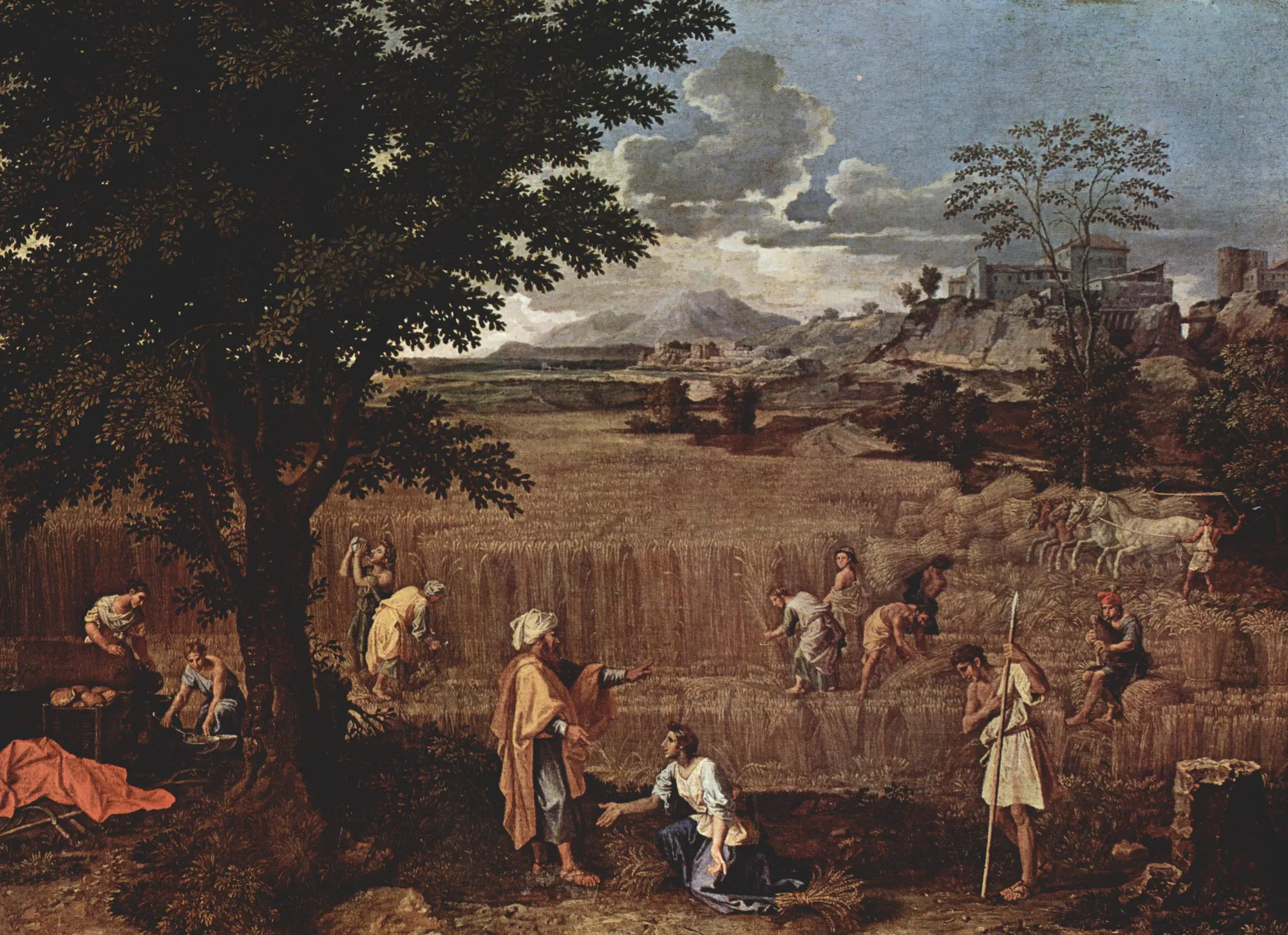
in Ruth 3“Who are you?” he asked. “I am your servant Ruth,” she replied. “Spread the corner of your garment over me, for you are a kinsman-redeemer.”
BSB
The same verse in ASV and KJV ▾
ASV
And he said, Who art thou? And she answered, I am Ruth thy handmaid: spread therefore thy skirt over thy handmaid; for thou art a near kinsman.
KJV
And he said, Who art thou? And she answered, I am Ruth thine handmaid: spread therefore thy skirt over thine handmaid; for thou art a near kinsman.
⋯
This verse in Ruth 3
Commentary
6 notes on this verseSpread therefore thy skirt over thine hand maid - Hebrew, Spread thy wing. The wing is the emblem of protection, and is a metaphor taken from the young of fowls, which run under the wings of their mothers, that they may be saved from birds of prey. The meaning here is, Take me to thee for wife; and so the Targum has translated it, Let thy name be called on thy handmaid to take me for wife, because thou art the redeemer; i.e., thou art the גאל goel, the kinsman, to whom the right of redemption belongs.
This site's exposition
Spread the corner of your garment over me
The word behind "corner of your garment" is kanaph, wing, which Boaz used at 2:12. She asks him to answer his blessing, and at Ezekiel 16:8 God spreads his cloak over Jerusalem and makes a covenant. The Hebrew behind "kinsman-redeemer" is goel, whose right over land stands at Leviticus 25:25.
The record, by era
The Puritans and the Awakening2 voices
44 ), put a sword between himself and her, that he might not touch her. Boaz knew it was not any sinful lust that brought her thither, and therefore bravely maintained both his own honour and hers.
quarantine:debris (2026-07-29) — leading-citation-number+unbalanced-parens
And he said, who art thou?....
The Nineteenth Century2 voices
A commentator
Jamieson, Fausset & Brown1802–1910
Commentary Critical and Explanatory on the Whole Bible (1871)
To spread a skirt over one is, in the East, a symbolical action denoting protection. To this day in many parts of the East, to say of anyone that he put his skirt over a woman, is synonymous with saying that he married her; and at all the marriages of the modern Jews and Hindus, one part of the ceremony is for the bridegroom to put a silken or cotton cloak around his bride.
A commentator
Albert Barnes1798–1870
Notes, Explanatory and Practical, on the Old and New Testaments (1832-1869)
proposed
Spread thy skirt ... - The phrase indicates receiving and acknowledging her as a wife.
How the passage was read
What the Jewish commentators add
On the verses either side of this one
[Your] earlier [kindness]. That you did for your mother-in-law. 12 When you abandoned your home and fortune to stay with your mother-in-law. Your last act of kindness, i.e., your willingness to marry an older man to perpetuate your late husband’s name is a greater sacrifice on your part.
This section is reception history: how the passage was read and kept in the Jewish tradition. Where a reading parts from an essential of the Christian faith, the section says so at that point.
Texts and citation data: Sefaria; each excerpt follows its version’s licence. 2 further sources are cited on this chapter that carry no English text this site may quote or only restate the verse.
The words behind it
14 Hebrew wordsEvery Hebrew word of this verse in the order it stands, with what it means and the door to its own study. The last column counts the times a word stands in the whole Bible: the rarer the word, the more the places it appears belong together.
| Hebrew | Sound | Meaning | Word study | In the Bible |
|---|---|---|---|---|
| וַיֹּ֖אמֶר | vaiyomer | and he said | H559 → | 5305 times |
| מִי־ | mi- | who? | H4310 → | 423 times |
| אָ֑תּ | ʾat | [are] you | H859 → | 1094 times |
| וַתֹּ֗אמֶר | vatomer | and she said | H559 → | 5305 times |
| אָנֹכִי֙ | ʾanokhi | I | H595 → | 359 times |
| ר֣וּת | rut | [am] Ruth | H7327 → | 12 times |
| אֲמָתֶ֔ךָ | ʾamatekha | maidservant your | H519 → | |
| וּפָרַשְׂתָּ֤ | ufarasta | and you will spread out | H6566 → | |
| כְנָפֶ֙ךָ֙ | khenafekha | skirt your | H3671 → | |
| עַל־ | ʾal- | over | H5921 → | 5755 times |
| אֲמָ֣תְךָ֔ | ʾamatekha | maidservant your | H519 → | |
| כִּ֥י | ki | for | H3588 → | 4482 times |
| גֹאֵ֖ל | goel | [are] a kinsman-redeemer | H1350 → | 104 times |
| אָֽתָּה׃ | ʾatah | you | H859 → | 1094 times |
וַיֹּ֖אמֶרand he said
vaiyomerH559 →5305 times
מִי־who?
mi-H4310 →423 times
אָ֑תּ[are] you
ʾatH859 →1094 times
וַתֹּ֗אמֶרand she said
vatomerH559 →5305 times
אָנֹכִי֙I
ʾanokhiH595 →359 times
ר֣וּת[am] Ruth
rutH7327 →12 times
אֲמָתֶ֔ךָmaidservant your
ʾamatekhaH519 →
וּפָרַשְׂתָּ֤and you will spread out
ufarastaH6566 →
כְנָפֶ֙ךָ֙skirt your
khenafekhaH3671 →
עַל־over
ʾal-H5921 →5755 times
אֲמָ֣תְךָ֔maidservant your
ʾamatekhaH519 →
כִּ֥יfor
kiH3588 →4482 times
גֹאֵ֖ל[are] a kinsman-redeemer
goelH1350 →104 times
אָֽתָּה׃you
ʾatahH859 →1094 times
A shaded row is a word that stands 400 times or fewer in the Bible.
The walk
8 stopsEach card is a verse this one points to, and under it the verses that one points to in turn. Where several paths arrive at the same place, that place is listed first: the text keeps returning to it.
Through
Luke 14:11For everyone who exalts himself will be humbled, and the one who humbles himself will be exalted.”
it leads to
- Luke 18:14
I tell you, this man, rather than the Pharisee, went home justified. For everyone who exalts himself will be humbled, but the one who humbles himself will be exalted.”
- Matthew 23:12
For whoever exalts himself will be humbled, and whoever humbles himself will be exalted.
- Proverbs 29:23
A man’s pride will bring him low, but a humble spirit will obtain honor.
- James 4:6
But He gives us more grace. This is why it says: “God opposes the proud, but gives grace to the humble.”
- 1 Peter 5:5
Young men, in the same way, submit yourselves to your elders. And all of you, clothe yourselves with humility toward one another, because, “God opposes the proud, but gives grace to the humble.”
- Luke 18:14
Through
Ezekiel 16:8Then I passed by and saw you, and you were indeed old enough for love. So I spread My cloak over you and covered your nakedness. I pledged Myself to you, entered into a…
it leads to
- Jeremiah 2:2–3
“Go and proclaim in the hearing of Jerusalem that this is what the LORD says: ‘I remember the devotion of your youth, your love as a bride, how you followed Me in the wilderness,…
- Romans 5:8
But God proves His love for us in this: While we were still sinners, Christ died for us.
- Isaiah 43:4
Because you are precious and honored in My sight, and because I love you, I will give men in exchange for you and nations in place of your life.
- Jeremiah 2:2–3
Where this verse is studied
About Ruth
Who and where
1 name in this verse with a page on the site.
This page draws on Adam Clarke, Commentary on the Bible; Albert Barnes, Notes, Explanatory and Practical, on the Old and New Testaments (1832-1869); Jamieson, Fausset & Brown, Commentary Critical and Explanatory on the Whole Bible; John Gill, Exposition of the Old Testament (1748-1763) and Matthew Henry, Commentary on the Whole Bible.