
Ruth 1:12
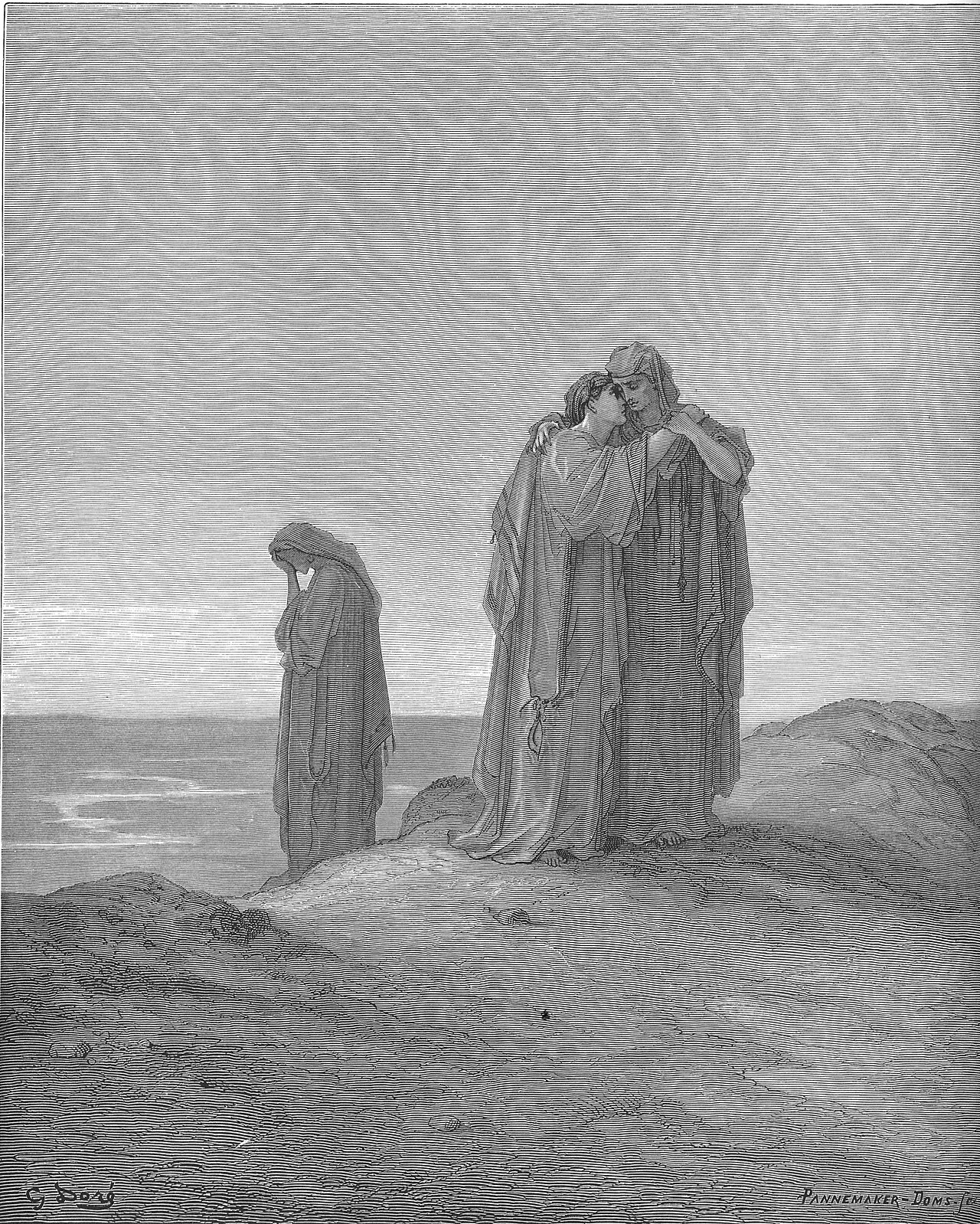
in Ruth 1Return home, my daughters. Go on, for I am too old to have another husband. Even if I thought there was hope for me to have a husband tonight and to bear sons,
BSB
The same verse in ASV and KJV ▾
ASV
Turn again, my daughters, go your way; for I am too old to have a husband. If I should say, I have hope, if I should even have a husband to-night, and should also bear sons;
KJV
Turn again, my daughters, go your way; for I am too old to have an husband. If I should say, I have hope, if I should have an husband also to night, and should also bear sons;
⋯
This verse in Ruth 1
Commentary
4 notes on this verseThis site's exposition
Surely we will return with you to your people
on Ruth 1:10-13
Naomi argues from the levirate law of Deuteronomy 25:5, where a brother raises up offspring for the dead, and shows it cannot reach them. She lays the whole of it on God, "the hand of the LORD has gone out against me", and carries that reading until chapter 4.
This site's exposition
I am too old to have another husband
Naomi builds her case as a rising series of conditions: a husband tonight, sons from that night, and long years of waiting while they grow. Each step makes the hope less likely. The argument is built to close the door, and verse 18 shows it failed with Ruth.
The record, by era
The Puritans and the Awakening2 voices
Observe, [1.] She judges herself chiefly aimed at in the affliction, that God's quarrel was principally with her: " The hand of the Lord has gone out against me. I am the sinner; it is with me that God has a controversy; it is with me that he is contending;
quarantine:debris (2026-07-29) — odd-straight-quotes
Turn again, my daughters, go your way,....
How the passage was read
What the Jewish commentators add
On the verses either side of this one
Would you wait for them. This is a question posed in wonder, “Would you perhaps wait for them until they grew up?” 17 The feminine form of them [להן] is used, because Naomi was hinting that perhaps she would bear daughters instead of sons, so why wait for “them”?
1 more on this passage, in their own words ▾
"Are there yet any more sons in my womb?" Many of our colleagues thought that this response was directed at those who deny (the custom), not realizing that our ancestors transmitted that levirate marriage (yibbum) applies to brothers from the father, not from the mother. She was simply saying to them, if I had sons in my womb, I would give them to you in place of the deceased.
This section is reception history: how the passage was read and kept in the Jewish tradition. Where a reading parts from an essential of the Christian faith, the section says so at that point.
Texts and citation data: Sefaria; each excerpt follows its version’s licence. 4 further sources are cited on this chapter that carry no English text this site may quote or only restate the verse.
The words behind it
19 Hebrew wordsEvery Hebrew word of this verse in the order it stands, with what it means and the door to its own study. The last column counts the times a word stands in the whole Bible: the rarer the word, the more the places it appears belong together.
| Hebrew | Sound | Meaning | Word study | In the Bible |
|---|---|---|---|---|
| שֹׁ֤בְנָה | shoenah | go back | H7725 → | 1056 times |
| בְנֹתַי֙ | venotai | O daughters my | H1323 → | 588 times |
| לֵ֔כְןָ | lekhena | go | H1980 → | 1546 times |
| כִּ֥י | ki | for | H3588 → | 4482 times |
| זָקַ֖נְתִּי | zakanti | I am [too] old | H2204 → | |
| מִהְי֣וֹת | mihyot | for belonging | H1961 → | 3559 times |
| לְאִ֑ישׁ | leish | to a husband | H376 → | 1663 times |
| כִּ֤י | ki | if | H3588 → | 4482 times |
| אָמַ֙רְתִּי֙ | ʾamarti | I said | H559 → | 5305 times |
| יֶשׁ־ | yesh- | there | H3426 → | |
| לִ֣י | li | for <the> me | ||
| תִקְוָ֔ה | tikvah | [is] hope | H8615 → | |
| גַּ֣ם | gam | also | H1571 → | 769 times |
| הָיִ֤יתִי | hayiti | I belonged | H1961 → | 3559 times |
| הַלַּ֙יְלָה֙ | halaylah | this night | H3915 → | 233 times |
| לְאִ֔ישׁ | leish | to a husband | H376 → | 1663 times |
| וְגַ֖ם | vegam | and also | H1571 → | 769 times |
| יָלַ֥דְתִּי | yaladti | I bore | H3205 → | 496 times |
| בָנִֽים׃ | vanim | sons | H1121 → | 4930 times |
שֹׁ֤בְנָהgo back
shoenahH7725 →1056 times
בְנֹתַי֙O daughters my
venotaiH1323 →588 times
לֵ֔כְןָgo
lekhenaH1980 →1546 times
כִּ֥יfor
kiH3588 →4482 times
זָקַ֖נְתִּיI am [too] old
zakantiH2204 →
מִהְי֣וֹתfor belonging
mihyotH1961 →3559 times
לְאִ֑ישׁto a husband
leishH376 →1663 times
כִּ֤יif
kiH3588 →4482 times
אָמַ֙רְתִּי֙I said
ʾamartiH559 →5305 times
יֶשׁ־there
yesh-H3426 →
לִ֣יfor <the> me
li
תִקְוָ֔ה[is] hope
tikvahH8615 →
גַּ֣םalso
gamH1571 →769 times
הָיִ֤יתִיI belonged
hayitiH1961 →3559 times
הַלַּ֙יְלָה֙this night
halaylahH3915 →233 times
לְאִ֔ישׁto a husband
leishH376 →1663 times
וְגַ֖םand also
vegamH1571 →769 times
יָלַ֥דְתִּיI bore
yaladtiH3205 →496 times
בָנִֽים׃sons
vanimH1121 →4930 times
A shaded row is a word that stands 400 times or fewer in the Bible.
The walk
8 stopsEach card is a verse this one points to, and under it the verses that one points to in turn. Where several paths arrive at the same place, that place is listed first: the text keeps returning to it.
Through
Genesis 17:17Abraham fell facedown. Then he laughed and said to himself, “Can a child be born to a man who is a hundred years old? Can Sarah give birth at the age of ninety?”
it leads to
- Genesis 18:12
So she laughed to herself, saying, “After I am worn out and my master is old, will I now have this pleasure?”
- Genesis 21:6
Then Sarah said, “God has made me laugh, and everyone who hears of this will laugh with me.”
- John 8:56
Your father Abraham rejoiced that he would see My day. He saw it and was glad.”
- Genesis 17:3
Then Abram fell facedown, and God said to him,
- Romans 4:19–20
Without weakening in his faith, he acknowledged the decrepitness of his body (since he was about a hundred years old) and the lifelessness of Sarah’s womb.
- Genesis 18:12
Through
1 Timothy 5:9A widow should be enrolled if she is at least sixty years old, the wife of one man,
it leads to
- 1 Timothy 3:2
An overseer, then, must be above reproach, the husband of but one wife, temperate, self-controlled, respectable, hospitable, able to teach,
- Luke 2:36–37
There was also a prophetess named Anna, the daughter of Phanuel, of the tribe of Asher, who was well along in years. She had been married for seven years,
- 1 Timothy 5:11
But refuse to enroll younger widows. For when their passions draw them away from Christ, they will want to marry,
- 1 Timothy 3:2
Where this verse is studied
On this page
Studies10
About Ruth
This page draws on John Gill, Exposition of the Old Testament; John Gill, Exposition of the Old Testament (1748-1763); Keil and Delitzsch, Biblical Commentary on the Old Testament: Joshua, Judges, Ruth and Matthew Henry, Commentary on the Whole Bible.