
Psalms 42:1
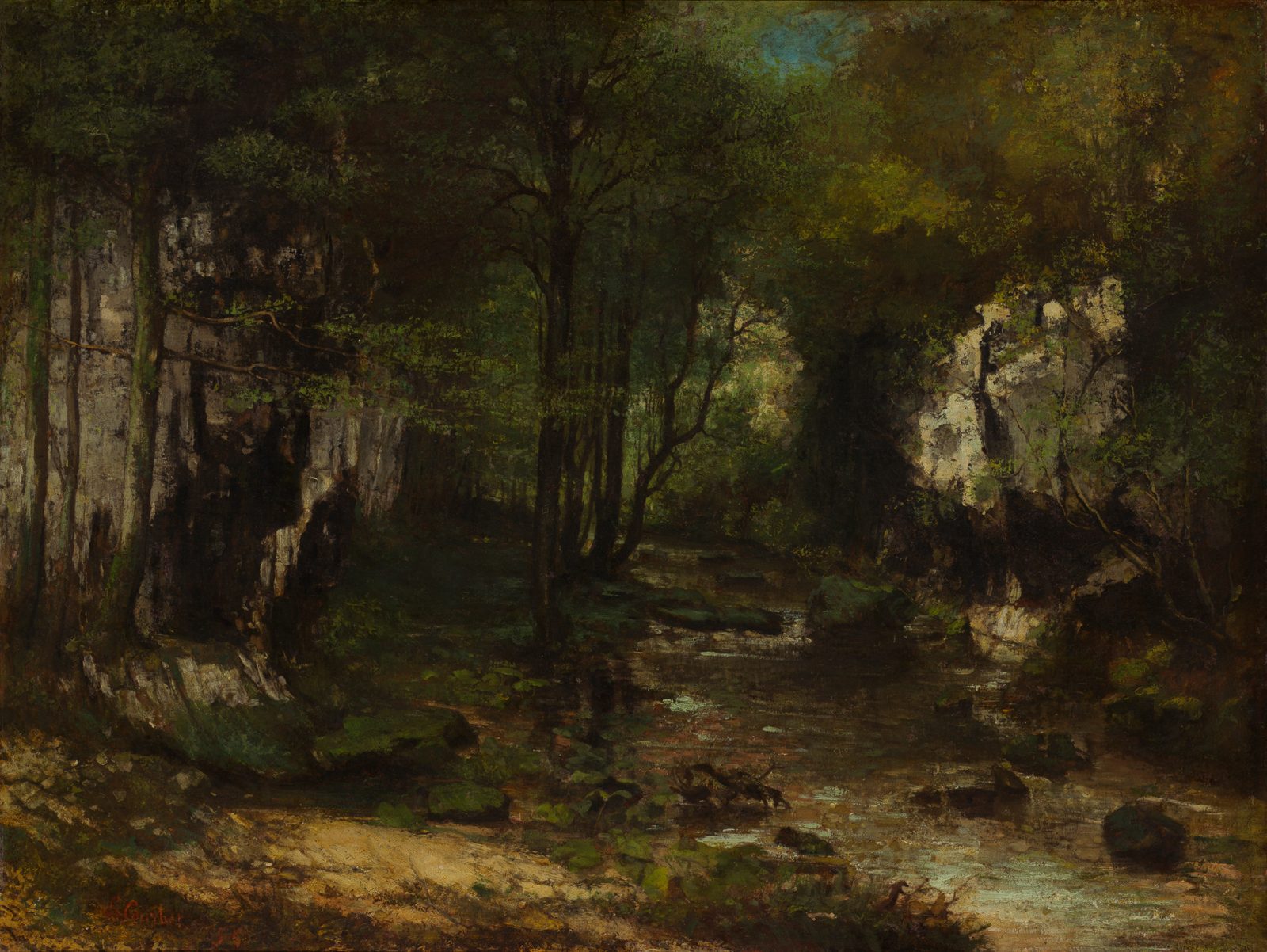
in Psalms 42As the deer pants for streams of water, so my soul longs after You, O God.
BSB
The same verse in ASV and KJV ▾
ASV
As the hart panteth after the water brooks, So panteth my soul after thee, O God.
KJV
As the hart panteth after the water brooks, so panteth my soul after thee, O God.
⋯
This verse in Psalms 42
Commentary
17 notes on this verseAs the hart panteth after the water brooks,.... Either through a natural thirst that creature is said to have; or through the heat of the summer season; and especially when hunted by dogs, it betakes itself to rivers of water, partly to make its escape, and partly to extinguish its thirst, and refresh itself.
This site's exposition
deer pants for streams
on Psalms 42:1-2
A deer pants for streams of water, and the soul's thirst is for God, the living God. Spurgeon reads a hunted animal's need in it, pressed and desperate for water. He asks when he will appear in God's presence.
The record, by era
The Church Fathers3 voices
A commentator
Desert FathersThe Desert Fathers, Sayings of the Early Christian Monks · Written before 500.
proposed
Poemen said, 'It is written, "Like as the hart longs for the waterbrooks, so longs my soul for you, O my God" (Ps. 42:1). Indeed, the harts in the desert eat many snakes and when their venom makes them burn with thirst they come to …
We have undertaken the exposition of a Psalm corresponding to your own "longings," on which we propose to speak to you. For the Psalm itself begins with a certain pious "longing;" and he who sings so, says, "Like as the hart desires the water-brooks, so longs my soul after You, O God" [Psalm 42:1]. Who is it then that says this? It is ourselves, if we be but willing! And why ask, who it is other than yourself, when it is in your power to be the thing which you are asking about? It is not however one individual, but it is "One Body;" but "Christ's Body is the Church." [Colossians 1:24] Such "longing" indeed is not found in all who enter the Church: let all however who have "tasted" the sweetness "of the Lord," and who own in Christ that for which they have a relish, think that they are not the only ones; but that there are such seeds scattered throughout "the field" of the Lord, this whole earth: and that there is a certain Christian unity, whose voice thus speaks, "Like as the hart desires the water-brooks, so longs my soul after You, O God." And indeed it is not ill understood as the cry of those, who being as yet Catechumens, are hastening to the grace of the holy Font. On which account too this Psalm is ordinarily chanted on those occasions, that they may long for the Fountain of remission of sins, even "as the hart for the water-brooks." Let this be allowed; and this meaning retain its place in the Church; a place both truthful and sanctioned by usage. Nevertheless, it appears to me, my brethren, that such "a longing" is not fully satisfied even in the faithful in Baptism: but that haply, if they know where they are sojourning, and whither they have to remove from hence, their "longing" is kindled in even greater intensity.
I am longing and thirsting for the worship of my living God, he is saying. "To see the face of God" means worshiping him according to the Law, and such worship was confined to Jerusalem.… very appropriately do they name God "strong and living" as …
The Medieval Church2 voices
And in these degrees consists the ladder of Jacob, whose summit reaches heaven: and the throne of Solomon, upon which sits the most wise King, truly peaceful and loving as the most beautiful bridegroom and wholly desirable: upon whom the Angels desire to gaze, and …
This is the fifth decade of the first group of fifty, and thus it is ordered toward imploring help against present evils. And this is a figure of the temporal evils that befell David, who suffered persecution from Absalom—and against this was the first decade. …
10 more voices on this verse
The Medieval Church1 voice
A commentator
BonaventureCollations on the Hexaemeron, Collation 3 · Written in the 13th century.
proposed
Likewise, wisdom is not obtained except by the man who thirsts. Hence, the Psalm: "My soul hath thirsted after the strong living God"; and: "As the hind longs for the running waters, so my soul longs for You, O God."
The Puritans and the Awakening3 voices
It was, (1.) When he was debarred from his outward opportunities of waiting on God, when he was banished to the land of Jordan, a great way off from the courts of God's house. Note, Sometimes God teaches us effectually to know the worth of mercies by the want of them, and whets our appetite for the means of grace by cutting us short in those means.
Reproached by his enemies, still hopes in him, ver. 10, 11. To the chief musician, Maschil, for the sons of Korah. Sons of Korah - Who were an eminent order of singers in the house of God, 1 Chron. vi, 33.
quarantine:anchor (2026-07-29) — cites-ver-10-anchored-1-4
Reproached by his enemies, still hopes in him, ver. 10, 11. To the chief musician, Maschil, for the sons of Korah. Sons of Korah - Who were an eminent order of singers in the house of God, 1 Chron. vi, 33.
The Nineteenth Century6 voices
As the hart panteth after the water brooks, so panteth my soul after the, O God. As after a long drought the poor fainting hind longs for the streams, or rather as the hunted hart instinctively seeks after the river to lave its smoking flanks and to escape the dogs, even so my weary, persecuted soul pants after the Lord my God. Debarred from public worship, David was heartsick.
THERE is something to be lamented in this state of mind, for if the Psalmist had maintained unbroken communion with his God, he would not have been so much panting after Him as enjoying Him. It is deeply to be deplored that we, who sometimes bask in the sunshine of God's Countenance, cannot live so as always to enjoy it. Why do we wander? Why do we grieve His Holy Spirit? Why do we turn aside from God, our exceeding joy?
As the hart panteth after the water brooks, so panteth my soul after the, O God. As after a long drought the poor fainting hind longs for the streams, or rather as the hunted hart instinctively seeks after the river to lave its smoking flanks and to escape the dogs, even so my weary, persecuted soul pants after the Lord my God. Debarred from public worship, David was heartsick. Ease he did not seek, honour he did not covet, but the enjoyment of communion with God was an urgent need of his soul; he viewed it not merely as the sweetest of all luxuries, but as an absolute necessity, like water to a stag. Like the parched traveller in the wilderness, whose skin bottle is empty, and who finds the wells dry, he must drink or die—he must have his God or faint. His soul, his very self, his deepest life, was insatiable for a sense of the divine presence. As the hart brays so his soul prays. Give him his God and he is as content as the poor deer which at length slakes its thirst and is perfectly happy; but deny him his Lord, and his heart heaves, his bosom palpitates, his whole frame is convulsed, like one who gasps for breath, or pants with long running. Dear reader, dost thou know what this is, by personally having felt the same? It is a sweet bitterness. The next best thing to living in the light of the Lord's love is to be unhappy till we have it, and to pant hourly after it—hourly, did I say? thirst is a perpetual appetite, and not to be forgotten, and even thus continual is the heart's longing after God. When it is as natural for us to long for God as for an animal to thirst, it is well with our souls, however painful our feelings. We may learn from this verse that the eagerness of our desires may be pleaded with God, and the more so, because there are special promises for the importunate and fervent.
THERE is something to be lamented in this state of mind, for if the Psalmist had maintained unbroken communion with his God, he would not have been so much panting after Him as enjoying Him. It is deeply to be deplored that we, who sometimes bask in the sunshine of God's Countenance, cannot live so as always to enjoy it. Why do we wander? Why do we grieve His Holy Spirit? Why do we turn aside from God, our exceeding joy? Why do we provoke Him to jealousy and cause Him to make us grope in darkness, and sigh out of a lonely and desolate heart? There is much of an evil heart of unbelief in departing from the living God. If, therefore, we can join in the language of the text, we must not too much congratulate ourselves, for though it is a sign of Divine Grace to pant after God as the deer pants for the water brooks, yet it is an equally certain sign of a need of more Grace, and the loss of a privilege which we should strive always to possess. We are yet but poor in spiritual things when we might be rich. We are thirsting when we might put flagons to our lips. At the same time there is very much which is commendable in the desire expressed in the text—the insatiable desire which burned in the Psalmist's heart is a heavenly flame enkindled from above. If I have not my Lord in near and dear communion, it is at least the next best thing to be unutterably wretched until I find Him. If I do not sit at His banquets, yet blessed are they that do hunger and thirst after righteousness. If my Beloved is not in my embrace, yet so long as I am not contented without Him—so long as I sigh, and cry, and follow hard after Him—I may be assured that I am in the possession of His love and that before long I shall find Him to the joy of my soul. Our text, then, has a warp and a woof of differing colors—sin and Grace are mingled—the wine is mixed with water, yet it is wine.
As the hart panteth after the water brooks - The hart is not only fond of feeding near some water for the benefit of drinking, “but when he is hard hunted, and nearly spent, he will take to some river or brook, in which,” says Tuberville, “he will keep as long as his breath will suffer him. Understand that when a hart is spent and sore run, his last refuge is to the water; and he will commonly descend down the streame and swimme in the very middest thereof; for he will take as good heede as he can to touch no boughes or twygges that grow upon the sides of the river, for feare lest the hounds should there take sent of him. And sometimes the hart will lye under the water, all but his very nose; and I have seene divers lye so until the hounds have been upon them, before they would rise; for they are constrayned to take the water as their last refuge.” - Tuberville’s Art of Venerie, chapter 40: Lond. 4th., 1611. The above extracts will give a fine illustration of this passage. The hart feels himself almost entirely spent; he is nearly hunted down; the dogs are in full pursuit; he is parched with thirst; and in a burning heat pants after the water, and when he comes to the river, plunges in as his last refuge. Thus pursued, spent, and nearly ready to give up the ghost, the psalmist pants for God, for the living God! for him who can give life, and save from death.
A commentator
Albert Barnes1798–1870
Notes, Explanatory and Practical, on the Old and New Testaments (1832-1869)
proposed
As the hart panteth after the water-brooks - Margin, brayeth. The word rendered hart - איל 'ayâl - means commonly a stag, hart, male deer: Deu 12:15; Deu 14:5; Isa 35:6. The word is masculine, but in this place is joined with a feminine verb, as words of the common gender may be, and thus denotes a hind, or female deer. The word rendered in the text “panteth,” and in the margin “brayeth” - ערג ‛ârag - occurs only in this place and in Joe 1:20, where it is applied to the beasts of the field as “crying” to God in a time of drought. The word properly means to rise; to ascend; and then, to look up toward anything; to long for. It refers here to the intense desire of the hind, in the heat of day, for water; or, in Joel, to the desire of the cattle for water in a time of drought. Luther renders it “cries;” the Septuagint and Vulgate render it simply “desires.” Neither the idea of panting nor braying seems to be in the original word. It is the idea of looking for, longing for, desiring, that is expressed there. By ‘water-brooks’ are meant the streams that run in vallies. Dr. Thomson (Land and the Book, vol. i., p. 253) says, “I have seen large flocks of these panting harts gather round the water-brooks in the great deserts of Central Syria, so subdued by thirst that you could approach quite near them before they fled.” There is an idea of tenderness in the reference to the word “hart” here - female deer, gazelle - which would not strike us if the reference had been to any other animal. These are so timid, so gentle, so delicate in their structure, so much the natural objects of love and compassion, that our feelings are drawn toward them as to all other animals in similar circumstances. We sympathize with them; we pity them; we love them; we feel deeply for them when they are pursued, when they fly away in fear, when they are in want. […]
The words behind it
10 Hebrew wordsEvery Hebrew word of this verse in the order it stands, with what it means and the door to its own study. The last column counts the times a word stands in the whole Bible: the rarer the word, the more the places it appears belong together.
| Hebrew | Sound | Meaning | Word study | In the Bible |
|---|---|---|---|---|
| כְּאַיָּ֗ל | keaiyal | like a deer | H354 → | |
| תַּעֲרֹ֥ג | taarog | [which] it pants | H6165 → | |
| עַל־ | ʾal- | towards | H5921 → | 5755 times |
| אֲפִֽיקֵי־ | ʾafikei- | channels of | H650 → | 19 times |
| מָ֑יִם | mayim | water | H4325 → | 581 times |
| כֵּ֤ן | ken | so | H3651 → | 771 times |
| נַפְשִׁ֨י | nafshi | being my | H5315 → | 754 times |
| תַעֲרֹ֖ג | taarog | it pants | H6165 → | |
| אֵלֶ֣יךָ | ʾeleikha | to you | H413 → | 5510 times |
| אֱלֹהִֽים׃ | ʾelohim | O God | H430 → | 2601 times |
כְּאַיָּ֗לlike a deer
keaiyalH354 →
תַּעֲרֹ֥ג[which] it pants
taarogH6165 →
עַל־towards
ʾal-H5921 →5755 times
אֲפִֽיקֵי־channels of
ʾafikei-H650 →19 times
מָ֑יִםwater
mayimH4325 →581 times
כֵּ֤ןso
kenH3651 →771 times
נַפְשִׁ֨יbeing my
nafshiH5315 →754 times
תַעֲרֹ֖גit pants
taarogH6165 →
אֵלֶ֣יךָto you
ʾeleikhaH413 →5510 times
אֱלֹהִֽים׃O God
ʾelohimH430 →2601 times
A shaded row is a word that stands 400 times or fewer in the Bible.
The walk
5 stopsEach card is a verse this one points to, and under it the verses that one points to in turn. Where several paths arrive at the same place, that place is listed first: the text keeps returning to it.
Through
Psalms 119:131I open my mouth and pant, longing for Your commandments.
it leads to
- Psalms 119:20
My soul is consumed with longing for Your judgments at all times.
- 1 Peter 2:2
Like newborn babies, crave pure spiritual milk, so that by it you may grow up in your salvation,
- Hebrews 12:14
Pursue peace with everyone, as well as holiness, without which no one will see the Lord.
- Psalms 81:10
I am the LORD your God, who brought you up out of Egypt. Open wide your mouth, and I will fill it.
- Isaiah 26:8–9
Yes, we wait for You, O LORD; we walk in the path of Your judgments. Your name and renown are the desire of our souls.
- Psalms 119:20
Where this verse is studied
On this page
Studies5
On this verse
About Psalms
This page draws on 15 works. Open the list of works
This page draws on Adam Clarke, Commentary on the Bible; Albert Barnes, Notes, Explanatory and Practical, on the Old and New Testaments (1832-1869); Augustine of Hippo, Exposition on Psalm 42; Bonaventure, Breviloquium, Part 5; Bonaventure, Collations on the Hexaemeron, Collation 3; Charles Spurgeon, The Treasury of David; Charles Spurgeon, The Treasury of David, Vol. 2; Charles Spurgeon, The Metropolitan Tabernacle Pulpit, Sermon No. 822: “The Panting Deer” (lightly modernized text, CCEL edition); Desert Fathers, The Desert Fathers, Sayings of the Early Christian Monks; Franz Delitzsch, Biblical Commentary on the Psalms; John Gill, Exposition of the Old Testament (1748-1763); John Wesley, Explanatory Notes upon the Old Testament; Matthew Henry, Commentary on the Whole Bible; Theodoret of Cyrus, COMMENTARY ON THE PSALMS 42:2 and Thomas Aquinas, Exposition on the Psalms of David.