
Psalms 42:2
in Psalms 42My soul thirsts for God, the living God. When shall I come and appear in God’s presence?
BSB
The same verse in ASV and KJV ▾
ASV
My soul thirsteth for God, for the living God: When shall I come and appear before God?
KJV
My soul thirsteth for God, for the living God: when shall I come and appear before God?
⋯
This verse in Psalms 42
Commentary
16 notes on this verseFirst, therefore, he is sought without being found, so that afterward, when found, he may be held more tightly. For holy desires, as we have said, grow by delay. But if they fail by delay, they were not desires. With this love burned whoever was able to reach the truth. Hence David says: "My soul has thirsted for the living God; when shall I come and appear before the face of God?" Hence he admonishes us, saying: "Seek his face always."
This site's exposition
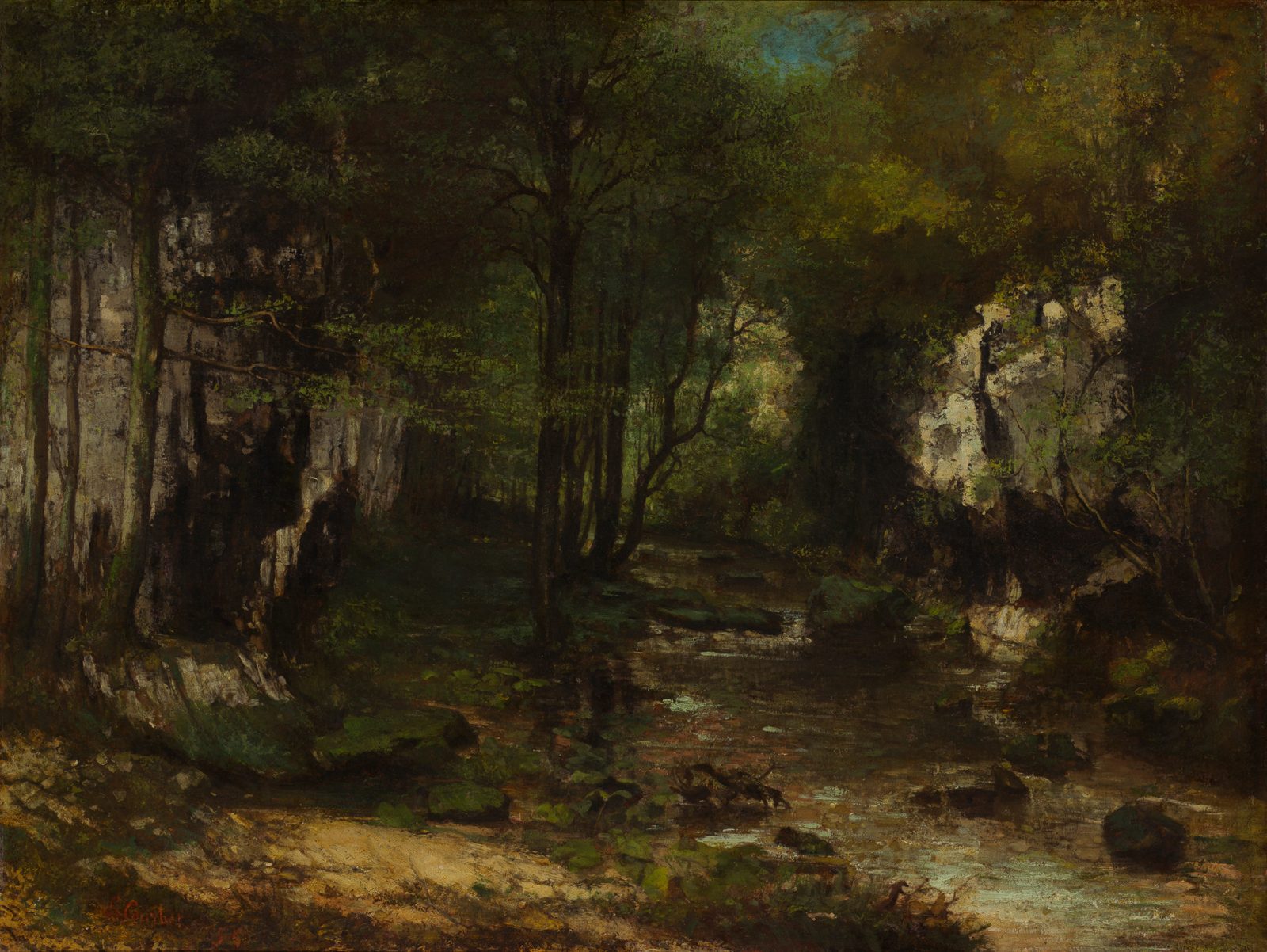
deer pants for streams
on Psalms 42:1-2
A deer pants for streams of water, and the soul's thirst is for God, the living God. Spurgeon reads a hunted animal's need in it, pressed and desperate for water. He asks when he will appear in God's presence.
This site's exposition
the living God
Barnes read the soul that thirsts here as one that longs to come back to the house of God and praise Him with His people. Spurgeon pressed further, to God himself beyond the temple. Thirst, he said, is worse than hunger.
The record, by era
The Church Fathers4 voices
"My soul is athirst for the living God" (ver. 2). What I am saying, that "as the hart panteth after the water-brooks, so longs my soul after Thee, O God," means this, "My soul is athirst for the living God." For what is it athirst? "When shall I come and appear before God?" This it is for which I am athirst, to "come and to appear before Him." I am athirst in my pilgrimage, in my running; I shall be filled on my arrival. But "When shall I come?" And this, which is soon in the sight of God, is late to our "longing." "When shall I come and appear before God?" This too proceeds from that "longing," of which in another place comes that cry, "One thing have I desired of the Lord; that will I seek after; that I may dwell in the house of the Lord all the days of my life." Wherefore so? "That I may behold" (he saith) "the beauty of the Lord." "When shall I come and appear before the Lord?"...
A commentator
Desert FathersThe Desert Fathers, Sayings of the Early Christian Monks · Written before 500.
proposed
Poemen said, 'It is written, "Like as the hart longs for the waterbrooks, so longs my soul for you, O my God" (Ps. 42:1). Indeed, the harts in the desert eat many snakes and when their venom makes them burn with thirst they come to …
A commentator
Gregory of NyssaON THE INSCRIPTIONS OF THE PSALMS 1:5.40-41 · Written before 395.
proposed
The person, however, who has once tasted virtue and has come to understand its nature by his own experience of the good is no longer the kind of person who must be dragged away from his passionate attachment to evil by necessity and warning and compelled to look to virtue. On the contrary, he has an excessive thirst for what is superior.… [He] "thirsts" for participation in God more than "the hart" longs for "the fountains of water." And it follows that the person who finds the fountain after this excessive thirst draws in as much water as the abundance of his desire draws off. But he who has received what he desired in himself is full of what he desired. For that which has become full is not again emptied on the model of physical satiety, nor does that which was drunk remain inactive in itself. In whomever the divine fountain has come into existence, it transforms the one who has embraced it to itself and imparts to this person a portion of its own power.
Christ the Lord is the fountain of waters from which flows everything that restores us. Flowing streams can often run dry, but a fountain is always supplied with water. So we are rightly invited to hurry to the liquid of the sacred source; there our …
The Medieval Church1 voice
But is there a fountain of waters in God? Yes; hence he says, "My soul has thirsted for God, the living fountain." A fountain is called one that springs forth and produces living waters, and that unceasingly and unfailingly sends forth waters. Every water of …
8 more voices on this verse
The Medieval Church1 voice
A commentator
BonaventureCollations on the Hexaemeron, Collation 3 · Written in the 13th century.
proposed
The gift of understanding is solid food, like bread which is obtained through much labor. And so it is with the gift of understanding: to prepare understanding is a difficult task in itself. Likewise, wisdom is not obtained except by the man who thirsts. Hence, …
The Puritans and the Awakening3 voices
It was, (1.) When he was debarred from his outward opportunities of waiting on God, when he was banished to the land of Jordan, a great way off from the courts of God's house. Note, Sometimes God teaches us effectually to know the worth of mercies by the want of them, and whets our appetite for the means of grace by cutting us short in those means.
Reproached by his enemies, still hopes in him, ver. 10, 11. To the chief musician, Maschil, for the sons of Korah. Sons of Korah - Who were an eminent order of singers in the house of God, 1 Chron. vi, 33.
quarantine:anchor (2026-07-29) — cites-ver-10-anchored-1-4
My soul thirsteth for God, for the living God,....
The Nineteenth Century4 voices
My soul. All my nature, my inmost self. Thirsteth. Which is more than hungering; hunger you can palliate, but thirst is awful, insatiable, clamorous, deadly. O to have the most intense craving after the highest good! this is no questionable mark of grace. For God. Not merely for the temple and the ordinances, but for fellowship with God himself. None but spiritual men can sympathise with this thirst. For the living God. Because he lives, and gives to men the living water; therefore we, with greater eagerness, desire him.
My soul. All my nature, my inmost self. Thirsteth. Which is more than hungering; hunger you can palliate, but thirst is awful, insatiable, clamorous, deadly. O to have the most intense craving after the highest good! this is no questionable mark of grace. For God. Not merely for the temple and the ordinances, but for fellowship with God himself. None but spiritual men can sympathise with this thirst. For the living God. Because he lives, and gives to men the living water; therefore we, with greater eagerness, desire him. A dead God is a mere mockery; we loathe such a monstrous deity; but the ever living God, the perennial fountain of life and light and love, is our soul's desire. What are gold, honour, pleasure, but dead idols? May we never pant for these. When shall I come and appear before God? He who loves the Lord loves also the assemblies wherein his name is adored. Vain are all pretences to religion where the outward means of grace have no attraction. David was never so much at home as in the house of the Lord; he was not content with private worship; he did not forsake the place where saints assemble, as the manner of some is. See how pathetically he questions as to the prospect of his again uniting in the joyous gathering! How he repeats and reiterates his desire! After his God, his Elohim (his God to be worshipped, who had entered into covenant with him), he pined even as the drooping flowers for the dew, or the moaning turtle for her mate. It were well if all our resortings to public worship were viewed as appearances before God, it would then be a sure mark of grace to delight in them. Alas, how many appear before the minister, or their fellow men, and think that enough! "To see the face of God" is a nearer translation of the Hebrew; but the two ideas may be combined—he would see his God and be seen of him: this is worth thirsting after!
When shall I come - When, when shall I have the privilege of appearing in his courts before God? In the mouth of a Christian these words would import: “When shall I see my heavenly country? When shall I come to God, the Judge of all, and to Jesus, the Mediator of the new covenant?” He who is a stranger and a pilgrim here below, and feels a heart full of piety to God, may use these words in this sense; but he who feels himself here at home, whose soul is not spiritual, wishes the earth to be eternal, and himself eternal on it - feels no panting after the living God.
A commentator
Albert Barnes1798–1870
Notes, Explanatory and Practical, on the Old and New Testaments (1832-1869)
proposed
My soul thirsteth for God - That is, as the hind thirsts for the running stream. For the living God - God, not merely as God, without anything more definitely specified, but God considered as living, as himself possessing life, and as having the power of imparting that life to the soul. When shall I come and appear before God? - That is, as I have been accustomed to do in the sanctuary. When shall I be restored to the privilege of again uniting with his people in public prayer and praise? The psalmist evidently expected that this would be; but to one who loves public worship the time seems long when he is prevented from enjoying that privilege.
How the passage was read
What the Jewish commentators add
On the verses either side of this one
when will I come and appear before God? to make the pilgrimages on the festivals. Here he prophesied concerning the destruction of the Temple.
This section is reception history: how the passage was read and kept in the Jewish tradition. Where a reading parts from an essential of the Christian faith, the section says so at that point.
Texts and citation data: Sefaria; each excerpt follows its version’s licence. 5 further sources are cited on this chapter that carry no English text this site may quote or only restate the verse.
The words behind it
10 Hebrew wordsEvery Hebrew word of this verse in the order it stands, with what it means and the door to its own study. The last column counts the times a word stands in the whole Bible: the rarer the word, the more the places it appears belong together.
| Hebrew | Sound | Meaning | Word study | In the Bible |
|---|---|---|---|---|
| צָמְאָ֬ה | tzameah | it thirsts | H6770 → | |
| נַפְשִׁ֨י׀ | nafshi | being my | H5315 → | 754 times |
| לֵאלֹהִים֮ | lelohim | for God | H430 → | 2601 times |
| לְאֵ֪ל | leel | for [the] God | H410 → | 241 times |
| חָ֥י | chai | living | H2416 → | 498 times |
| מָתַ֥י | matai | when? | H4970 → | 43 times |
| אָב֑וֹא | ʾavo' | will I go | H935 → | 2568 times |
| וְ֝אֵרָאֶ֗ה | veeraeh | and I may appear? | H7200 → | 1300 times |
| פְּנֵ֣י | penei | [the] presence of | H6440 → | 2123 times |
| אֱלֹהִֽים׃ | ʾelohim | God | H430 → | 2601 times |
צָמְאָ֬הit thirsts
tzameahH6770 →
נַפְשִׁ֨י׀being my
nafshiH5315 →754 times
לֵאלֹהִים֮for God
lelohimH430 →2601 times
לְאֵ֪לfor [the] God
leelH410 →241 times
חָ֥יliving
chaiH2416 →498 times
מָתַ֥יwhen?
mataiH4970 →43 times
אָב֑וֹאwill I go
ʾavo'H935 →2568 times
וְ֝אֵרָאֶ֗הand I may appear?
veeraehH7200 →1300 times
פְּנֵ֣י[the] presence of
peneiH6440 →2123 times
אֱלֹהִֽים׃God
ʾelohimH430 →2601 times
A shaded row is a word that stands 400 times or fewer in the Bible.
The walk
8 stopsEach card is a verse this one points to, and under it the verses that one points to in turn. Where several paths arrive at the same place, that place is listed first: the text keeps returning to it.
Through
Revelation 22:1Then the angel showed me a river of the water of life, as clear as crystal, flowing from the throne of God and of the Lamb
it leads to
- John 4:14
But whoever drinks the water I give him will never thirst. Indeed, the water I give him will become in him a fount of water springing up to eternal life.”
Reached by 2 separate paths from here.
- Revelation 7:17
For the Lamb in the center of the throne will be their shepherd. ‘He will lead them to springs of living water,’ and ‘God will wipe away every tear from their eyes.’”
- John 7:38–39
Whoever believes in Me, as the Scripture has said: ‘Streams of living water will flow from within him.’”
- Psalms 36:8–9
They feast on the abundance of Your house, and You give them drink from Your river of delights.
- John 4:10–11
Jesus answered, “If you knew the gift of God and who is asking you for a drink, you would have asked Him, and He would have given you living water.”
- John 4:14
Through
Psalms 27:4One thing I have asked of the LORD; this is what I desire: to dwell in the house of the LORD all the days of my life, to gaze on the beauty of the…
it leads to
- Psalms 26:8
O LORD, I love the house where You dwell, the place where Your glory resides.
- Psalms 23:6
Surely goodness and mercy will follow me all the days of my life, and I will dwell in the house of the LORD forever.
- Psalms 26:8
Through
John 7:37On the last and greatest day of the feast, Jesus stood up and called out in a loud voice, “If anyone is thirsty, let him come to Me and drink.
it leads to
- Isaiah 55:1
“Come, all you who are thirsty, come to the waters; and you without money, come, buy, and eat! Come, buy wine and milk without money and without cost!
- Isaiah 55:1
Where this verse is studied
About Psalms
This page draws on 16 works. Open the list of works
This page draws on Adam Clarke, Commentary on the Bible; Albert Barnes, Notes, Explanatory and Practical, on the Old and New Testaments; Albert Barnes, Notes, Explanatory and Practical, on the Old and New Testaments (1832-1869); Augustine of Hippo, Exposition on Psalm 42; Bonaventure, Collations on the Hexaemeron, Collation 3; Cassiodorus, EXPLANATION OF THE PSALMS 42:2; Charles Spurgeon, The Treasury of David; Charles Spurgeon, The Treasury of David, Vol. 2; Desert Fathers, The Desert Fathers, Sayings of the Early Christian Monks; Franz Delitzsch, Biblical Commentary on the Psalms; Gregory of Nyssa, ON THE INSCRIPTIONS OF THE PSALMS 1:5.40-41; Gregory the Dialogist, Forty Gospel Homilies, Homily 25; John Gill, Exposition of the Old Testament (1748-1763); John Wesley, Explanatory Notes upon the Old Testament; Matthew Henry, Commentary on the Whole Bible and Thomas Aquinas, Exposition on the Psalms of David.