
Obadiah 1:14
in Obadiah 1Nor should you stand at the crossroads to cut off their fugitives, nor deliver up their survivors in the day of their distress.
BSB
The same verse in ASV and KJV ▾
ASV
And stand thou not in the crossway, to cut off those of his that escape; and deliver not up those of his that remain in the day of distress.
KJV
Neither shouldest thou have stood in the crossway, to cut off those of his that did escape; neither shouldest thou have delivered up those of his that did remain in the day of distress.
⋯
This verse in Obadiah 1
Commentary
9 notes on this verse(Verse 13, 14.) And you shall not despise them in their adversities on the day of their destruction, and you shall not send forth your army against them on the day of their destruction. And you shall not stand at the exits to kill those who flee, and you shall not capture the survivors on the day of their distress. LXX: And you shall not despise even their assembly on the day of their ruin, and you shall not put your strength against them on the day of their ruin.
This site's exposition
your brother’s day of misfortune
on Obadiah 1:12-14
Verses 12 to 14 build the fullest list of a nation's guilt in the Twelve, clause after clause in the negative: "you should not gloat". Lamentations 4:21-22 addresses the same Daughter of Edom who rejoices. The wrongs grow from watching to gloating to plundering to handing over survivors.
This site's exposition
stand at the crossroads
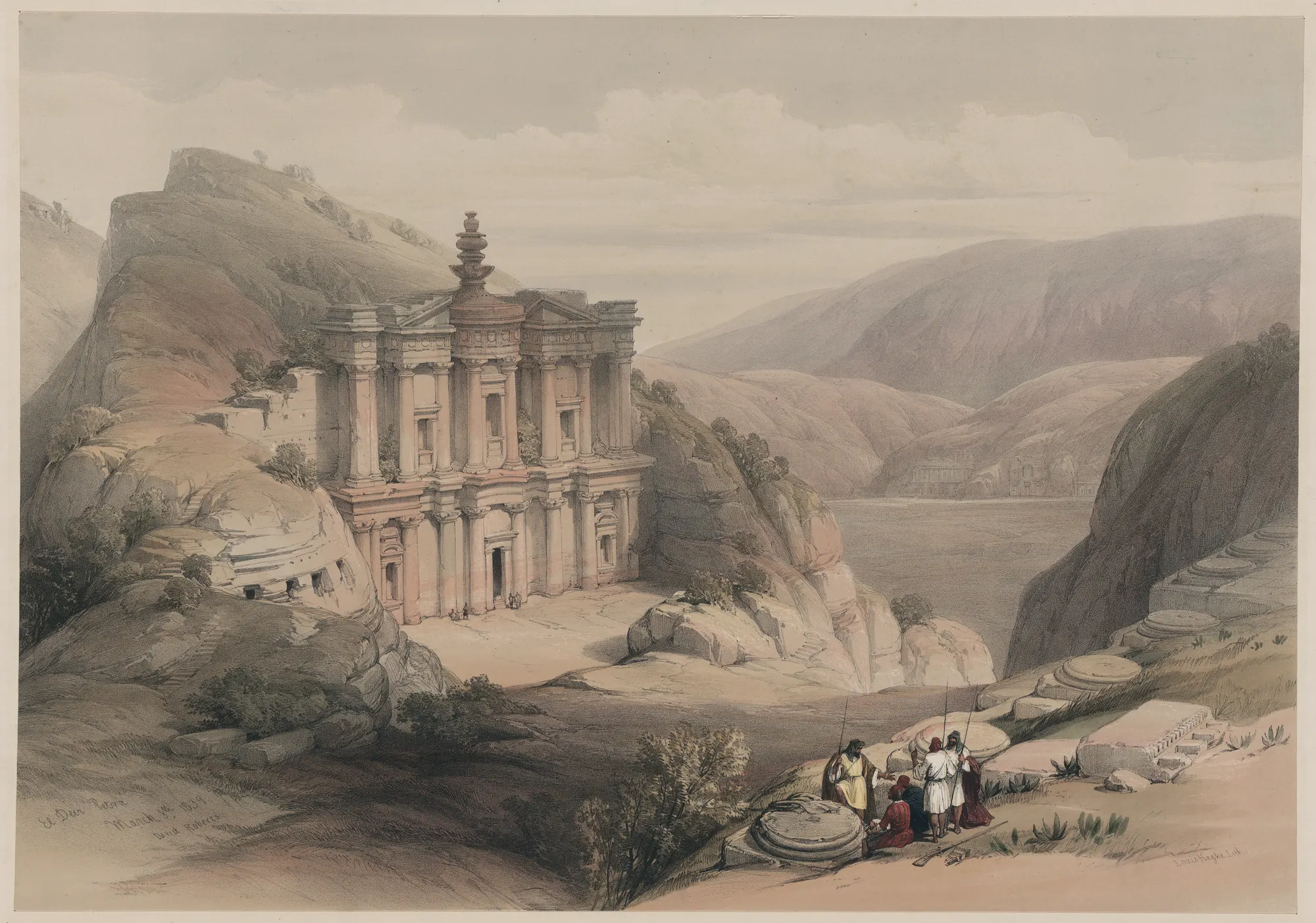
Edom stood at the crossroads, the narrow passes out of the hill country where fugitives from Jerusalem would run. Adam Clarke describes the Edomites holding those passes and driving the survivors back to the Babylonians. Some who fled to Edom for refuge were delivered up.
The record, by era
The Puritans and the Awakening5 voices
Sin thus looked upon, in the glass of the commandment, will appear exceedingly sinful. What was the case of Judah and Jerusalem when the Edomites behaved themselves thus basely and insulted over them. (1.) It was a day of distress with them (
quarantine:debris (2026-07-29) — unbalanced-parens
What the shame is that shall cover them for this violence of theirs. They shall soon find that the cup is going round, even the cup of trembling; and, when they come to be in the same calamitous condition that the Israel of God is now in, they will be ashamed to remember how they triumphed over them (
quarantine:debris (2026-07-29) — unbalanced-parens
Gracious promises to Israel; that they shall be restored and reformed, and shall be victorious over the Edomites, and become masters of their land and the lands of others of their neighbours (
quarantine:debris (2026-07-29) — unbalanced-parens
The breaches - Of the walls, by which when the city was taken, some might have made their escape. Delivered - To the Chaldeans. Remain - Survived the taking of the city.
Neither shouldest thou have stood in the crossing,....
1 more voice on this verse
The Nineteenth Century1 voice
Neither shouldest thou have stood in the crossway - They are represented here as having stood in the passes and defiles to prevent the poor Jews from escaping from the Chaldeans. By stopping these passes, they threw the poor fugitives back into the teeth of their enemies. They had gone so far in this systematic cruelty as to deliver up the few that had taken refuge among them.
How the passage was read
What the Jewish commentators add
And you should not have stood by the gap Heb. הַפֶּרֶק. The place through which the escapees emerge to escape, and in French they call it “trou.
1 more on this passage, in their own words ▾
and you should not have stretched out upon their possessions —You should not have stretched out your hand upon their possessions. So did Jonathan render. And this is an ellipsis, to which we must add: “your hands.”
This section is reception history: how the passage was read and kept in the Jewish tradition. Where a reading parts from an essential of the Christian faith, the section says so at that point.
Texts and citation data: Sefaria; each excerpt follows its version’s licence. 2 further sources are cited on this chapter that carry no English text this site may quote or only restate the verse.
The words behind it
12 Hebrew wordsEvery Hebrew word of this verse in the order it stands, with what it means and the door to its own study. The last column counts the times a word stands in the whole Bible: the rarer the word, the more the places it appears belong together.
| Hebrew | Sound | Meaning | Word study | In the Bible |
|---|---|---|---|---|
| וְאַֽל־ | veal- | and may not | H408 → | 724 times |
| תַּעֲמֹד֙ | taamod | you stand | H5975 → | |
| עַל־ | ʾal- | at | H5921 → | 5755 times |
| הַפֶּ֔רֶק | haperek | the parting of ways | H6563 → | |
| לְהַכְרִ֖ית | lehakhrit | to cut off | H3772 → | 288 times |
| אֶת־ | ʾet- | <obj.> | H853 → | 10935 times |
| פְּלִיטָ֑יו | pelitav | fugitives his | H6412 → | |
| וְאַל־ | veal- | and may not | H408 → | 724 times |
| תַּסְגֵּ֥ר | tasger | you deliver up | H5462 → | |
| שְׂרִידָ֖יו | seridav | survivors his | H8300 → | |
| בְּי֥וֹם | beyom | on [the] day of | H3117 → | 2304 times |
| צָרָֽה׃ | tzarah | trouble | H6869 → |
וְאַֽל־and may not
veal-H408 →724 times
תַּעֲמֹד֙you stand
taamodH5975 →
עַל־at
ʾal-H5921 →5755 times
הַפֶּ֔רֶקthe parting of ways
haperekH6563 →
לְהַכְרִ֖יתto cut off
lehakhritH3772 →288 times
אֶת־<obj.>
ʾet-H853 →10935 times
פְּלִיטָ֑יוfugitives his
pelitavH6412 →
וְאַל־and may not
veal-H408 →724 times
תַּסְגֵּ֥רyou deliver up
tasgerH5462 →
שְׂרִידָ֖יוsurvivors his
seridavH8300 →
בְּי֥וֹםon [the] day of
beyomH3117 →2304 times
צָרָֽה׃trouble
tzarahH6869 →
A shaded row is a word that stands 400 times or fewer in the Bible.
The walk
8 stopsEach card is a verse this one points to, and under it the verses that one points to in turn. Where several paths arrive at the same place, that place is listed first: the text keeps returning to it.
Through
Jeremiah 30:7How awful that day will be! None will be like it! It is the time of Jacob’s distress, but he will be saved out of it.
it leads to
- Daniel 12:1
“At that time Michael, the great prince who stands watch over your people, will rise up. There will be a time of distress, the likes of which will not have occurred from the beginning…
- Malachi 4:1
“For behold, the day is coming, burning like a furnace, when all the arrogant and every evildoer will be stubble; the day is coming when I will set them ablaze,” says the LORD of…
- Zechariah 14:1–2
Behold, a day of the LORD is coming when your plunder will be divided in your presence.
- Daniel 9:12
You have carried out the words spoken against us and against our rulers by bringing upon us a great disaster. For under all of heaven, nothing has ever been done like what has been…
- Matthew 24:21–22
For at that time there will be great tribulation, unmatched from the beginning of the world until now, and never to be seen again.
- Daniel 12:1
Through
Psalms 31:8You have not delivered me to the enemy; You have set my feet in the open.
it leads to
- Job 36:16
Indeed, He drew you from the jaws of distress to a spacious and broad place, to a table full of richness.
- Deuteronomy 32:30
How could one man pursue a thousand, or two put ten thousand to flight, unless their Rock had sold them, unless the LORD had given them up?
- Psalms 18:19
He brought me out into the open; He rescued me because He delighted in me.
- Job 36:16
Where this verse is studied
On this page
Studies6
About Obadiah
This page draws on Adam Clarke, Commentary on the Bible; Edward Bouverie Pusey, The Minor Prophets: A Commentary; Jerome, Commentary on Obadiah; John Gill, Exposition of the Old Testament (1748-1763); John Wesley, Explanatory Notes upon the Old Testament and Matthew Henry, Commentary on the Whole Bible.