
Numbers 21:17
in Numbers 21Then Israel sang this song: “Spring up, O well, all of you sing to it!
BSB
The same verse in ASV and KJV ▾
ASV
Then sang Israel this song: Spring up, O well; sing ye unto it:
KJV
Then Israel sang this song, Spring up, O well; sing ye unto it:
⋯
This verse in Numbers 21
Commentary
8 notes on this verseA commentator
Albert Barnes1798–1870
Notes, Explanatory and Practical, on the Old and New Testaments (1832-1869)
This song, recognized by all authorities as dating from the earliest times, and suggested apparently by the fact that God in this place gave the people water not from the rock, but by commanding Moses to cause a well to be dug, bespeaks the glad zeal, the joyful faith, and the hearty cooperation among all ranks, which possessed the people. In after time it may well have been the water-drawing song of the maidens of Israel.
This site's exposition
from thence they went to Beer
on Numbers 21:16-17
Water is promised at Beer before anybody asks for it, and the words are gather the people together, and I will give them water. At verse 5 these same people had said there is no water, and in chapter 20 the want of water cost Moses the land. Here Israel sings over a well, and the song before this one was at the Red sea in Exodus 15:1.
The record, by era
The Puritans and the Awakening3 voices
Spring up - Hebrew. ascend, that is, let thy waters, which now lie hid below in the earth, ascend for our use. It is either a prediction that it should spring up, or a prayer that it might.
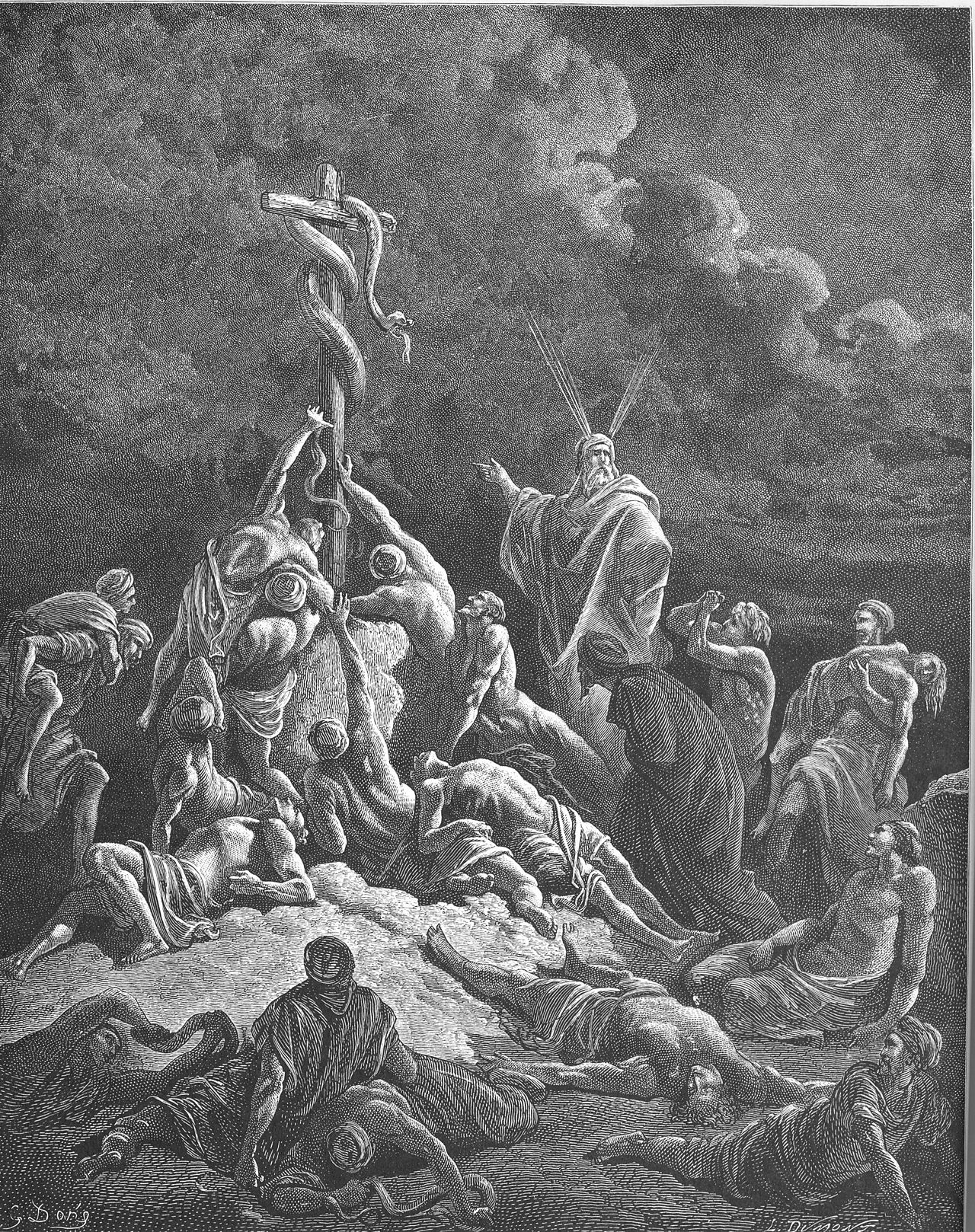
With joy must we draw water out of the wells of salvation, Isa. xi. As the brazen serpent was a figure of Christ, who is lifted up for our cure, so is this well a figure of the Spirit, who is poured forth for our comfort, and from whom flow to us rivers of living waters, John vii.
Then Israel sang this song,....
The Nineteenth Century2 voices
WE have remarked in our reading that the children of Israel were continually changing their places and that there was usually a great difference between one station and the next. So, also, we are constantly varying in our experience, and the variations are sometimes exceedingly remarkable. You observe, in the neighborhood of the text, that the people pitched their tents at one time by the brooks of Arnon. There appears to have been an exceedingly abundance of water where they then were, but nevertheless they removed into the wilderness where there was not a single drop to quench their thirst.
WE have remarked in our reading that the children of Israel were continually changing their places and that there was usually a great difference between one station and the next. So, also, we are constantly varying in our experience, and the variations are sometimes exceedingly remarkable. You observe, in the neighborhood of the text, that the people pitched their tents at one time by the brooks of Arnon. There appears to have been an exceedingly abundance of water where they then were, but nevertheless they removed into the wilderness where there was not a single drop to quench their thirst. So is it with us. At one time we are abounding in every good thing, rejoicing "with joy unspeakable and full of glory." And at another time we discover how great our weakness is—faith is at a very low ebb—and joy seems as though the frost of doubt had nipped its root. But, great as the changes of our experience certainly are, our necessities never change. Whether they found water or not, the people always needed water. The great camp must always have a supply, or perish for the lack of it. So, at all hours, and in all places, Believers need the Divine Grace which only their Lord can give them. They carry no stores with them—they are daily dependent upon their God. "All my springs are in You," said David, and every heir of Heaven must experimentally learn this Truth of God. Now there is one thing certain, that although our experiences vary and our necessities remain the same, yet there is something that does not change, namely, the supply which God has provided for our needs. Our experience may be high or low, bright or dark, but JEHOVAH-JIREH is still the name of our God. In the mountain of the Lord it shall be seen, and in the valley, too, that the Lord will provide. As our day, so shall our strength be.
1 more voice on this verse
The Nineteenth Century1 voice
Spring up, O well, etc. - This is one of the most ancient war songs in the world, but is not easily understood, which is commonly the case with all very ancient compositions, especially the poetic. See the remarks Exo 15:1 (note), etc.
The words behind it
10 Hebrew wordsEvery Hebrew word of this verse in the order it stands, with what it means and the door to its own study. The last column counts the times a word stands in the whole Bible: the rarer the word, the more the places it appears belong together.
| Hebrew | Sound | Meaning | Word study | In the Bible |
|---|---|---|---|---|
| אָ֚ז | ʾaz | then | H227 → | |
| יָשִׁ֣יר | yashir | it sang | H7891 → | |
| יִשְׂרָאֵ֔ל | yisrael | Israel | H3478 → | 2507 times |
| אֶת־ | ʾet- | <obj.> | H853 → | 10935 times |
| הַשִּׁירָ֖ה | hashirah | the song | H7892 → | |
| הַזֹּ֑את | hazot | <the> this | H2063 → | 603 times |
| עֲלִ֥י | ʾali | spring up | H5927 → | 890 times |
| בְאֵ֖ר | veer | O well | H875 → | 38 times |
| עֱנוּ־ | ʾenu- | sing | H6030 → | 331 times |
| לָֽהּ׃ | lah | of <the> it |
אָ֚זthen
ʾazH227 →
יָשִׁ֣ירit sang
yashirH7891 →
יִשְׂרָאֵ֔לIsrael
yisraelH3478 →2507 times
אֶת־<obj.>
ʾet-H853 →10935 times
הַשִּׁירָ֖הthe song
hashirahH7892 →
הַזֹּ֑את<the> this
hazotH2063 →603 times
עֲלִ֥יspring up
ʾaliH5927 →890 times
בְאֵ֖רO well
veerH875 →38 times
עֱנוּ־sing
ʾenu-H6030 →331 times
לָֽהּ׃of <the> it
lah
A shaded row is a word that stands 400 times or fewer in the Bible.
The walk
8 stopsEach card is a verse this one points to, and under it the verses that one points to in turn. Where several paths arrive at the same place, that place is listed first: the text keeps returning to it.
Through
James 5:13Is any one of you suffering? He should pray. Is anyone cheerful? He should sing praises.
it leads to
- Psalms 50:15
Call upon Me in the day of trouble; I will deliver you, and you will honor Me.”
- Jonah 2:2
saying: “In my distress I called to the LORD, and He answered me. From the belly of Sheol I called for help, and You heard my voice.
- Ephesians 5:19
Speak to one another with psalms, hymns, and spiritual songs. Sing and make music in your hearts to the Lord,
- Acts 16:24–25
On receiving this order, he placed them in the inner cell and fastened their feet in the stocks.
- Revelation 5:9–14
And they sang a new song: “Worthy are You to take the scroll and open its seals, because You were slain, and by Your blood You purchased for God those from every tribe and…
- Psalms 50:15
Through
Isaiah 12:5Sing to the LORD, for He has done glorious things. Let this be known in all the earth.
it leads to
- Exodus 15:1
Then Moses and the Israelites sang this song to the LORD: “I will sing to the LORD, for He is highly exalted. The horse and rider He has thrown into the sea.
Reached by 2 separate paths from here.
- Psalms 98:1
Sing to the LORD a new song, for He has done wonders; His right hand and holy arm have gained Him the victory.
- Exodus 15:1
Through
Judges 5:1On that day Deborah and Barak son of Abinoam sang this song:
it leads to
- Revelation 19:1–3
After this I heard a sound like the roar of a great multitude in heaven, shouting: “Hallelujah! Salvation and glory and power belong to our God!
Reached by 2 separate paths from here.
- Revelation 19:1–3
Where this verse is studied
On this page
About Numbers
This page draws on Adam Clarke, Commentary on the Bible; Albert Barnes, Notes, Explanatory and Practical, on the Old and New Testaments (1832-1869); Charles Spurgeon, The Metropolitan Tabernacle Pulpit, Sermon No. 776: “A Song at the Wellhead” (lightly modernized text, CCEL edition); John Gill, Exposition of the Old Testament; John Gill, Exposition of the Old Testament (1748-1763); John Wesley, Explanatory Notes upon the Old Testament and Matthew Henry, Commentary on the Whole Bible.