
Numbers 16:20
in Numbers 16And the LORD said to Moses and Aaron,
BSB
The same verse in ASV and KJV ▾
ASV
And Jehovah spake unto Moses and unto Aaron, saying,
KJV
And the Lord spake unto Moses and unto Aaron, saying,
⋯
This verse in Numbers 16
Commentary
3 notes on this verseThis site's exposition
the Lord spake unto Moses and unto Aaron
on Numbers 16:20-22
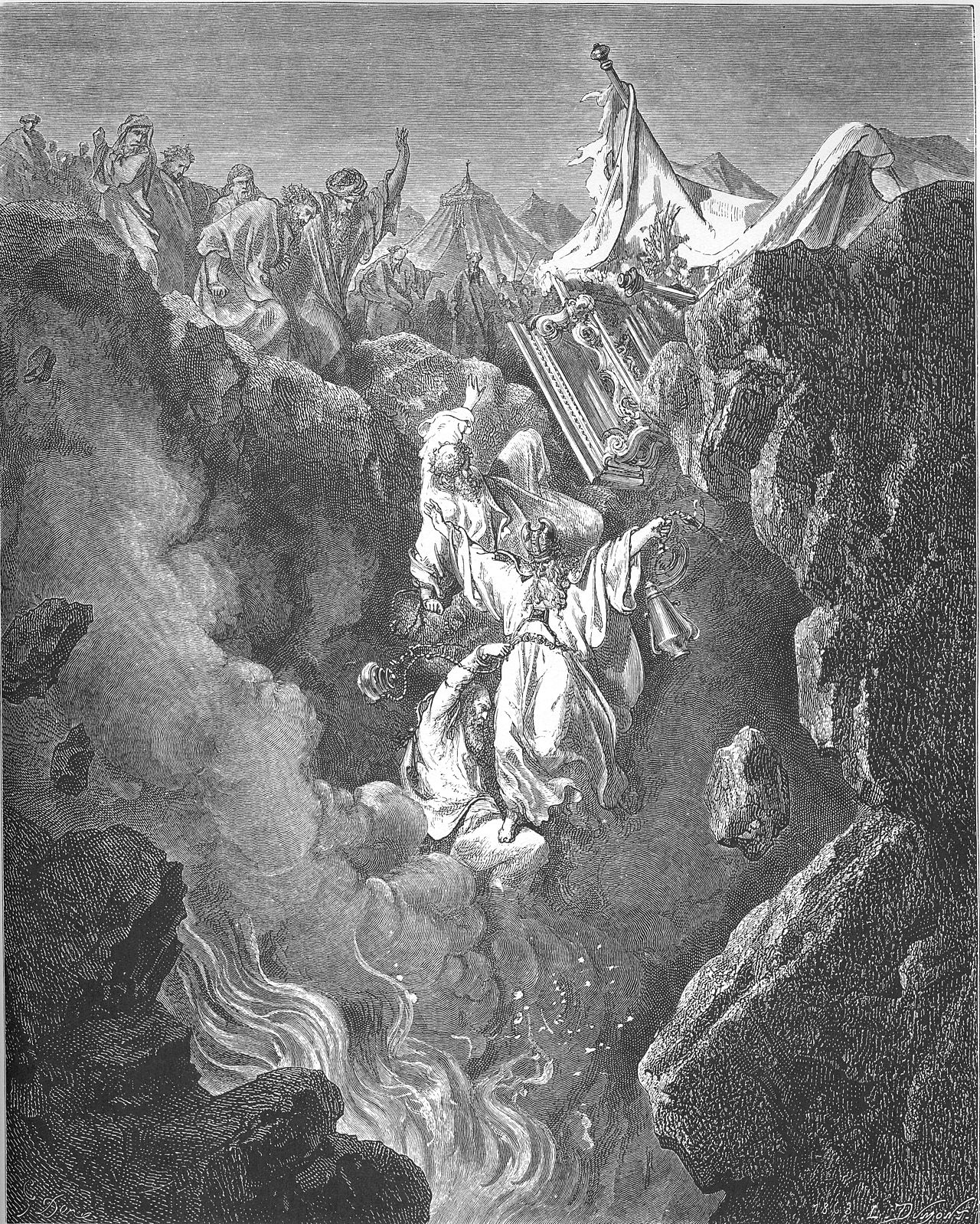
The offer to consume the congregation in a moment is the third of its kind, after Exodus 32:10 and Numbers 14:12, and each time Moses stands in the way of it. The title he uses, the God of the spirits of all flesh, occurs twice in Scripture, here and at 27:16 where he asks for a man to be set over the congregation after him. His argument is the argument Abraham made at Genesis 18:23-25, that the many should not be swept away with the guilty.
The record, by era
The Puritans and the Awakening2 voices
And the Lord spake unto Moses, and unto Aaron,.... Out of the cloud: saying; as follows.
And the Lord spake unto Moses, and unto Aaron,.... Out of the cloud: saying; as follows.
The words behind it
7 Hebrew wordsEvery Hebrew word of this verse in the order it stands, with what it means and the door to its own study. The last column counts the times a word stands in the whole Bible: the rarer the word, the more the places it appears belong together.
| Hebrew | Sound | Meaning | Word study | In the Bible |
|---|---|---|---|---|
| וַיְדַבֵּ֣ר | vaydaber | and he spoke | H1696 → | 1141 times |
| יְהוָ֔ה | yahweh | Yahweh | H3068 → | 6520 times |
| אֶל־ | ʾel- | to | H413 → | 5510 times |
| מֹשֶׁ֥ה | mosheh | Moses | H4872 → | 765 times |
| וְאֶֽל־ | veel- | and to | H413 → | 5510 times |
| אַהֲרֹ֖ן | ʾaharon | Aaron | H175 → | 347 times |
| לֵאמֹֽר׃ | lemor | <to> saying | H559 → | 5305 times |
וַיְדַבֵּ֣רand he spoke
vaydaberH1696 →1141 times
יְהוָ֔הYahweh
yahwehH3068 →6520 times
אֶל־to
ʾel-H413 →5510 times
מֹשֶׁ֥הMoses
moshehH4872 →765 times
וְאֶֽל־and to
veel-H413 →5510 times
אַהֲרֹ֖ןAaron
ʾaharonH175 →347 times
לֵאמֹֽר׃<to> saying
lemorH559 →5305 times
A shaded row is a word that stands 400 times or fewer in the Bible.
Where this verse is studied
On this page
Studies3
On this verse
On this chapter
About Numbers
Who and where
2 names in this verse with a page on the site.
This page draws on John Calvin, Commentary on the Four Last Books of Moses Arranged in the Form of a Harmony; John Gill, Exposition of the Old Testament (1748-1763) and Keil and Delitzsch, Biblical Commentary on the Old Testament: The Pentateuch.