
Malachi 3:1
in Malachi 3“Behold, I will send My messenger, who will prepare the way before Me. Then the Lord whom you seek will suddenly come to His temple—the Messenger of the covenant, in whom you delight—see, He is coming,” says the LORD of Hosts.
BSB
The same verse in ASV and KJV ▾
ASV
Behold, I send my messenger, and he shall prepare the way before me: and the Lord, whom ye seek, will suddenly come to his temple; and the messenger of the covenant, whom ye desire, behold, he cometh, saith Jehovah of hosts.
KJV
Behold, I will send my messenger, and he shall prepare the way before me: and the Lord, whom ye seek, shall suddenly come to his temple, even the messenger of the covenant, whom ye delight in: behold, he shall come, saith the Lord of hosts.
⋯
This verse in Malachi 3
Commentary
16 notes on this verseAnd that we may not have to ask, Of what God was the Word made flesh? he does himself previously teach us, saying, "There was a man sent from God, whose name was John. The same came as a witness, that he might bear witness of that Light. He was not that Light, but [came] that he might testify of the Light." By what God, then, was John, the forerunner, who testifies of the Light, sent [into the world]?
This site's exposition
Behold, I will send My messenger
on Malachi 3:1-2
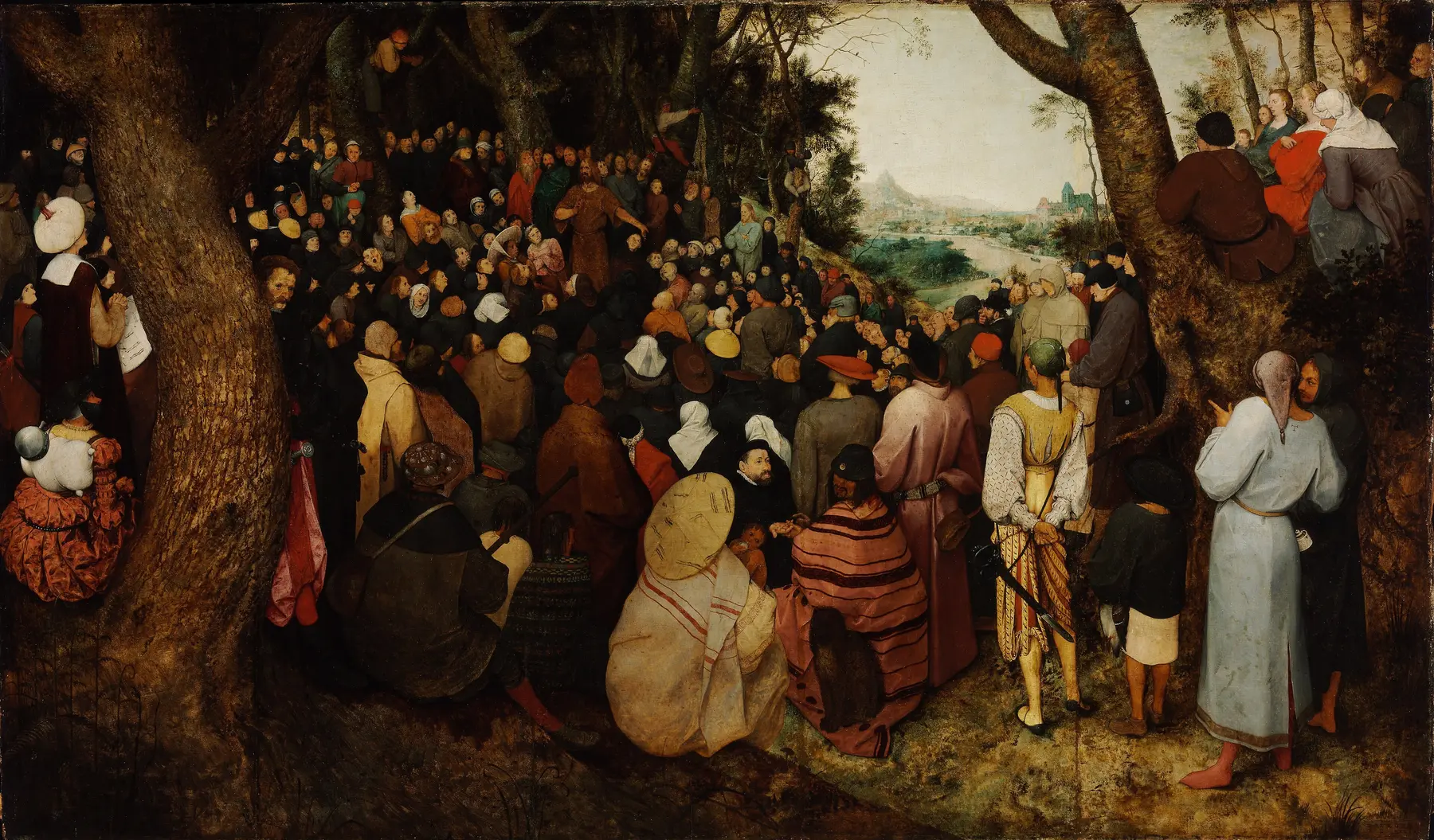
The demand of 2:17 is answered with an arrival: "Behold, I will send My messenger". Matthew 11:10, Mark 1:2 and Luke 7:27 quote the verse of John the Baptist. The Lord follows as "the Messenger of the covenant," and verse 2 asks "who can endure the day of His coming?"
The record, by era
The Church Fathers5 voices
Since then it is evident that many are to judge with the Lord but that others are to be judged, not however on equality but according to their deserts, he will come with all his angels. [At the judgment] before him shall be gathered all nations, and among all the angels are to be reckoned those that have been so perfect, that sitting upon twelve thrones they judge the twelve tribes of Israel. For men are called angels; the apostle says of himself, "As an angel of God you received me." Of John the Baptist it is said, "Behold, I send my angel before your face, who shall prepare your way before you."
I for my part shall come, he is saying, whom you look to as punisher of sins. There will be present also the angel who ministers to the agreements I have often made with you. When you seek him, you will find him punishing the …
A commentator
Origen of AlexandriaCOMMENTARY ON THE GOSPEL OF JOHN 2:17 · Written before 253.
proposed
Someone else will appeal to the text, "Let us make man according to our image and likeness," and maintain that whatever is made according to God's image and likeness is man. To support this, numberless instances are adduced to show that in Scripture "man" and "angel" are used indifferently and that the same subject is called both angel and man. This is true of the three who were entertained by Abraham and of the two who came to Sodom. In the whole course of Scripture, persons are styled sometimes men, sometimes angels. Those who hold this view will say that since persons are styled angels who are manifestly men, as when Zechariah says, "The messenger of the Lord, I am with you, says the Lord almighty," and as it is written of John the Baptist, "Behold, I send my messenger before your face," the angels (messengers) of God are so called on account of their nature. Scripture confirms this view that the names applied to higher powers are not those ofspecies of living beings but those of the orders, assigned by God to this and to that reasonable being.
Chapter 3, Verse 1: Behold, I send (or will send) my angel, and he will prepare the way before me: and immediately he will come to his temple, the Lord whom you seek, and the angel of the covenant whom you desire. LXX: Behold, I will send my angel, and he will prepare the way before me: and suddenly the Lord whom you seek will come to his temple, and the angel of righteousness whom you desire. This the Lord interpreted in the Gospel according to John the Baptist, saying: This is he of whom it is written; Behold, I send my angel before your face, and he will prepare your way before me (Matthew 11:10); and he did not use the same words that the translators of the LXX rendered. Marcus the evangelist also, combining two testimonies of Malachi and Isaiah in the discourse of one prophet, began as follows: The beginning of the Gospel of Jesus Christ, as it is written in the prophet Isaiah: Behold, I send my angel before your face, who will prepare your way (Mark 1:2). This we also read in other words in Malachi. And what follows: The voice of one crying in the wilderness: Prepare the way of the Lord, make straight his paths (Isaiah 40:3), is said by the prophet Isaiah. And immediately explaining both testimonies, he says: There was, he said, John in the wilderness, baptizing and preaching a baptism of repentance for the forgiveness of sins (Mark 1:4). But even the evangelists have interpreted the prophecy of the prophets concerning John, and while they agree in meaning, they differ in wording. […]
Behold I will send my messenger, and he shall prepare the way before thy presence. This passage the Lord applied to himself and to John the Baptist.
9 more voices on this verse
The Church Fathers4 voices
And what sort of connexion may this have with what was said before? Much, assuredly, and in full accordance therewith. Yea, by this topic also He proceeds to urge and press them into the faith of Himself; and at the same time likewise, He is speaking in agreement with what had been before said by John. "For if all things are fulfilled even down to John, I am "He that should come." For all the prophets," saith He, "and the law prophesied until John." For the prophets would not have ceased, unless I were come. Expect therefore nothing further, neither wait for any one else. For that I am He is manifest both from the prophets ceasing, and from those that every day "take by force" the faith that is in me. For so manifest is it and certain, that many even take it by force. Why, who hath so taken it? tell me. All who approach it with earnestness of mind. Then He states also another infallible sign, saying, "If ye will receive it, he is Elias, which was for to come." For "I will send you," it is said, "Elias the Tishbite, who shall turn the heart of the father to the children." This man then is Elias, if ye attend exactly, saith He. For "I will send," saith He, "my messenger before Thy face." And well hath He said, "If ye will receive it," to show the absence of force. For I do not constrain, saith He. And this He said, as requiring a candid mind, and showing that John is Elias, and Elias John. For both of them received one ministry, and both of them became forerunners. Wherefore neither did He simply say, "This is Elias," but, "If ye are willing to receive it, this is he," that is, if with a candid mind ye give heed to what is going on. And He did not stop even at this, but to the words, "This is Elias, which was for to come," He added, to show that understanding is needed, "He that hath ears to hear, let him hear."
Of these two comings the prophet Malachi says, "And suddenly there will come to the temple the Lord whom you seek"; that is one coming. Of the second coming he says, " 'And the messenger of the covenant whom you desire, yes, he is coming,' says the Lord of hosts. 'But who will endure the day of his coming? And who can stand when he appears? For he is like a refiner's fire or like the fuller's lye. He will sit refining and purifying.' " In what immediately follows the Savior himself says, "I will draw near to you for judgment, and I will be swift to bear witness against sorcerers, adulterers and perjurers." It was with this in view that Paul says in due warning: "But if anyone builds upon this foundation gold, silver, precious stones, wood, hay, straw—the work of each will be made manifest, for the Day of the Lord will declare it, since the day is to be revealed in fire." Paul indicates these two comings also in writing to Titus in these words: "The grace of God our Savior has appeared to all men, instructing us, in order that, rejecting ungodliness and worldly lusts, we may live temperately and justly and piously in this world; looking for the blessed hope and glorious coming of our great God and Savior, Jesus Christ." Do you see how he speaks of a first coming, for which he gives thanks, and of a second we are going to look for? We find the same lesson in the wording of the creed we profess, as delivered to us, that is, to believe in him who "ascended into heaven and sat down on the right of the Father, and is to come in glory to judge the living and dead, of whose kingdom there will be no end."
Speaking further of Christ in the same vein, Malachi says, "Behold, I send my angel, and he shall prepare the way before my face. And presently the Lord, whom you seek, and the angel of the testament whom you desire, shall come into the temple. Behold, he comes, says the Lord of hosts. And who shall be able to think of the day of his coming? And who shall stand to see him?" In this text he foretells both comings of Christ, the first and the second—the first where he says, "And presently the Lord shall come into his temple." This refers to Christ's body, of which he himself said in the Gospel, "Destroy this temple, and in three days I will raise it up." His second coming is foretold in these words: " 'Behold, he comes,' says the Lord of hosts. 'And who shall be able to think of the day of his coming? And who shall stand to see him?' "
A commentator
Augustine of HippoTRACTATES ON THE GOSPEL OF JOHN 14:10.1 · Written before 430.
proposed
"For he whom God has sent speaks the words of God." John said this, of course, about Christ that he might diminish himself from him. Why? Did not God send John himself? And didn't John himself say, "I have been sent before him," and, "He who sent me to baptize with water," and about him it was said, "Behold, I send my messenger before you and he will prepare the way"? Does not he too speak the words of God, about whom it was said that he was more than a prophet? Therefore if God also sent John, and he speaks the words of God, how, in regard to the distinction [between himself and Christ], do we know that he said about Christ, "For he whom God has sent speaks the words of God"?
The Puritans and the Awakening2 voices
Behold, I will send my messenger,....
A reproof of the Jews for their corrupting God's ordinances and sacrilegiously robbing him of his dues, with a charge to them to amend this matter, and a promise that, if they did, God would return in mercy to them,
The Nineteenth Century3 voices
A commentator
Albert Barnes1798–1870
Notes, Explanatory and Practical, on the Old and New Testaments (1832-1869)
God answers their complaints of the absence of His judgments, that they would come, but would include those also who clamored for them. For no one who knew his own sinfulness would call for the judgment of God, as being himself, chief of sinners. Augustine pictures one saying to God, “Take away the ungodly man,” and that God answers, “Which?” Behold, I send My messenger before My face, and he shall prepare My way before Me - they, then, were not prepared for His Coming, for whom they clamored.
A commentator
Jamieson, Fausset & Brown1802–1910
Commentary Critical and Explanatory on the Whole Bible (1871)
proposed
The explanation is: the passage in Malachi rests on that in Isa 40:3, and therefore the original source of the prophecy is referred to in order to mark this dependency and connection. the Lord--Ha-Adon in Hebrew. The article marks that it is JEHOVAH (Ex 23:17;
quarantine:debris (2026-07-29) — unbalanced-parens
Behold, I will send my messenger - מלאכי Malachi, the very name of the prophet. But this speaks of John the Baptist. I, the Messiah, the Seed of God, mentioned above, will send my messenger, John the Baptist. He shall prepare the way - Be as a pioneer before me; a corrector of civil abuses, and a preacher of righteousness. And the Lord, whom ye seek - The Messiah, whom ye expect, from the account given by the prophet Daniel, in his seventy weeks, Dan 9:24. Shall suddenly come to his temple - Shall soon be presented before the Lord in his temple; cleanse it from its defilement, and fill it with his teaching and his glory. The Messenger of the covenant - He that comes to fulfill the great design, in reference to the covenant made with Abram, that in his seed all the families of the earth should be blessed. See the parallel texts in the margin, and the notes on them.
The words behind it
24 Hebrew wordsEvery Hebrew word of this verse in the order it stands, with what it means and the door to its own study. The last column counts the times a word stands in the whole Bible: the rarer the word, the more the places it appears belong together.
| Hebrew | Sound | Meaning | Word study | In the Bible |
|---|---|---|---|---|
| הִנְנִ֤י | hini | here I | H2005 → | |
| שֹׁלֵחַ֙ | sholeach | [am] about to send | H7971 → | 845 times |
| מַלְאָכִ֔י | malakhi | messenger my | H4397 → | 213 times |
| וּפִנָּה־ | ufinah- | and he will make clear | H6437 → | |
| דֶ֖רֶךְ | derekh | a way | H1870 → | 707 times |
| לְפָנָ֑י | lefanai | <to> before me | H6440 → | 2123 times |
| וּפִתְאֹם֩ | ufitom | and suddenly | H6597 → | |
| יָב֨וֹא | yavo' | he will come | H935 → | 2568 times |
| אֶל־ | ʾel- | to | H413 → | 5510 times |
| הֵיכָל֜וֹ | heikhalo | temple his | H1964 → | |
| הָאָד֣וֹן׀ | haadon | the lord | H113 → | 333 times |
| אֲשֶׁר־ | ʾasher- | whom | H834 → | 5497 times |
| אַתֶּ֣ם | ʾatem | you | H859 → | 1094 times |
| מְבַקְשִׁ֗ים | mevakshim | [are] seeking | H1245 → | 225 times |
| וּמַלְאַ֨ךְ | umalakh | and [the] messenger of | H4397 → | 213 times |
| הַבְּרִ֜ית | haberit | the covenant | H1285 → | 284 times |
| אֲשֶׁר־ | ʾasher- | whom | H834 → | 5497 times |
| אַתֶּ֤ם | ʾatem | you | H859 → | 1094 times |
| חֲפֵצִים֙ | chafetzim | [are] delighting | H2655 → | |
| הִנֵּה־ | hineh- | there! | H2009 → | 843 times |
| בָ֔א | va' | [he is] about to come | H935 → | 2568 times |
| אָמַ֖ר | ʾamar | he says | H559 → | 5305 times |
| יְהוָ֥ה | yahweh | Yahweh | H3068 → | 6520 times |
| צְבָאֽוֹת׃ | tzevaot | of hosts | H6635 → | 485 times |
הִנְנִ֤יhere I
hiniH2005 →
שֹׁלֵחַ֙[am] about to send
sholeachH7971 →845 times
מַלְאָכִ֔יmessenger my
malakhiH4397 →213 times
וּפִנָּה־and he will make clear
ufinah-H6437 →
דֶ֖רֶךְa way
derekhH1870 →707 times
לְפָנָ֑י<to> before me
lefanaiH6440 →2123 times
וּפִתְאֹם֩and suddenly
ufitomH6597 →
יָב֨וֹאhe will come
yavo'H935 →2568 times
אֶל־to
ʾel-H413 →5510 times
הֵיכָל֜וֹtemple his
heikhaloH1964 →
הָאָד֣וֹן׀the lord
haadonH113 →333 times
אֲשֶׁר־whom
ʾasher-H834 →5497 times
אַתֶּ֣םyou
ʾatemH859 →1094 times
מְבַקְשִׁ֗ים[are] seeking
mevakshimH1245 →225 times
וּמַלְאַ֨ךְand [the] messenger of
umalakhH4397 →213 times
הַבְּרִ֜יתthe covenant
haberitH1285 →284 times
אֲשֶׁר־whom
ʾasher-H834 →5497 times
אַתֶּ֤םyou
ʾatemH859 →1094 times
חֲפֵצִים֙[are] delighting
chafetzimH2655 →
הִנֵּה־there!
hineh-H2009 →843 times
בָ֔א[he is] about to come
va'H935 →2568 times
אָמַ֖רhe says
ʾamarH559 →5305 times
יְהוָ֥הYahweh
yahwehH3068 →6520 times
צְבָאֽוֹת׃of hosts
tzevaotH6635 →485 times
A shaded row is a word that stands 400 times or fewer in the Bible.
The walk
8 stopsEach card is a verse this one points to, and under it the verses that one points to in turn. Where several paths arrive at the same place, that place is listed first: the text keeps returning to it.
Through
Malachi 4:5Behold, I will send you Elijah the prophet before the coming of the great and awesome Day of the LORD.
it leads to
- Luke 1:17
And he will go on before the Lord in the spirit and power of Elijah, to turn the hearts of the fathers to their children and the disobedient to the wisdom of the righteous—to…
- Matthew 17:10–13
The disciples asked Him, “Why then do the scribes say that Elijah must come first?”
- Mark 9:11–13
And they asked Jesus, “Why do the scribes say that Elijah must come first?”
- Matthew 11:13–14
For all the Prophets and the Law prophesied until John.
- Isaiah 40:3
A voice of one calling: “Prepare the way for the LORD in the wilderness; make a straight highway for our God in the desert.
- Luke 1:17
Through
Luke 1:76And you, child, will be called a prophet of the Most High; for you will go on before the Lord to prepare the way for Him,
it leads to
- Isaiah 40:3–5
A voice of one calling: “Prepare the way for the LORD in the wilderness; make a straight highway for our God in the desert.
- Mark 1:2–3
As it is written in Isaiah the prophet: “Behold, I will send My messenger ahead of You, who will prepare Your way.”
- Matthew 14:5
Although Herod wanted to kill John, he was afraid of the people, because they regarded John as a prophet.
- Isaiah 40:3–5
Where this verse is studied
On this page
Studies12
On this verse
About Malachi
This page draws on 16 works. Open the list of works
This page draws on Adam Clarke, Commentary on the Bible; Albert Barnes, Notes, Explanatory and Practical, on the Old and New Testaments (1832-1869); Augustine of Hippo, EXPLANATION OF THE PSALMS 50:11; Augustine of Hippo, City of God 18.35; Augustine of Hippo, TRACTATES ON THE GOSPEL OF JOHN 14:10.1; Carl Friedrich Keil, The Twelve Minor Prophets; Cosmas Indicopleustes, The Christian Topography, Book 5; Cyril of Jerusalem, Catechetical Lecture 15:2; Irenaeus, AGAINST HERESIES 3:11.4; Jamieson, Fausset & Brown, Commentary Critical and Explanatory on the Whole Bible; Jerome, Commentary on Malachi; John Chrysostom, Homily on the Gospel of Matthew 37; John Gill, Exposition of the Old Testament (1748-1763); Matthew Henry, Commentary on the Whole Bible; Origen of Alexandria, COMMENTARY ON THE GOSPEL OF JOHN 2:17 and Theodore of Mopsuestia, COMMENTARY ON MALACHI 3:1.