
Judges 4:19
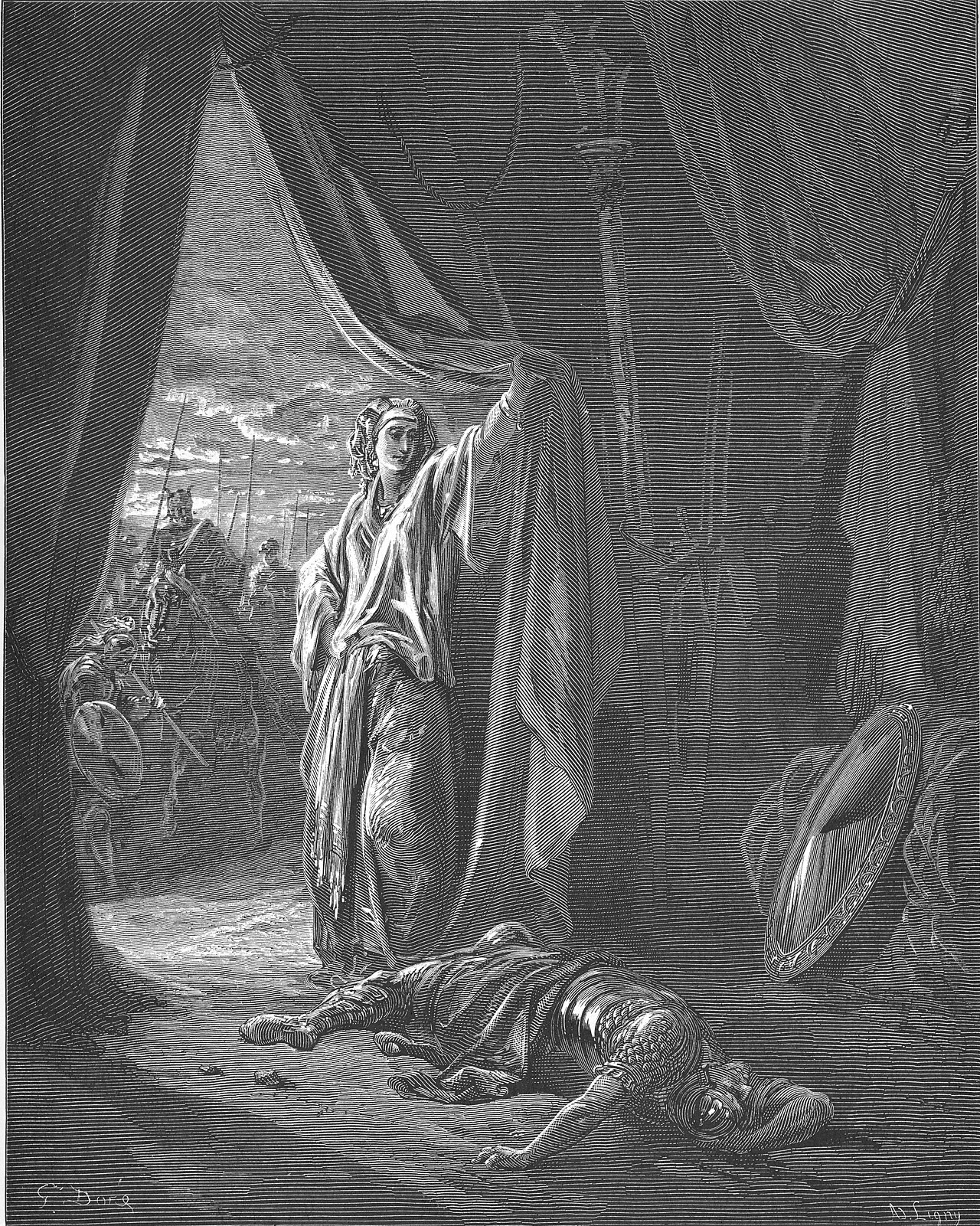
in Judges 4Sisera said to her, “Please give me a little water to drink, for I am thirsty.” So she opened a container of milk, gave him a drink, and covered him again.
BSB
The same verse in ASV and KJV ▾
ASV
And he said unto her, Give me, I pray thee, a little water to drink; for I am thirsty. And she opened a bottle of milk, and gave him drink, and covered him.
KJV
And he said unto her, Give me, I pray thee, a little water to drink; for I am thirsty. And she opened a bottle of milk, and gave him drink, and covered him.
⋯
This verse in Judges 4
Commentary
5 notes on this verseShe opened a bottle of milk - She gave more than he requested; and her friendship increased his confidence and security.
This site's exposition
Please give me a little water to drink
on Judges 4:19-21
He asks for water and is given milk, which 5:25 tells again as curds "In a magnificent bowl". Jamieson, Fausset and Brown call the act murder, and Albert Barnes weighs that age's treachery against her faith and gives her due praise. Judges 5:24 calls her "Most blessed among women".
The record, by era
The Puritans and the Awakening2 voices
), which, we may suppose, he drank heartily of, and, being refreshed with it, was the better disposed to sleep. Was he cold, or afraid of catching cold? or did he desire to be hid from the pursuers, if they should search that tent? she covered him with a mantle,
quarantine:debris (2026-07-29) — leading-punctuation+unbalanced-parens
And he said unto her, give me, I pray thee, a little water to drink, for I am thirsty,.... Which might be occasioned by the heat of the battle, and by the heat of the day, and by heat in running; he asks for a little water, that being very desirable by persons athirst.
The Nineteenth Century1 voice
A commentator
Jamieson, Fausset & Brown1802–1910
Commentary Critical and Explanatory on the Whole Bible (1871)
proposed
she . . . gave him drink, and covered him--Sisera reckoned on this as a pledge of his safety, especially in the tent of a friendly sheik. This pledge was the strongest that could be sought or obtained, after he had partaken of refreshments, and been introduced in the inner or women's apartment.
quarantine:debris (2026-07-29) — starts-lowercase
The words behind it
14 Hebrew wordsEvery Hebrew word of this verse in the order it stands, with what it means and the door to its own study. The last column counts the times a word stands in the whole Bible: the rarer the word, the more the places it appears belong together.
| Hebrew | Sound | Meaning | Word study | In the Bible |
|---|---|---|---|---|
| וַיֹּ֧אמֶר | vaiyomer | and he said | H559 → | 5305 times |
| אֵלֶ֛יהָ | ʾeleiha | to her | H413 → | 5510 times |
| הַשְׁקִינִי־ | hashkini- | give to drink me | H8248 → | |
| נָ֥א | na' | please | H4994 → | 404 times |
| מְעַט־ | meat- | a little of | H4592 → | |
| מַ֖יִם | mayim | water | H4325 → | 581 times |
| כִּ֣י | ki | for | H3588 → | 4482 times |
| צָמֵ֑אתִי | tzameti | I am thirsty | H6770 → | |
| וַתִּפְתַּ֞ח | vatiftach | and she opened | H6605 → | 144 times |
| אֶת־ | ʾet- | <obj.> | H853 → | 10935 times |
| נֹ֧אוד | nod | [the] skin-bottle of | H4997 → | |
| הֶחָלָ֛ב | hechalav | <the> milk | H2461 → | |
| וַתַּשְׁקֵ֖הוּ | vatashkehu | and she gave a drink him | H8248 → | |
| וַתְּכַסֵּֽהוּ׃ | vatekhasehu | and she covered him | H3680 → |
וַיֹּ֧אמֶרand he said
vaiyomerH559 →5305 times
אֵלֶ֛יהָto her
ʾeleihaH413 →5510 times
הַשְׁקִינִי־give to drink me
hashkini-H8248 →
נָ֥אplease
na'H4994 →404 times
מְעַט־a little of
meat-H4592 →
מַ֖יִםwater
mayimH4325 →581 times
כִּ֣יfor
kiH3588 →4482 times
צָמֵ֑אתִיI am thirsty
tzametiH6770 →
וַתִּפְתַּ֞חand she opened
vatiftachH6605 →144 times
אֶת־<obj.>
ʾet-H853 →10935 times
נֹ֧אוד[the] skin-bottle of
nodH4997 →
הֶחָלָ֛ב<the> milk
hechalavH2461 →
וַתַּשְׁקֵ֖הוּand she gave a drink him
vatashkehuH8248 →
וַתְּכַסֵּֽהוּ׃and she covered him
vatekhasehuH3680 →
A shaded row is a word that stands 400 times or fewer in the Bible.
The walk
8 stopsEach card is a verse this one points to, and under it the verses that one points to in turn. Where several paths arrive at the same place, that place is listed first: the text keeps returning to it.
Through
Isaiah 41:17The poor and needy seek water, but there is none; their tongues are parched with thirst. I, the LORD, will answer them; I, the God of Israel, will not forsake them.
it leads to
- Isaiah 55:1
“Come, all you who are thirsty, come to the waters; and you without money, come, buy, and eat! Come, buy wine and milk without money and without cost!
- Isaiah 30:19
O people in Zion who dwell in Jerusalem, you will weep no more. He will surely be gracious when you cry for help; when He hears, He will answer you.
- Isaiah 44:3
For I will pour water on the thirsty land, and currents on the dry ground. I will pour out My Spirit on your descendants, and My blessing on your offspring.
- Matthew 5:6
Blessed are those who hunger and thirst for righteousness, for they will be filled.
- Isaiah 61:1
The Spirit of the Lord GOD is on Me, because the LORD has anointed Me to preach good news to the poor. He has sent Me to bind up the brokenhearted, to proclaim liberty…
- Isaiah 55:1
Through
John 4:7When a Samaritan woman came to draw water, Jesus said to her, “Give Me a drink.”
it leads to
- Matthew 10:42
And if anyone gives even a cup of cold water to one of these little ones because he is My disciple, truly I tell you, he will never lose his reward.”
- 1 Kings 17:10
So Elijah got up and went to Zarephath. When he arrived at the city gate, there was a widow gathering sticks. Elijah called to her and said, “Please bring me a little water in…
- Matthew 10:42
Through
Genesis 24:43Here I am, standing beside this spring. Now if a maiden comes out to draw water and I say to her, ‘Please let me drink a little water from your jar,’
it leads to
- Genesis 24:13–14
Here I am, standing beside the spring, and the daughters of the townspeople are coming out to draw water.
- Genesis 24:13–14
Where this verse is studied
On this page
About Judges
This page draws on Adam Clarke, Commentary on the Bible; Albert Barnes, Notes on the Old Testament; Jamieson, Fausset & Brown, Commentary Critical and Explanatory on the Whole Bible; John Gill, Exposition of the Old Testament (1748-1763) and Matthew Henry, Commentary on the Whole Bible.