
Joshua 15:10
in Joshua 15The border curled westward from Baalah to Mount Seir, ran along the northern slope of Mount Jearim (that is, Chesalon), went down to Beth-shemesh, and crossed to Timnah.
BSB
The same verse in ASV and KJV ▾
ASV
and the border turned about from Baalah westward unto mount Seir, and passed along unto the side of mount Jearim on the north (the same is Chesalon), and went down to Beth-shemesh, and passed along by Timnah;
KJV
And the border compassed from Baalah westward unto mount Seir, and passed along unto the side of mount Jearim, which is Chesalon, on the north side, and went down to Beth–shemesh, and passed on to Timnah:
⋯
This verse in Joshua 15
Commentary
4 notes on this verseBeth-shemesh - The house or temple of the sun. It is evident that the sun was an object of adoration among the Canaanites; and hence fountains, hills, etc., were dedicated to him. Beth-shemesh is remarkable for the slaughter of its inhabitants, in consequence of their prying curiously, if not impiously, into the ark of the Lord, when sent back by the Philistines. See 1Sa 6:19.
This site's exposition
This then was the lot of the tribe
on Joshua 15:1-12
Judah is given first and given most, before the tabernacle tribe and before Joseph, which matches the sceptre of Genesis 49:10 rather than birth order. The word lot is meant literally: Numbers 26:55 and Joshua 14:2 both say the land was divided by lot, so the borders traced here were settled by a method nobody could steer. The frame runs from the salt sea in verse 2 to the great sea in verse 12, so the chapter opens by drawing a line around the whole of it before naming anything inside.
The record, by era
The Puritans and the Awakening1 voice
And the border compassed from Baalah westward unto Mount Seir,....
The Nineteenth Century1 voice
A commentator
Albert Barnes1798–1870
Notes, Explanatory and Practical, on the Old and New Testaments (1832-1869)
proposed
Mount Seir is not the well-known range of Edom. The name ( “shaggy mountain”) is applicable to any rugged or well-wooded hill. Here it probably denotes the range which runs southwestward from Kirjath-jearim to the Wady Surar. Mount Jearim, i. e. “woody mountain,” is through its other name, Chesalon, identified with the modern “Kesla”. Beth-shemesh - i. e. “house of the sun,” called “Ir-shemesh” or “city of the sun” (Jos 19:41; Compare 1Ki 4:9), a place assigned to Dan, and one of the cities which fell by lot to the Levites Jos 21:16. Beth-shemesh was the first place at which the ark rested after its return from the hands of the Philistines 1Sa 6:12. It was the residence of one of Solomon’s purveyors 1Ki 4:9, and was the spot where at a later date Amaziah was defeated and slain by Jehoash (2Ki 14:11 ff). It is no doubt the modern “Ain Shems”. Timnah, called also Timnath, and Timnathah, belonged likewise to Dan, and is to be distinguished from other places of like name Gen 38:12; Jos 24:30. Timnah ( “portion”) was evidently, like Gilgal, Ramah, Kirjath, and several other towns, of frequent use in Canaanite topography.
How the passage was read
What the Jewish commentators add
The boundary turned from Baaloh westward. Now he reverts to his previous description [of the cities] from the east to the west.
1 more on this passage, in their own words ▾
The boundary went out — Referring to the end of the boundary.
This section is reception history: how the passage was read and kept in the Jewish tradition. Where a reading parts from an essential of the Christian faith, the section says so at that point.
Texts and citation data: Sefaria; each excerpt follows its version’s licence. 4 further sources are cited on this chapter that carry no English text this site may quote or only restate the verse.
The words behind it
20 Hebrew wordsEvery Hebrew word of this verse in the order it stands, with what it means and the door to its own study. The last column counts the times a word stands in the whole Bible: the rarer the word, the more the places it appears belong together.
| Hebrew | Sound | Meaning | Word study | In the Bible |
|---|---|---|---|---|
| וְנָסַב֩ | venasav | and it turns | H5437 → | 161 times |
| הַגְּב֨וּל | hagevul | the border | H1366 → | 240 times |
| מִבַּעֲלָ֥ה | mibaalah | from Baalah | H1173 → | 6 times |
| יָ֙מָּה֙ | yamah | west -ward | H3220 → | 396 times |
| אֶל־ | ʾel- | to | H413 → | 5510 times |
| הַ֣ר | har | [the] mountain of | H2022 → | 546 times |
| שֵׂעִ֔יר | seir | Seir | H8165 → | 39 times |
| וְעָבַ֕ר | veavar | and it passes on | H5674 → | 556 times |
| אֶל־ | ʾel- | to | H413 → | 5510 times |
| כֶּ֧תֶף | ketef | [the] slope of | H3802 → | 67 times |
| הַר־ | har- | [the] mountain of | H2022 → | 546 times |
| יְעָרִ֛ים | yearim | Jearim | H3297 → | |
| מִצָּפ֖וֹנָה | mitzafonah | from north -ward | H6828 → | 153 times |
| הִ֣יא | hi' | that | H1931 → | 1879 times |
| כְסָל֑וֹן | khesalon | [is] Kesalon | H3693 → | |
| וְיָרַ֥ד | veyarad | and it goes down | H3381 → | 381 times |
| בֵּֽית־ | beit- | Beth | H1053 → | 42 times |
| שֶׁ֖מֶשׁ | shemesh | Shemesh | H1053 → | 42 times |
| וְעָבַ֥ר | veavar | and it passes on | H5674 → | 556 times |
| תִּמְנָֽה׃ | timnah | Timnah | H8553 → | 12 times |
וְנָסַב֩and it turns
venasavH5437 →161 times
הַגְּב֨וּלthe border
hagevulH1366 →240 times
מִבַּעֲלָ֥הfrom Baalah
mibaalahH1173 →6 times
יָ֙מָּה֙west -ward
yamahH3220 →396 times
אֶל־to
ʾel-H413 →5510 times
הַ֣ר[the] mountain of
harH2022 →546 times
שֵׂעִ֔ירSeir
seirH8165 →39 times
וְעָבַ֕רand it passes on
veavarH5674 →556 times
אֶל־to
ʾel-H413 →5510 times
כֶּ֧תֶף[the] slope of
ketefH3802 →67 times
הַר־[the] mountain of
har-H2022 →546 times
יְעָרִ֛יםJearim
yearimH3297 →
מִצָּפ֖וֹנָהfrom north -ward
mitzafonahH6828 →153 times
הִ֣יאthat
hi'H1931 →1879 times
כְסָל֑וֹן[is] Kesalon
khesalonH3693 →
וְיָרַ֥דand it goes down
veyaradH3381 →381 times
בֵּֽית־Beth
beit-H1053 →42 times
שֶׁ֖מֶשׁShemesh
shemeshH1053 →42 times
וְעָבַ֥רand it passes on
veavarH5674 →556 times
תִּמְנָֽה׃Timnah
timnahH8553 →12 times
A shaded row is a word that stands 400 times or fewer in the Bible.
The walk
7 stopsEach card is a verse this one points to, and under it the verses that one points to in turn. Where several paths arrive at the same place, that place is listed first: the text keeps returning to it.
Through
Judges 14:1One day Samson went down to Timnah, where he saw a young Philistine woman.
it leads to
- 1 John 2:16
For all that is in the world—the desires of the flesh, the desires of the eyes, and the pride of life—is not from the Father but from the world.
- Joshua 19:43
Elon, Timnah, Ekron,
- Psalms 119:37
Turn my eyes away from worthless things; revive me with Your word.
- 2 Samuel 11:2
One evening David got up from his bed and strolled around on the roof of the palace. And from the roof he saw a woman bathing—a very beautiful woman.
- Job 31:1
“I have made a covenant with my eyes. How then could I gaze with desire at a virgin?
- 1 John 2:16
Through
Joshua 15:57Kain, Gibeah, and Timnah—ten cities, along with their villages.
it leads to
- Genesis 38:12
After a long time Judah’s wife, the daughter of Shua, died. When Judah had finished mourning, he and his friend Hirah the Adullamite went up to his sheepshearers at Timnah.
- Jeremiah 14:1
This is the word of the LORD that came to Jeremiah concerning the drought:
- Genesis 38:12
Where this verse is studied
On this page
About Joshua
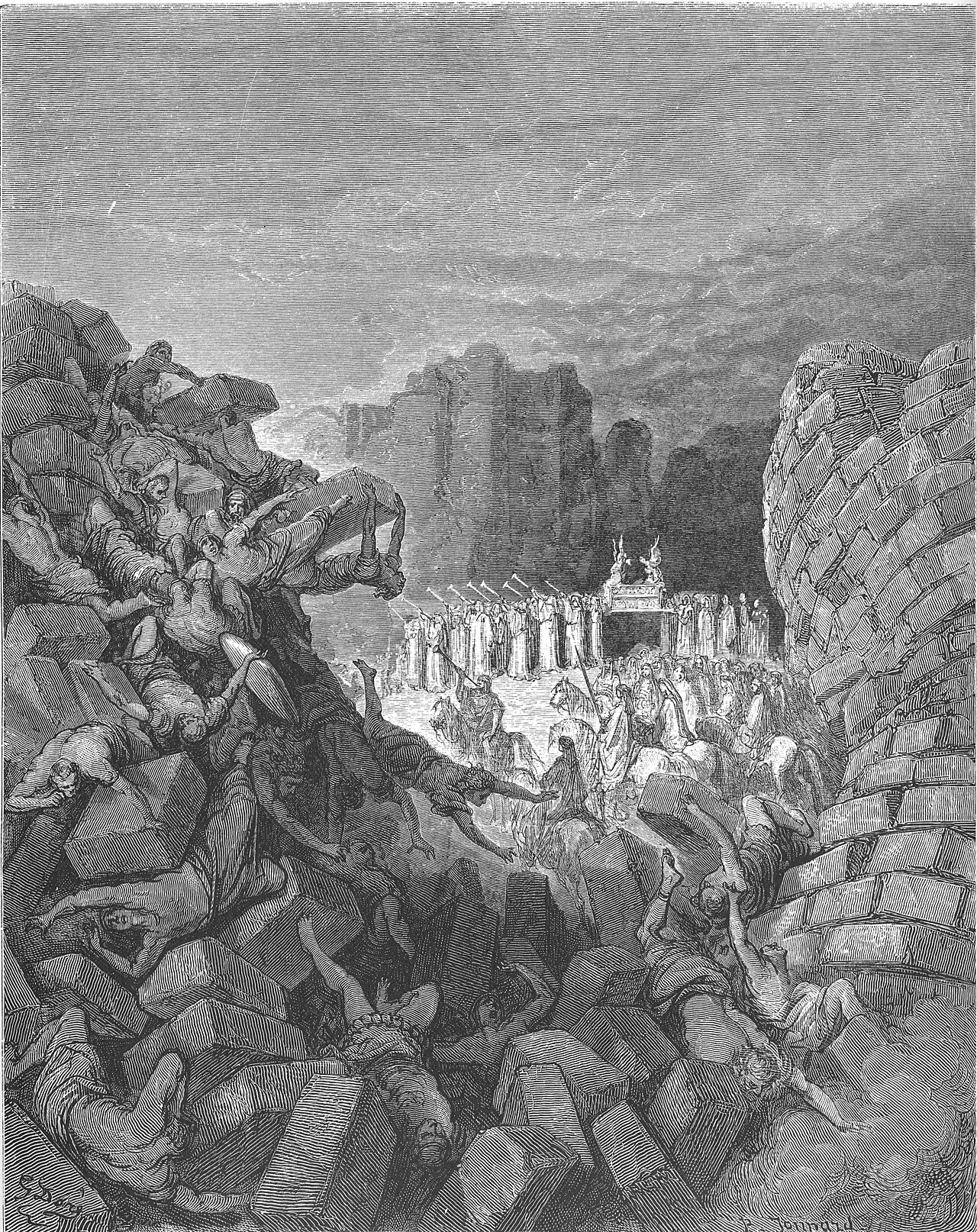
This page draws on Adam Clarke, Commentary on the Bible; Albert Barnes, Notes, Explanatory and Practical, on the Old and New Testaments (1832-1869); John Gill, Exposition of the Old Testament (1748-1763); Keil and Delitzsch, Biblical Commentary on the Old Testament: Joshua, Judges, Ruth and Matthew Henry, Commentary on the Whole Bible.