
Joshua 15:36
in Joshua 15Shaaraim, Adithaim, and Gederah (or Gederothaim)—fourteen cities, along with their villages.
BSB
The same verse in ASV and KJV ▾
ASV
and Shaaraim, and Adithaim, and Gederah, and Gederothaim; fourteen cities with their villages.
KJV
And Sharaim, and Adithaim, and Gederah, and Gederothaim; fourteen cities with their villages:
⋯
This verse in Joshua 15
Commentary
5 notes on this verseAnd Sharaim,.... Sharaim seems to be the Saara of Jerom, which he describes as a village on the borders of Eleutheropolis, to the north as you go to Nicopolis (or Emmaus), about ten miles from it in the tribe of Dan or Judah (o); there was a place called Bethshaaraim, where the sanhedrim sometimes sat (p), and where R. Judah was buried (q).
This site's exposition
These were in the foothills
on Joshua 15:33-47
Ekron, Ashdod and Gaza are written into Judah's inheritance, though Joshua 11:22 had just said that Anakim survived in Gaza and Ashdod. Zorah and Eshtaol open the list, where Samson is born at Judges 13:2, and from here the border on paper and the ground held differ.
This site's exposition
Gederah (or Gederothaim)
The King James text names fifteen towns before the total of fourteen, and Matthew Henry and Clarke both take Gederah and Gederothaim as one place. Shaaraim gives its name to the road where the Philistine dead lay after Goliath fell, at 1 Samuel 17:52. The count then agrees.
The record, by era
The Puritans and the Awakening1 voice
And when this was done there was a more equal dividend (either in quantity or quality) of the remainder among the seven tribes. And this, probably, was intended in that general rule which was given concerning this partition ( Num. xxxiii.
quarantine:debris (2026-07-29) — unbalanced-parens
The Nineteenth Century1 voice
Gederah - See the note on Jos 12:13. Fourteen cities - Well reckoned, we shall find fifteen cities here; but probably Gederah and Gederothaim (Jos 15:36) are the same. See the note on Jos 15:32.
The words behind it
8 Hebrew wordsEvery Hebrew word of this verse in the order it stands, with what it means and the door to its own study. The last column counts the times a word stands in the whole Bible: the rarer the word, the more the places it appears belong together.
| Hebrew | Sound | Meaning | Word study | In the Bible |
|---|---|---|---|---|
| וְשַׁעֲרַ֙יִם֙ | veshaarayim | and Shaaraim | H8189 → | |
| וַעֲדִיתַ֔יִם | vaaditayim | and Adithaim | H5723 → | |
| וְהַגְּדֵרָ֖ה | vehagederah | and <the> Gederah | H1449 → | |
| וּגְדֵרֹתָ֑יִם | ugederotayim | and Gederothaim | H1453 → | |
| עָרִ֥ים | ʾarim | cities | H5892 → | 1090 times |
| אַרְבַּֽע־ | ʾarba'- | four- | H702 → | 318 times |
| עֶשְׂרֵ֖ה | ʾesreh | teen | H6240 → | 338 times |
| וְחַצְרֵיהֶֽן׃ | vechatzreihen | and villages their | H2691 → | 191 times |
וְשַׁעֲרַ֙יִם֙and Shaaraim
veshaarayimH8189 →
וַעֲדִיתַ֔יִםand Adithaim
vaaditayimH5723 →
וְהַגְּדֵרָ֖הand <the> Gederah
vehagederahH1449 →
וּגְדֵרֹתָ֑יִםand Gederothaim
ugederotayimH1453 →
עָרִ֥יםcities
ʾarimH5892 →1090 times
אַרְבַּֽע־four-
ʾarba'-H702 →318 times
עֶשְׂרֵ֖הteen
ʾesrehH6240 →338 times
וְחַצְרֵיהֶֽן׃and villages their
vechatzreihenH2691 →191 times
A shaded row is a word that stands 400 times or fewer in the Bible.
The walk
5 stopsEach card is a verse this one points to, and under it the verses that one points to in turn. Where several paths arrive at the same place, that place is listed first: the text keeps returning to it.
Through
1 Samuel 17:52Then the men of Israel and Judah charged forward with a shout and pursued the Philistines to the entrance of Gath and to the gates of Ekron. And the bodies of the Philistines were…
it leads to
- Joshua 15:11
Then it went out to the northern slope of Ekron, curved toward Shikkeron, proceeded to Mount Baalah, went on to Jabneel, and ended at the Sea.
- Joshua 15:33–36
These were in the foothills:
- Judges 7:23
Then the men of Israel were called out from Naphtali, Asher, and all Manasseh, and they pursued the Midianites.
- Joshua 15:45–46
Ekron, with its towns and villages;
- 2 Samuel 23:10
but Eleazar stood his ground and struck the Philistines until his hand grew weary and stuck to his sword. The LORD brought about a great victory that day. Then the troops returned to him,…
- Joshua 15:11
Where this verse is studied
On this page
About Joshua
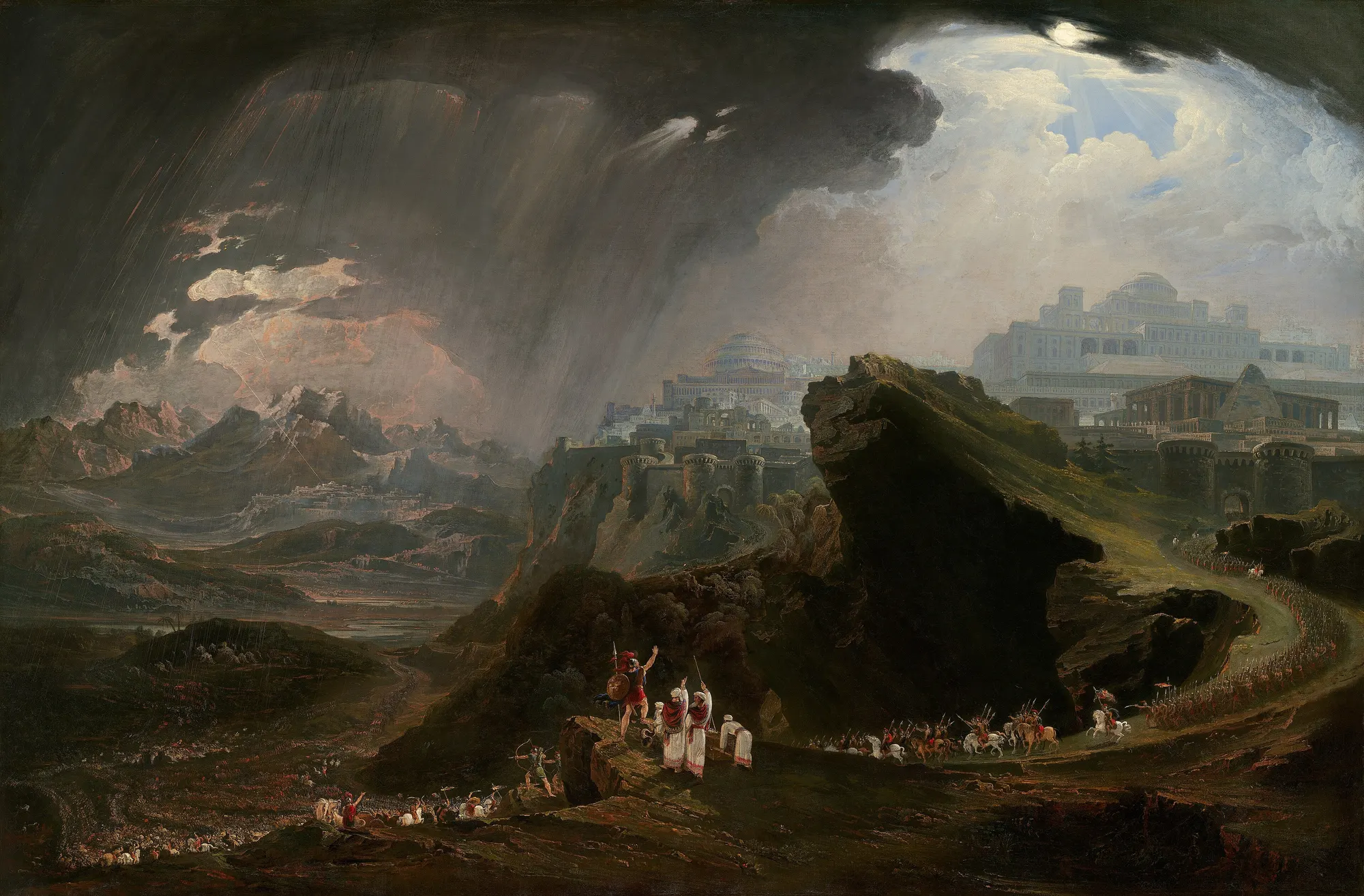
This page draws on Adam Clarke, Commentary on the Bible; Albert Barnes, Notes on the Old Testament; John Gill, Exposition of the Old Testament (1748-1763); Keil and Delitzsch, Biblical Commentary on the Old Testament: Joshua, Judges, Ruth; Matthew Henry, Commentary on the Whole Bible and The Berean Standard Bible, Joshua 15, with the verses cited in the note.