
Jeremiah 34:9
in Jeremiah 34that each man should free his Hebrew slaves, both male and female, and no one should hold his fellow Jew in bondage.
BSB
The same verse in ASV and KJV ▾
ASV
that every man should let his man-servant, and every man his maid-servant, that is a Hebrew or a Hebrewess, go free; that none should make bondmen of them, to wit, of a Jew his brother.
KJV
That every man should let his manservant, and every man his maidservant, being an Hebrew or an Hebrewess, go free; that none should serve himself of them, to wit, of a Jew his brother.
⋯
This verse in Jeremiah 34
Commentary
2 notes on this verseThat every man should let his manservant, and every man his maidservant, being an Hebrew, or an Hebrewess, go free,.... This is the proclamation that was agreed to be made, that every manservant and maidservant, that serve six years an apprenticeship, should be freed from their servitude, according to the law in Exo 21:1; a law founded upon justice and equity, mercy and compassion; done for the honour of the Jewish nation, that they might be a free people, and in commemoration of their deliverance from their servitude in Egypt.
This site's exposition
to proclaim liberty unto them
on Jeremiah 34:8-12
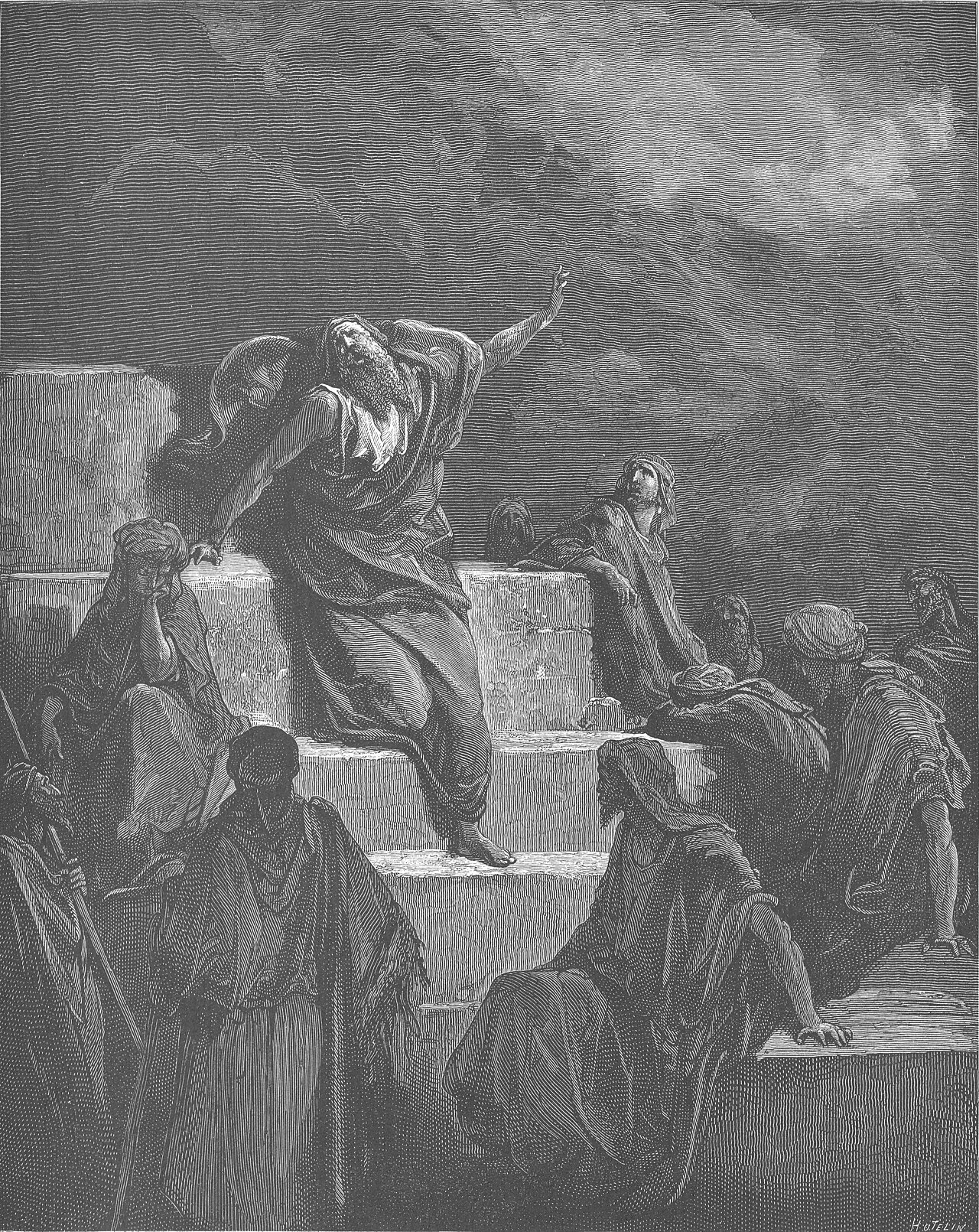
Under the pressure of the siege, king and people struck a covenant to let every Hebrew slave go free, the ancient release law kept for once, and for a moment they did as commanded and let them go. The turn comes at once, afterward they turned, and the freed men and women were seized back into service; the word of the Lord comes to Jeremiah while that reversal is still fresh. Gill and Henry both read the timing as the tell, obedience produced by fear rather than conviction, dropped the moment the danger seemed to ease.
The words behind it
16 Hebrew wordsEvery Hebrew word of this verse in the order it stands, with what it means and the door to its own study. The last column counts the times a word stands in the whole Bible: the rarer the word, the more the places it appears belong together.
| Hebrew | Sound | Meaning | Word study | In the Bible |
|---|---|---|---|---|
| לְ֠שַׁלַּח | leshalach | to let go | H7971 → | 845 times |
| אִ֣ישׁ | ʾish | everyone | H376 → | 1663 times |
| אֶת־ | ʾet- | <obj.> | H853 → | 10935 times |
| עַבְדּ֞וֹ | avdo | [male] slave his | H5650 → | 799 times |
| וְאִ֧ישׁ | veish | and everyone | H376 → | 1663 times |
| אֶת־ | ʾet- | <obj.> | H853 → | 10935 times |
| שִׁפְחָת֛וֹ | shifchato | female slave his | H8198 → | 63 times |
| הָעִבְרִ֥י | haivri | <the> Hebrew [masc] | H5680 → | 34 times |
| וְהָעִבְרִיָּ֖ה | vehaivriyah | and <the> Hebrew [fem] | H5680 → | 34 times |
| חָפְשִׁ֑ים | chafeshim | free [people] | H2670 → | 17 times |
| לְבִלְתִּ֧י | levilti | to not | H1115 → | 112 times |
| עֲבָד־ | ʾavod- | to work | H5647 → | 288 times |
| בָּ֛ם | bam | by <the> them | ||
| בִּיהוּדִ֥י | bihudi | by a Jew | H3064 → | 75 times |
| אָחִ֖יהוּ | ʾachihu | brother his | H251 → | 630 times |
| אִֽישׁ׃ | ʾish | anyone | H376 → | 1663 times |
לְ֠שַׁלַּחto let go
leshalachH7971 →845 times
אִ֣ישׁeveryone
ʾishH376 →1663 times
אֶת־<obj.>
ʾet-H853 →10935 times
עַבְדּ֞וֹ[male] slave his
avdoH5650 →799 times
וְאִ֧ישׁand everyone
veishH376 →1663 times
אֶת־<obj.>
ʾet-H853 →10935 times
שִׁפְחָת֛וֹfemale slave his
shifchatoH8198 →63 times
הָעִבְרִ֥י<the> Hebrew [masc]
haivriH5680 →34 times
וְהָעִבְרִיָּ֖הand <the> Hebrew [fem]
vehaivriyahH5680 →34 times
חָפְשִׁ֑יםfree [people]
chafeshimH2670 →17 times
לְבִלְתִּ֧יto not
leviltiH1115 →112 times
עֲבָד־to work
ʾavod-H5647 →288 times
בָּ֛םby <the> them
bam
בִּיהוּדִ֥יby a Jew
bihudiH3064 →75 times
אָחִ֖יהוּbrother his
ʾachihuH251 →630 times
אִֽישׁ׃anyone
ʾishH376 →1663 times
A shaded row is a word that stands 400 times or fewer in the Bible.
The walk
8 stopsEach card is a verse this one points to, and under it the verses that one points to in turn. Where several paths arrive at the same place, that place is listed first: the text keeps returning to it.
Through
1 Corinthians 6:8Instead, you yourselves cheat and do wrong, even against your own brothers!
it leads to
- 1 Thessalonians 4:6
and no one should ever violate or exploit his brother in this regard, because the Lord will avenge all such acts, as we have already told you and solemnly warned you.
- 1 Thessalonians 4:6
Through
Exodus 2:6When she opened it, she saw the child, and behold, the little boy was crying. So she had compassion on him and said, “This is one of the Hebrew children.”
it leads to
- 1 Kings 8:50
May You forgive Your people who have sinned against You and all the transgressions they have committed against You, and may You grant them compassion in the eyes of their captors to show them…
- 1 Peter 3:8
Finally, all of you, be like-minded and sympathetic, love as brothers, be tenderhearted and humble.
- Acts 7:21
When he was set outside, Pharaoh’s daughter took him and brought him up as her own son.
- 1 Kings 8:50
Through
Deuteronomy 15:12If a fellow Hebrew, a man or a woman, is sold to you and serves you six years, then in the seventh year you must set him free.
it leads to
- Jeremiah 34:14
Every seventh year, each of you must free his Hebrew brother who has sold himself to you. He may serve you six years, but then you must let him go free. But your fathers…
- Exodus 21:2–6
If you buy a Hebrew servant, he is to serve you for six years. But in the seventh year, he shall go free without paying anything.
- Leviticus 25:39–41
If a countryman among you becomes destitute and sells himself to you, then you must not force him into slave labor.
- Jeremiah 34:14
Through
1 Samuel 14:11So the two of them showed themselves to the outpost of the Philistines, who exclaimed, “Look, the Hebrews are coming out of the holes in which they were hiding!”
it leads to
- 1 Samuel 13:6
Seeing that they were in danger because their troops were hard-pressed, the men of Israel hid in caves and thickets, among the rocks, and in cellars and cisterns.
- 1 Samuel 13:6
Where this verse is studied
On this page
Studies3
On this verse
On this chapter
About Jeremiah
This page draws on John Gill, Exposition of the Old Testament (1748-1763); John Gill, Exposition of the Old Testament and Matthew Henry, Commentary on the Whole Bible.